
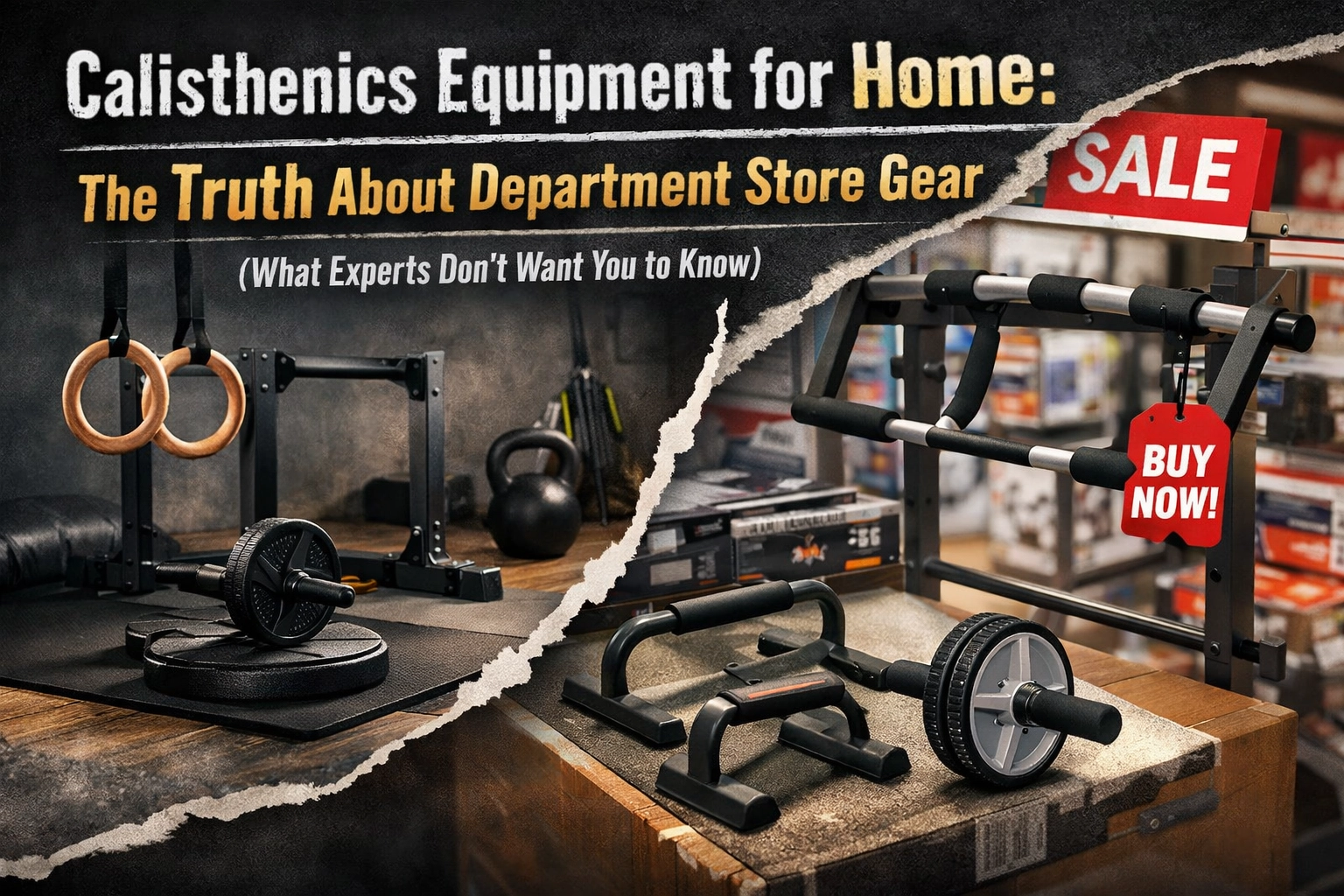
Let's cut through the BS. Walk into any big-box retailer, and you'll see rows of "home gym equipment" that promises to transform your body. Shiny pull-up bars for $29.99, flimsy resistance bands in neon colors, and doorframe bars that look like they were engineered by someone who's never done an actual pull-up.
Here's what the department store fitness industry doesn't want you to know: most of that gear is designed to sell, not to perform. And if you're serious about calisthenics: whether you're training for ninja warrior competitions, grinding through CrossFit WODs, or building gymnast-level strength: you're going to find out the hard way.
The Department Store Equipment Trap
Department store calisthenics gear has one primary design goal: appeal to beginners who don't know better. The packaging looks great. The price point seems reasonable. And it checks the box of "I bought workout equipment" without requiring any real research or investment.
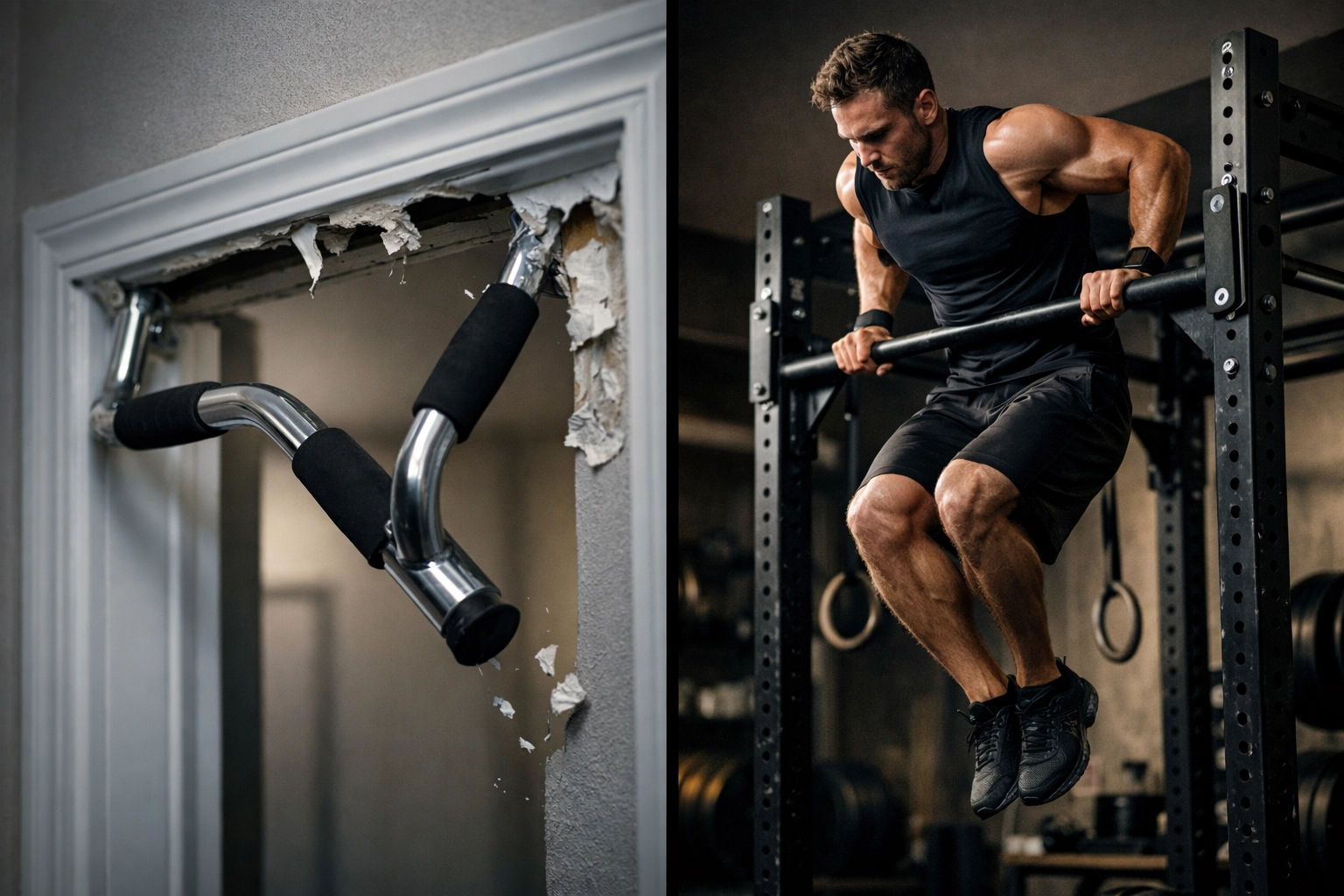
But here's the reality check: serious bodyweight training at home demands equipment that can handle dynamic, explosive movements. When you're throwing muscle-ups, working toward a front lever, or cranking out high-volume pull-up sets, that cheap doorframe bar isn't just inadequate: it's dangerous.
I've seen it countless times. Athletes start with budget gear, progress in their training, and then face a choice: stop advancing or upgrade everything. Most end up spending twice: once on the cheap stuff that failed, and again on equipment that actually works.
What Actually Breaks (And Why It Matters)
Let's talk specifics. Department store pull-up bars typically have three fatal flaws:
Weight limits that lie. That "300 lb capacity" sticker? It's based on static load testing. When you're doing explosive pull-ups or kipping movements, you're generating forces 2-3x your bodyweight. A 200 lb athlete doing dynamic movements can easily exceed that "safe" rating.
Mounting systems designed to minimize wall damage: at the expense of stability. Those foam pads and tension-based systems? They're great for protecting rental apartment walls. They're terrible for providing the rigid stability you need when you're training at intensity.
Materials that can't handle the abuse. Thin-gauge steel. Plastic components in load-bearing positions. Welds that look good but crack under repeated stress. This isn't equipment built for athletes who train seriously.
The Hidden Cost of Cheap Equipment
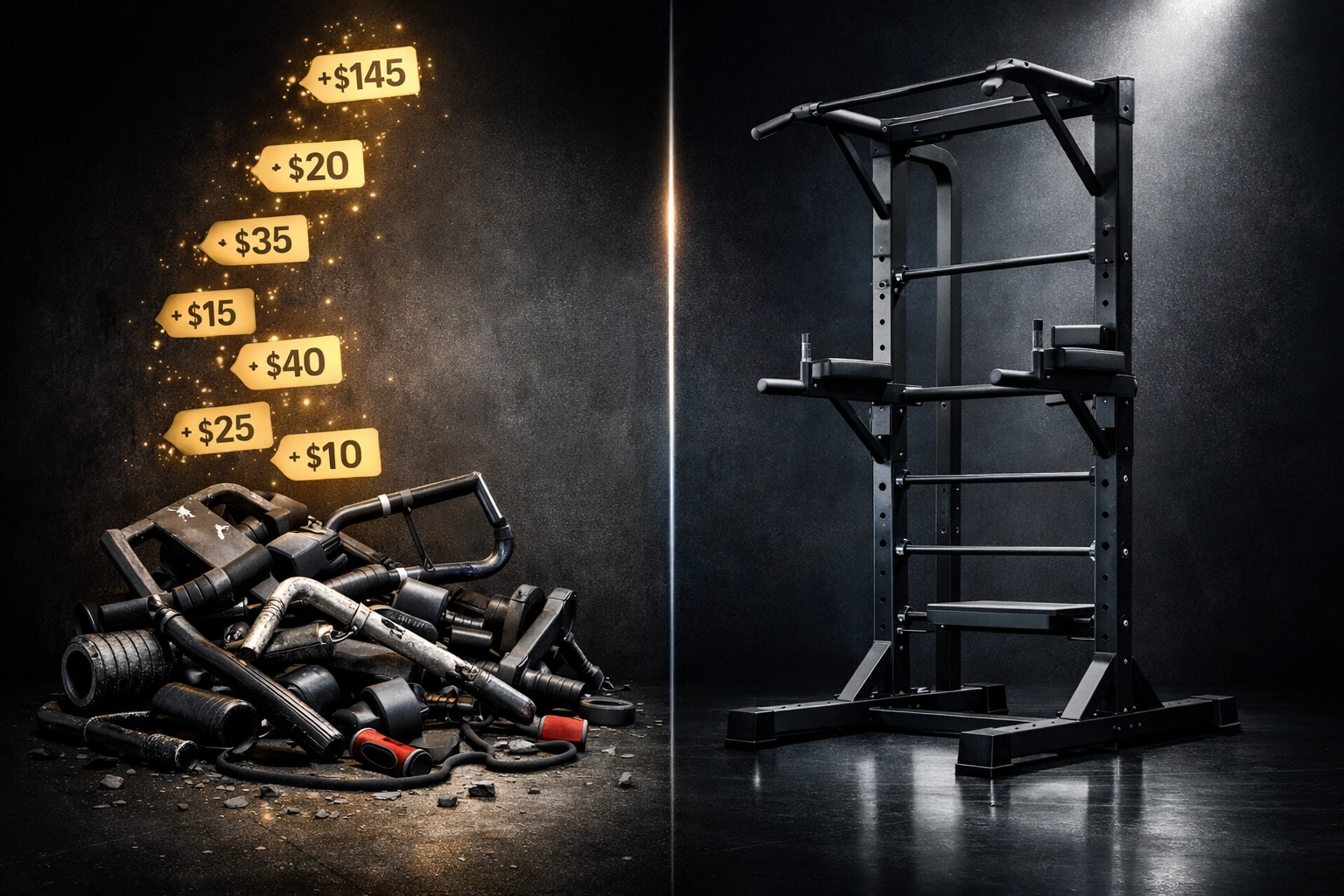
Here's the math nobody wants to do: A $30 doorframe pull-up bar that lasts six months before the mounting system fails costs you $60 per year. Do that for five years, and you've spent $300 on equipment that never let you train at your full potential.
Meanwhile, professional-grade calisthenics equipment for home costs more upfront but delivers decades of reliable performance. The real question isn't "Can I afford quality equipment?" It's "Can I afford to keep replacing cheap gear while my training suffers?"
And let's talk about the opportunity cost. Every workout where you're limited by unstable equipment, worried about gear failure, or unable to attempt advanced movements because your setup can't handle them: that's training potential you're leaving on the table.
What Serious Athletes Actually Need
If you're committed to building real strength through bodyweight training, your home setup needs to deliver three things:
Absolute stability. Your equipment should feel as solid as what you'd find in a serious gym. No wobble, no flex, no wondering if this is the rep that breaks something.
Progressive capability. Your setup should support you at beginner level and still challenge you when you're throwing advanced movements. That means proper grip width options, sufficient height clearance, and the structural integrity to handle explosive training.
Space efficiency without compromise. Most of us train at home because we value convenience and flexibility. But space-saving shouldn't mean performance-killing. The best calisthenics equipment maximizes your available space without limiting your training options.
Traditional wall-mounted systems check some of these boxes, but they come with their own problems. Unless you own your home and don't mind drilling into studs, installation is complicated. And once it's mounted, you're committed to that configuration.
The Floor-to-Ceiling Solution Nobody Talks About
Here's where the equipment industry has been selling you short: you don't need to destroy your walls to get gym-quality stability.
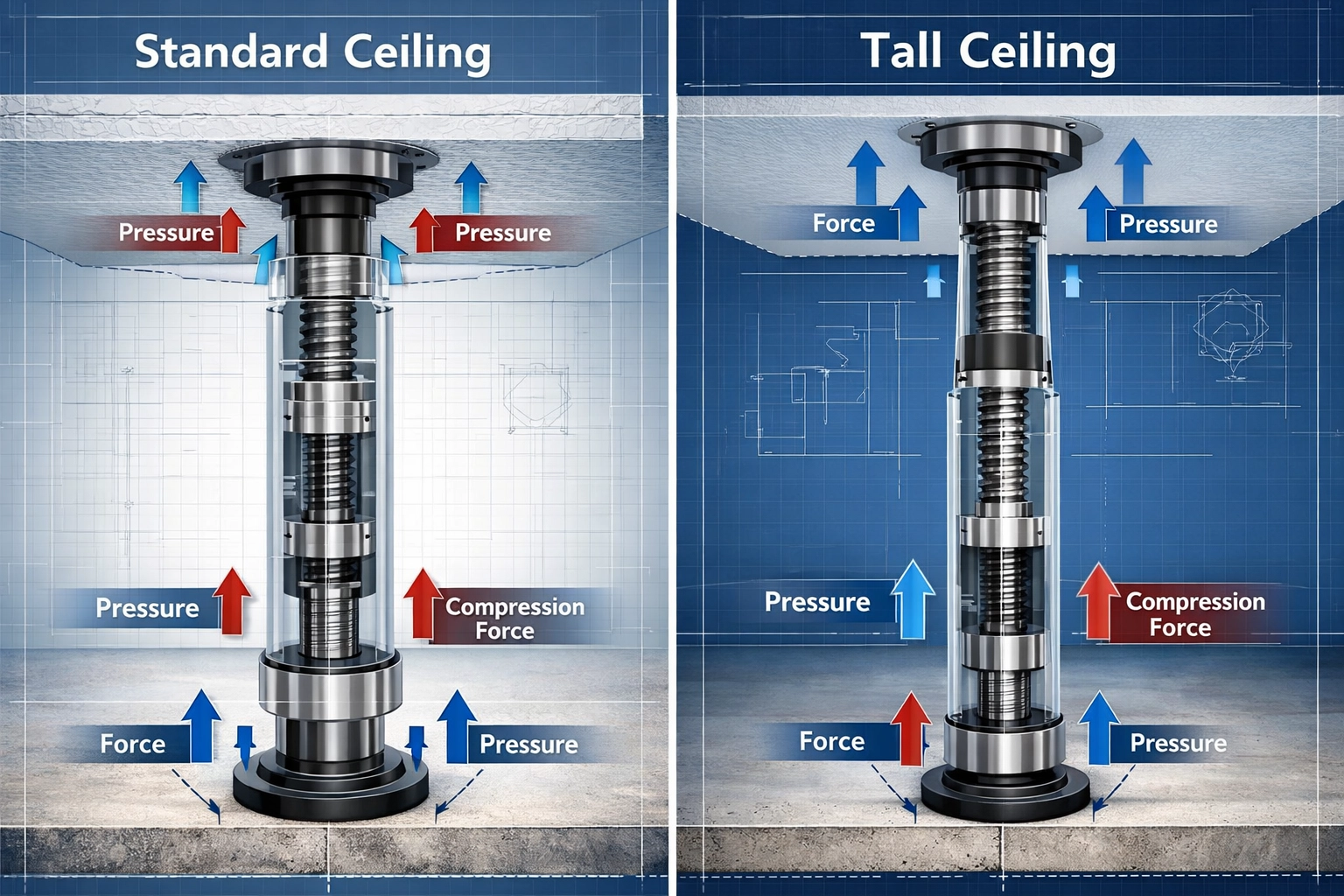
Modern floor-to-ceiling systems use tension between your floor and ceiling to create rock-solid anchor points. No drilling. No permanent installation. And: here's the key difference from department store gear: they're engineered to handle serious training loads.
The Bold Body Fitness approach takes this concept further. Instead of just copying the pressure-mounted poles you might have seen (which can slip, damage ceilings, and still feel unstable), they've designed systems specifically for calisthenics athletes who need versatile home gym setups that don't compromise.
Building Your Actually Useful Home Calisthenics Setup
If you're ready to invest in equipment that matches your commitment to training, here's the honest breakdown of what works:
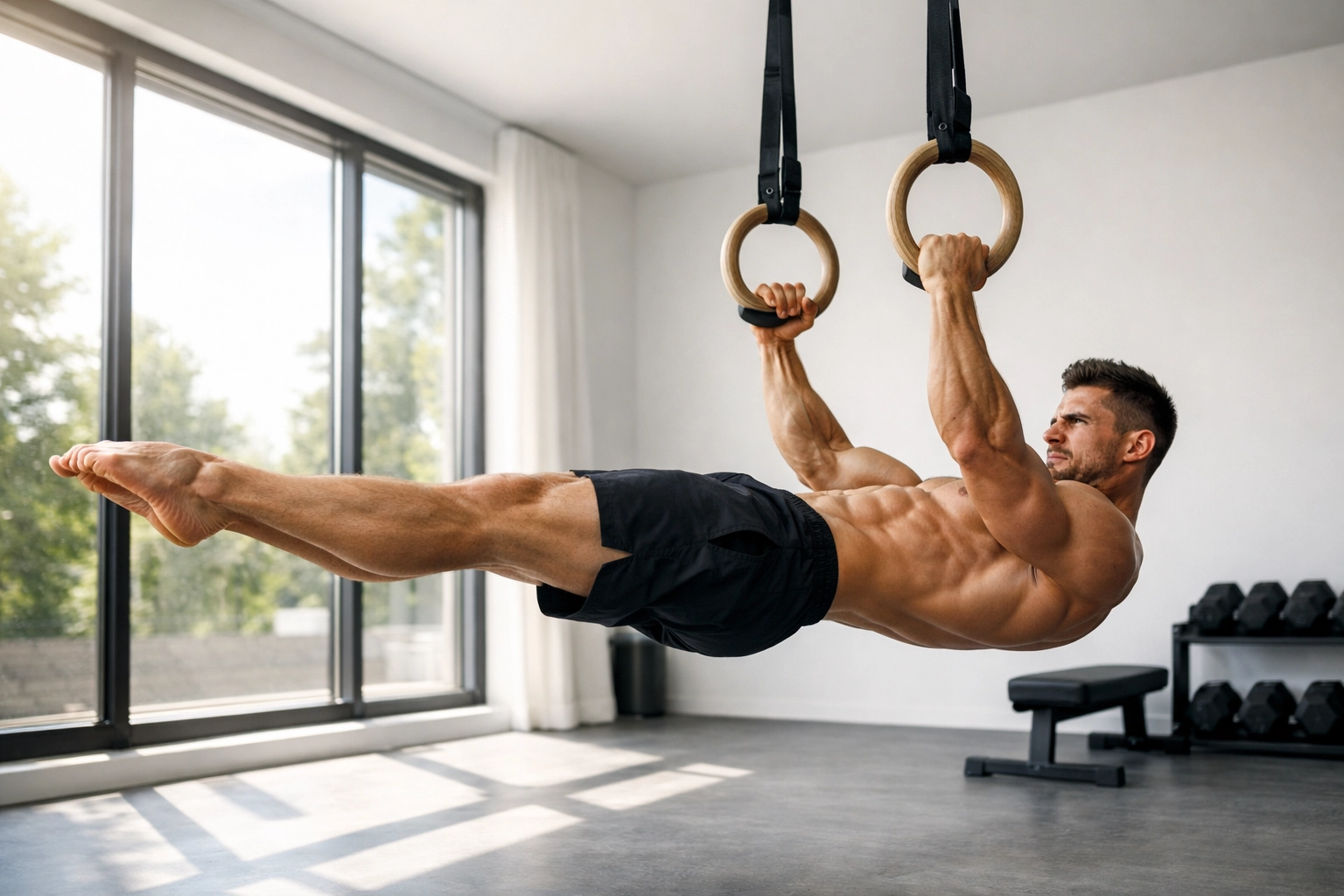
Pull-up capability is non-negotiable. Whether it's rings, a bar, or a rail system, you need multiple grip options and bulletproof stability. Your pulling movements form the foundation of upper body strength development, and half-assing this component limits everything else.
Dip station or parallel bar access. Pushing movements balance your pulling work and unlock advanced skills like planches and L-sits. The equipment needs to be stable enough for explosive movements and weighted variations as you progress.
Band anchor points at multiple heights. Resistance bands are massively underrated for calisthenics. They provide assistance for movements you're building toward, add resistance to movements you've mastered, and enable exercises that pure bodyweight can't replicate. But you need proper anchor points: not just looping them over a pull-up bar and hoping.
Enough clear space to move. Research suggests you need at least 3-4 square meters of clear space to train effectively. If your equipment setup eats into that space with bulky frames or permanent installations, you're limiting your training variety.
The Resistance Rail system addresses all of these requirements in a way that department store gear simply can't. It's a floor-to-ceiling system that provides rock-solid anchor points for rings, bars, and bands: without permanent installation. For renters, apartment dwellers, or anyone who values flexibility, it's the kind of solution that should have existed years ago.
Making the Investment That Actually Pays Off
Look, I get it. Dropping serious money on home gym equipment feels risky, especially when you can grab something cheaper at Target. But here's the reality: cheap equipment doesn't make training easier: it makes progression harder.
Every serious calisthenics athlete I know has a graveyard of failed equipment in their garage. Doorframe bars that pulled out of the frame. Dip stations that wobbled. Resistance bands that snapped mid-exercise. We've all been there, and we've all learned the same lesson: buy once, cry once.
Quality equipment pays for itself in consistency. When you can train hard without worrying about gear failure, you progress faster. When your setup doesn't require an engineering degree to install, you actually use it. And when you're not constantly replacing broken equipment, the math works in your favor.
The Bottom Line for Serious Athletes
Department store calisthenics equipment exists to capitalize on New Year's resolution energy and casual fitness enthusiasm. It's not designed for athletes who train with purpose, intensity, and long-term goals.
If you're reading this, you're probably past that stage. You've experienced the frustration of equipment that limits your training. You've felt the wobble of gear that can't handle your intensity. And you're ready to invest in a setup that matches your commitment.
The truth experts don't want you to know? You don't need a massive budget to build a serious home calisthenics setup: but you do need to be strategic about where you invest. Skip the department store equipment aisle entirely. Focus on systems engineered for real athletes doing real training.
Your body deserves equipment that can keep up with your ambitions. Stop compromising, stop replacing broken gear, and build a home gym that actually supports serious training.
Because at the end of the day, the only equipment failure that matters is the one that happens during your workout: and serious athletes don't have time for that.
