
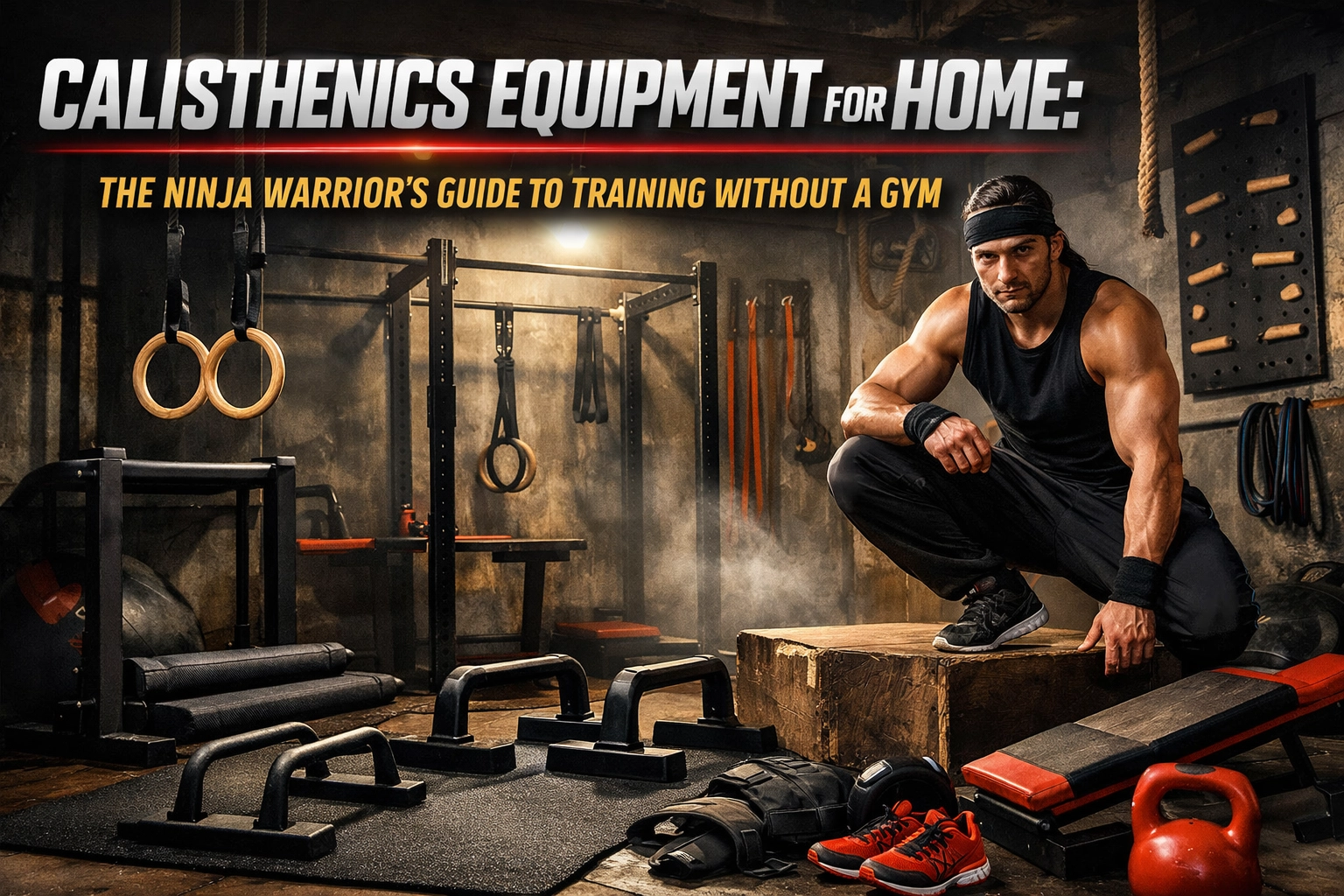
Let's cut through the noise: you don't need a $10,000 gym membership or a garage full of chrome-plated machines to train like a ninja warrior. But you absolutely need the right calisthenics equipment for home if you're serious about building elite-level strength, agility, and control.
Whether you're a competitive ninja warrior preparing for your next obstacle course, a CrossFit athlete looking to supplement your box training, or an MMA fighter building functional strength, this guide breaks down exactly what equipment you need: and what you don't: to create a versatile home gym that doesn't compromise on performance.
Why Equipment Matters (Even for Bodyweight Training)
Here's the truth: pure bodyweight training has limits. Can you build impressive strength without any equipment? Sure. But the moment you want to develop serious pulling strength, master advanced calisthenics skills, or progress faster than a snail's pace, you need tools.
Think about it. How are you going to train pull-ups without something to pull on? How will you practice muscle-ups, front levers, or rope climbs with nothing but your floor and walls? The answer is simple: you won't.
Equipment doesn't replace hard work. It amplifies it. The right setup transforms your living room or garage into a legitimate training ground where you can build full body workout at home routines that rival anything you'd do in a commercial gym.
The Non-Negotiable Foundation: Pull-Up Bars and Alternatives
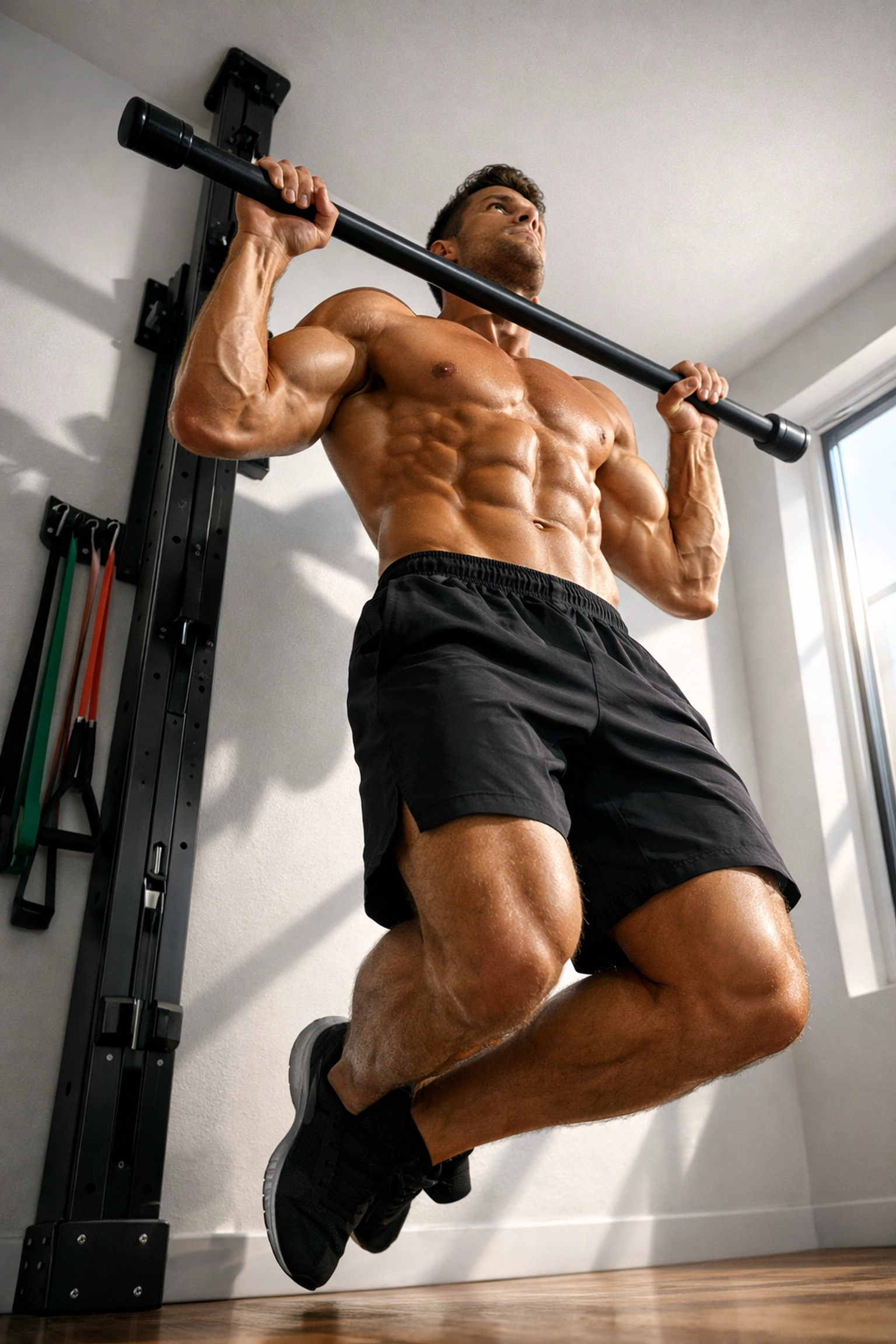
If you're going to invest in one piece of equipment, make it something you can pull from. Pulling movements are impossible to replicate without equipment, period. You can do push-ups on the floor, squats with your bodyweight, and core work on a mat: but you cannot effectively train your back, biceps, and grip without something overhead.
Traditional Pull-Up Bar Options
Door frame pull-up bars are the classic choice. They're affordable, install in seconds, and let you practice the "grease the groove" method: doing multiple sets throughout the day to accelerate skill development. Perfect for achieving your first pull-up or building up to weighted variations.
But here's where most setups fall short: wall damage. Traditional wall-mounted pull-up bars require drilling holes, leave permanent marks, and limit your training options. If you're renting or just don't want to destroy your space, you need a better solution.
The Floor-to-Ceiling Alternative
Enter the floor to ceiling gym setup. This game-changing approach gives you all the benefits of a mounted pull-up bar without touching your walls. Systems like the Resistance Rail from Bold Body Fitness use tension-based mounting between your floor and ceiling: zero drilling, zero damage, 100% versatility.
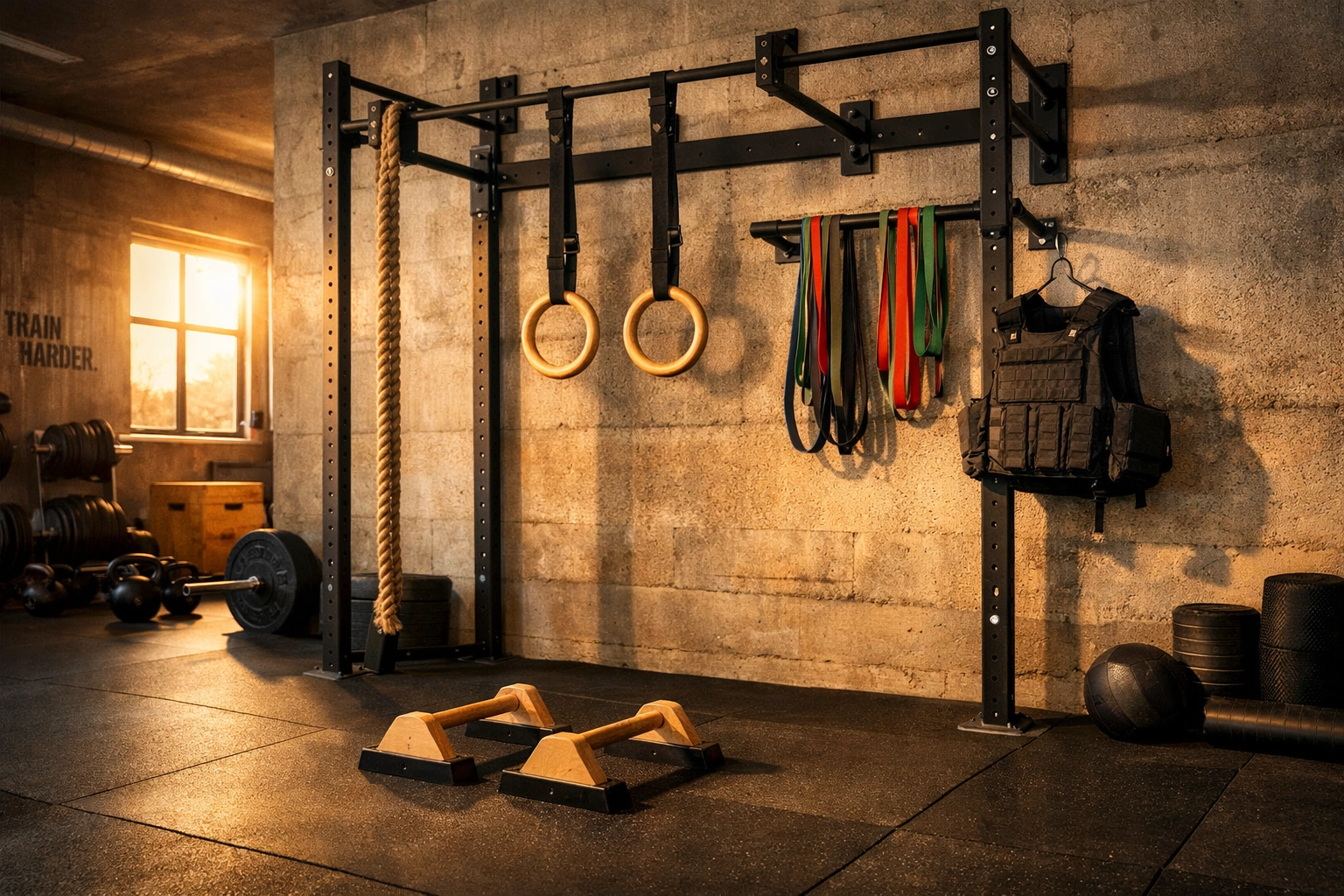
The Resistance Rail isn't just a pull up bar alternative. It's a complete training station that handles pull-ups, muscle-ups, ring work, rope climbs, resistance band training, and dozens of other movements. For ninja warriors who need to practice obstacle-specific skills like rope climbs and grip transitions, this kind of versatility is essential.
Dip Stations: The Most Underrated Tool in Your Arsenal
If pull-up bars handle your pulling movements, dip stations dominate everything else. And we're not just talking about tricep dips here.
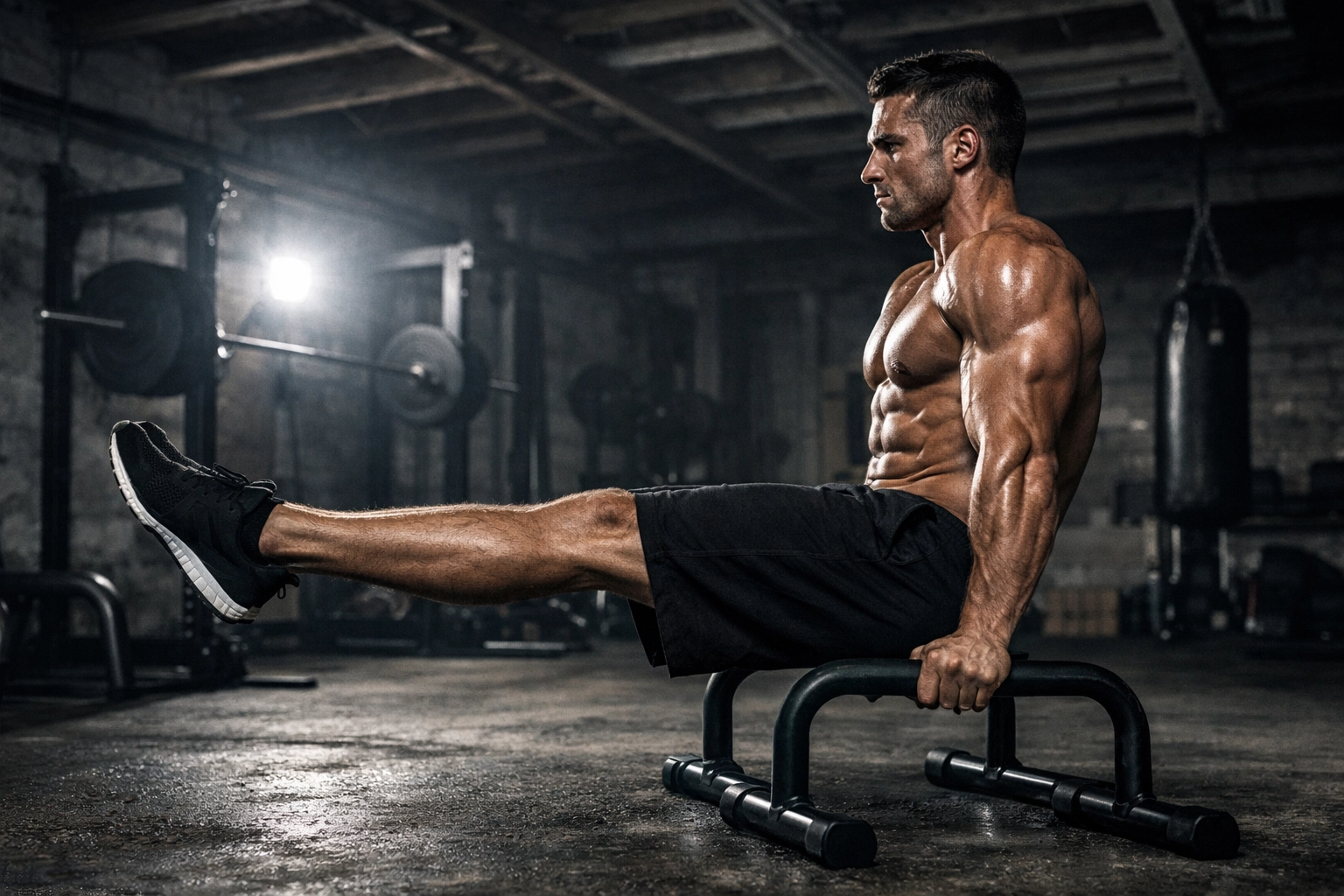
Parallel dip bars are extremely versatile. You can use them for:
- Standard dips (chest and triceps)
- L-sits and V-sits (core strength)
- Support holds (building time under tension)
- Tuck planches and straddle planches (advanced skills)
- Straight bar dips (shoulder conditioning)
- Knee raises and leg lifts (ab destruction)
- Front lever progressions (back strength)
For beginners, dip bars are friendly and forgiving. For advanced athletes, they're platforms for some of the most challenging movements in calisthenics. Independent bars that you can position at different widths offer more exercise variety and easier storage than fixed stations.
Can't afford dip bars yet? Two sturdy chairs work in a pinch. Just make sure they're stable enough to handle your bodyweight during movement. But honestly, dedicated dip bars are worth the investment: they're safer, more versatile, and open up progressions that furniture simply can't handle.
Parallettes: Small Equipment, Massive Impact
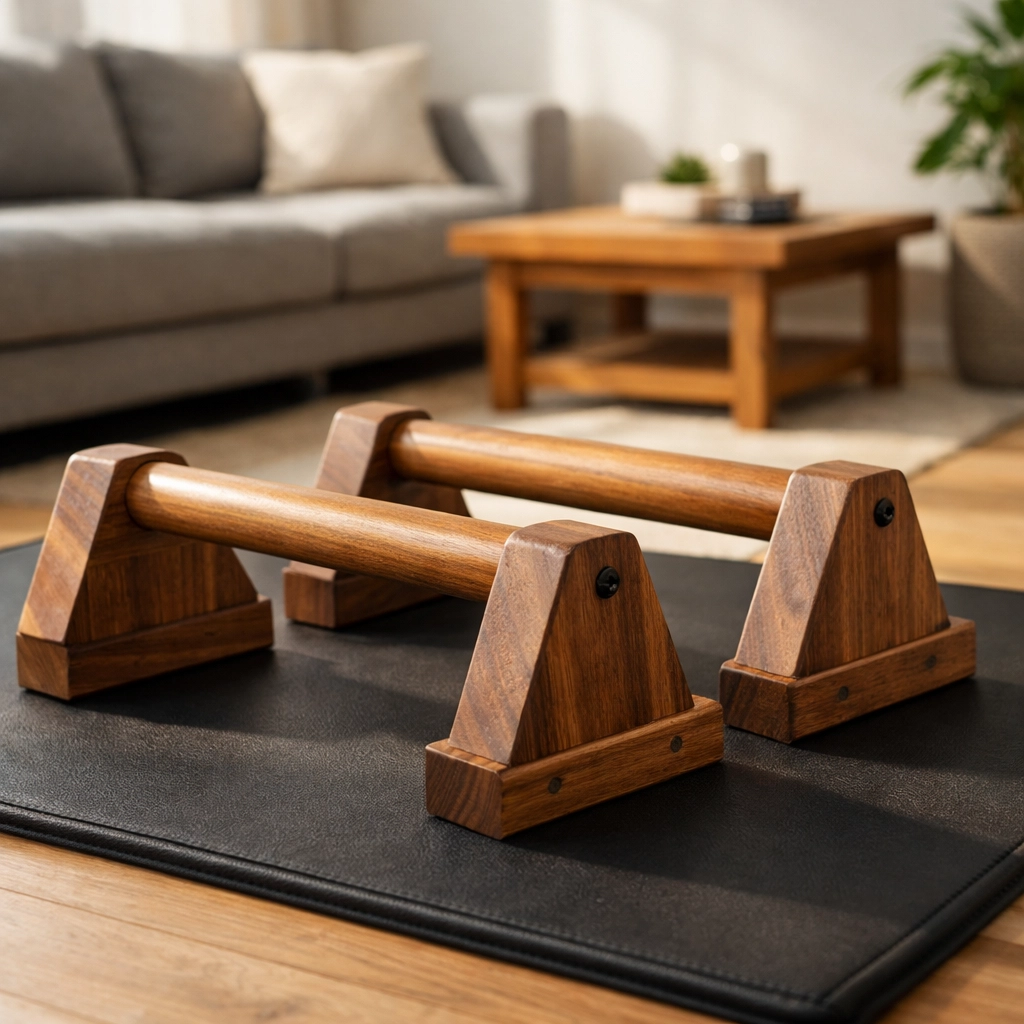
Parallettes look simple: just two small parallel bars that sit on the ground. But don't let their simplicity fool you. These compact tools unlock an entire world of movements:
- Push-up variations with increased range of motion
- L-sits and other static holds
- Handstand push-ups with neutral grip
- Tuck planche and planche progressions
- Crow poses and handstand work
- Various seated and supported positions
Their small dimensions make them perfect for bodyweight training at home in tight spaces. Toss them in a closet when you're done. Take them to the park. Pack them when traveling. Parallettes give you gym-quality training anywhere.
Resistance Bands: The Secret Weapon
If you're working with a tight budget, prioritize dip bars and resistance bands. Together, these two tools create a solid foundation for building strength across all movement patterns.
Resistance bands serve multiple purposes in a calisthenics equipment for home setup:
- Assistance work: Loop a band over your pull-up bar to make pull-ups easier as you build strength
- Resistance training: Add variable resistance to push-ups, squats, and other movements
- Mobility work: Improve flexibility and range of motion
- Activation exercises: Pre-workout band work fires up your muscles
- Skill progressions: Practice muscle-ups, front levers, and other advanced skills with assistance
Get a set with multiple resistance levels. Light bands for warm-ups and mobility. Medium bands for assistance work. Heavy bands for adding serious resistance to bodyweight movements.
Building a No-Damage Home Training Station
Here's where most home gym setups fail: they require permanent modifications to your space. Drilling holes, mounting brackets, hoping your studs are in the right place: it's a nightmare for renters and a commitment for homeowners.
The solution is a no wall damage workout system that gives you professional-grade training capacity without touching your walls. This is where innovation separates mediocre home gyms from elite training environments.
The Resistance Rail system exemplifies this approach. It mounts between your floor and ceiling using pressure: no drilling, no holes, no permanent damage. But it doesn't sacrifice stability or versatility. You get a rock-solid anchor point that handles everything from gymnastics rings to climbing ropes to resistance bands.
For ninja warriors and obstacle course athletes, this flexibility is crucial. Your training needs change based on your competition schedule and skill development. One week you're focusing on upper body pulling strength. The next week you're working rope climbs. The following week you're drilling lache movements and grip transitions. Your equipment needs to adapt with you.
Check out the full range of equipment options at the Bold Body Fitness shop to see how a versatile mounting system can transform your training space.
Advanced Tools for Serious Athletes
Once you've covered the basics, these additional tools take your crossfit home gym or ninja warrior training to the next level:
Gymnastics Rings
Rings are brutal. They're unstable, they demand core control, and they expose every weakness in your movement patterns. They're also absolutely essential for building the kind of strength and body control that ninja warriors need.
Rings attach to any overhead anchor point (like a Resistance Rail or pull-up bar) and enable:
- Ring dips and push-ups
- Archer push-ups and ring flyes
- Iron cross progressions
- Ring rows and pull-ups
- Muscle-ups with rotation
- Front levers and back levers
- Support holds and various static positions
Climbing Rope
Rope climbs appear in almost every ninja warrior course. They test grip strength, pulling power, and technique under fatigue. Having a rope at home means you can practice the specific skill you need rather than just general pulling strength.
Weight Vest
Once you've mastered bodyweight exercises, add external load with a weight vest. This is how you progress from 20 pull-ups to seriously impressive numbers while building dense, functional muscle.
Ab Wheel
Simple, cheap, devastating for your core. The ab wheel builds the kind of anti-extension strength that protects your spine during dynamic movements and makes every other exercise stronger.
Liquid Chalk
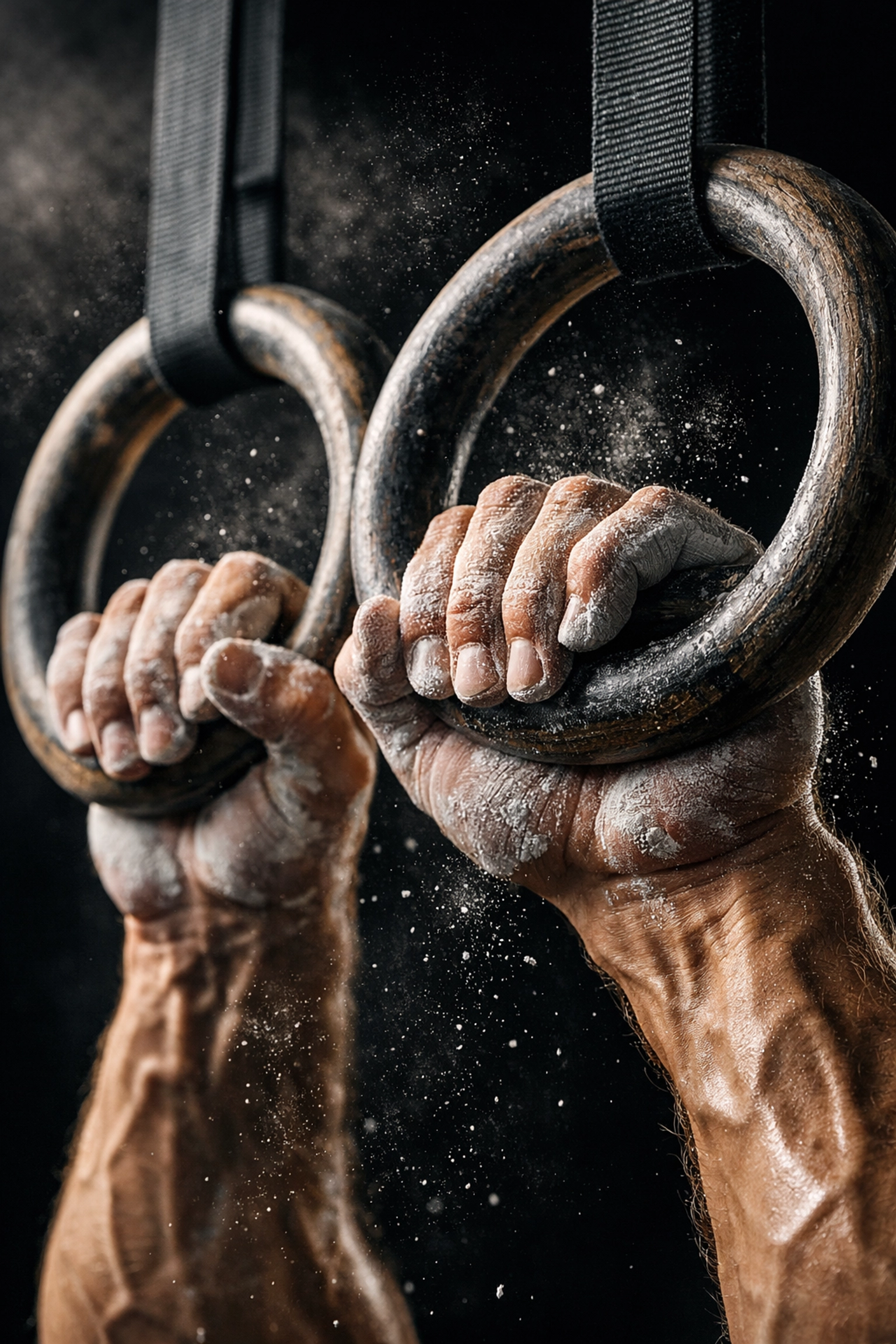
Your grip gives out before your muscles do. Liquid chalk keeps your hands dry and secure, letting you train longer and harder without slipping. It's cleaner than regular chalk and doesn't make a mess in your home gym.
Programming Your Home Calisthenics Training
Having equipment is step one. Using it intelligently is step two. Here's how serious athletes structure their resistance training with minimal equipment:
The Push-Pull-Legs Split
- Push Day: Dips, push-up variations, pike push-ups, handstand progressions
- Pull Day: Pull-ups, rows, front lever work, grip training
- Leg Day: Pistol squats, Bulgarian split squats, jump training, weighted lunges
This classic split works perfectly with home calisthenics equipment because you can achieve complete muscle development without machines.
The Full Body Approach
Hit every major movement pattern in each session:
- One vertical push (handstand work or pike push-ups)
- One horizontal push (push-up variation)
- One vertical pull (pull-up variation)
- One horizontal pull (row variation)
- One leg movement (pistol squat progression)
- Core work (L-sits, ab wheel, hanging knee raises)
This approach works well for ninja warriors who need to maintain all physical qualities while focusing on specific skills.
Skill-Focused Sessions
Dedicate entire workouts to specific skills:
- Muscle-up progressions
- Handstand practice
- Planche work
- Front lever training
- Rope climb technique
These sessions prioritize quality over quantity. You're building neural patterns and technical proficiency, not just chasing muscle fatigue.
The Minimal Effective Setup
If you're starting from zero and need to prioritize purchases, here's your roadmap:
Phase 1 - Foundation ($100-200)
- Resistance bands (multiple resistances)
- Door frame pull-up bar OR floor-to-ceiling system
- Yoga mat
Phase 2 - Expansion ($200-400)
- Parallettes
- Dip station or independent dip bars
- Weight vest (adjustable)
Phase 3 - Advanced ($400+)
- Gymnastics rings
- Climbing rope
- Ab wheel
- Liquid chalk
- Additional specialized equipment
Or skip the piecemeal approach and invest in a comprehensive system like the Resistance Rail that handles multiple training modalities from day one. Sometimes buying once and buying right saves money in the long run.
Making It Work in Small Spaces
You don't need a dedicated gym room. Most calisthenics equipment is compact and portable. Store parallettes under your bed. Hang rings when training, take them down when done. Use furniture for dip stations if needed.
The beauty of bodyweight training at home is its flexibility. Your living room becomes your gym. Your doorway becomes your pull-up station. Your ceiling becomes your rope climb anchor point.
For renters or anyone who can't permanently modify their space, this flexibility is essential. You get professional-level training capacity without losing your security deposit or committing to permanent modifications.
The Bottom Line
Building an effective home calisthenics setup doesn't require a massive budget or a dedicated gym space. It requires smart equipment choices that maximize versatility while minimizing space requirements and installation headaches.
Prioritize pulling equipment first: you literally cannot train pulling movements effectively without it. Add dip bars or parallettes second for pressing and core work. Layer in resistance bands for assistance, progression, and variety.
For serious athletes who want a complete solution without the commitment of wall-mounted equipment, systems like the Resistance Rail represent the cutting edge of home gym equipment design. You get the versatility of multiple tools in one package, the strength of a permanent installation, and the flexibility of a damage-free mounting system.
The goal isn't to replicate a commercial gym. It's to create a training environment optimized for your specific needs as a ninja warrior, calisthenics athlete, or functional fitness enthusiast. With the right equipment and intelligent programming, your home setup can deliver results that rival: or exceed: what you'd achieve at any gym.
Now stop reading and start building. Your home training station is waiting.
