
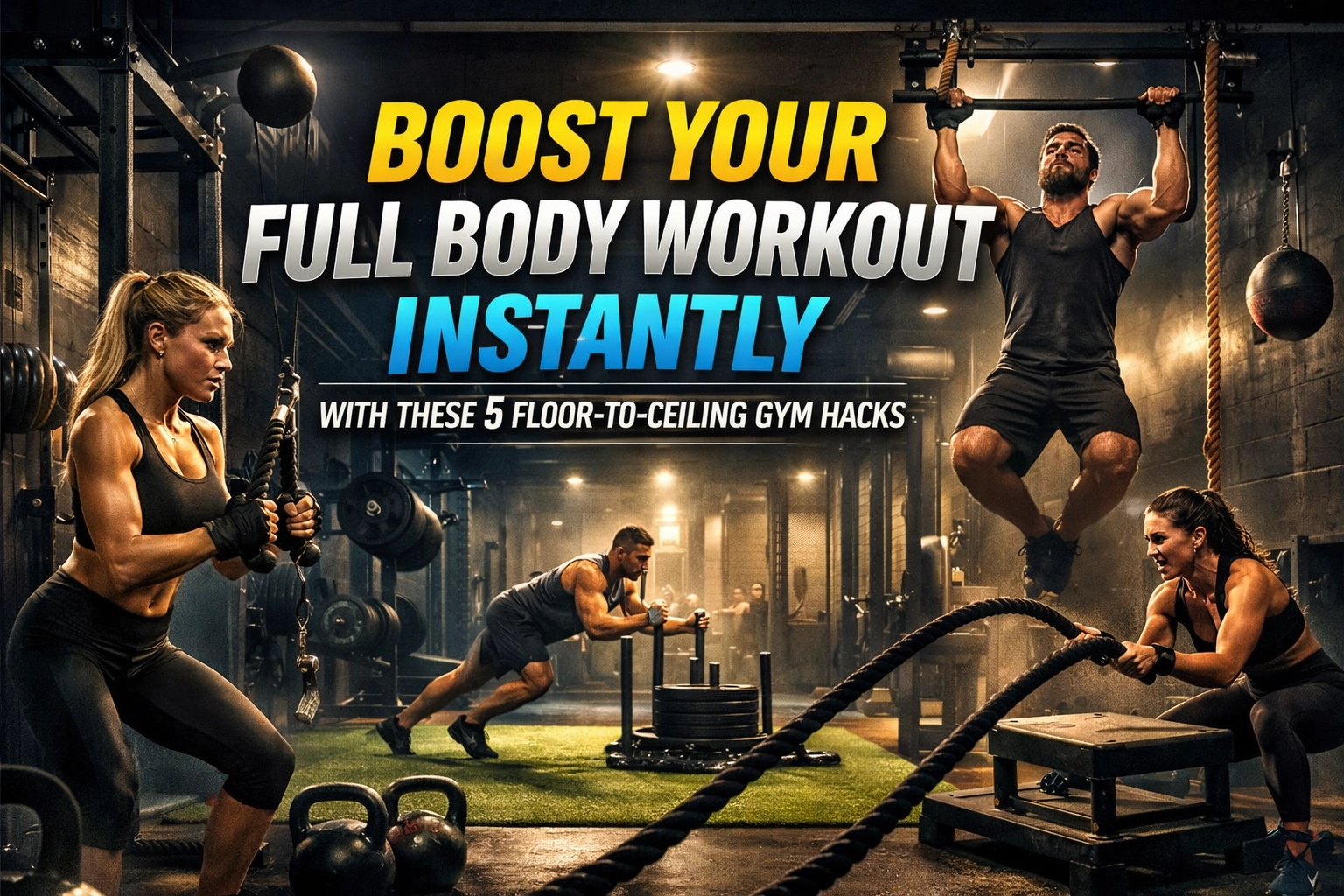
Let's cut straight to it: you're not here for fluff. You're here because you want results. Real, tangible, sweat-dripping-off-your-face results from your full body workout at home. Whether you're a calisthenics beast, a CrossFit addict, a ninja warrior in training, or an MMA fighter looking for that competitive edge, you already know the power of vertical training space.
A floor to ceiling gym setup isn't just about saving floor space (though that's a massive bonus). It's about unlocking training possibilities that flat-ground workouts simply can't deliver. We're talking about gravity-defying movements, brutal core engagement, and the kind of muscle recruitment that transforms good athletes into absolute units.
At Bold Body Fitness, we've spent years helping serious athletes build versatile home gyms that don't compromise on intensity. And today, we're breaking down five game-changing hacks that will instantly amplify your vertical training: no wall damage required.
Ready to level up? Let's go.
Hack #1: Master Multiple Grip Positions for Maximum Muscle Recruitment
Here's a truth bomb most home gym users miss: your grip dictates your gains. The same pull-up bar can hit completely different muscle groups depending on how you grab it. And if you're only using one grip position, you're leaving serious results on the table.
Switch it up like this:
- Wide grip: Crushes your upper lats and rear delts. This is your go-to for building that V-taper that commands respect.
- Neutral grip (palms facing each other): Joint-friendly and perfect for targeting the brachialis and lower lats. If you've got shoulder issues, this is your new best friend.
- Close grip: Hammers your biceps and lower back while still engaging your core. Brutal in the best way.
The key is rotation. Don't just pick one and stick with it: cycle through all three within your workout to maximize muscle engagement and prevent overuse injuries.

This is where quality calisthenics equipment for home matters. Cheap doorway bars with limited grip options won't cut it. You need equipment designed for serious athletes who demand versatility. The Resistance Rail Standard delivers multiple grip configurations without requiring any wall drilling: making it the ultimate pull up bar alternative for renters and homeowners who want to protect their space.
Hack #2: Integrate Floor-to-Ceiling Medicine Ball Passes
Want to torch calories while building functional strength? The medicine ball floor-to-ceiling pass is an absolute weapon in your arsenal.
Here's the movement:
- Start in a wide athletic stance with a medicine ball on the floor between your feet
- Squat down and grab the ball with both hands
- Explosively drive up through your legs while pressing the ball overhead
- Control the descent back into the squat position
- Tap the ball to the floor and repeat
This exercise doesn't play favorites: it demolishes your quads, glutes, shoulders, and core in one fluid motion. It's the kind of bodyweight training at home (with added resistance) that translates directly to athletic performance.
For CrossFit athletes, this movement mimics the wall ball but can be performed anywhere. For MMA fighters, it builds the explosive hip drive essential for takedowns and clinch work. For gymnasts and ninja warriors, it develops the overhead stability crucial for apparatus work.
Pro tip: Pair this with hanging movements for a superset that'll have your heart rate through the roof while building serious strength.
Hack #3: Stack Exercises to Double Your Training Efficiency
Time is money. And if you're spending hours in your home gym doing isolation exercises, you're wasting both.
Exercise stacking is the art of combining two movements into one brutal package. It's how elite athletes train more efficiently: and how you can get twice the results in half the time.

The L-Sit Pull-Up:
This is the crown jewel of stacked exercises. You're holding an L-sit (legs extended at 90 degrees) while performing pull-ups. Your core is screaming. Your lats are on fire. Your hip flexors are begging for mercy. And your grip strength is getting forged in the flames.
This single movement trains:
- Back and lat strength
- Core stability and strength
- Hip flexor endurance
- Grip strength
- Mental toughness (because this is hard)
The Front Lever:
Keep your body perfectly parallel to the ground while hanging from a bar. This builds insane tension across your entire posterior chain: lats, lower back, glutes, and shoulder stabilizers all working overtime.
These stacked exercises are the secret weapon of gymnasts and calisthenics athletes worldwide. And with proper home gym equipment like a floor-to-ceiling setup, you can practice them daily without booking gym time.
Check out the Bold Body Fitness gallery to see how other athletes are setting up their spaces for these advanced movements.
Hack #4: Use Smart Progression to Unlock Advanced Movements
Here's where ego gets people hurt: and where smart athletes separate themselves from the pack.
You don't jump straight into a full front lever on day one. You don't attempt muscle-ups without building the foundation first. Resistance training is about progressive overload, and that applies to bodyweight movements just as much as barbell work.
The Progression Framework:
For Front Levers:
- Start with a tucked front lever (knees to chest)
- Progress to single-leg extended
- Move to straddle front lever
- Finally, full front lever
For Muscle-Ups:
- Master strict pull-ups (10+ reps with control)
- Practice explosive pull-ups (chest to bar)
- Work negative muscle-ups
- Attempt full muscle-up

Using a resistance band can bridge the gap between progressions. Loop it around your floor to ceiling gym setup and use it for assisted reps while building the raw strength needed for unassisted movements.
The Resistance Rail Deluxe is specifically engineered for this kind of training: giving you the stable anchor points needed for band-assisted progressions without compromising your walls. It's a true no wall damage workout system that doesn't sacrifice functionality.
Hack #5: Dominate Core Training with Hanging Movements
If you're still doing crunches on the floor, it's time to grow up.
Hanging core exercises are exponentially more effective than ground-based movements. Why? Because gravity becomes your worst enemy (and best training partner). There's no way to cheat a hanging leg raise. Either you're strong enough, or you're not.
The Toes-to-Bar:
This movement is the gold standard for hanging core work. From a dead hang, bring your toes all the way up to touch the bar, then lower with control.
What it targets:
- Rectus abdominis (your six-pack muscles)
- Hip flexors
- Lower back stabilizers
- Grip strength and forearm endurance
- Shoulder stability
Can't do toes-to-bar yet? Start with knee raises, progress to straight leg raises, then work up to the full movement. Every elite CrossFit athlete, gymnast, and ninja warrior has mastered this progression.
For those building a crossfit home gym, this single exercise justifies the investment in a quality vertical training system. It's that effective.
Building Your Ultimate Floor-to-Ceiling Setup
These five hacks only work if you have the right foundation. A wobbly doorway bar or a flimsy wall-mounted pull-up station won't cut it for serious training. You need equipment that can handle explosive movements, support progressive training, and ideally: leave your walls intact.
That's exactly why we created the Resistance Rail system at Bold Body Fitness. It's the versatile home gym solution designed for athletes who refuse to compromise. Ninja warriors use it for grip training. Calisthenics practitioners use it for lever work. CrossFit athletes use it for pull-up variations. MMA fighters use it for resistance band work.

No drilling. No wall damage. No excuses.
Head over to our shop to explore the full lineup and find the setup that matches your training intensity.
Your Next Move
You've got the knowledge. You've got the hacks. Now it's time to execute.
Pick one of these techniques and add it to your next training session. Then add another. Stack the habits. Build the strength. Become the athlete you're capable of being.
The floor-to-ceiling approach isn't just a space-saving solution: it's a training philosophy that prioritizes functionality, intensity, and results. And with the right home gym equipment, there's nothing stopping you from achieving beast mode right in your living room.
Now stop reading and start training.
