
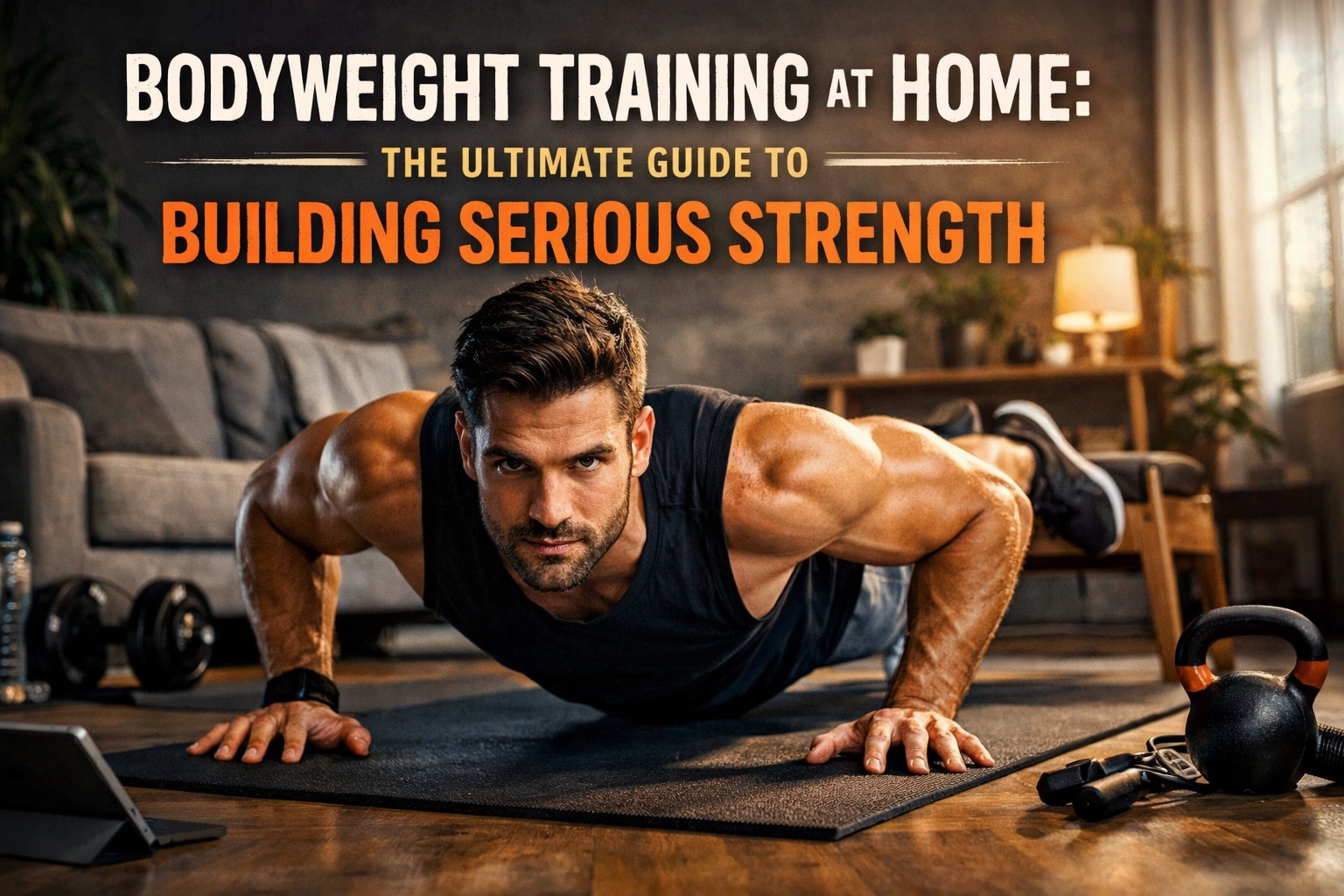
Forget the myth that you need a commercial gym packed with machines to build serious strength. Your body is the ultimate training tool: and if you know how to use it, you can forge functional muscle, explosive power, and rock-solid conditioning without ever leaving your living room.
Bodyweight training at home isn't just for beginners doing basic push-ups. Elite athletes across disciplines: from MMA fighters drilling movement patterns to gymnasts building iron-strong cores: rely on bodyweight mastery as the foundation of their training. When programmed correctly with progressive overload and strategic intensity, bodyweight exercises build the kind of strength that actually translates to real-world performance.
Let's cut through the noise and break down exactly how to build a bulletproof bodyweight training program that delivers results.
The Foundation: Essential Bodyweight Movements
Every solid bodyweight program is built on compound movements that hit multiple muscle groups simultaneously. These aren't isolation exercises: they're functional patterns that build strength you can actually use.
Lower Body: Anterior Chain
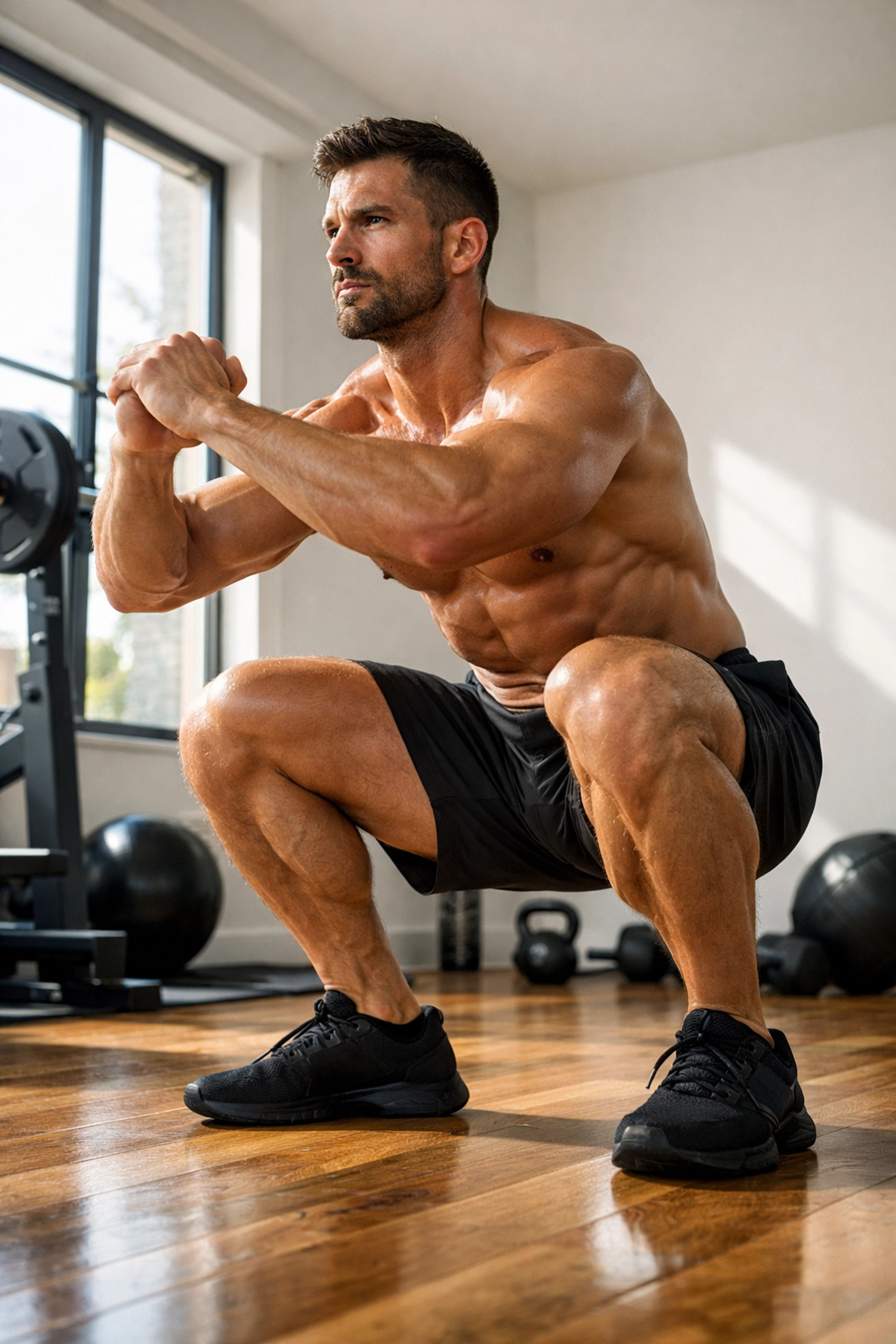
Squats and lunges are the bread and butter of lower body development. Stand with feet hip-width apart, toes slightly out, and lower until your quads hit parallel. Drive through your heels and squeeze your glutes at the top. This simple movement pattern hammers your quadriceps, glutes, hamstrings, and core while improving hip mobility and ankle stability.
Forward lunges add a stability challenge. Step forward, drop the back knee toward the floor until your front quad is parallel, then explode back to standing. The unilateral nature forces each leg to carry the load independently: crucial for athletic performance and injury prevention.
Upper Body: Push Patterns
Push-ups are the king of upper body bodyweight exercises, and for good reason. From a high plank with hands just outside shoulder-width, lower your chest to the floor with elbows at roughly 45 degrees, then press back up. You're building chest, shoulders, triceps, and core stability all in one movement.
Dips take pushing strength to the next level. Using parallel bars or a stable elevated surface, lower your body by bending at the elbows until you can't descend further, then drive back up. The increased range of motion and vertical pressing angle hit your triceps and lower chest hard.
Lower Body: Posterior Chain
Your posterior chain: glutes, hamstrings, lower back: is the engine of athletic power. Glute bridges isolate this system beautifully. Lie on your back with knees bent, feet flat, and drive through your heels to lift your hips toward the ceiling. Squeeze hard at the top for a second before lowering.
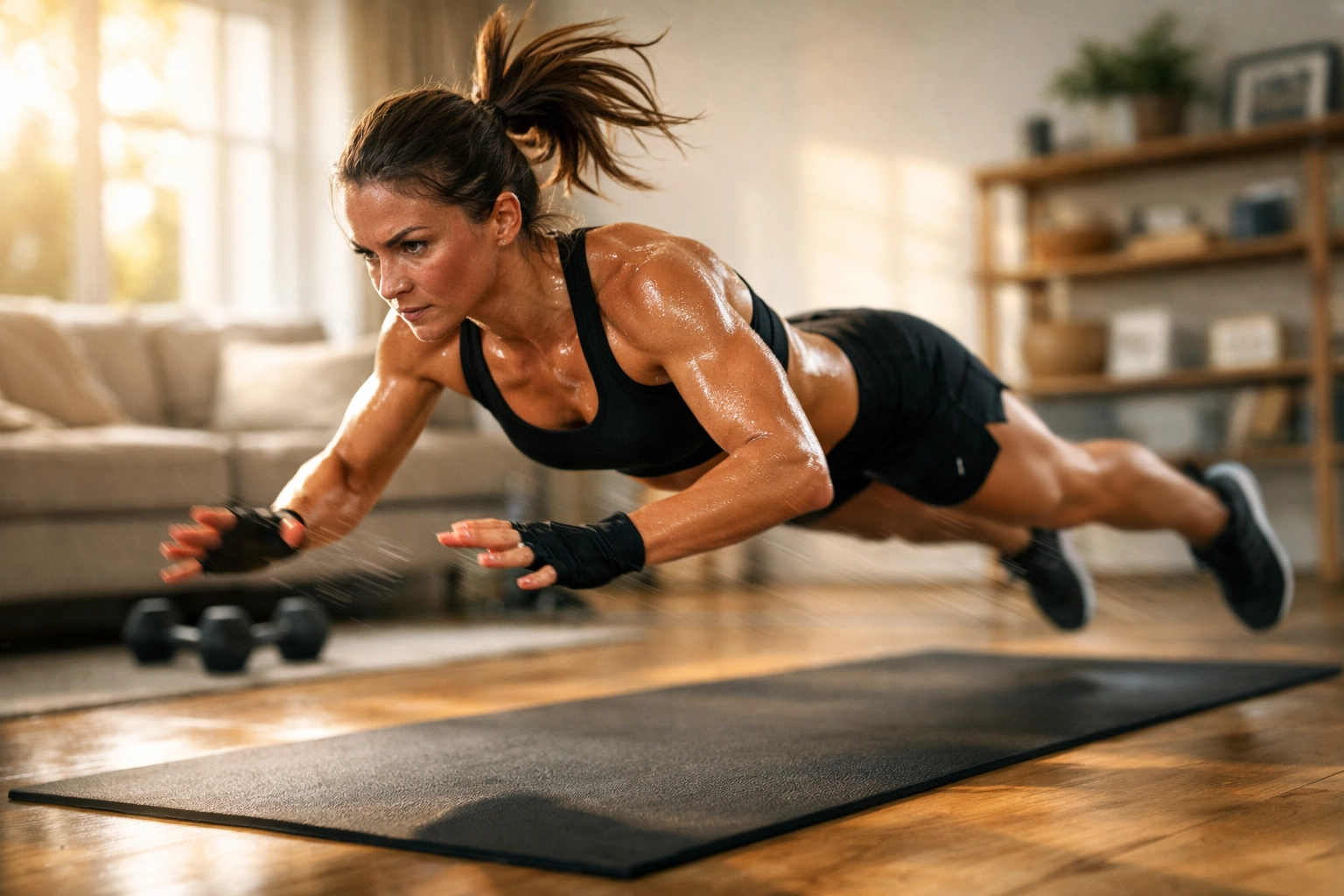
Superman holds build lower back endurance and full posterior chain activation. Face-down with limbs extended, squeeze everything along the back of your body to lift your arms and legs off the floor simultaneously. Hold for time.
Pull Patterns and Core
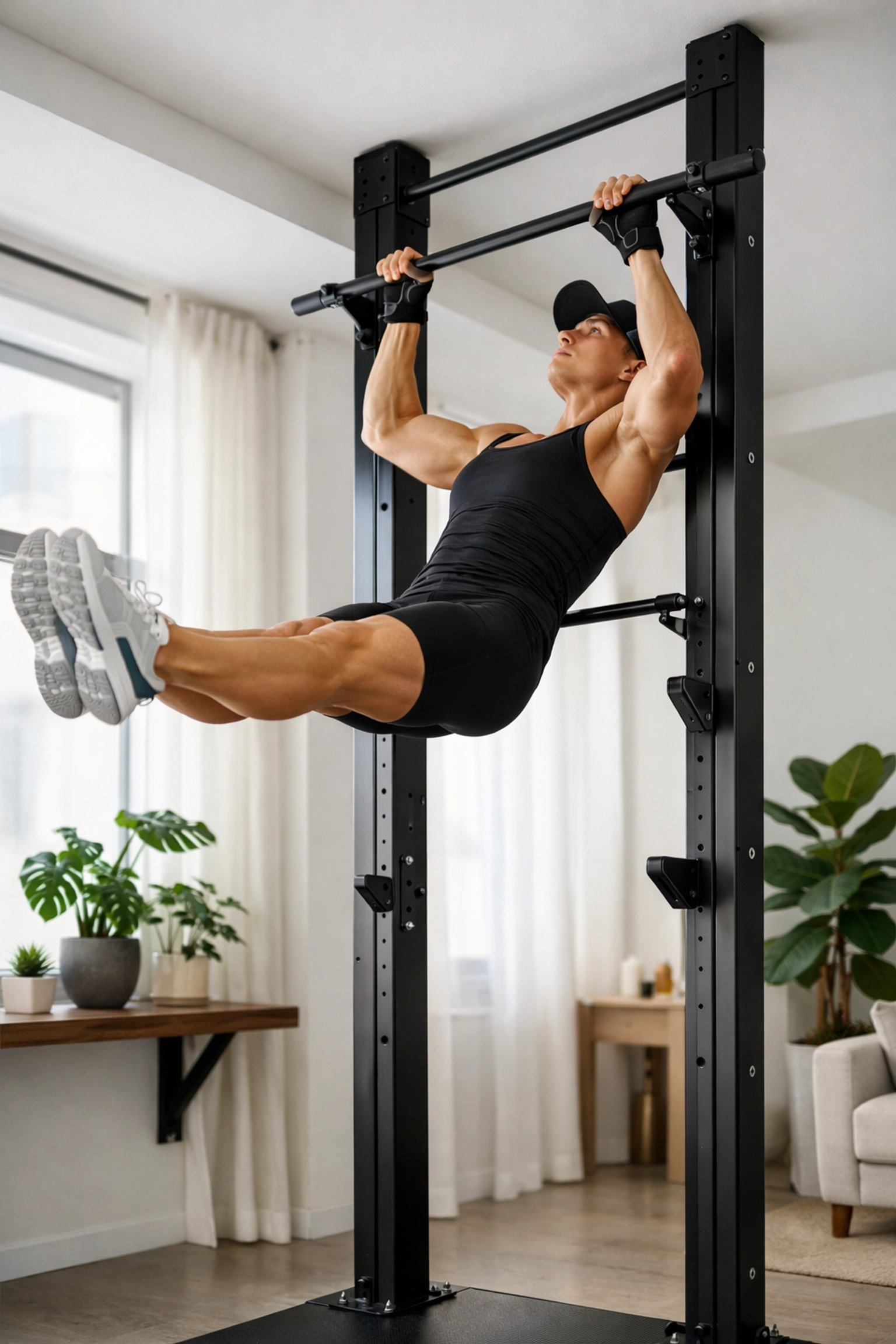
Here's where most home bodyweight programs hit a wall: pull movements are harder to replicate without equipment. Standard bodyweight exercises like forearm planks and mountain climbers build core strength, but true pulling strength: the kind that balances out all that pressing: requires something to pull against.
This is exactly why serious home athletes invest in versatile equipment like the Resistance Rail from Bold Body Fitness. A floor-to-ceiling system gives you legitimate pull-up and rowing variations without drilling holes in your walls or ceiling. For renters and home gym enthusiasts, it's a game-changer that unlocks the full spectrum of bodyweight training.
Building Your Bodyweight Training Program
Random exercises don't build serious strength. You need structured programming that hits all major movement patterns while allowing for strategic recovery.
The Beginner Foundation (20-Minute Circuit)
If you're new to bodyweight training at home, start with a simple circuit performed 3 times through with minimal rest:
- 20 Bodyweight squats
- 10 Push-ups (modify to knees if needed)
- 10 Walking lunges per leg
- 15-second forearm plank
- 30 Jumping jacks
This hits every major muscle group while building work capacity. As you get stronger, increase reps or decrease rest periods between circuits.
Intermediate/Advanced Approach
Once you've built a foundation, move to a Monday-Wednesday-Friday split with two alternating full-body workouts. Each session should include six functional categories:
- Lower Body Anterior (squats, split squats)
- Upper Body Push (push-ups, dips)
- Lower Body Posterior (bridges, single-leg deadlifts)
- Upper Body Pull (rows, pull-ups)
- Core Circuit (planks, mountain climbers, dead bugs)
- Mobility/Corrective Work (hip flexor stretches, shoulder mobility)
Aim for approximately one minute per exercise with minimal rest between movements. The circuit format keeps your heart rate elevated while allowing individual muscle groups to recover as you rotate through patterns.

Progressive Overload: The Key to Continuous Gains
Here's the truth: if you're doing the same 20 push-ups every workout for six months, you're not building strength anymore: you're just maintaining what you've already built. Progressive overload is non-negotiable if you want to keep getting stronger.
Leverage and Angle Variations
Change the leverage to increase difficulty. Wall push-ups become knee push-ups, which become standard push-ups, which become decline push-ups with your feet elevated. Each variation increases the load your muscles must handle.
For squats, progress from standard bodyweight squats to Bulgarian split squats (rear foot elevated) to pistol squats (single-leg). Each progression demands more strength and stability.
Time Under Tension
Slow down the movement or add isometric holds. Try a 5-second descent on your push-ups, or hold the bottom position of a squat for 10 seconds before driving up. The increased time under tension forces your muscles to work harder without adding external weight.
Range of Motion Challenges
Increase the range of motion to make exercises more demanding. Perform push-ups on parallettes or with your hands on books to allow your chest to drop below your hands. Use a deficit for Bulgarian split squats by elevating your front foot on a step.
Unilateral Training
Single-leg squats, single-arm push-ups, and one-leg bridges dramatically increase the difficulty while exposing and correcting strength imbalances between sides.
Why Equipment Still Matters for Serious Bodyweight Athletes
Pure bodyweight training is incredibly effective, but there's a ceiling: especially for pulling movements. Without a way to perform pull-ups, rows, or vertical pulling exercises, you're leaving significant strength gains on the table and creating muscular imbalances that can lead to injury.
This is where strategic equipment investment makes sense. A system like Bold Body Fitness's Resistance Rail bridges the gap between pure bodyweight training and a full home gym setup. The floor-to-ceiling design requires zero drilling or wall damage, making it perfect for renters and those who want a clean, minimalist home gym.
You can perform legitimate pull-ups, inverted rows, hanging core work, and even attach resistance bands for accommodating resistance training. It's the missing piece that transforms your bodyweight program from good to complete.
Training Principles That Separate Average from Elite
Compound Over Isolation
Every exercise in your program should work multiple muscle groups. Single-joint isolation movements have their place, but compound patterns build functional strength and burn more calories.
Strategic Rest Periods
Circuit-style training with alternating upper and lower body movements allows muscles to recover without stopping the workout. You maintain training density and cardiovascular stimulus while giving individual muscle groups adequate rest.
Movement Quality Over Volume
Ten perfect push-ups with full range of motion and control build more strength than 30 sloppy half-reps. Focus on movement quality first, then add volume as you maintain form.
Consistency Beats Intensity
Three solid 30-minute sessions per week will build more strength than one brutal 90-minute session followed by a week of soreness-induced inactivity. Show up consistently, apply progressive overload gradually, and the results compound over time.
Your Next Step
Bodyweight training at home is one of the most accessible, effective ways to build serious functional strength: but only if you approach it with structure and progressive intent. Start with the fundamental movement patterns, program your training intelligently, and apply progressive overload systematically.
Ready to take your home training to the next level? Check out the full range of versatile home gym solutions at Bold Body Fitness. Whether you're a CrossFit athlete, MMA fighter, or calisthenics enthusiast, we've built equipment designed for serious athletes who train at home.
And if you're ready to unlock the complete bodyweight training experience with legitimate pull-up and rowing capabilities, explore the Resistance Rail systems in our shop. Your body is the ultimate training tool( give it the support system it deserves.)
