
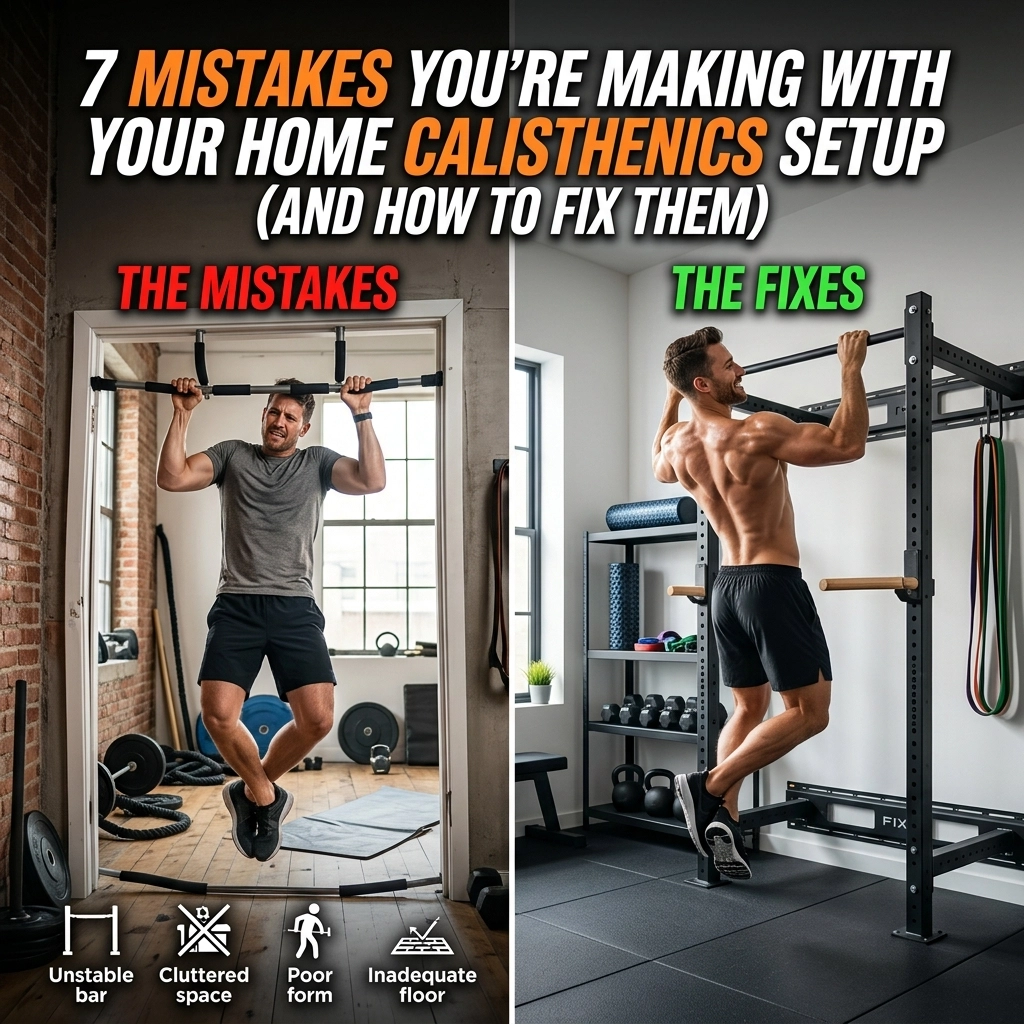
Listen up. If you’re trying to master the planche, hit a clean muscle-up, or dominate a high-intensity CrossFit circuit in your living room, you already know that the stakes are higher at home. Calisthenics isn’t just "exercise": it’s a discipline that demands precision, strength, and a hell of a lot of respect for physics. But here’s the cold, hard truth: your environment is either your biggest ally or your worst enemy.
Most people starting their journey with bodyweight training at home make the same fundamental errors. They treat their home gym like a closet where they store a few dusty dumbbells. If you’re a serious athlete: a ninja warrior, a gymnast, or an MMA fighter: you can’t afford a mediocre setup. A weak setup leads to weak gains, or worse, injury.
At Bold Body Fitness, we don’t do "mediocre." We build gear for people who want to push boundaries. If you want a full body workout at home that actually delivers results, you need to stop making these seven common mistakes.
1. The Ceiling Height Trap (Ignoring Vertical Clearance)
The biggest mistake people make when buying calisthenics equipment for home is only measuring their floor space. They find a nice 4x4 corner and think they’re set. Then, the first time they go for an explosive pull-up or attempt to transition into a muscle-up, they headbutt the drywall.
For serious calisthenics and crossfit home gym enthusiasts, vertical space is just as important as square footage. If your pull-up bar is shoved right against the ceiling, you’ve effectively killed half of your possible movements. You can forget about muscle-ups, bar dips, or even high-volume chin-ups where your head needs to clear the bar comfortably.
The Fix:
Measure your reach. Stand on your tiptoes and reach as high as you can; that’s your "active zone." For a truly versatile home gym, you need at least 12 to 18 inches of clearance above the bar. If you’re into handstand push-ups, you need to measure your height plus the length of your arms.
If you’re working with standard 8-foot ceilings, look for a floor to ceiling gym system that allows for adjustable heights. This gives you the flexibility to move the bar down for rows and levers or up for maximum clearance during pull movements.

2. Settling for Flimsy "No-Drill" Doorway Bars
We’ve all seen them. The $20 tension bars that claim to hold 300 pounds. If you are serious about your training, throw those in the trash. Doorway bars are the ultimate "amateur hour" move. They limit your range of motion because you’re confined to a narrow frame, they ruin your door molding, and: most importantly: they are inherently unstable.
When you’re performing dynamic movements, levers, or explosive pull-ups, you are putting lateral force on the bar. A doorway bar is only designed for vertical downward force. One slip, and you’re on the floor with a broken tailbone and a damaged door frame.
The Fix:
You need a professional-grade pull up bar alternative. Look for a no wall damage workout system that uses structural tension between the floor and the ceiling rather than squeezing a thin piece of wood. The Resistance Rail system is designed to provide the stability of a bolted-down power rack without actually drilling into your joists. It gives you the wide-open space you need to move laterally, perform wide-grip pull-ups, and hang rings for a true gymnastic experience.
3. Treating Your Floor Like an Afterthought
You wouldn't practice MMA on concrete, so why are you doing high-impact calisthenics on thin carpet or hardwood? Using inadequate flooring is a fast track to tendonitis, shin splints, and joint pain. When you’re working on "sprawls," burpees, or landing from a pull-up bar, your joints take a beating.
Furthermore, "cheap" yoga mats don't cut it for calisthenics. They slide, they bunch up, and they offer zero protection for the floor underneath when you start adding home gym equipment like weighted vests or kettlebells.
The Fix:
Invest in high-density rubber flooring. We’re talking 1/2 inch to 3/4 inch thick. Look for interlocking high-impact tiles or horse stall mats. This doesn't just protect your joints; it protects your home. A solid foundation changes the psychology of your workout. When the ground feels stable and grippy, you’ll find yourself pushing harder on those handstands and explosive movements.
4. Failing to Integrate Resistance Training
Pure calisthenics is incredible, but if you want to reach elite levels of strength, you eventually need to add external load. One of the biggest mistakes home athletes make is thinking it’s "cheating" to use weights or bands.
If you’ve hit a plateau with your bodyweight pull-ups, the fastest way to break through is to add resistance. Conversely, if you’re struggling to hit your first muscle-up, using bands for assistance is the smartest way to build the necessary neural pathways.
The Fix:
Incorporate resistance training into your bodyweight routine. This is where the Resistance Rail truly shines. By integrating heavy-duty resistance bands into your floor-to-ceiling setup, you can add load to your push-ups, assist your pull-ups, or create a cable-machine feel for face pulls and rotations. It turns a simple bar into a versatile home gym capable of hundreds of movements. Check out our gallery to see how elite athletes are mixing bodyweight and resistance for maximum impact.

5. Cluttering the Space with Single-Use Machines
If your "home gym" is 50% occupied by a treadmill you haven't used since 2023, you’re killing your gains. Calisthenics and CrossFit require space. You need room to swing, room to kick, and room to flow.
Filling your workout area with bulky, single-purpose machines: like stationary bikes or leg press machines: is a waste of precious real estate. These machines dictate your movement, whereas calisthenics allows you to dictate the movement.
The Fix:
Focus on modular, multi-use home gym equipment. A single, solid pull-up station, a set of rings, and a quality resistance system can replace an entire room full of machines. Keep your floor space open. If you can't do a full burpee or a cartwheel in your gym without hitting a piece of equipment, it’s time to declutter. Your gym should be an arena, not a storage unit.
6. Ignoring the "Warrior Mode" Environment
If your gym is in a dark, damp basement or a cluttered garage, your brain is going to fight you every time you try to train. Psychology is a huge part of high-level performance. If the lighting is dim and the air is stale, your energy levels will naturally dip.
Calisthenics practitioners often overlook the "vibe" of their space, thinking they can just "tough it out." While that works for a week or two, it’s not a sustainable way to build a lifestyle.
The Fix:
Upgrade your environment. Install high-output LED shop lights to mimic daylight. Add a full-length mirror: not for vanity, but for form checks. Seeing your alignment during a lever or a squat is crucial for injury prevention. Finally, clear the clutter. A clean space leads to a clear mind. When you step into your "action zone," your brain should immediately switch into "warrior mode."

7. Relying on Unstable Towers
Power towers are a common choice for bodyweight training at home, but most consumer-grade towers have a fatal flaw: they wobble. When you’re at the top of a dip or swinging into a leg raise, that slight sway is more than just annoying: it’s a performance killer.
Your nervous system is smart. If it senses that the structure you’re holding onto is unstable, it will "throttle" your power output to keep you safe. You literally cannot give 100% effort on a wobbly piece of equipment.
The Fix:
Stability is king. You need gear that feels like it’s part of the building. This is why we advocate for the floor to ceiling gym design. By using the structural integrity of your floor and ceiling, you create a rock-solid anchor point that doesn't budge, no matter how explosive your movements are. Whether you’re an MMA fighter working on explosive pull-ins or a gymnast practicing static holds, the equipment must be an extension of the ground.
Why Bold Body Fitness is the Solution
You’re not just looking for a place to do a few reps. You’re looking to build an elite-level physique and develop functional strength that carries over into the real world. To do that, you need a setup that respects your ambition.
The Resistance Rail by Bold Body Fitness was born out of the frustration of seeing serious athletes limited by subpar equipment. We wanted to create a no wall damage workout system that offered the stability of a professional CrossFit box with the versatility of a full-scale gym, all within a minimal footprint.
Our system provides:
- Zero Wall Damage: Perfect for renters or those who don't want to drill into their walls.
- Infinite Adjustability: Move your anchor points in seconds to switch from heavy resistance rows to high-clearance pull-ups.
- Rock-Solid Stability: The vertical tension design eliminates the "wobble" found in cheap towers.
- Small Footprint: Maximize your floor space for full body workouts at home without the clutter.

Stop Making Excuses
Your training is only as good as your weakest link. If your gear is flimsy, your space is cramped, or your flooring is non-existent, you are holding yourself back. It’s time to stop "making do" with amateur equipment and start building the professional-grade home gym you deserve.
Check out our full range of gear at the Bold Body Fitness Shop and take the first step toward a setup that actually fuels your progress rather than hindering it.
Don't settle for a mediocre workout. Be bold. Build a gym that matches your hustle. Whether you're a weekend warrior or a professional athlete, your home setup should be your sanctuary of strength. Fix these seven mistakes today, and watch your performance reach heights you didn't think were possible in a home environment.
