
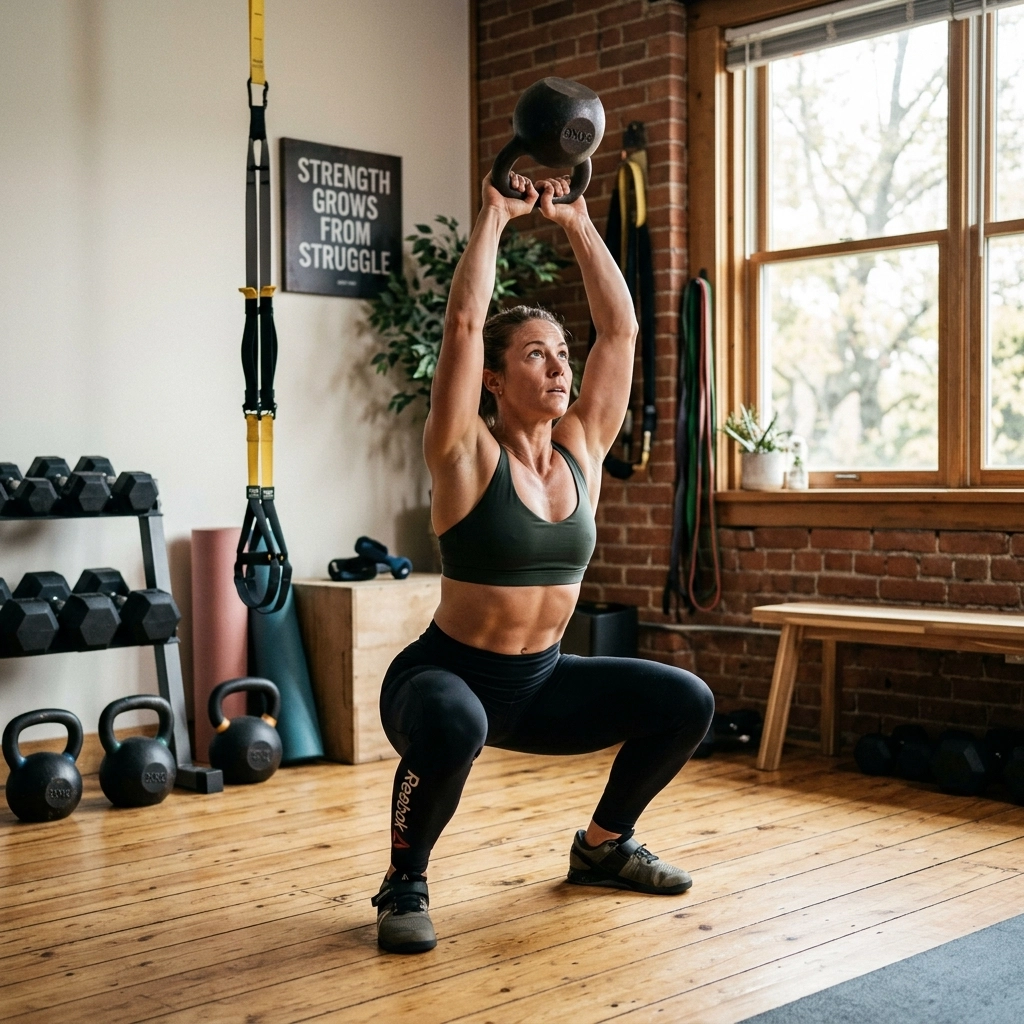
Let’s be real for a second. You’ve been grinding away in your living room or garage for months. You’ve got the sweat, the soreness, and the "no excuses" mentality. But when you look in the mirror or test your max output, the needle hasn’t moved. You’re hitting a wall, and it’s not because you lack discipline. It’s because your full body workout at home is fundamentally flawed.
At Bold Body Fitness, we see it all the time. Serious athletes, Ninja Warriors, CrossFitters, and MMA fighters, trying to port their high-intensity training to a home environment, only to find that their home gym equipment (or lack thereof) is holding them back.
Building real, raw strength requires more than just "getting a pump." It requires mechanical tension, neurological adaptation, and the right tools to force your body to change. If you’re tired of mediocre results, here are the 10 brutal reasons why your home workout is failing you and exactly how to fix it.
1. You’ve Ignored the Law of Progressive Overload
The most common mistake in bodyweight training at home is stagnation. Your body is a survival machine; it adapts to the stress you put on it. Once it adapts, it stops growing. If you’ve been doing the same three sets of fifteen pushups for the last six months, you aren’t building strength, you’re just practicing being good at fifteen pushups.
To build real power, you must systematically increase the demand on your muscles. In a traditional gym, you just grab a heavier plate. At home, you have to get creative. You need to manipulate leverage, decrease rest intervals, or increase the range of motion. If you aren't tracking your metrics and forcing a "more" every week, more weight, more reps, or a harder variation, you are spinning your wheels.
2. Your Equipment is Limiting Your Physics
Let’s talk about your home gym equipment. Most people start with a pair of light dumbbells and a yoga mat. That’s fine for a vacation workout, but it’s a joke for a serious athlete. To trigger hypertrophy and strength gains, you need a versatile home gym setup that allows for heavy resistance across all planes of motion.
The problem with most "all-in-one" systems is that they are either too flimsy for a 200lb athlete or they require you to drill massive holes in your studs. For people who need a no wall damage workout system, the options used to be limited to basic door-frame pull-up bars that eventually snap or ruin the trim. This lack of robust equipment means you can’t perform high-tension movements safely, leading to "safe" but ineffective workouts.

3. The "Pulling" Problem: Your Back is Shrinking
If your home workout consists mostly of pushups, dips, and squats, you are creating a massive structural imbalance. Most home setups are "push-heavy" because pushing against the floor is easy. Pulling, however, requires an anchor point.
Serious calisthenics practitioners and gymnasts know that back strength is the foundation of all upper-body power. Without a proper pull up bar alternative or a heavy-duty rowing station, your posterior chain (lats, traps, rhomboids, and rear delts) stays soft. This doesn't just look bad; it wrecks your posture and sets you up for shoulder injuries. You need a way to perform vertical and horizontal pulls with significant resistance. This is where a floor to ceiling gym system changes the game, allowing you to anchor resistance at any height.
4. You’re Training for Fatigue, Not Force
There is a massive difference between being "tired" and being "strong." Many home enthusiasts fall into the "HIIT trap": doing 100 burpees and mountain climbers until they are gasping for air. While great for cardiovascular health, this is the enemy of raw strength.
Strength training is about the Central Nervous System (CNS). It requires high-intensity efforts (high tension) with enough rest for the nervous system to recover between sets. If you are constantly out of breath, your heart rate is the limiting factor, not your muscle fibers. To fix this, you need to slow down. Focus on the quality of the rep. Use the Resistance Rail Standard to crank up the tension to a level where you can only perform 5-8 reps, and then rest long enough to do it again with perfect form.
5. You’ve Lost the Mind-Muscle Connection
When you’re in a crowded gym, there’s an unspoken pressure to perform. At home, you’re three feet away from your couch and a refrigerator. It is incredibly easy to "go through the motions."
Building strength requires internal focus. You need to actively recruit as many motor units as possible during every contraction. This is why calisthenics equipment for home needs to be high-quality. If your equipment feels shaky or cheap, your brain will naturally "throttle" your power output to prevent injury. You won't push to 100% because you don't trust the bar or the band. When you upgrade to a professional-grade system like the Resistance Rail, that psychological barrier disappears, and you can finally go all-out.

6. Zero Stability Training
A common issue for CrossFit home gym setups is a lack of stability work. If you're only using machines or guided movements, you aren't engaging the small stabilizer muscles that protect your joints and translate to real-world power (like in MMA or wrestling).
True strength is "integrated strength." This means your core, hips, and shoulders are all working in unison. If your home workout doesn't include offset loading or unstable resistance, you’re building "fake strength" that won’t help you on the mat or the obstacle course. You need equipment that allows for multi-planar movement: rotational, diagonal, and lateral.
7. You’re Avoiding Your Weaknesses
In a public gym, you might feel obligated to do the hard stuff: deadlifts, heavy rows, and overhead presses. At home, people tend to gravitate toward what they are already good at. If you love pushups, you’ll do pushups. If you hate lunges, you’ll skip them.
This creates "leaks" in your kinetic chain. A chain is only as strong as its weakest link. For many, that link is the legs or the grip. To fix this, your full body workout at home must be programmed with the same rigor as a professional athlete’s. You need a system that makes the "hard stuff" accessible and scalable.
8. Poor Range of Motion (ROM)
Home workouts often suffer from "cheated reps." Without a coach or a mirror, your squats get shallower and your pull-ups turn into chin-jerks. Limited ROM leads to limited muscle fiber recruitment.
If you aren't reaching the "end range" of a muscle's length, you are leaving gains on the table. This is particularly true with resistance training. Many people use cheap bands that only provide tension at the very top of the movement. You need a system that provides consistent, high-quality tension throughout the entire range of motion. The Resistance Rail allows you to adjust the anchor points instantly, ensuring you are under load from the bottom of the rep to the top.

9. You’re Not Eating Like an Athlete
You can have the best versatile home gym in the world, but if you aren't fueling the machine, the machine won't grow. Building strength is an anabolic process. It requires a caloric surplus and, more importantly, adequate protein.
Many people treat home workouts as a way to "burn off" dinner. If your goal is strength, you need to flip that mindset. You are training to build, not to shrink. If you're a serious athlete putting in the work on the Resistance Rail, you need to be hitting at least 0.8g to 1g of protein per pound of body weight. Without the fuel, your body will simply break down your existing muscle to survive the stress of the workout.
10. Lack of Versatility in Resistance
The final reason you’re stuck is the "plateau of the familiar." Your muscles have a memory. If you always use the same resistance profile, they stop responding.
In a professional setting, athletes use chains, bands, and varied angles to "confuse" the neuromuscular system (not "muscle confusion" in the cheesy 90s way, but via varied stimulus). Most home setups are static. To fix this, you need a floor to ceiling gym that can change as fast as your training needs do. You should be able to switch from a high-tension heavy row to a high-velocity explosive rotation in seconds.
The Fix: Transforming Your Home Into a Powerhouse
Knowing the problems is only half the battle. The other half is taking action. If you’re serious about building a CrossFit home gym or a calisthenics equipment for home sanctuary, you need to stop relying on gear that belongs in a physical therapy office and start using gear built for athletes.
Introducing the Resistance Rail
We designed the Resistance Rail to solve every single one of the 10 problems listed above. It is the ultimate versatile home gym solution for people who refuse to settle for "good enough."
Why it works:
- Infinite Adjustability: The sliding carriage allows you to change your anchor point in seconds. Go from overhead presses to low-anchor rows without missing a beat. This ensures you never skip the "hard" movements.
- Progressive Overload Made Easy: Our system is designed to handle heavy-duty resistance bands. You can stack tension to levels that challenge even the strongest MMA fighters and gymnasts.
- The Pull Up Bar Alternative: If you can’t (or don’t want to) bolt a chin-up bar into your wall, the Resistance Rail provides a superior way to train your back with vertical and horizontal pulling movements.
- No Wall Damage: This is a no wall damage workout system. It uses a floor-to-ceiling tension design that is rock-solid but leaves your home exactly how you found it. Perfect for apartments or high-end finished basements.
- Built for Athletes: This isn't a plastic toy. It’s a high-performance tool for people who value quality and results.

How to Restructure Your Home Training
If you want to see progress in the next 30 days, follow this blueprint:
- Prioritize the Big Three: Every workout should include a heavy push, a heavy pull, and a heavy leg movement. Use the Resistance Rail to ensure the tension is high enough that you struggle to finish 8 reps.
- Track Everything: Stop guessing. Write down your resistance levels and reps. If you did 10 reps last week, aim for 11 today or increase the band tension.
- Focus on Tempo: Instead of rushing through reps, use a 3-second eccentric (lowering) phase. This increases time under tension, which is the primary driver for strength and growth.
- Fix Your Posterior Chain: Spend twice as much time pulling as you do pushing. Use the rail to perform heavy face pulls, lat pulldowns, and rows. Your shoulders will thank you.
- Upgrade Your Gear: Stop trying to get elite results with budget equipment. Check out our shop for tools that actually match your ambition.
Why Serious Athletes Choose Bold Body Fitness
Whether you are a Ninja Warrior training for the next obstacle, a gymnast working on your iron cross, or an MMA fighter looking for explosive power, your home is where the real work happens. But you shouldn't have to compromise on the quality of your training just because you aren't at a commercial facility.
The floor to ceiling gym concept isn't just about saving space; it's about maximizing potential. It’s about having a versatile home gym that evolves with you. When you have the right tools, you remove the excuses. You stop "working out" and you start training.
Final Thoughts
Strength isn't given; it’s earned through calculated, high-intensity stress and proper recovery. If your full body workout at home has stalled, it’s a sign that your current stimulus is no longer enough.
Don't let your environment dictate your results. Whether you’re looking for a pull up bar alternative or a complete no wall damage workout system, Bold Body Fitness has the engineering to help you break through your plateaus.
Stop settling for "maintenance." It’s time to build real, functional strength that translates to the gym, the mat, and life.
Ready to upgrade?
Explore the Resistance Rail Standard and take control of your home training today. Your future self will thank you for the gains.
For more tips on optimizing your home gym, check out our blog sitemap or join the conversation in our community forum.
