
You’re tired of the excuses. You’re tired of driving twenty minutes to a crowded commercial gym just to wait for a rack. You want to train hard, you want to train now, and you want to do it in the comfort of your own home. But there’s a problem: your landlord is a hawk, or maybe you just don't want to turn your spare bedroom into a construction zone with holes drilled into every stud.
Enter the floor to ceiling gym.
This isn't just another piece of home gym equipment gathering dust in the corner. This is a revolution for the modern athlete. Whether you are a ninja warrior, a gymnast, a CrossFit fanatic, or an MMA fighter, the floor-to-ceiling system is the ultimate no wall damage workout system. It’s time to stop compromising on your gains because of your living situation.
In this guide, we’re breaking down everything you need to know to build a high-performance training sanctuary that stands tall without a single screw in your walls.
What is a Floor to Ceiling Gym?
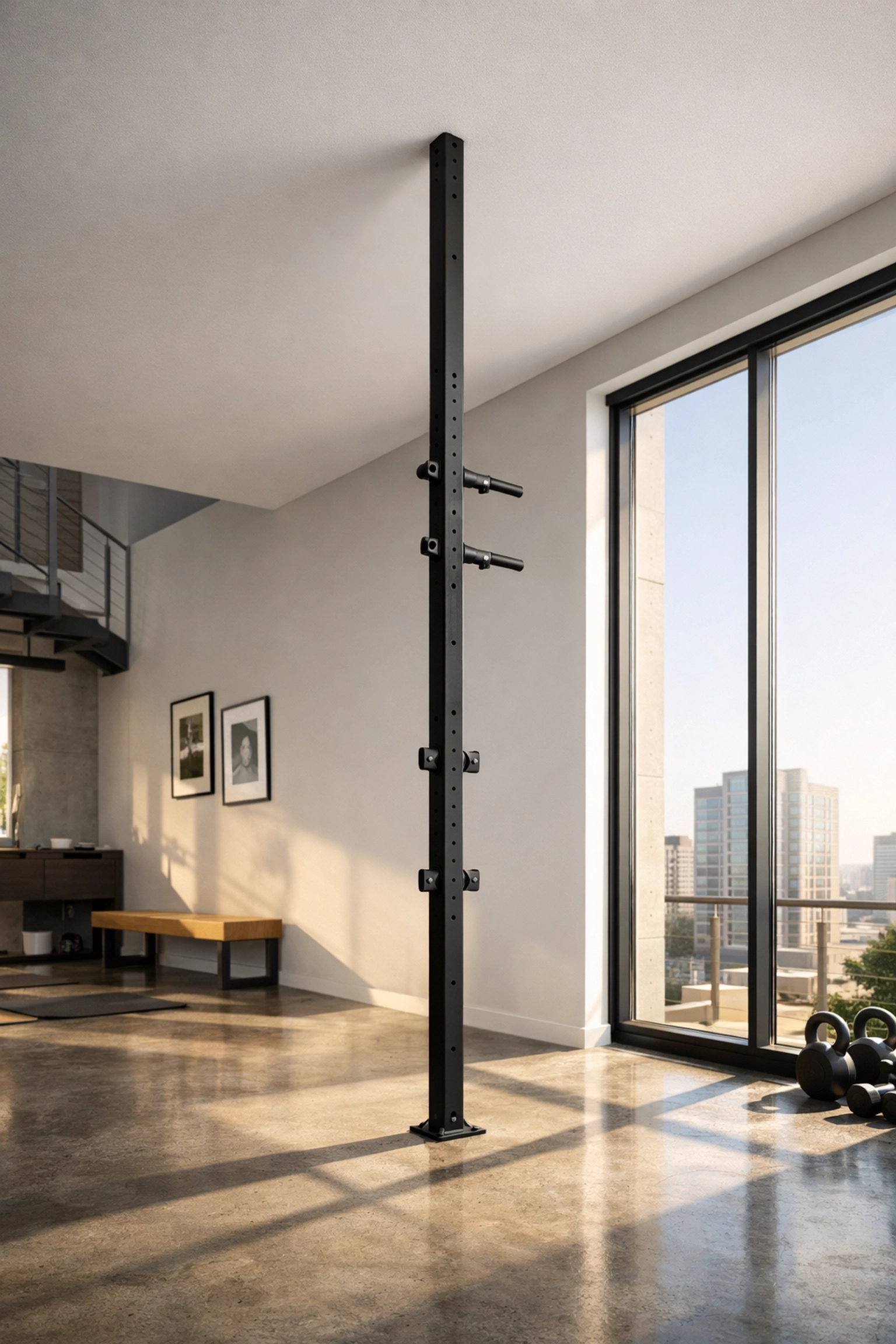
At its core, a floor-to-ceiling gym is a vertical training hub that utilizes a tension-mounting system. Think of it as a heavy-duty, high-performance pillar that locks between your floor and your ceiling. By creating immense vertical pressure, these systems provide a rock-solid anchor point for resistance training, pull-ups, and suspension work without the need for permanent bolts.
For the serious athlete, this is the premier pull up bar alternative. Standard doorway bars are a recipe for damaged trim and limited range of motion. A dedicated floor-to-ceiling system like the Resistance Rail gives you the height and stability you need for real bodyweight training at home.
Why High-Performance Athletes are Making the Switch
If you’re just looking to do three sets of curls, any old setup will do. But if you’re practicing calisthenics, training for a Spartan Race, or drilling explosive CrossFit movements, you need equipment that won’t wobble when the intensity ramps up.
1. Zero Wall Damage
The primary draw is the "no-trace" installation. This is the versatile home gym solution that follows you when you move. Renters can finally have a professional-grade setup without losing their security deposit.
2. Maximum Space Efficiency
Traditional power racks take up a massive footprint. A floor-to-ceiling rail uses vertical space, leaving your floor clear for movement, sprawls, and heavy lifting. It’s the smartest way to achieve a full body workout at home in a limited area.
3. Infinite Adjustability
Unlike fixed wall bars, systems like the Resistance Rail allow you to slide your anchor points to any height. Transition from high-bar pull-ups to low-anchor resistance training in seconds.
Measuring Your Battlefield: Space Planning
Before you order your gear from the Bold Body Fitness shop, you need to know your dimensions. A floor to ceiling gym is only as good as the space it occupies.
Ceiling Height
Most modern homes have 8-foot ceilings. While this is the bare minimum for pull-ups (especially if you're over 6 feet tall), 9 or 10-foot ceilings are the "sweet spot" for overhead work and muscle-ups. If you have 8-foot ceilings, you’ll need to focus on tucked movements or L-sit pull-ups to avoid hitting the drywall.
Clearance Zones
Don't just measure where the pole goes; measure where you go. You need at least a 4-foot radius of clear space around the rail for swinging, kipping, or using suspension trainers. Check for ceiling fans, low-hanging lights, and door swings.
The Floor Matters
You cannot install a tension system on a plush, squishy carpet and expect it to be stable. You need a hard, flat surface. If you have carpet, you’ll need to use a high-density rubber mat or a plywood spreader to create a solid base.
The Foundation: High-Density Flooring
Your floor isn't just what you stand on; it's the bottom half of your gym's support system. For a versatile home gym, we recommend 3/4-inch high-density rubber stall mats.
These mats serve two purposes:
- Grip: They provide the necessary friction to keep the bottom of your tension mount from sliding.
- Protection: They absorb the impact of dropped kettlebells or dumbbells, protecting your subfloor.
If you're doing Olympic lifting as part of your crossfit home gym, consider doubling up on mats in your "drop zone." You can find inspiration for layout designs in our gymnastic shots gallery.

The Heart of the Setup: The Resistance Rail
When we designed the Resistance Rail, we didn't want just another piece of equipment. We wanted a centerpiece. At Bold Body Fitness, we believe that your gear should be as bold as your goals.
The Resistance Rail is the ultimate calisthenics equipment for home. It functions as:
- A rock-solid pull-up station.
- An adjustable anchor for heavy-duty resistance bands.
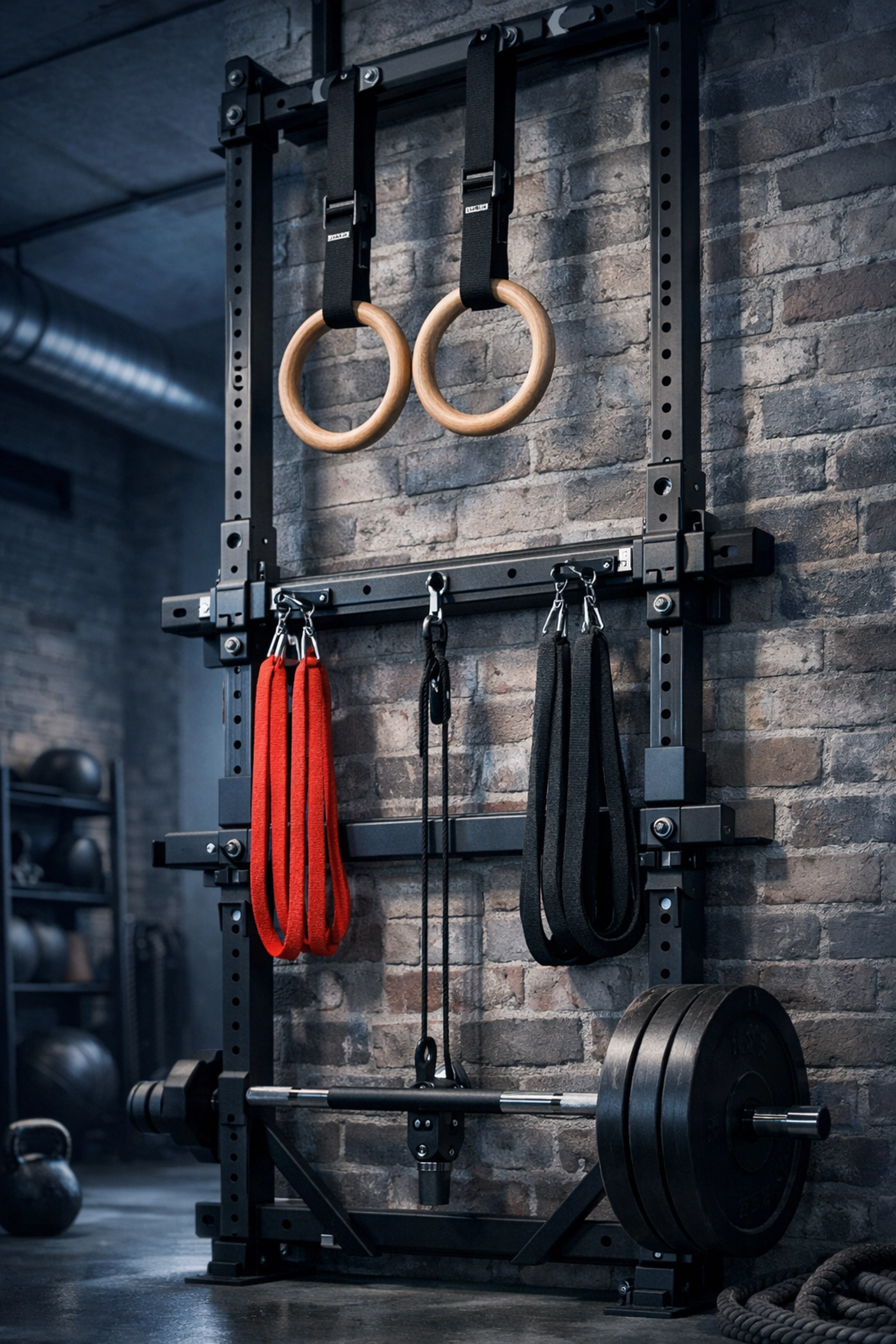
- A mount for gymnastic rings (essential for upper body stability).
- A vertical track for specialized attachments.
Because it mounts floor-to-ceiling, it can handle the lateral forces of suspension training better than almost any other non-permanent solution. It’s the bridge between "light home exercise" and "professional athletic training."
Building Your Arsenal: Essential Add-Ons
A rail is the spine, but you need the limbs to make it a full body workout at home powerhouse.
Gymnastic Rings
If you aren't using rings, you're leaving gains on the table. They are the gold standard for bodyweight training at home. Hang them from the top of your floor-to-ceiling system to work on dips, rows, and the dreaded muscle-up. Check out some ring-focused mobility work in our flexible muscle stretches gallery.
Resistance Bands
Don't underestimate the power of bands. By anchoring them at various heights on the Resistance Rail, you can mimic cable machine movements like face pulls, woodchoppers, and lat pulldowns. This is resistance training at its most efficient.
Kettlebells and Parallettes
To round out your calisthenics equipment for home, add a set of parallettes for handstand work and a few heavy kettlebells for lower body power. Since your floor-to-ceiling system takes up so little space, you actually have room to move these around.
Programming for Success
Having the gear is only half the battle. You need a plan. Whether you're an MMA fighter working on explosive power or a gymnast working on static holds, your floor to ceiling gym can handle the load.
The "Bold Strength" Circuit
Try this high-intensity circuit to test your new setup:
- Pull-Ups (Wide Grip): 10 reps (Top of the rail).
- Banded Rows: 15 reps (Mid-height anchor).
- Ring Dips: 10 reps (Suspended from top).
- Banded Squats: 20 reps (Low-height anchor).
- Hanging Leg Raises: 12 reps.
Repeat 4-5 times with minimal rest. This targets every major muscle group using nothing but your rail and a few attachments. For more workout ideas and community support, join the conversation on our community forums.
Safety and Maintenance: Keeping it Rock Solid
A tension-based no wall damage workout system requires a little bit of respect.
- Check Tension Weekly: Houses settle and temperatures change. Give your rail a quick shake once a week to ensure the tension is still "combat ready."
- Inspect Your Anchors: Ensure your bands and rings aren't fraying.
- Watch Your Ceiling: If you have a drywall ceiling, make sure you are mounting the top plate under a joist (a ceiling stud). This prevents the tension from pushing through the drywall.
The Verdict: No More Excuses
The days of choosing between a great workout and a pristine home are over. The floor to ceiling gym is the answer for the athlete who demands more. It is the most versatile home gym solution on the market, providing a professional-grade platform for calisthenics, CrossFit, and strength training without the structural commitment.
Don't let a lack of wall space hold you back. Stop looking for a pull up bar alternative that only does half the job. Build a gym that matches your ambition.

Ready to dominate your home workouts? Head over to Bold Body Fitness and grab the Resistance Rail today. Your walls will thank you, but your muscles won't.
Stay Bold.
Brian Kerr
Founder, Bold Body Fitness
