
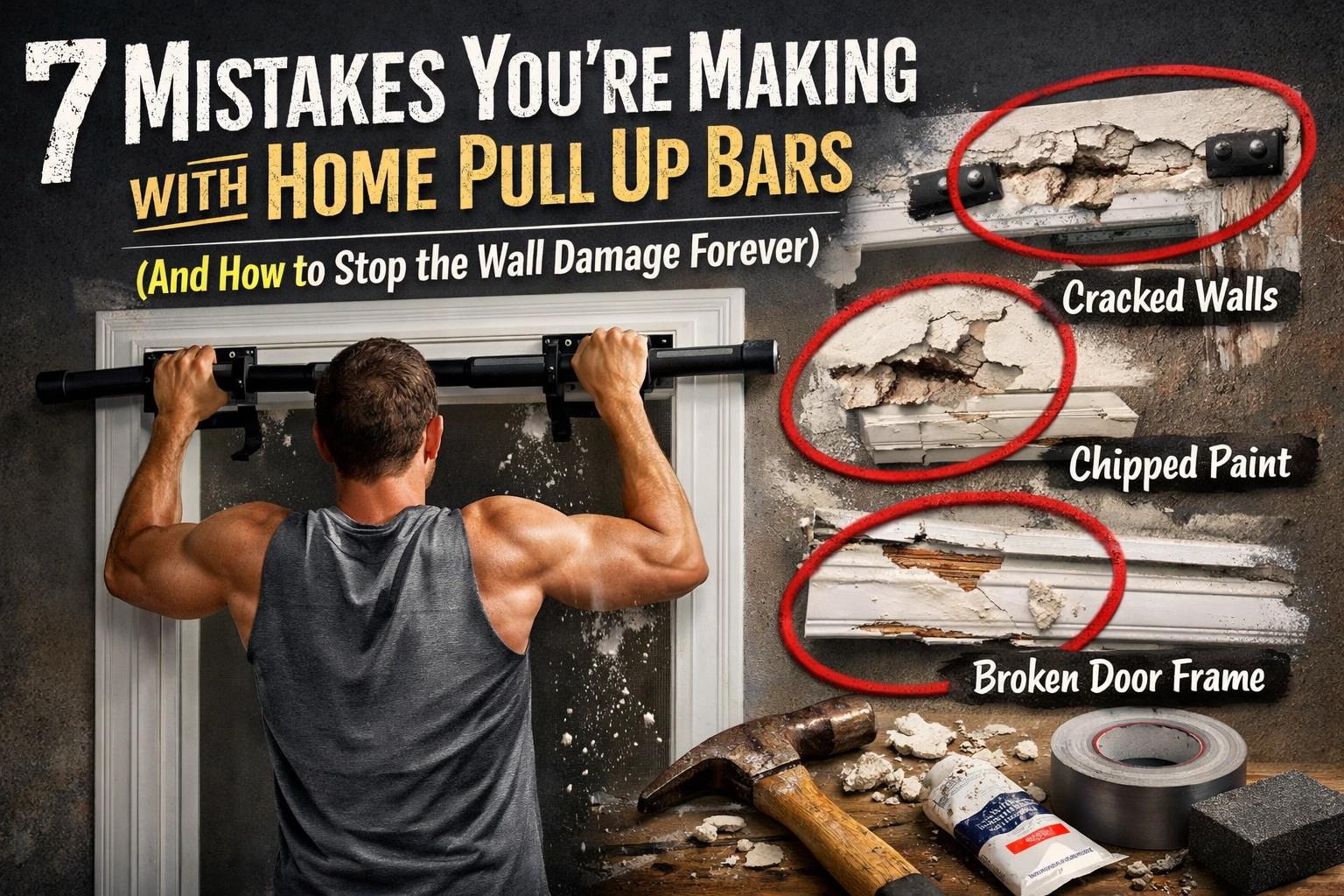
Listen, I get it. You’re ready to level up your home gym. You want those wide-back gains, you’re training for your next Spartan race, or maybe you’re just trying to mastered the muscle-up in your garage. You go out, buy a generic pull up bar, and within three weeks, you’ve got cracked drywall, a splintered doorframe, or a literal hole in your wall that’s going to cost you your entire security deposit.
At Bold Body Fitness, we see this every single day. People treat their homes like a jungle gym without realizing that standard residential construction isn't built to handle the dynamic force of a 200-pound athlete doing kipping pull-ups.
If you're serious about bodyweight training at home, you need to stop making these rookie mistakes. Here are the 7 biggest blunders you’re making with home pull up bars and how to transition to a no wall damage workout system that actually holds up to the intensity of a pro-level workout.
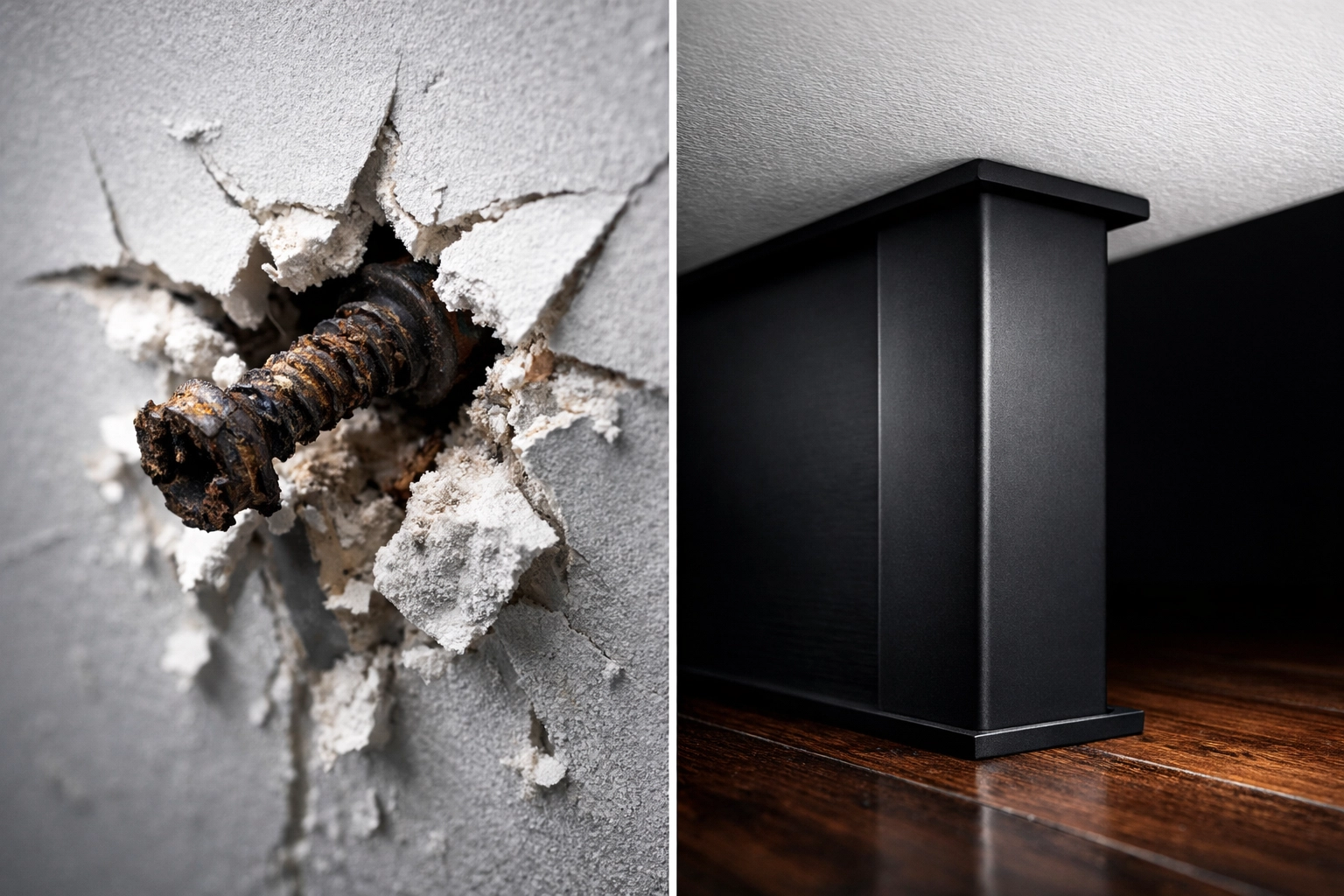
1. The Drywall Death Trap
The biggest mistake? Trusting drywall. Drywall is essentially chalk and paper. It’s designed to look pretty and hold up a picture frame, not to support your entire body weight while you’re grinding out reps.
Even if you use "heavy-duty" anchors, the dynamic load of a pull-up: meaning the extra force generated when you move: can easily double or triple the weight applied to the wall. Eventually, those anchors will wiggle, the hole will widen, and you’ll end up on the floor with a chunk of the wall still attached to your bar.
If you’re looking for a versatile home gym setup, you have to move beyond the wall. That’s why we developed the Resistance Rail. It’s a floor to ceiling gym solution that uses structural tension rather than invasive drilling into fragile surfaces.
2. Destroying Your Trim with Tension Bars
We’ve all seen the "as-seen-on-TV" doorway bars. They promise no screws, just tension. What they don’t tell you is that they rely on crushing your door trim to stay upright. After a month of use, you’ll notice the wood cracking, the paint peeling, and dark scuff marks that won’t come off.
For serious calisthenics equipment for home, you need something that doesn’t turn your doorway into a hazard zone. Doorway bars also limit your range of motion. You can’t go wide, and you definitely can’t do explosive movements without the risk of the bar slipping and sending you face-first into the floor.
3. Ignoring the "Dynamic Load" Factor
Are you a CrossFit athlete? An MMA fighter? A ninja warrior? Then you know you don't just "hang" there. You’re moving. You’re swinging. You’re exploding upward.
A standard home pull up bar is usually rated for a "static load": meaning the weight it can hold if you’re perfectly still. But the second you start a kipping pull-up or a leg raise, that force spikes. Most home gym equipment isn't designed for this. You need a crossfit home gym setup that is anchored securely from floor to ceiling, distributing that force vertically rather than pulling horizontally on a few measly screws in a wall stud.
4. Setting the Bar Too Low
There is nothing more frustrating than trying to do resistance training or pull-ups and having to tuck your knees behind you because the bar is only six feet off the ground. It ruins your form, limits your muscle engagement, and prevents you from achieving a full dead-hang.
Optimal height is crucial for full body workout at home success. You need clearance. Most doorway bars and wall-mounted units are limited by the height of your ceiling or door frame. A floor to ceiling gym like our Resistance Rail allows you to maximize your vertical space, giving even the tallest athletes the room they need to stretch out and work.

5. Thinking a Pull Up Bar is "Enough"
If your goal is a truly versatile home gym, a single horizontal bar is a start, but it’s not the finish line. One of the biggest mistakes enthusiasts make is buying a piece of equipment that only does one thing.
You need a system that grows with you. Can you attach resistance bands to your current bar? Can you adjust the height for inverted rows or push-ups? If not, you’re leaving gains on the table. When we designed our shop, we focused on products like the Resistance Rail Standard because it’s not just a bar: it’s an entire ecosystem for bodyweight training at home.
6. The "Drill Now, Regret Later" Mentality
If you’re a renter or someone who values their home's resale value, drilling massive holes into your studs is a nightmare. Even if you’re handy with a drill, finding the exact center of a stud is harder than it looks. Hit the edge, and the screw will eventually tear through the wood under pressure.
The move toward a no wall damage workout system isn't just about being "nice" to your house; it’s about safety. A floor-to-ceiling system utilizes the structural integrity of your floor and ceiling joists: the strongest parts of your home: without the permanent scars of a wall mount.
7. Buying the Cheapest Gear on the Market
We get it, fitness is an investment. But your safety shouldn't be the place you cut corners. Cheap, thin-walled steel bars flex. They vibrate. They feel "sketchy."
Serious athletes need gear that feels like it belongs in a pro facility. When you're performing high-level calisthenics, you need a solid grip and zero wobble. Bold Body Fitness was built on the idea that home gym equipment should be just as tough as the people using it.
The Solution: Why the Resistance Rail Changes Everything
If you’re tired of the "7 mistakes," it’s time to look at a better way to train. The Resistance Rail was engineered to solve every single one of these problems. It’s the ultimate pull up bar alternative for people who actually train hard.
Why It’s the Best Choice for Your Home:
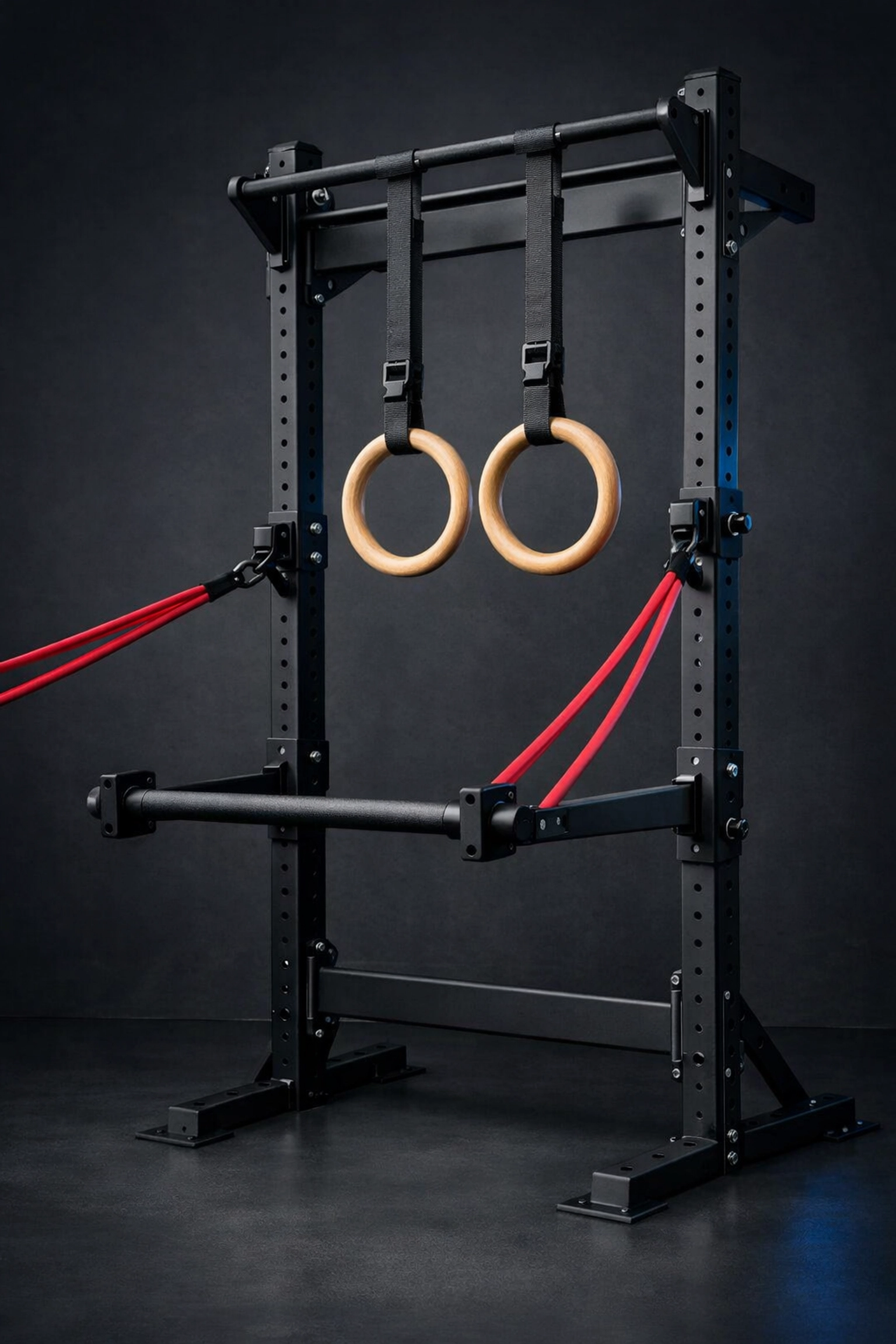
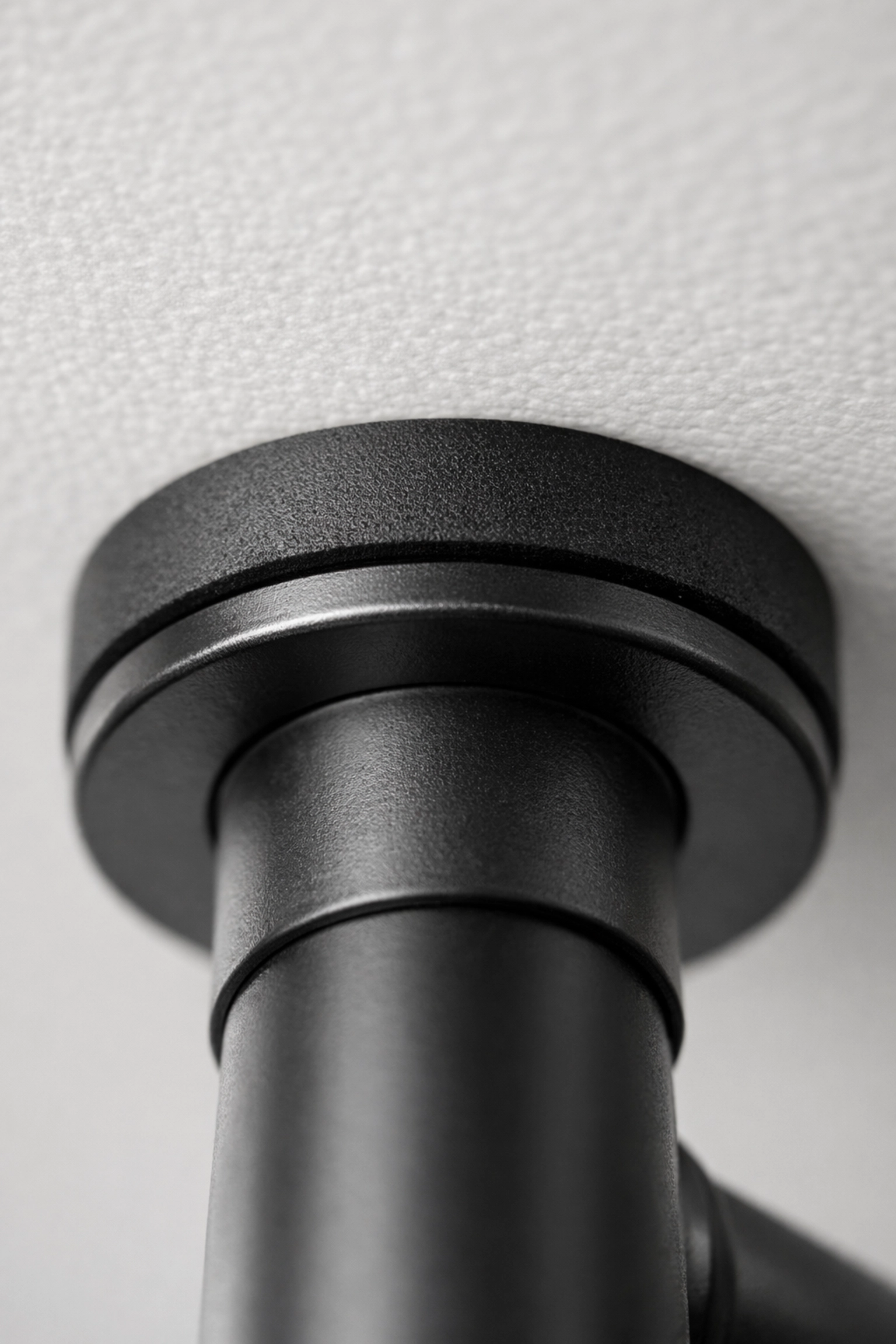
- True No-Wall-Damage: Our system uses a patented tension design that locks between your floor and ceiling. No drilling. No screws. No permanent marks.
- Elite Versatility: It’s not just for pull-ups. It’s a full resistance training station. Attach bands, rings, or TRX straps at any height.
- Professional Strength: Designed for gymnasts, MMA fighters, and CrossFitters. It doesn’t budge, no matter how explosive your movement.
- Height Adjustable: Set your workout at the perfect height for your specific body type and ceiling height.
Build Your Dream Home Gym Today
Stop settling for equipment that damages your home and limits your potential. Whether you are building out a dedicated garage gym or trying to make the most of a small apartment, you deserve gear that works as hard as you do.
Check out our Gallery to see how other athletes have integrated the Resistance Rail into their spaces. From minimalist setups to full-blown crossfit home gyms, the possibilities are endless.
Ready to stop the damage and start the gains?
Explore the full range of Bold Body Fitness gear at our Shop. It’s time to go bold.
Final Thoughts for the Serious Athlete
The transition from "working out at home" to "having a home gym" is a mindset shift. It requires choosing quality over convenience and structural integrity over "good enough."
Don't let a poorly installed pull up bar be the reason you have to call a contractor or, worse, a doctor. Invest in a no wall damage workout system that supports your goals, your home, and your future.
Join the Bold Body Fitness Members community and get access to training tips, early product releases, and a network of athletes who refuse to let their environment dictate their performance.

Stop making mistakes. Start making progress.
