
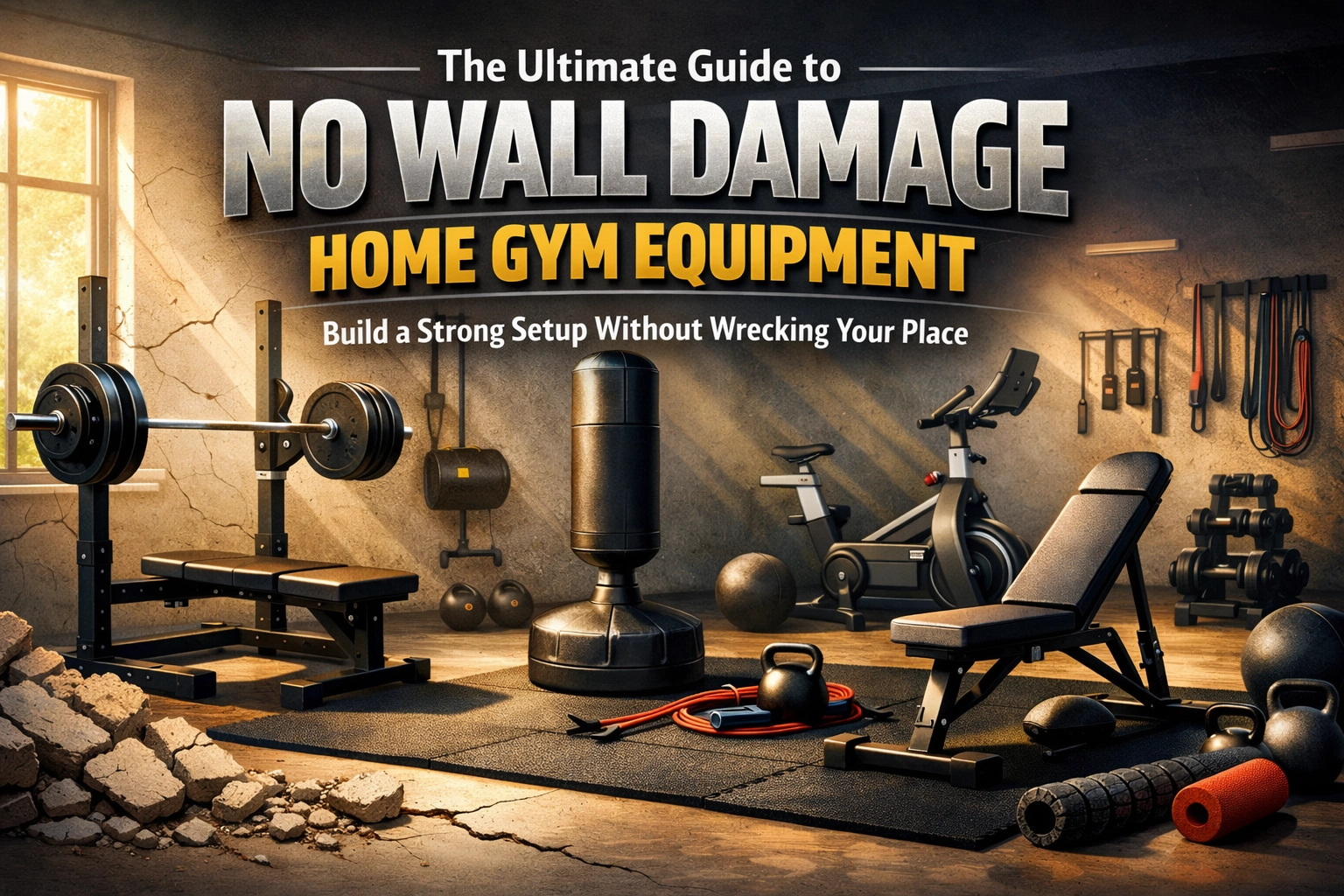
Listen, I get it. You’re a high-performer. You’re a Ninja Warrior, a CrossFit addict, or maybe a calisthenics beast. You need to train, and you need to train hard. But you also live in a place where the landlord treats a single nail in the wall like a declaration of war. You’ve probably looked at those massive power racks and sighed, knowing they won’t fit in your spare room, or worse, you’ve looked at door-frame pull-up bars that promise "no damage" only to leave black scuff marks and crushed trim.
The era of choosing between your fitness and your security deposit is over.
At Bold Body Fitness, we believe your environment shouldn’t dictate your intensity. If you want to rip through muscle-ups, hit heavy resistance sets, or train for your next Spartan race, you shouldn't need a construction crew to set up your gear. Welcome to the world of the no wall damage workout system.
In this guide, we’re going to break down exactly how to build a world-class, versatile home gym that requires zero drilling, zero studs, and zero headaches.
Why Traditional Home Gyms Fail the Modern Athlete
If you’ve spent any time on a product-sitemap.xml search for home gym gear, you’ve seen the usual suspects: wall-mounted rigs, heavy-duty power cages, and those "as seen on TV" door gadgets. Here’s the reality for the serious athlete:
- Space Constraints: A standard power rack eats up 16 to 25 square feet of floor space. That’s a massive footprint in a modern apartment or a shared house.
- Structural Damage: Most high-intensity equipment requires anchoring into wall studs. If you’re a renter, that’s an automatic "no." Even if you own your home, you might not want to turn your guest bedroom into a construction zone.
- The "Junk" Factor: Many "portable" solutions are flimsy. If you’re a 200lb athlete trying to do explosive pull-ups on a tension bar that clips onto a doorframe, you’re asking for a trip to the ER.
You need a pull up bar alternative that actually holds your weight and a full body workout at home solution that scales with your strength.
The Holy Grail: The Floor to Ceiling Gym
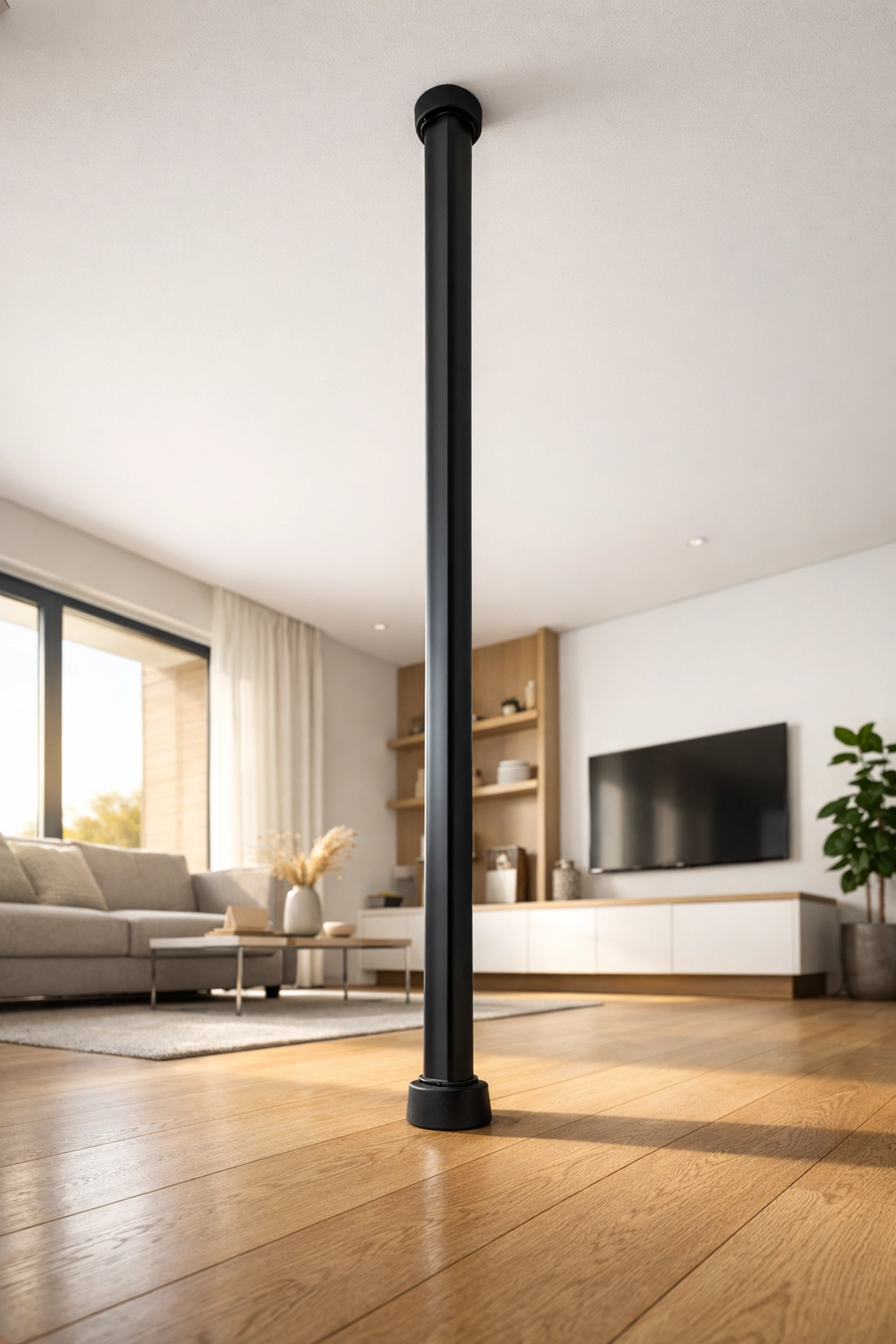
The most significant innovation in damage-free fitness is the floor to ceiling gym. This isn't just a gimmick; it’s a structural solution. By using vertical tension between your floor and your ceiling, you create a rock-solid anchor point that can handle lateral and vertical forces without a single screw.
This is where the Resistance Rail comes into play.
Unlike a cage that takes up your entire room, a tension-based vertical system like the Resistance Rail occupies less than one square foot of floor space. It’s the ultimate versatile home gym foundation. You get a vertical rail that supports everything from heavy resistance training to suspension work.
Building Your Damage-Free Arsenal
You don’t need a 5,000-square-foot warehouse to train like a pro. You just need the right pieces that work together. Here is how you should phase your build.
Phase 1: The Foundation (The "No Excuses" Setup)
If you have nothing else, start here. This setup covers 90% of your training needs for bodyweight training at home.
- The Anchor: A high-quality tension system. The Resistance Rail Standard is designed specifically for those who need a no wall damage workout system but refuse to compromise on stability.
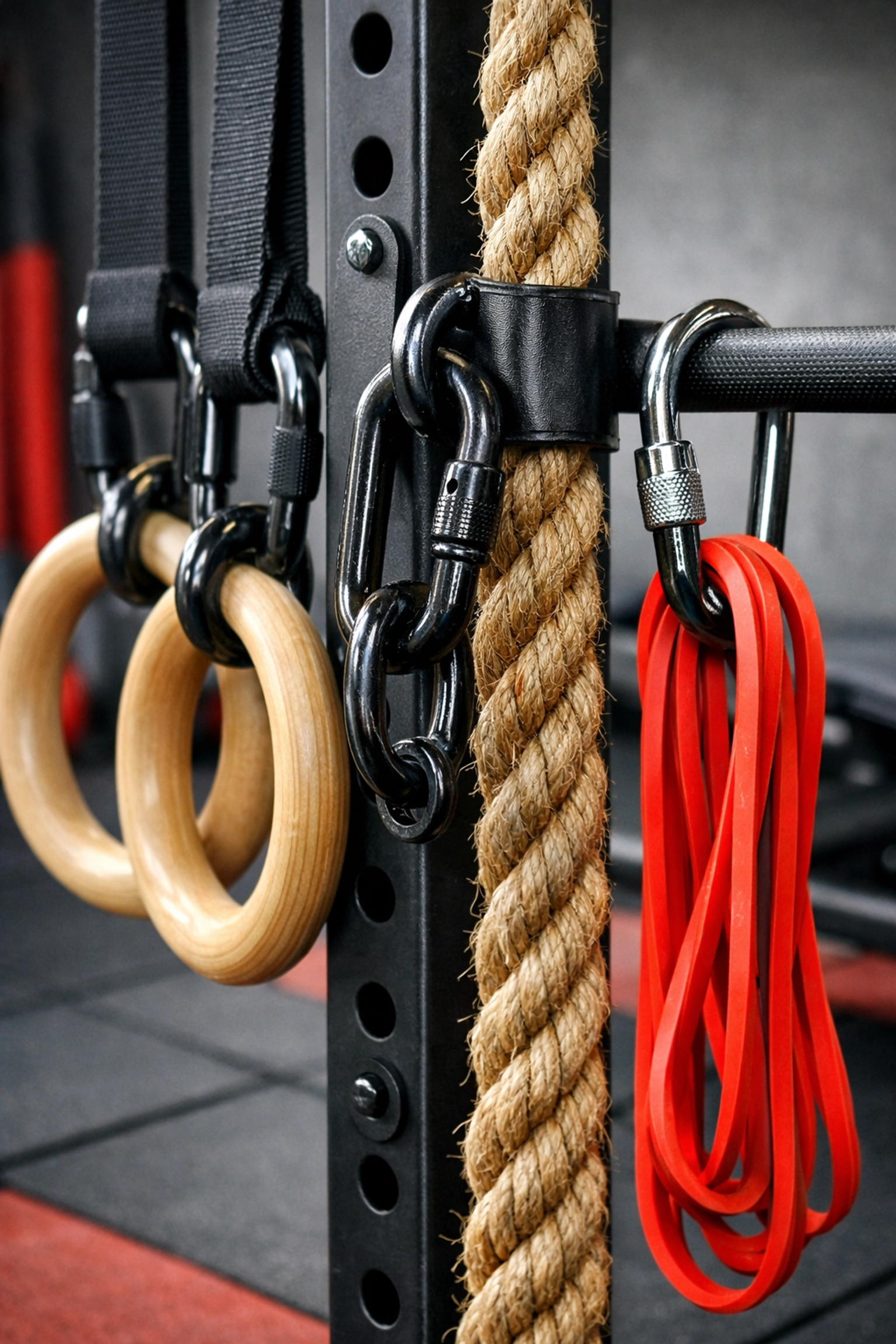
- Gymnastic Rings: These are the gold standard for calisthenics equipment for home. Attach them to your vertical rail for dips, rows, and muscle-up progressions.
- High-Quality Floor Matting: Don’t just use a yoga mat. Get 8-10mm thick rubber tiles to protect the floor from sweat and dropped weights. Check our post-sitemap.xml for guides on floor maintenance.
Phase 2: Adding Resistance
To truly call it a crossfit home gym, you need to move beyond just gravity.
- Heavy-Duty Resistance Bands: These aren’t the thin "toning" bands. You want layered latex bands that can provide up to 150 lbs of tension. When anchored to a vertical rail, these allow for heavy squats, overhead presses, and deadlifts.
- Adjustable Kettlebells or Dumbbells: These save massive amounts of space. One pair replaces an entire rack of iron.
- Parallettes: Essential for L-sits, handstand pushups, and deepening your range of motion during floor work.
Phase 3: The Specialized Athlete
For the Ninja Warriors and MMA fighters, you need specific stimulus.
- Grip Trainers: Hang "cannonball" grips or nunchucks from your vertical rail. Because the system is tension-locked, it can handle the swinging forces that would rip a door-frame bar right off the wall.
- Suspension Trainers: Systems like TRX or similar are great, but they are only as good as their anchor. A floor to ceiling gym provides a much safer and more adjustable height than a door anchor.
Why Calisthenics and Resistance Training Are the Perfect Pair
Many people think you have to choose: are you a "weights guy" or a "bodyweight guy"? The truth is, the most elite athletes combine both.
Bodyweight training at home builds incredible relative strength and spatial awareness. It’s why gymnasts are pound-for-pound the strongest people on earth. However, adding resistance training via bands or weights allows you to overload specific muscles in ways that bodyweight alone can’t always do (especially for leg hypertrophy).
By utilizing a no wall damage workout system like the Resistance Rail, you can transition from a set of weighted chest presses (using bands attached to the rail) straight into explosive pull-ups or dips on rings. This versatility is why it’s the centerpiece of a crossfit home gym.

Protecting Your Space (And Your Deposit)
Even with "damage-free" gear, you need to be smart. If you're a serious athlete, you're going to be putting out high wattage. Here is how to ensure your house stays as pristine as your technique:
- Ceiling Protection: When installing a tension system, always check for a joist. While the Resistance Rail is designed to distribute pressure, placing it directly under a ceiling joist provides maximum stability. Use a thin piece of rubber or a furniture pad between the top plate and the ceiling to prevent any micro-scuffs.
- Floor Buffering: Even if you have carpet, the pressure of a workout can leave indentations. Use a piece of plywood or heavy-duty rubber matting under the base of your equipment.
- Noise Mitigation: If you’re doing CrossFit-style workouts, the noise isn't usually from the gear: it's from you. Burpees and box jumps can annoy the neighbors. Invest in high-density foam mats to deaden the sound of your impact.
- Clearance: Ensure you have at least 18-24 inches of clearance from any wall. If you’re using rings or a suspension trainer, the last thing you want is to swing back and put your heel through the drywall.
Programming Your Home Setup for Maximum Gains
A gym is only as good as the work you do in it. If you’ve built a versatile home gym using our shop, here is a sample "Bold Body" workout you can run with zero wall damage:
The "Bold Hybrid" Circuit (Perform 4 Rounds)
- Explosive Pull-ups (or Rows): 10 reps (Using the Resistance Rail/Rings)
- Band-Resisted Squats: 15 reps (Heavy band anchored at the base of the rail)
- Ring Dips: 10 reps
- Rail-Supported Core Wipers: 12 reps (Hanging from the rail, rotate legs side to side)
- Band-Resisted Overhead Press: 12 reps
This circuit hits every major muscle group, incorporates both pulling and pushing, and requires exactly zero square feet of permanent wall space.
Ninja Warriors and Gymnasts: The Ultimate Test
Ninja Warriors need grip variety. Gymnasts need height and stability. Most home solutions fail these two groups because the equipment can't handle dynamic movement.
When you use a no wall damage workout system that locks between the floor and ceiling, you create a rigid structure. This allows for "lache" training (at a smaller scale) and high-intensity isometric holds that would make a standard "pull-up bar" slide right off the door.
If you’re serious about your craft, don't settle for "fitness-lite" equipment. You need gear that matches your intensity. You can explore more specialized setups in our category-sitemap.xml to see how different athletes are configuring their spaces.
Stop Making Excuses
"I don't have enough room."
"I'm renting, so I can't build a gym."
"Home workouts aren't intense enough."
These are the lies we tell ourselves to stay in our comfort zones. With the right floor to ceiling gym setup, you can turn a corner of your bedroom into a high-performance training lab. You don't need a massive budget, and you certainly don't need to wreck your house.
At Bold Body Fitness, we are dedicated to helping you push your limits. Whether you’re looking for a pull up bar alternative or a complete full body workout at home solution, we’ve got the gear that stands up to the challenge.
Ready to level up? Head over to our shop and check out the Resistance Rail Standard. It’s time to stop worrying about your walls and start focusing on your gains.
Build it. Use it. Break your limits, not your house.
For more tips on setup and training, check out our community forums or look through our sitemap.xml for deep dives into specific training modalities. There is no reason to wait. Your best self is one workout away, and your landlord never even has to know.
Stay Bold.
