
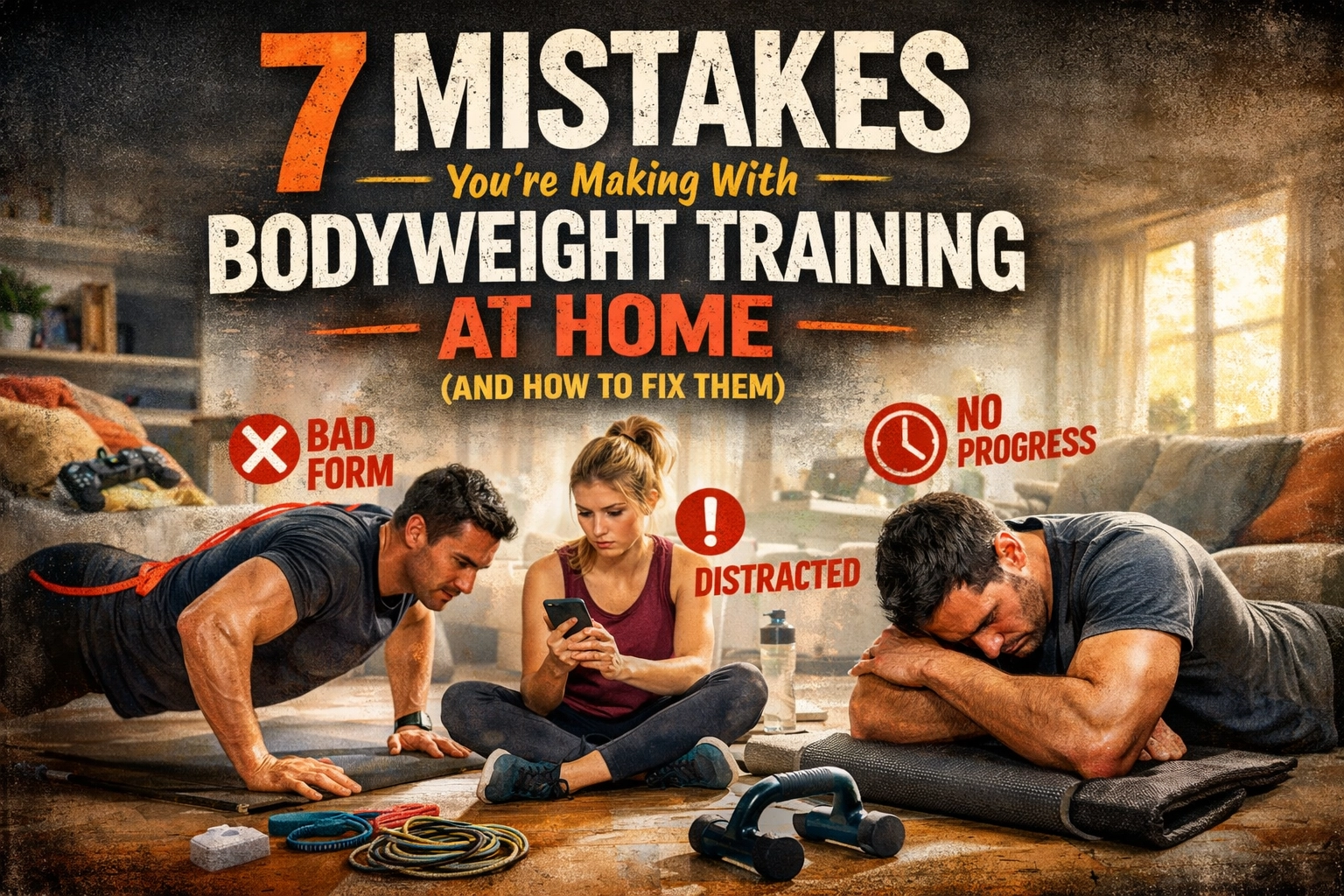
Bodyweight training is the ultimate test of relative strength. Whether you’re a Ninja Warrior tackling obstacles, a gymnast holding a perfect maltese, or an MMA fighter needing explosive power to sprawl, your body is your primary tool. But let’s be real: most people training at home are spinning their wheels.
They think "bodyweight training at home" means doing a few sloppy pushups during a commercial break and wondering why their physique hasn't changed in six months. If you’re serious about building elite-level strength, you have to stop treating your home workouts like an afterthought. You need a versatile home gym mindset, even if you don't have a thousand square feet of turf and a rack of dumbbells.
At Bold Body Fitness, we don’t do "average." We build equipment for those who demand more from their environment. If you want to stop plateauing and start performing like a pro, you need to identify and destroy these seven common mistakes.
1. Skipping the Warm-Up (The "I'll Just Get Into It" Fallacy)
The biggest lie you tell yourself is that you don't have time to warm up. You think jumping straight into a set of max-effort pull-ups or handstand push-ups is "efficient." It’s not. It’s a fast track to tendonitis and shoulder impingement.
Cold muscles are brittle. Stiff joints are fragile. When you’re training at home, especially for high-impact movements or advanced calisthenics, your nervous system needs to be "turned on" before you demand peak performance.
The Fix: Dynamic Preparation
Forget static stretching. Save that for the post-workout cooldown. You need 5–8 minutes of dynamic movement.
- Arm Circles & Leg Swings: Get the synovial fluid moving in your joints.
- Hip Circles & Ankle Rolls: Essential for anyone doing explosive lower-body work.
- Cat-Cow & Thoracic Bridges: If you spend your day hunched over a desk, your spine needs to wake up before you try any full body workout at home.
Treat your warm-up as the first set of your workout. If you aren't sweating slightly before you hit your first "real" set, you aren't ready.

2. Letting Form Deteriorate Without Feedback
In a commercial gym, you have mirrors, trainers, and other athletes watching you. At home, it’s just you and the wall. Without external feedback, your "perfect" push-up often turns into a sagging-hip, elbow-flaring mess.
Bad form doesn't just lead to injury; it leads to inefficiency. If you’re compensating with your lower back because your core is weak, you aren't actually getting stronger: you’re just learning how to cheat.
The Fix: The Digital Eye and Stable Equipment
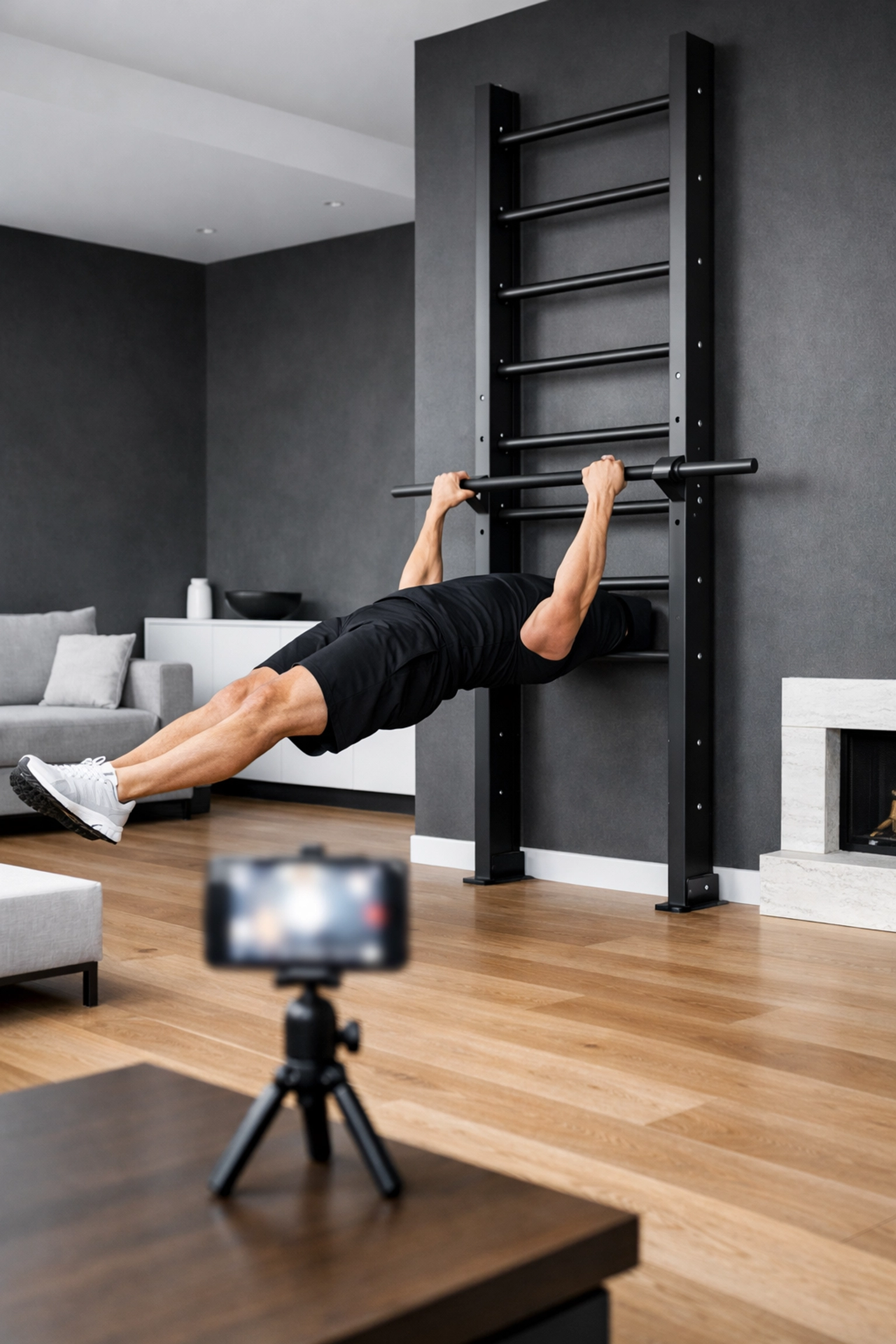
First, film yourself. Set your phone up and record a set from the side. You’ll be shocked at how different your form looks compared to how it feels.
Second, stop using unstable, "makeshift" furniture for your exercises. Doing dips on the edge of a kitchen chair is a recipe for a trip to the ER. You need dedicated calisthenics equipment for home that provides a stable, predictable base. This is where a no wall damage workout system like our Resistance Rail becomes a game-changer. It gives you the structural integrity of a professional gym without the need to bolt anything into your studs.
3. The "Same Old, Same Old" Plateau
Doing 3 sets of 10 pushups every Monday, Wednesday, and Friday is a great way to maintain the body you already have. It is a terrible way to build a new one. Your body is a master of adaptation. Once it figures out how to handle a specific stimulus, it stops growing.
Many home athletes fall into the trap of doing the same "bodyweight circuit" for months. If you aren't increasing the difficulty, you aren't doing resistance training; you’re just doing chores.
The Fix: Progressive Overload (The Bodyweight Way)
Since you aren't just "adding more plates" to a bar, you have to get creative with how you increase intensity:
- Change the Lever: Move from regular pushups to archer pushups or elevated-feet pushups.
- Slow Down the Tempo: Try a 5-second eccentric (lowering) phase. Time under tension is a brutal muscle builder.
- Decrease Rest: Force your body to recover faster.
- Increase Range of Motion: Use tools that allow you to go deeper than the floor.
The Resistance Rail allows for hundreds of height and angle adjustments, making it the ultimate versatile home gym tool for progressive overload. You can adjust the anchor points in seconds to make an exercise slightly harder, ensuring you never hit that dreaded plateau.
4. Ignoring the Posterior Chain (The "Front-Heavy" Mistake)
This is the most common mistake in home-based calisthenics. It’s easy to do pushups, sit-ups, and squats. It’s much harder to do heavy pulling movements without the right gear. Most home trainees end up with "caveman posture": overdeveloped chests and shoulders, and weak, neglected backs.
If you aren't hitting your lats, traps, and rear delts, you’re asking for shoulder pain and a rounded spine. This is especially dangerous for MMA fighters and CrossFit athletes who need a strong back for grappling and overhead stability.
The Fix: Real Pulling Power
You need a pull up bar alternative or a dedicated pulling station. You can't build a massive back with "Superman" holds alone.
- Inverted Rows: The king of back thickness.
- Pull-ups/Chin-ups: The king of back width.
- Face Pulls: Essential for shoulder health.
A floor to ceiling gym setup like the one we offer at Bold Body Fitness ensures you have a rock-solid anchor point for rows and pull-ups. By incorporating these into your full body workout at home, you balance your physique and bulletproof your joints.
5. Getting the Intensity Dial Wrong
Training at home usually results in one of two extremes: the "Lounge Act" or the "Kamikaze."
The "Lounge Act" trainee takes 5-minute rest breaks, checks their phone, and never actually breaks a sweat. The "Kamikaze" trainee goes to absolute failure on every single set, every single day, leading to burnout and central nervous system fatigue within three weeks.
The Fix: Strategic Intensity
You need to train with purpose.
- For Strength: Keep reps low (3-6) and intensity high. Focus on difficult variations where you can only perform a few reps with perfect form.
- For Hypertrophy: Aim for the 8-12 rep range with moderate rest.
- For Endurance: Higher reps, shorter rest.
The key is to leave 1-2 reps "in the tank" on most sets. This allows you to recover and train again tomorrow. Save the "to failure" sets for the very last round of your workout.
6. Over-relying on Cardio and "Flashy" HIIT
Social media has convinced people that "bodyweight training" is just doing burpees and mountain climbers until you vomit. While HIIT (High-Intensity Interval Training) is great for heart health and burning a few extra calories, it is not a substitute for strength training.
If you spend all your time doing "cardio-calisthenics," you will get better at being tired, but you won't get stronger. You might even lose muscle mass if you’re in a caloric deficit.
The Fix: Prioritize Strength First
If you want a body that looks like a gymnast or a ninja warrior, you have to train like one.
- Start with your hardest strength movement (e.g., Handstand Pushups or Muscle-up progressions).
- Move to accessory strength work (e.g., Dips, Rows).
- Finish with a 10-minute "Finisher" of HIIT if you must.
Think of your crossfit home gym as a place of power, not just a place to pant. Use the resistance provided by your own body and your equipment to build actual tension.

7. Neglecting the "Other" 23 Hours
You can have the most advanced home gym equipment in the world, but if you’re sleeping four hours a night and eating like a trash can, you won't see results. Training is the stimulus; recovery is the growth.
At home, the lines between "life" and "gym" get blurred. You might finish a workout and immediately jump into a stressful work call or grab a bag of chips because it’s right there in the pantry.
The Fix: Create a Performance Environment
- Nutrition: Fuel your workouts. If you’re doing high-intensity bodyweight training at home, you need protein to repair tissue and carbs to fuel the effort.
- Sleep: Aim for 7–9 hours. This is when your hormones (like growth hormone and testosterone) do their best work.
- The "Post-Game": After your workout, take 5 minutes to stretch and breathe. Signal to your nervous system that the "fight" is over and the "recovery" has begun.
Why the Right Equipment Matters
Let's be honest: the floor and a doorway pull-up bar can only take you so far. If you are serious about your fitness, you eventually need tools that match your ambition.
Traditional home gym setups usually fall into two categories:
- Bulky Power Racks: They take up the whole room and require bolting into the floor.
- Cheap Plastic Gadgets: They break, slip, and limit your movement.
At Bold Body Fitness, we saw a gap. Serious athletes needed a versatile home gym that could handle the intensity of CrossFit, the precision of gymnastics, and the power of MMA training: without destroying their living space.
The Resistance Rail Solution
Our flagship product, the Resistance Rail, was designed to solve the very mistakes we listed above.
- No Wall Damage: Using a sophisticated floor-to-ceiling tension system, it stays rock-solid without a single screw in your wall.
- Infinite Adjustability: Unlike a standard pull-up bar, the Resistance Rail allows you to move your anchor points anywhere from the floor to the ceiling. This makes progressive overload simple.
- Full Body Versatility: From heavy rows and pull-ups to suspended core work and resistance band integration, it is the ultimate floor to ceiling gym.
If you're ready to stop making excuses and start making progress, check out our Shop to see how we’re redefining what a home workout looks like.
Summary: The Bold Path Forward
Bodyweight training isn't the "easy" option. When done correctly, it is one of the most challenging and rewarding ways to build a functional, aesthetic, and powerful physique.
Stop skipping the warm-up. Stop settling for "good enough" form. Stop doing the same twenty pushups every day.
Invest in yourself, invest in your space, and get to work. Whether you are looking for a pull up bar alternative or a complete no wall damage workout system, Bold Body Fitness is here to provide the tools. The rest is up to you.
Are you ready to build a Bold body?
Explore the Resistance Rail Standard here and take your home training to the elite level.
