
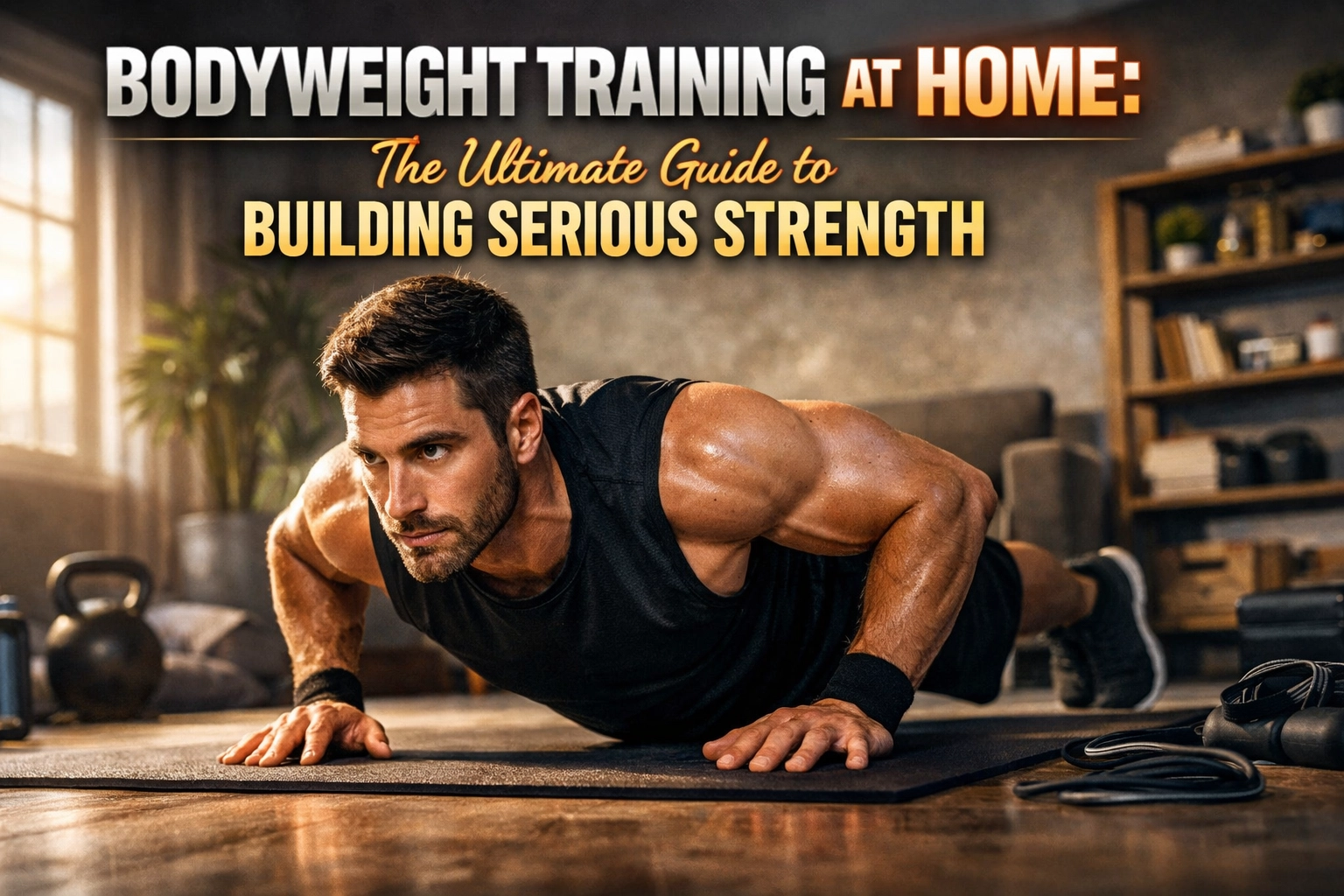
Listen up. If you think you need a garage full of expensive equipment to build serious strength, you're dead wrong. The strongest athletes on the planet: ninja warriors crushing obstacle courses, gymnasts defying gravity, MMA fighters dominating the cage: they all understand one fundamental truth: your body is the most versatile piece of equipment you'll ever own.
Bodyweight training isn't just for beginners or people "making do" until they can afford a gym membership. It's a legitimate path to building explosive power, functional strength, and the kind of muscle that actually performs when you need it. Let's cut through the BS and get into what actually works.
Why Bodyweight Training Works (And Why Most People Get It Wrong)
Here's the deal: bodyweight training forces your body to work as an integrated unit. Unlike isolation machines that turn you into a collection of disconnected parts, movements like push-ups, pistol squats, and pull-ups demand coordination, stability, and full-body tension. That's why gymnasts have some of the most impressive physiques in sports: every rep is a full-body experience.
But most people screw this up royally. They pump out garbage reps, ignore progressive overload, and wonder why they plateau after three weeks. Building strength with bodyweight training requires the same principles as any serious training program: progressive tension, adequate recovery, and technical precision.
The advantage? You can train anywhere, anytime, and your gym is literally attached to your skeleton. No commute, no membership fees, no waiting for equipment. Just you and gravity having a conversation about who's boss.
The Foundation: Mastering the Big Five Movement Patterns

Every effective bodyweight program is built on five fundamental movement patterns. Master these, and you've got the blueprint for a body that's strong, resilient, and built for real-world performance.
1. The Push (Horizontal and Vertical)
Push-ups are the king of horizontal pushing. But if you're still doing standard push-ups after six months, you're leaving gains on the table. Start with perfect form: hands slightly wider than shoulder-width, core braced like you're about to take a punch, elbows tracking at 45 degrees. Lower yourself with control until your chest kisses the floor, then explode back up.
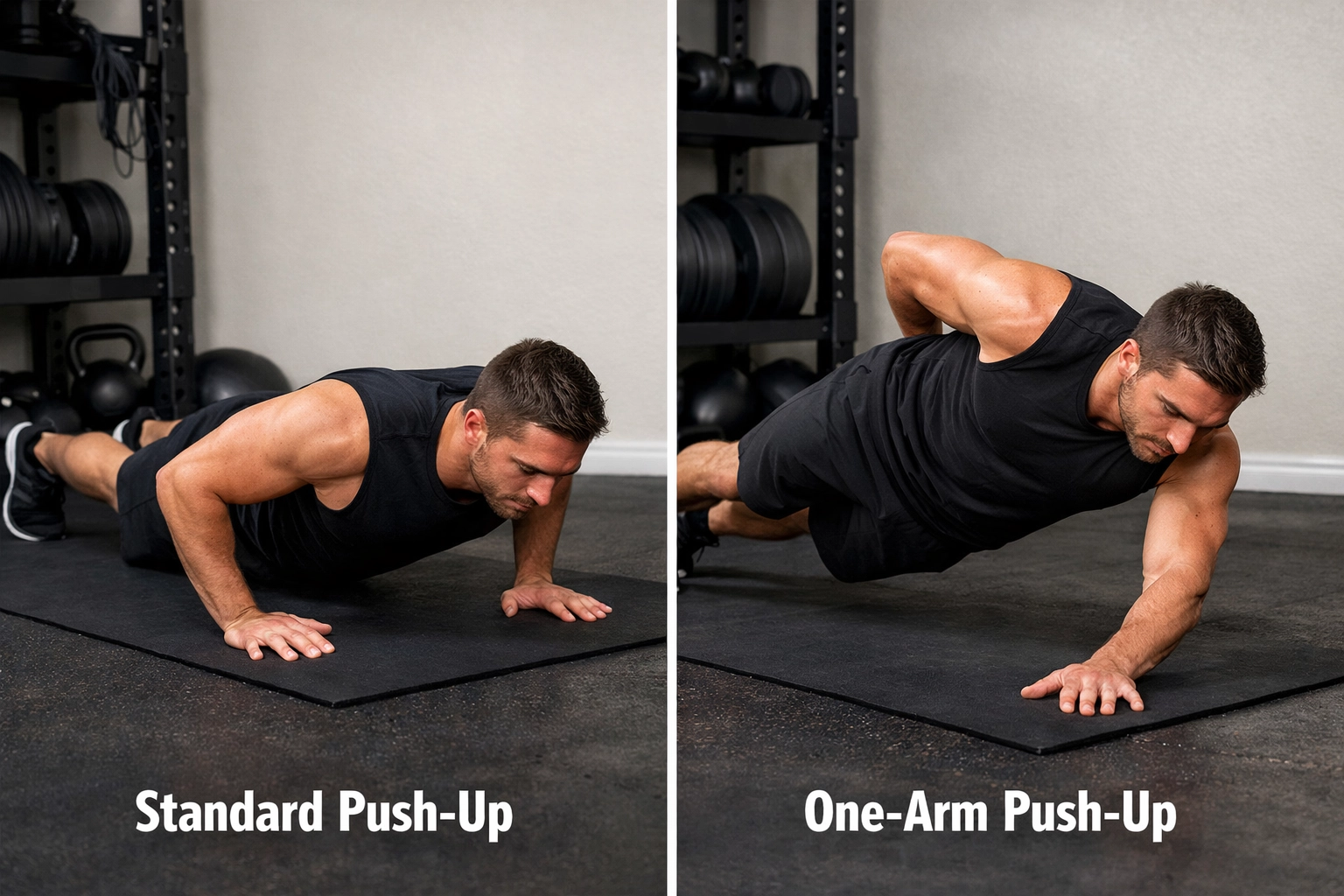
Once you can bang out 20+ clean reps, it's time to level up. Try diamond push-ups for tricep annihilation, archer push-ups for unilateral strength, or pseudo-planche push-ups to start building that gymnast-level pushing power.
For vertical pushing, you'll need something overhead to press against. This is where having versatile home gym equipment becomes crucial. Handstand push-ups against a wall are the gold standard, but pike push-ups are an excellent progression step.
2. The Pull (The Missing Link)
Here's where most bodyweight programs fall apart. You can push all day long, but without pulling movements, you're building a physique with the structural integrity of a house of cards. Pull-ups, rows, and their variations are non-negotiable for balanced development and shoulder health.
The problem? Most homes don't have anywhere to pull from. Door-frame pull-up bars damage your walls and limit exercise variety. Freestanding pull-up rigs take up half your living room. This is exactly why serious athletes are turning to systems like the Resistance Rail, a floor-to-ceiling solution that gives you a pull-up bar without the wall damage or space requirements.
Start with horizontal rows if you can't do pull-ups yet. Find something sturdy to grab onto at waist height, walk your feet forward, and pull your chest to the bar. As you get stronger, lower the bar height to increase difficulty. Eventually, you'll be cranking out pull-ups and unlocking advanced variations like muscle-ups and front levers.
3. The Squat (Building Bulletproof Legs)
Bodyweight squats get dismissed as "too easy" by people who've never done them properly. Stand with feet hip-width apart, toes slightly turned out. Before you descend, take a breath and brace your core like someone's about to kick you in the gut. This intra-abdominal pressure is crucial for spinal safety and power generation.
Lower yourself under control, keeping your chest proud and knees tracking over your toes. Go deep: ass to grass if your mobility allows. Your quads should be parallel to the floor at minimum. Drive through your heels to stand, squeezing your glutes at the top.
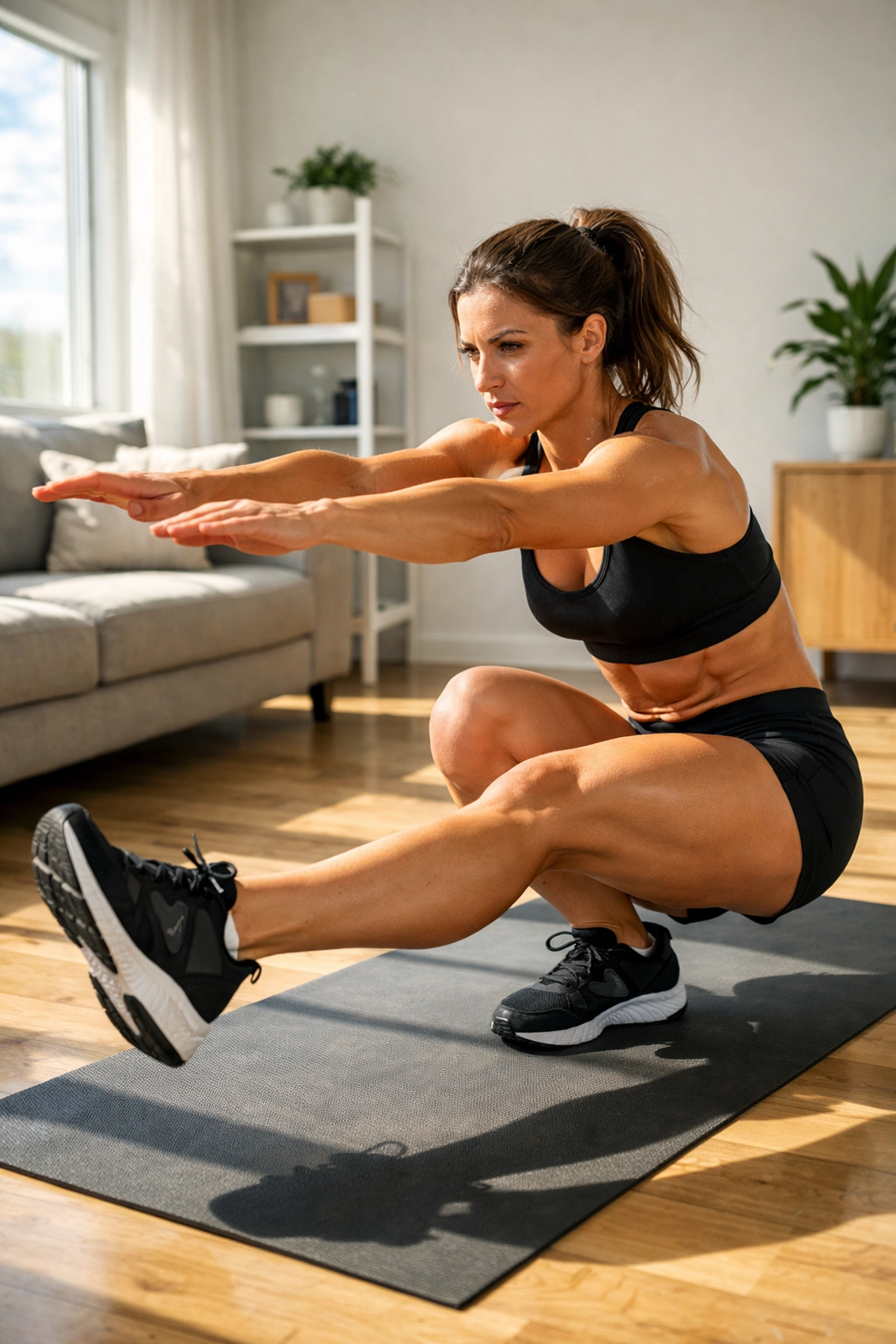
When bodyweight squats become easy, progress to pause squats (3-second hold at the bottom), jump squats for explosive power, or pistol squats: the single-leg monster that separates pretenders from contenders.
4. The Hinge (Posterior Chain Power)
Your posterior chain: hamstrings, glutes, and lower back: is where real athletic power comes from. Single-leg Romanian deadlifts, glute bridges, and Nordic curls should be staples in your program.
For glute bridges, lie on your back with feet flat and knees bent. Drive your heels into the ground and thrust your hips toward the ceiling, squeezing your glutes so hard they cramp. Hold for a second at the top, then lower with control. Too easy? Try single-leg variations or elevated your feet to increase range of motion.
Nordic curls are absolutely brutal and incredibly effective. Anchor your feet under something stable (or use a resistance system that allows for multiple anchor points), and lower yourself forward with controlled eccentric strength. This exercise builds hamstrings that can stop injuries before they start.
5. The Core (More Than Just Abs)
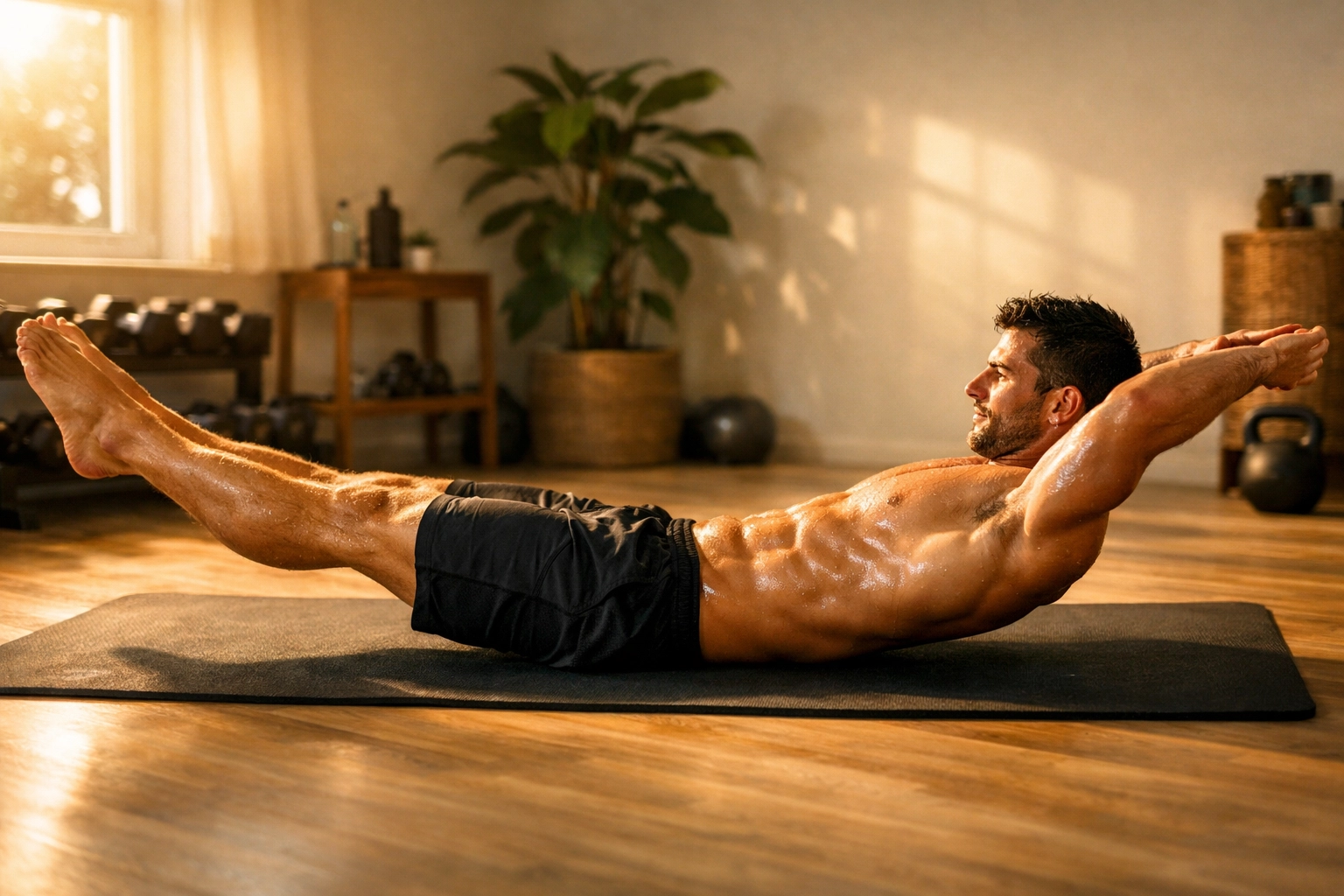
Forget crunches. Your core's primary job is to resist movement and transfer force between your upper and lower body. Planks, hollow body holds, and anti-rotation exercises are where it's at.
A proper plank isn't about how long you can hold it: it's about total-body tension. Get into a push-up position, squeeze everything, and hold. Your body should be straight as a board from head to heels. If you can hold a plank for more than 90 seconds, you're probably sagging or not creating enough tension.
L-sits, performed on parallel bars or even on the floor, take core training to another level. They demand hip flexor strength, shoulder stability, and the kind of abdominal control that shows up in every athletic movement you'll ever do.
Programming for Real Results: The Truth About Volume and Intensity
Here's the blueprint that actually works for bodyweight training: 2-3 full-body workouts per week, with at least one rest day between sessions. Your muscles don't grow in the gym: they grow while you're recovering. Push hard, then back off and let adaptation happen.
Each workout should hit all five movement patterns with 2-4 sets per exercise. Rest 2-3 minutes between sets for strength work, or circuit the exercises with 45-90 seconds rest if you're chasing conditioning alongside strength gains.
A solid intermediate workout looks like this:
Workout A:
- Pull-ups or Rows: 3 sets x 5-8 reps
- Push-ups (advanced variation): 3 sets x 8-12 reps
- Pistol Squats or Jump Squats: 3 sets x 6-10 reps per leg
- Nordic Curls or Single-Leg RDLs: 3 sets x 6-8 reps
- L-sits or Hollow Body Holds: 3 sets x 20-30 seconds
Workout B:
- Pike Push-ups or Handstand Push-ups: 3 sets x 5-8 reps
- Archer Rows or Pull-up Variations: 3 sets x 6-10 reps
- Bulgarian Split Squats: 3 sets x 8-12 reps per leg
- Glute Bridges (single-leg): 3 sets x 10-15 reps per leg
- Plank Variations: 3 sets x 30-45 seconds
Alternate between these workouts. When you hit the top of the rep range for 3 sets with perfect form, it's time to progress to a harder variation.
Progressive Overload Without Weights: The Secret Sauce
Progressive overload is the non-negotiable requirement for getting stronger. But without external weights, how do you progressively overload bodyweight movements? Several ways:
1. Increase Difficulty Through Variations: Standard push-ups → Diamond push-ups → Archer push-ups → One-arm push-ups
2. Slow Down Time Under Tension: Try 3-5 second eccentrics (lowering phase) on any exercise. Your muscles will hate you for it.
3. Add Pauses: Pause squats with a 3-second hold at the bottom are brutally effective.
4. Reduce Leverage: Elevate your feet for push-ups, or your hands for rows. Small changes in angle create massive increases in difficulty.
5. Increase Volume Gradually: Add reps, add sets, or reduce rest periods over time.
The Equipment Advantage: Why Smart Athletes Use Minimal Gear
Look, you can absolutely build strength with zero equipment. But the right piece of gear can unlock movements that are impossible with pure bodyweight alone. This isn't about buying unnecessary junk: it's about strategic investments that multiply your training options.
Pull-ups are essential, but traditional solutions suck. Door-frame bars leave holes in your walls and limit movement variety. Power towers are expensive and eat up floor space. A floor-to-ceiling system gives you pull-up capability, resistance training options, and the versatility to train like a gymnast or ninja warrior without destroying your rental deposit.
At Bold Body Fitness, we designed the Resistance Rail specifically for serious athletes who train at home. It's a pull-up bar alternative that mounts between floor and ceiling with zero wall damage, provides multiple grip positions, and integrates with resistance bands for literally hundreds of exercise variations. Whether you're a CrossFit athlete building a home gym or a martial artist maintaining strength between sessions, it's the kind of versatile home gym solution that actually earns its floor space.
Common Mistakes That Kill Your Progress
Mistake #1: Ego Reps
Quality beats quantity every single time. One perfect pull-up builds more strength than ten kipping half-reps. Check your ego, master the fundamentals, and progression will follow.
Mistake #2: Ignoring Recovery
Training every day sounds hardcore until you're injured and sitting on the couch. Rest days are when your body rebuilds stronger. Use them.
Mistake #3: No Structure
"I'll just do some push-ups and squats when I feel like it" is a recipe for looking exactly the same in six months. Track your workouts. Follow a program. Make measurable progress.
Mistake #4: Skipping Mobility Work
You can't express strength through a limited range of motion. Spend 5-10 minutes before each workout on dynamic stretching and mobility drills. Your joints will thank you, and your performance will improve.
Mistake #5: Not Eating for Your Goals
You can't out-train a garbage diet. If you're trying to build muscle, you need adequate protein (0.8-1g per pound of bodyweight) and a slight caloric surplus. If you're cutting, maintain protein while in a modest deficit. Nutrition is 50% of the equation.
Taking It to the Next Level: Advanced Bodyweight Mastery
Once you've built a foundation, the sky's the limit. Skills like muscle-ups, front levers, planches, and handstand walking aren't just party tricks: they're expressions of extreme relative strength that translate to every athletic endeavor.
These advanced movements require dedicated practice, intelligent programming, and often, the right training setup. A CrossFit home gym approach works well here: focus on skill work, strength training, and metabolic conditioning in balanced doses.
The beauty of bodyweight training is the journey never ends. There's always a harder variation, a cleaner rep, a more challenging skill to chase. You're not competing against anyone else: just the person you were yesterday.
Your Next Steps
Stop making excuses. Stop waiting for the perfect time, the perfect setup, or the perfect program. Start where you are, with what you have, and commit to showing up consistently.
Your body is capable of incredible things. Bodyweight training is how you unlock that potential without the overhead of expensive gym memberships or equipment you'll never use. It's training stripped down to its purest form: you versus gravity, getting stronger one rep at a time.
Whether you're a ninja warrior building obstacle course strength, a martial artist maintaining conditioning, or just someone who wants to look good and move well, bodyweight training delivers. Set up your space, dial in your technique, and get after it.
The only workout that doesn't work is the one you don't do. Now get moving.
