
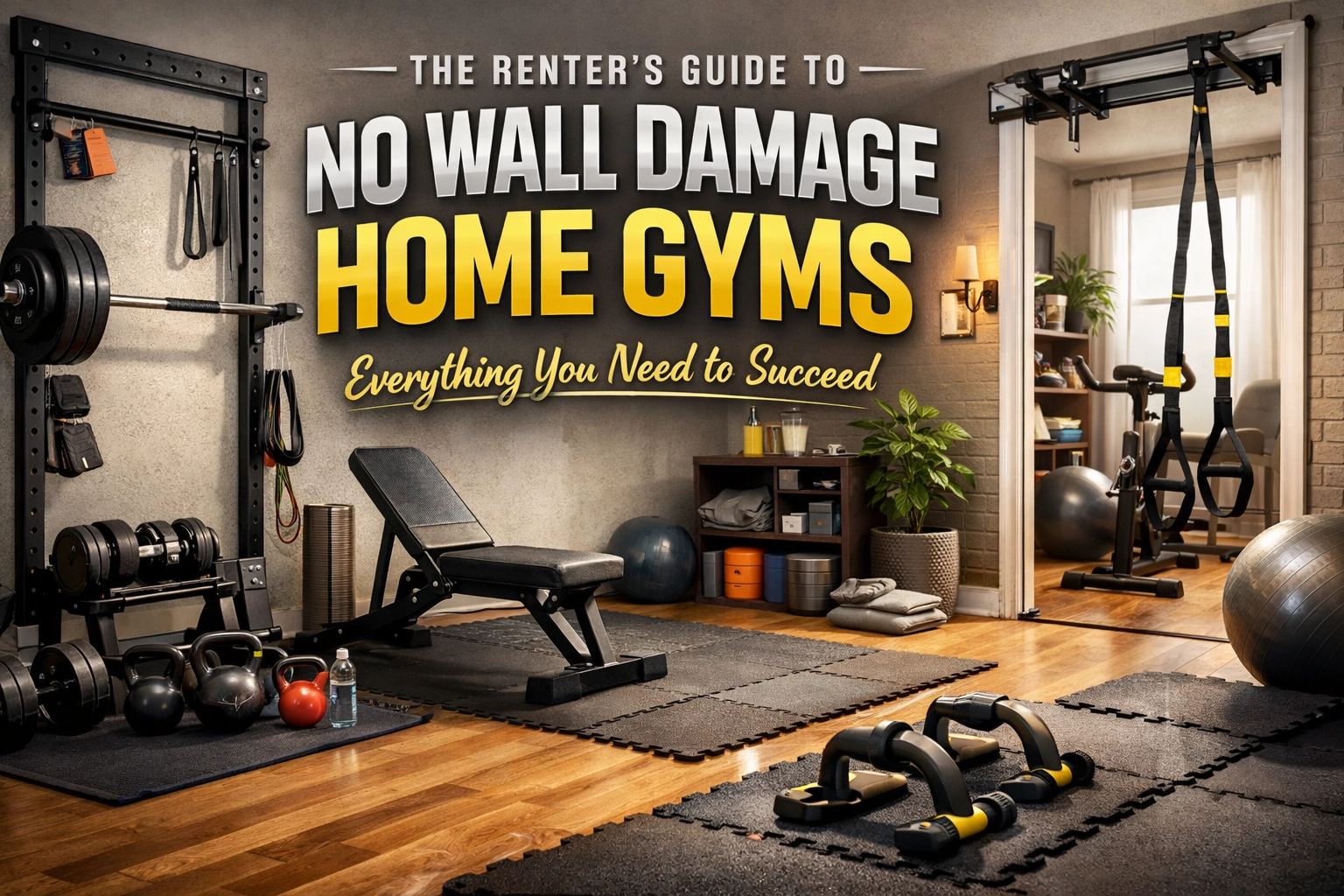
Let's get real: You're renting, you're serious about training, and you're tired of choosing between crushing your fitness goals and keeping your security deposit. The struggle is real when every fitness article assumes you own your walls and can drill wherever you want.
Here's the truth most rental guides won't tell you: You don't need to turn your apartment into Swiss cheese to build a legitimate training facility. You just need to be smarter about your equipment choices and think like the athlete you are, adaptable, resourceful, and uncompromising on results.
Why Wall-Mounted Equipment Is a Security Deposit Nightmare
Before we dive into solutions, let's talk about why that pull-up bar you saw on Pinterest is going to cost you more than just the installation fee.
Most landlords have zero chill when it comes to wall damage. Those anchor bolts you'd need for a proper squat rack? That's anywhere from $200 to $1,000 coming out of your security deposit. And if you're thinking "I'll just patch the holes before I move out", stop. Landlords can spot amateur patch jobs from across the room, and they'll charge you for professional repairs anyway.
Beyond the financial hit, there's the mobility issue. When you move (and as a renter, you know that day is coming), you're either leaving behind hundreds or thousands of dollars in mounted equipment, or you're spending a weekend with a crowbar and spackle trying to salvage your investment. Neither option is acceptable for someone serious about their training.
What Makes Home Gym Equipment Truly Renter-Friendly
Renter-friendly home gym equipment isn't just about avoiding holes in the wall. It's about three critical factors that most fitness enthusiasts overlook:
Zero permanent modifications. The equipment should require nothing more than your floor space and maybe a standard doorframe. No drilling, no anchoring, no construction work whatsoever.
True portability. When you move to your next place, you should be able to pack everything into a moving truck without hiring a construction crew to disassemble it. The best equipment breaks down efficiently or moves as a complete unit.
Noise control. Your downstairs neighbors shouldn't know your workout schedule. This matters more than most renters realize until they get that first complaint letter. Equipment that slams, thuds, or vibrates through the floor is a one-way ticket to problems with your landlord.
The Foundation: Essential Equipment That Won't Destroy Your Apartment
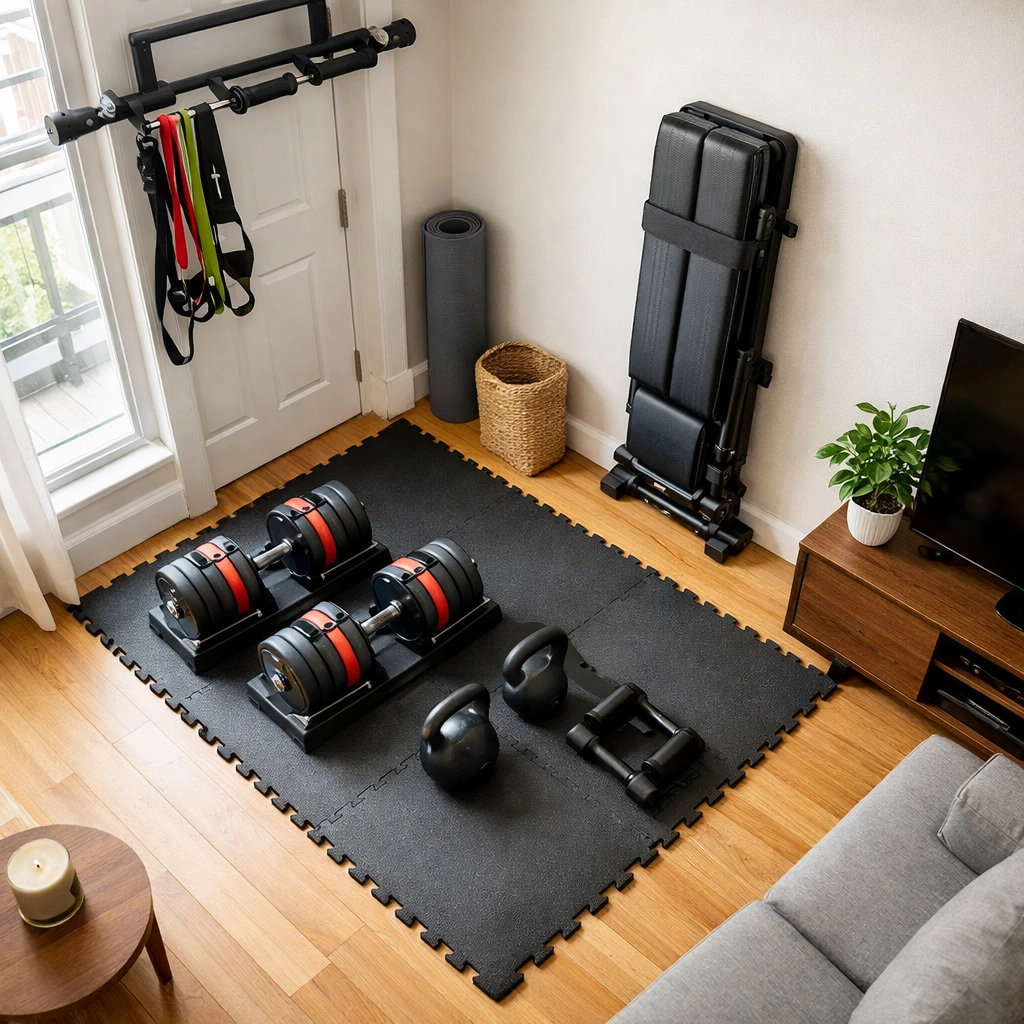
Let's build your no wall damage workout system from the ground up, focusing on what actually works for serious athletes, not weekend warriors.
Adjustable Dumbbells: Your Non-Negotiable Starting Point
If you're only buying one piece of equipment, make it adjustable dumbbells. We're not talking about those plastic-coated toy weights, you need legitimate adjustable dumbbells that scale from light warm-up work to muscle-building intensity.
Quality adjustable dumbbells eliminate the need for an entire rack of fixed weights. Instead of 10 pairs of dumbbells taking up half your living room, you get one pair that adjusts from 5 to 80 pounds. For CrossFit athletes and calisthenics practitioners, this means you can progress your weighted movements without constantly buying new equipment.
The key is choosing models with quick-adjustment mechanisms. When you're in the middle of a high-intensity circuit, fumbling with pins and clips kills your workout momentum. Look for systems that let you change weights in under 5 seconds.
Resistance Bands: The Most Underrated Tool in Your Arsenal
Don't sleep on resistance bands. These aren't just for physical therapy and warm-ups, when you choose heavy-duty bands, they become legitimate strength-building tools that rival free weights for certain movements.
For bodyweight training at home, bands fill crucial gaps. They allow you to add progressive resistance to pull-ups, assist with muscle-ups if you're working toward them, and provide variable resistance for exercises that dumbbells can't match. MMA fighters and ninja warriors especially benefit from the dynamic resistance patterns bands create.
Quality matters here. Cheap bands snap, and when a band snaps under tension, you're going to know about it. Invest in thick, commercial-grade latex or latex-free bands with clear weight ratings.
Floor Protection: The Unsexy Essential Nobody Talks About
Here's what every renter needs to understand: Your apartment's flooring is not designed for fitness equipment. Drop a 40-pound dumbbell once on hardwood or laminate, and you're looking at damage charges.
Interlocking foam mats solve multiple problems simultaneously. They protect your floors, reduce noise transmission to lower units, cushion your joints during floor exercises, and define your workout space in multi-purpose rooms. Plus, you can take them with you when you move.
For serious training, go with at least ¾-inch thick mats. The thin yoga mats won't cut it when you're doing burpees or dropping weights. Cover your entire training area, edges matter because dumbbells roll and kettlebells tip.
The Game-Changer: Floor-to-Ceiling Resistance Systems
Now let's talk about the equipment category that changes everything for renters who want serious calisthenics equipment for home and a true pull up bar alternative.
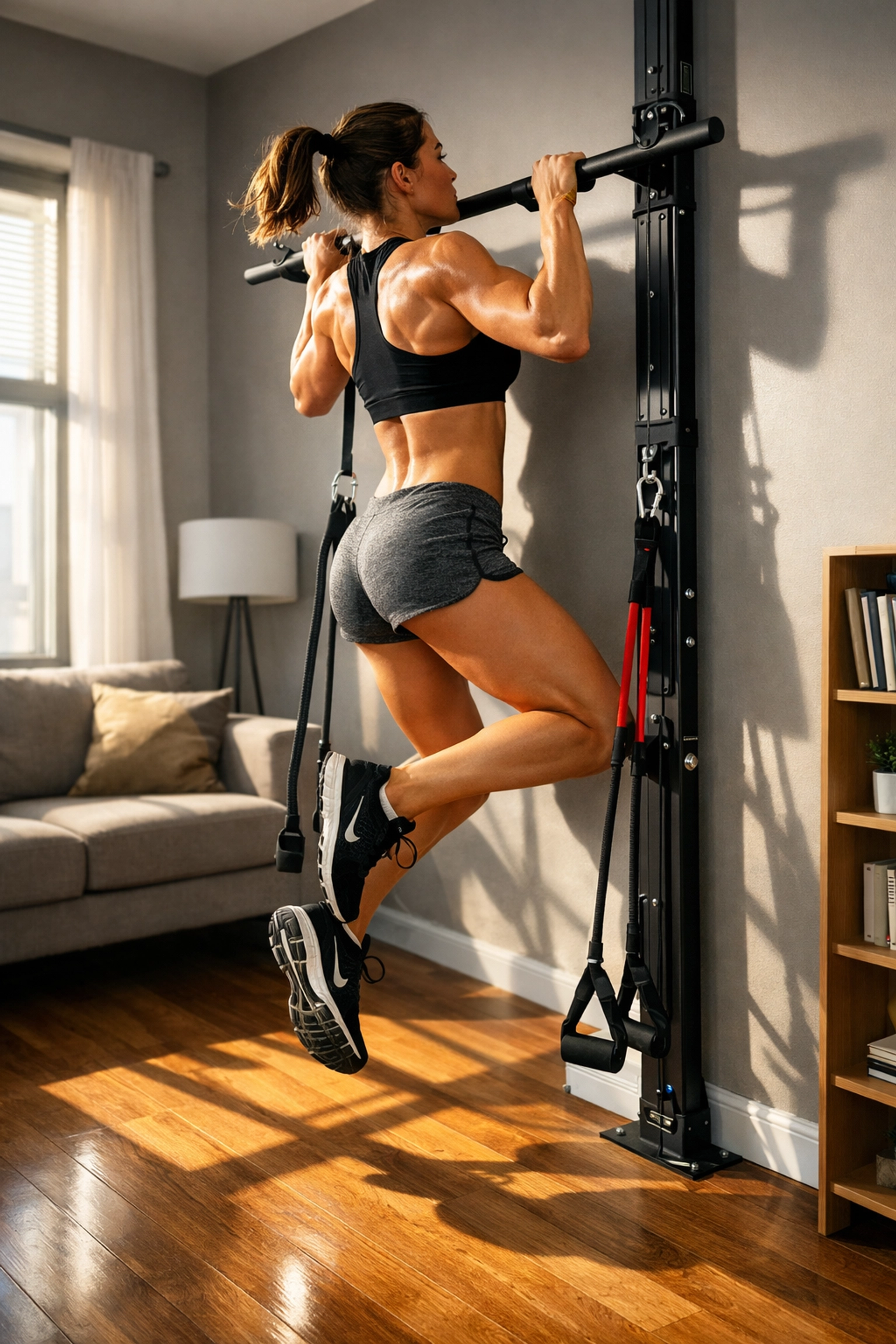
Traditional thinking says you can't do effective vertical pulling movements in a rental without mounting hardware. That's outdated information. Floor-to-ceiling resistance systems like the Resistance Rail from Bold Body Fitness use tension to secure themselves between your floor and ceiling: zero wall damage required.
This is where things get interesting for gymnasts, ninja warriors, and anyone serious about full body workout at home capabilities. A properly designed floor-to-ceiling system gives you:
- Pull-up and chin-up stations that handle your full bodyweight
- Multiple grip positions for varied training stimuli
- Attachment points for rings, TRX systems, and resistance bands
- The ability to train muscle-ups, levers, and advanced calisthenic movements
- A versatile home gym setup that adapts to different training modalities
The Resistance Rail system exemplifies what modern resistance training equipment should be: portable, damage-free, and uncompromising on performance. You set it up in minutes using ceiling pressure, train like you mean it, and remove it completely when needed. No tools, no damage, no excuses.
For CrossFit athletes building a crossfit home gym in a rental, this solves the massive problem of how to program pulling movements without a permanent rig. You get legitimate gymnastics work, strength progression, and the capacity to run full WODs at home.
Building Your Complete Renter-Friendly Training Space
Let's put this together into a coherent system rather than a random collection of equipment.
Space allocation matters. Measure your available floor space and plan your layout before buying anything. Most people need a minimum 8x8 foot area for effective training, though you can work with less if you're smart about equipment selection and willing to move furniture.
Create zones within your space. Even in a studio apartment, you can designate different areas: floor work zone (mats, space for burpees and push-ups), standing resistance zone (bands, dumbbells), and vertical training zone (floor-to-ceiling system).
Storage is non-negotiable. Equipment that stays scattered across your floor won't last long in a rental situation. You'll damage it, trip over it, or get sick of the visual clutter and stop training. Invest in a storage cart or designated closet space where everything has a specific home.
When you visit Bold Body Fitness, look for equipment that stacks, hangs, or collapses. Every piece should earn its footprint by either serving multiple functions or storing efficiently.
Advanced Options for Serious Athletes
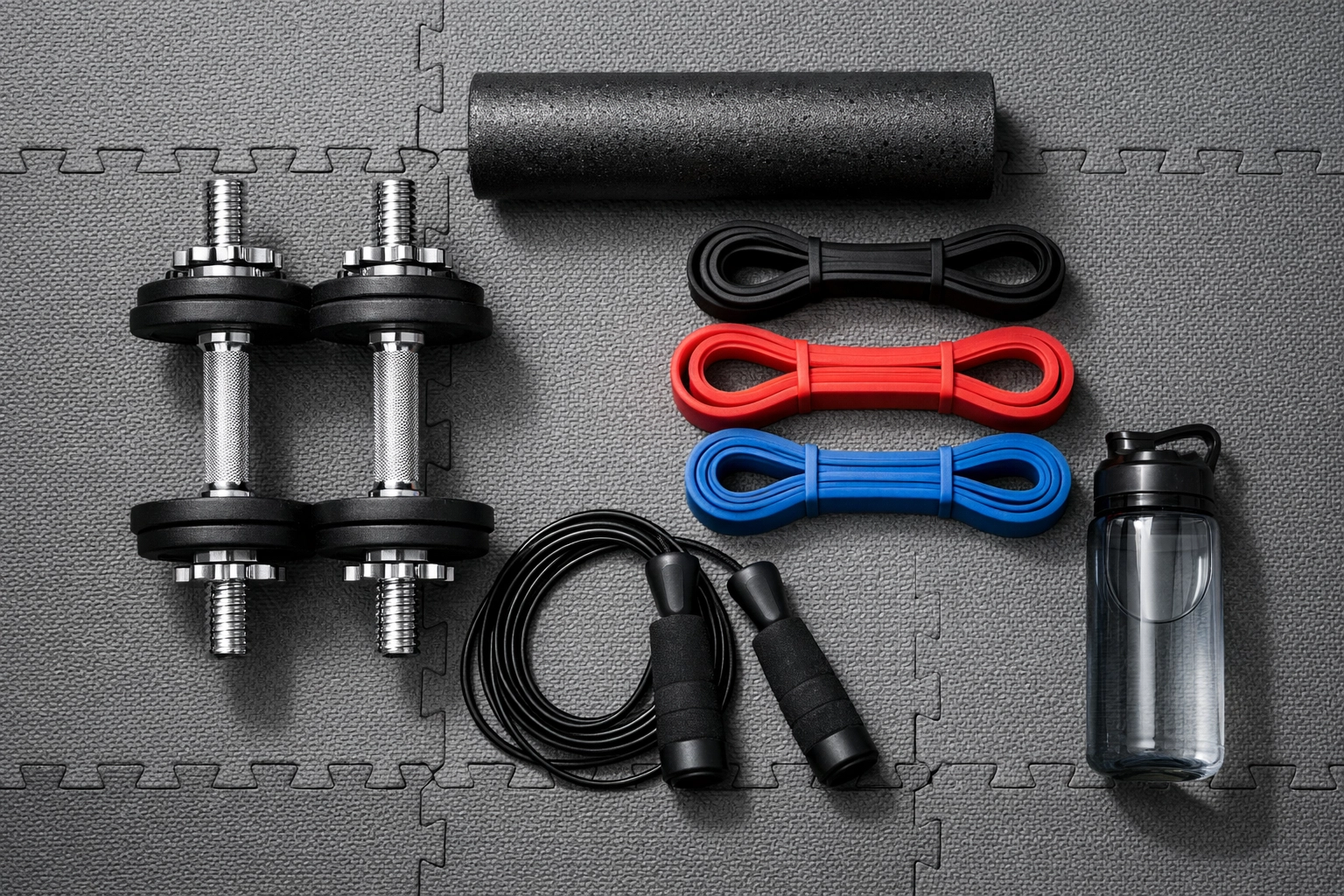
Once you've established your foundation, these additions take your rental gym to the next level.
Adjustable weight bench. A quality bench with adjustable incline positions multiplies your exercise options dramatically. Look for models that fold upright for storage and include transport wheels. REP and Rogue both make excellent options that won't destroy your floors.
Kettlebells or adjustable kettlebell systems. For MMA fighters and CrossFit athletes, ballistic movements matter. Adjustable kettlebells save space and money, but some athletes prefer the feel of competition-style bells. Either way, protect your floors with mats and learn proper technique before going heavy.
Suspension trainers. TRX-style systems attach to your floor-to-ceiling setup or doorframes and open up hundreds of exercise variations. They're especially valuable for gymnasts working on body control and stability.
Cardio solutions. Skip the treadmill (too loud, too heavy, too expensive). Assault bikes, rowing machines, or quality jump ropes give you conditioning work without bothering neighbors. The Concept2 rower is apartment-friendly and folds vertically for storage.
Common Mistakes That Waste Money and Space
After helping hundreds of renters build home gyms, these are the mistakes that keep showing up.
Buying equipment that doesn't fit through your door. Measure doorways and hallways before ordering large equipment. That bench press that looked perfect online becomes useless if you can't get it into your apartment.
Ignoring noise concerns. Your first noise complaint will limit your training more than any equipment restriction. Buy quiet equipment, use mats everywhere, and avoid late-night or early-morning sessions with high-impact movements.
Choosing fixed-weight equipment over adjustable. Unless you have a dedicated room and plan to stay for years, fixed weights waste space and money. Adjustable equipment costs more upfront but delivers better long-term value.
Skipping the fundamentals. That fancy piece of equipment won't help if you don't have proper mats, adequate lighting, and ventilation. Build your foundation first, then add specialized tools.
Forgetting about your next move. Every equipment purchase should pass the "moving day test." If it's going to be a nightmare to transport or won't fit in different spaces, reconsider the purchase.
Programming Your No-Wall-Damage Gym
Equipment means nothing without a solid training program. Here's how serious athletes maximize renter-friendly setups.
For resistance training, program around compound movements that require minimal equipment: goblet squats, Romanian deadlifts, overhead presses, rows using your floor-to-ceiling system, and loaded carries with dumbbells or kettlebells.
Bodyweight training at home becomes your secret weapon. Push-up variations, pistol squats, L-sits, planks, and hollow body holds require zero equipment but build serious strength. Add your floor-to-ceiling system for pull-ups, muscle-ups, and leg raises, and you've got complete upper-body and core programming.
CrossFit athletes can run modified versions of most benchmark WODs. Fran becomes thrusters and pull-ups on your resistance system. Cindy works perfectly with zero modification. Diane becomes deadlifts with dumbbells and handstand push-ups against the wall (using mats to protect paint).
Check out the shop at Bold Body Fitness for equipment specifically designed around athletic performance in space-limited environments.
Making It Official: Setting Up Your First Renter's Gym
Stop planning and start building. Here's your action plan:
Week 1: Measure your space, photograph it, and create your layout plan. Decide on your primary training focus (strength, calisthenics, CrossFit, etc.) and list equipment priorities.
Week 2: Start with the foundation: protective mats first, then adjustable dumbbells or your floor-to-ceiling resistance system. Don't buy everything at once. Build gradually and learn what you actually use.
Week 3: Add storage solutions and organizational systems. A disorganized gym is a gym you'll stop using.
Week 4: Fill gaps based on your actual training patterns, not what you think you should have.
The reality? You can build a legitimate training facility in a rental apartment without sacrificing your security deposit or compromising your athletic development. You just need to be strategic about equipment selection and commit to the process.
Your walls will remain pristine. Your landlord will stay happy. Your training will progress. And when moving day comes, you'll pack up your gym in a few hours and rebuild it in your new space the same day.
That's the power of thinking like a renter who refuses to accept limitations. Now get to work.
