
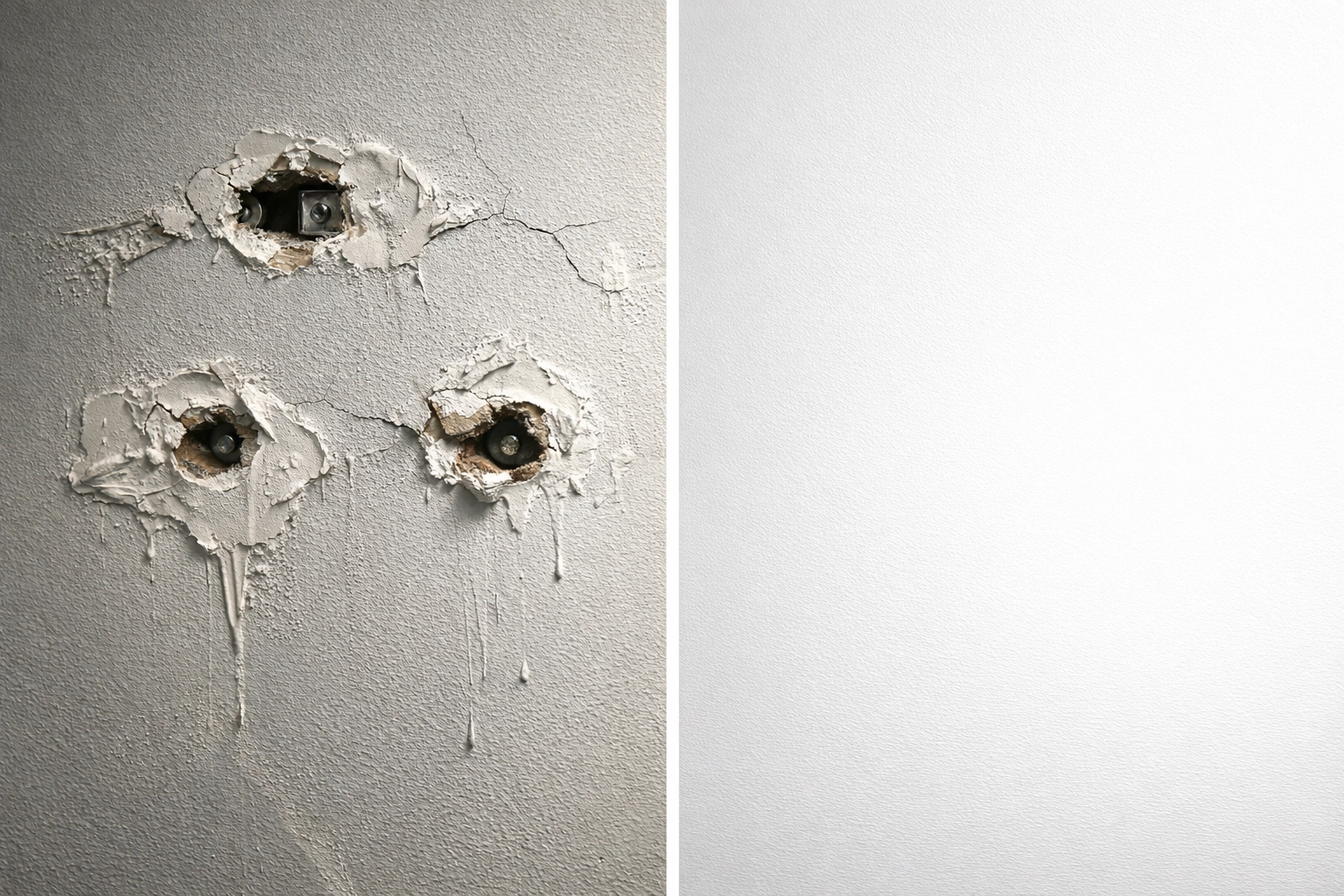
You know that sinking feeling when you're staring at the patched holes in your wall after removing a "permanent" pull-up bar? Or worse, when your landlord sends you a bill for $500 in security deposit deductions because your home gym equipment destroyed the drywall?
Traditional wall-mounted pull-up bars have been the default choice for home gym equipment for decades. But here's the truth: they're outdated, destructive, and limiting. A growing movement of renters and homeowners are saying "enough" and switching to no wall damage workout systems that deliver the same (or better) results without turning your living space into a construction zone.
Let's break down why this shift is happening and what it means for your training.
The Real Cost of Traditional Pull-Up Bars
When you install a traditional wall-mounted pull-up bar, you're not just committing to a workout, you're committing to permanent structural changes to your home. Here's what that actually looks like:
For Renters: You're playing Russian roulette with your security deposit. Most leases explicitly prohibit mounting heavy equipment to walls. Even if you patch the holes yourself, landlords can spot amateur repairs from a mile away. You're looking at deductions ranging from $200 to $800 depending on the damage and your landlord's mood.
For Homeowners: Sure, you own the place. But do you really want to limit where you can train based on stud locations? What happens when you want to rearrange your space, move to a different room, or (let's be real) sell your house? Those mounting holes become permanent scars that affect your home's value and appeal.
The Structural Risk: Not all walls are created equal. Mount a pull-up bar on drywall without proper stud support, and you're one muscle-up away from a catastrophic failure. Even with proper installation, the constant stress from dynamic movements like kipping pull-ups or explosive muscle-ups can loosen bolts, crack drywall, and weaken the mounting points over time.
Enter the No Wall Damage Workout System
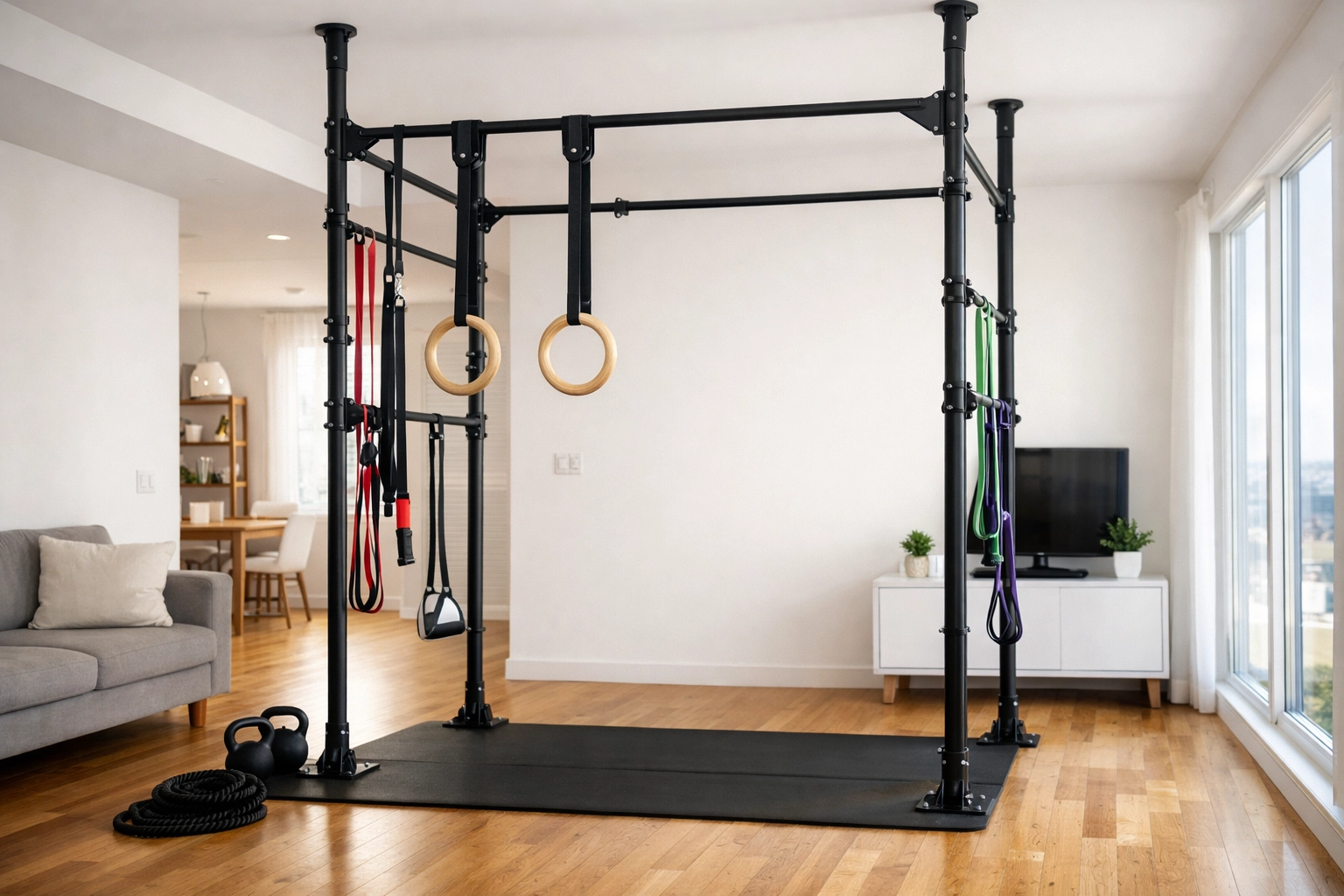
The no wall damage workout system revolution isn't about compromising your training: it's about upgrading it. These systems use tension, leverage, and innovative engineering to create stable, versatile training platforms without a single screw, bolt, or hole in your walls.
The most effective systems leverage floor-to-ceiling tension technology. Instead of relying on wall studs and drywall anchors, they distribute weight across your ceiling and floor: the strongest structural points in any room. This means you get industrial-grade stability without the permanent commitment.
Why Athletes Are Making the Switch
Versatility That Wall Bars Can't Match
Traditional pull-up bars give you one mounting height, one grip width, and one angle. That's it. You're locked into whatever configuration you installed.
A proper floor to ceiling gym system like the Resistance Rail changes the game entirely. You can adjust height on the fly, add multiple attachment points at different levels, and create complex training stations that would require dozens of wall-mounted bars to replicate.
For CrossFit Athletes: You need to transition between bar work, ring exercises, and resistance training without resetting your entire gym. No-damage systems let you build multi-modal workout stations that adapt to whatever your WOD demands.
For Calisthenics Practitioners: Progression is everything. You need different grip widths, heights, and angles as you build toward advanced skills like front levers, planches, and one-arm pull-ups. Adjustability isn't a luxury: it's a necessity.
For MMA Fighters: Your conditioning demands variety. Explosive pull-ups, hanging core work, and resistance band training need to flow seamlessly. Static wall bars create bottlenecks in your training flow.

The Renter's Revolution
The rental market has changed. More people are renting longer, and they're not willing to sacrifice their fitness goals because of lease restrictions. No wall damage workout systems have unlocked bodyweight training at home for millions of renters who previously had to rely on overcrowded gyms or inferior doorway pull-up bars.
These systems move with you. When your lease ends, you disassemble your setup in minutes, pack it up, and reinstall it in your new place. Zero damage, zero hassle, zero security deposit drama.
This portability also means you can train anywhere in your home. Want to work out in the living room today and your bedroom tomorrow? Done. Traditional wall bars lock you into one location forever.
Homeowners Want Flexibility Too
Just because you own your home doesn't mean you want to commit to permanent modifications. Interior design trends change. Families grow. Home offices become nurseries. A no-damage system gives you the freedom to evolve your space without expensive repairs or renovations.
Plus, when you eventually sell, you're not dealing with patched walls and touch-up paint. Your home shows cleaner, photographs better, and appeals to a wider range of buyers.
The Technology Behind No-Damage Systems
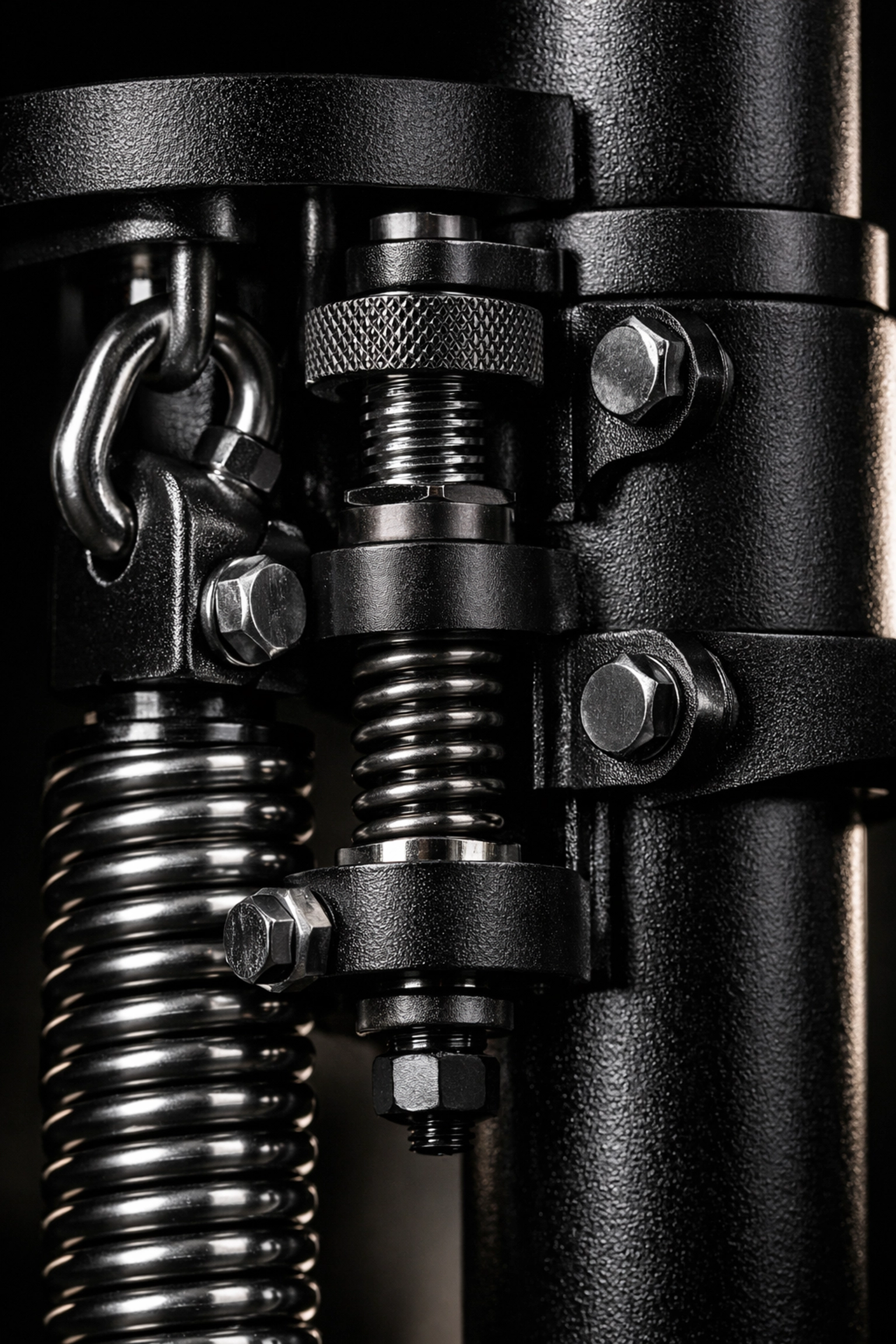
The best pull up bar alternative systems use precision-engineered tension mechanisms that create rock-solid stability through physics rather than hardware. Here's how they work:
Vertical Tension: The system extends from floor to ceiling with adjustable tension that's calibrated to your ceiling height. This creates a compression force that locks the system in place: the harder you pull, the more stable it becomes.
Load Distribution: Instead of concentrating stress on a few wall studs, tension systems distribute weight across your floor and ceiling joists: structural elements designed to support thousands of pounds.
Modular Design: Quality systems use modular components that let you customize your setup. Need multiple grip stations? Add a crossbar. Want to incorporate rings or resistance bands? Attach them anywhere along the vertical rail.
The Resistance Rail Deluxe, for example, uses industrial-grade tension springs and adjustable height mechanisms that accommodate ceilings from 7 to 10 feet. The system handles dynamic loads up to 300+ pounds: more than enough for any athlete, even during explosive movements.
Breaking Down the Options
Not all no-damage systems are created equal. Here's what separates the elite equipment from the gimmicks:
Floor-to-Ceiling Tension Systems
The Gold Standard. These systems offer the most versatility, stability, and training options. They're the choice of serious athletes who demand professional-grade equipment without the permanent installation.
Pros:
- Maximum stability for advanced movements
- Infinite adjustability
- Multi-function training stations
- True versatile home gym capability
Cons:
- Higher upfront investment
- Requires minimum ceiling height
Doorway Pull-Up Bars
The classic compromise. They work, but they're limited.
Pros:
- Inexpensive
- Truly portable
- Works in most doorways
Cons:
- One height, one position
- Grip width limitations
- Can still damage door frames over time
- Not suitable for dynamic movements or advanced progressions
Power Towers and Free-Standing Systems
Self-supporting frames that don't require wall mounting.
Pros:
- Zero installation
- Move anywhere
Cons:
- Large footprint takes up significant floor space
- Limited exercise variety
- Stability issues with dynamic movements
- Fixed heights and positions
The Training Advantages
Beyond avoiding property damage, no-damage systems actually improve your training in measurable ways:
Progressive Overload Made Easy: Adjust your leverage, grip width, and body angle without buying new equipment or drilling new holes. This variability is crucial for continued strength gains and skill development.
Comprehensive Full Body Workout At Home: Add rings for gymnastics work. Attach resistance bands for accommodating resistance. Install multiple bars at different heights for circuit training. Your calisthenics equipment for home becomes a complete training ecosystem.
Dynamic Movement Training: Wall-mounted bars limit explosive movements because of stability concerns. Quality tension systems are engineered for kipping pull-ups, muscle-ups, and other dynamic exercises that build real-world power.
Core Integration: When you can easily add hanging core work, leg raises, and oblique exercises at any height, your core development accelerates. Every movement becomes a core movement.
Making the Switch: What to Consider
Ready to ditch your traditional pull-up bar? Here's what matters:
Ceiling Height: Most tension systems require 7-10 feet of clearance. Measure twice, buy once.
Weight Capacity: Look for systems rated at least 300 pounds for dynamic load. Your body weight during a kipping pull-up or muscle-up can easily exceed your static weight.
Adjustability: Can you change heights quickly? Add attachments? Modify grip widths? The more adjustable, the more valuable.
Quality of Materials: Powder-coated steel, industrial-grade springs, and reinforced connection points aren't optional: they're essential for safety and longevity.
Warranty and Support: Elite equipment comes with real warranties and customer support. You're making an investment in your training: choose brands that stand behind their products.
The Bottom Line
The era of drilling holes and crossing your fingers is over. Modern resistance training demands equipment that's as dynamic and adaptable as your training. No wall damage workout systems deliver professional-grade performance without the permanent commitment, property damage, or mobility limitations of traditional wall bars.
Whether you're a renter protecting your security deposit, a homeowner preserving your property value, or an athlete demanding maximum training versatility, these systems represent the smarter choice. You get more functionality, more flexibility, and zero stress about damaging your space.
The traditional pull-up bar had its time. But like everything in fitness, evolution wins. The athletes who embrace no-damage systems aren't compromising: they're upgrading.
Ready to build your damage-free training system? Check out the complete lineup at Bold Body Fitness and see why thousands of renters and homeowners are making the switch. Your walls (and your landlord) will thank you.