
Let's cut through the noise: you don't need a garage full of weights to build serious strength, explosive power, or a shredded physique. If you think bodyweight training is just for beginners doing basic push-ups in their living room, you're dead wrong.
Elite gymnasts, Navy SEALs, and professional fighters have been proving for decades that your body is the most versatile piece of equipment you'll ever own. The question isn't whether bodyweight training works: it's whether you're willing to push yourself hard enough to unlock its full potential.
This guide is for the serious home athlete who wants results, not excuses. We're talking about legitimate full-body workouts that build functional strength, enhance athletic performance, and torch body fat: all without touching a single dumbbell.
Why Bodyweight Training Delivers Real Results
Your body doesn't know the difference between lifting a barbell and lifting yourself. It only knows tension, resistance, and mechanical stress. When you execute a proper one-arm push-up or pistol squat, you're generating massive force production that translates directly to muscle growth and strength gains.
The real advantage of bodyweight training at home isn't convenience: it's the freedom to train movement patterns that matter. Instead of isolating muscles on machines, you're building strength through compound movements that engage multiple muscle groups simultaneously. This creates functional athleticism that carries over to every aspect of your performance.
Plus, bodyweight exercises hammer your core stability with every rep. There's no bench supporting your back, no machine stabilizing the weight path. Your entire kinetic chain has to fire in perfect coordination, building the kind of body control that separates good athletes from great ones.
The Non-Negotiable Foundation: Essential Bodyweight Exercises
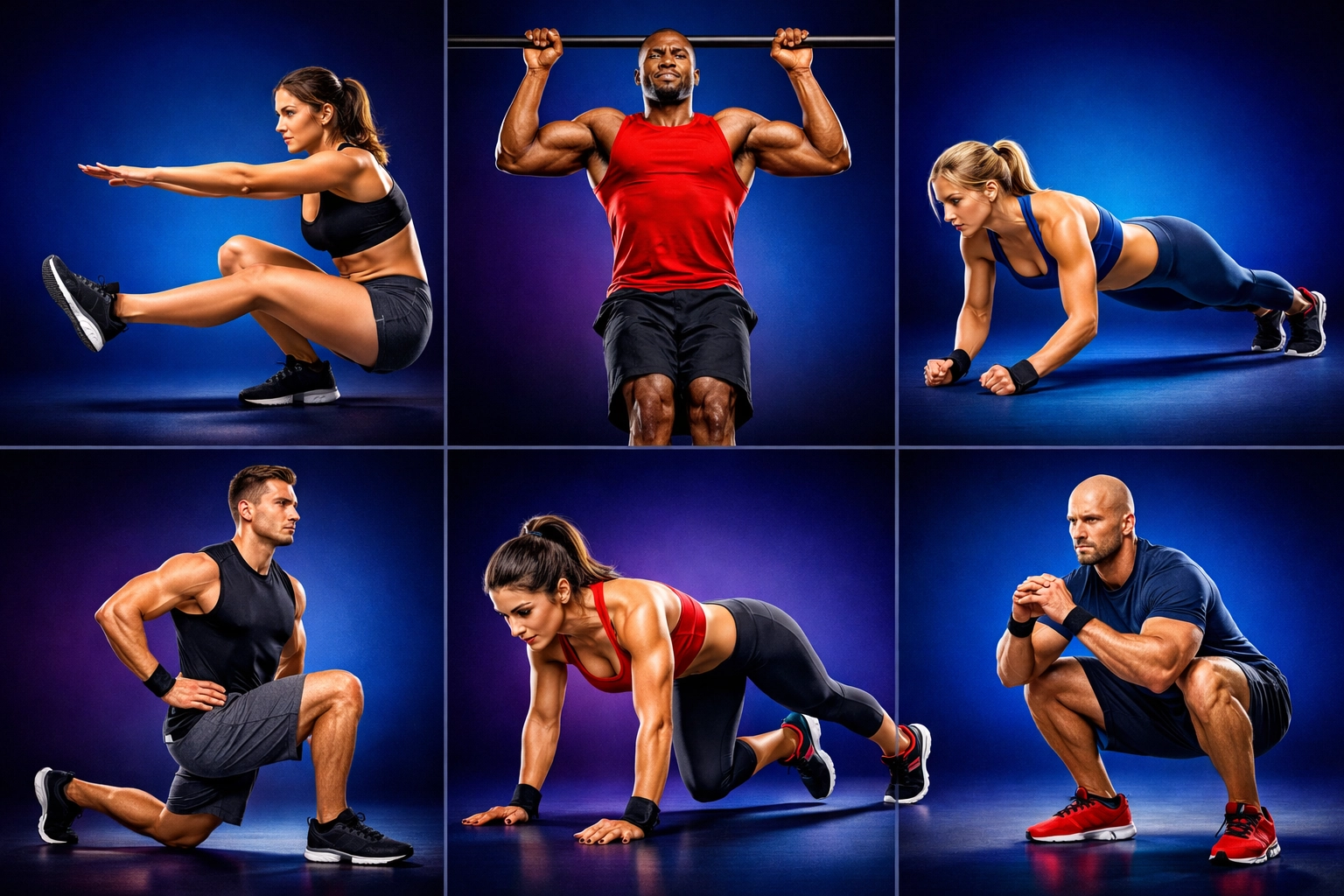
Before we dive into advanced variations and killer workout protocols, you need to master the fundamentals. These six exercises form the backbone of any effective bodyweight training program.
Push-Ups: The Ultimate Upper Body Builder
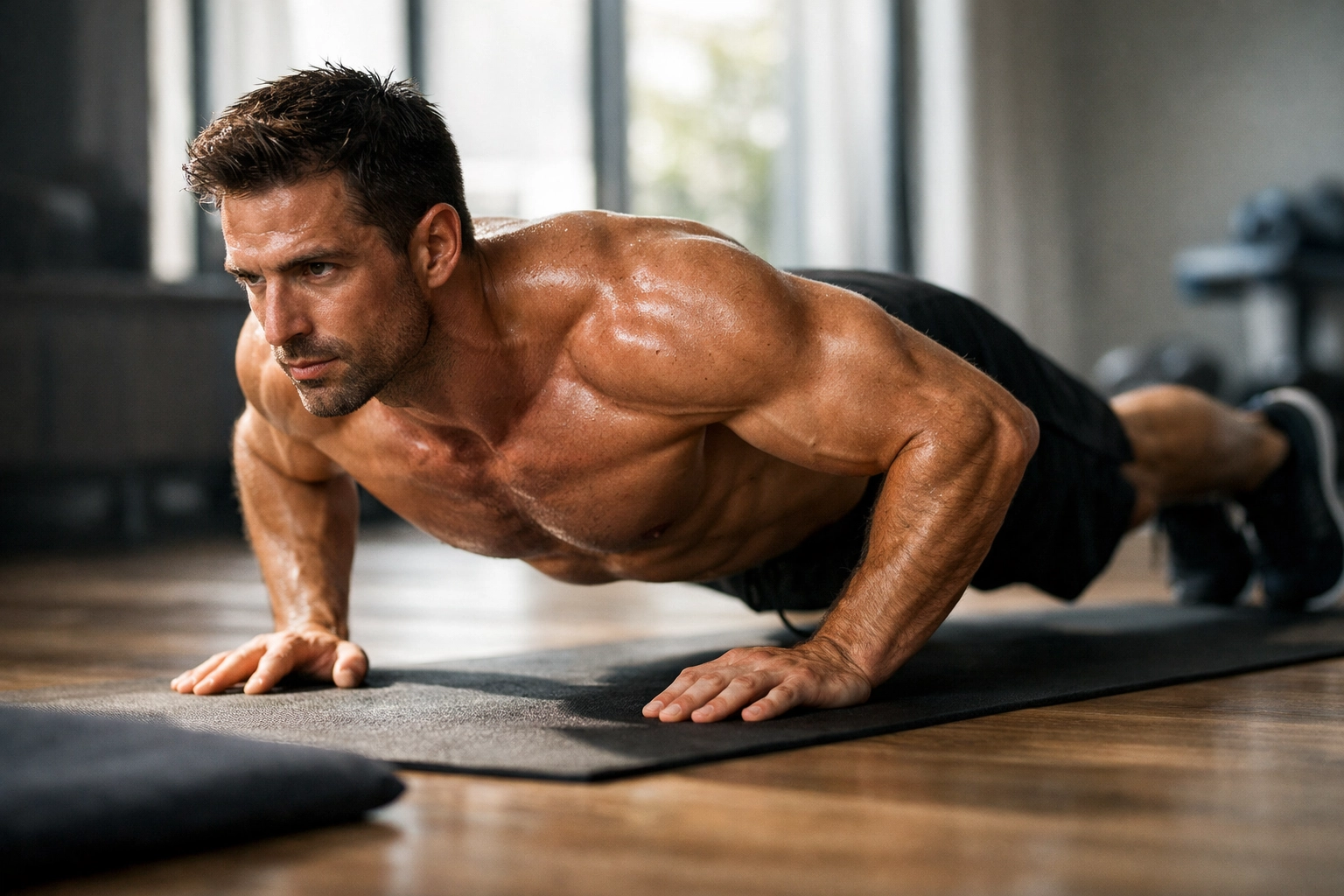
Forget what you've heard: push-ups aren't just a warm-up exercise. When performed with proper form and progressive variations, push-ups build serious chest, shoulder, and tricep development while crushing your core stability.
Start with hands shoulder-width apart, body in a straight line from head to heels. Lower your chest to within an inch of the floor while keeping your elbows at a 45-degree angle from your torso. Drive back up explosively, fully extending your arms at the top.
Progression path: Standard push-ups → Diamond push-ups → Decline push-ups → Archer push-ups → One-arm push-ups
Squats: Leg Power Without the Barbell
Air squats might sound basic, but they're the gateway to some of the most demanding lower-body exercises in existence. The squat pattern builds quad strength, glute power, and bulletproof knee stability.
Stand with feet shoulder-width apart, toes slightly turned out. Sit back and down like you're aiming for a chair, keeping your chest up and weight in your heels. Descend until your hip crease drops below your knee, then drive through your heels to stand.
Progression path: Bodyweight squats → Pause squats → Jump squats → Pistol squats (single-leg)
Pull-Ups: The King of Back Development
Here's where most bodyweight programs fall short: you absolutely need a way to perform pulling movements. Whether it's a doorway bar, ceiling-mounted system, or a versatile setup from Bold Body Fitness, you must train vertical pulls to build a complete physique.
Hang from the bar with an overhand grip slightly wider than shoulder-width. Pull your chest toward the bar by driving your elbows down and back, squeezing your shoulder blades together at the top. Lower with control.
Progression path: Negative pull-ups → Band-assisted pull-ups → Full pull-ups → Weighted pull-ups → One-arm pull-ups
Planks: Core Stability That Transfers Everywhere
The plank isn't sexy, but it's brutally effective for building the anti-extension strength that protects your spine during every other movement you perform.
Start in a push-up position, then drop to your forearms. Keep your body in a perfect straight line: no sagging hips, no raised butt. Squeeze your glutes, brace your abs like you're about to take a punch, and breathe steadily.
Progression path: Forearm plank (60+ seconds) → High plank → Plank to push-up → Single-arm plank
Lunges: Unilateral Strength and Athletic Power
Single-leg work exposes and eliminates strength imbalances while building the kind of stability that matters in real-world movement and sport performance.
Step forward with one leg, lowering your back knee toward the ground while keeping your front shin vertical. Your front thigh should reach parallel with the floor. Drive through your front heel to return to standing.
Progression path: Walking lunges → Reverse lunges → Jumping lunges → Bulgarian split squats
Mountain Climbers: Cardio Meets Core Conditioning
This dynamic movement bridges the gap between strength work and conditioning, spiking your heart rate while hammering your core and hip flexors.
Start in a high plank position. Drive one knee toward your chest, then explosively switch legs mid-air. Maintain a flat back and tight core throughout. This isn't a casual movement: attack it with maximum intensity.
Programming Your Bodyweight Training: Three Workout Blueprints
Raw exercises mean nothing without intelligent programming. Here are three distinct approaches to structure your training, each serving different goals and experience levels.
The Strength-Focused Circuit
This approach prioritizes maximum tension and progressive overload. You'll perform harder variations with more rest, focusing on quality reps that build genuine strength.
Structure:
- 5-6 exercises performed in sequence
- 5-8 reps per exercise (choose a variation that makes this challenging)
- 60-90 seconds rest between exercises
- 4-5 rounds total
- Train 3-4 times per week
Sample workout:
- Archer push-ups (5 reps per side)
- Pistol squats (5 reps per leg)
- Pull-ups (8 reps)
- Single-leg hip thrusts (8 reps per leg)
- L-sit hold (20-30 seconds)
- Nordic curls (5 reps)
The HIIT Demolition Protocol
High-intensity interval training maximizes fat burning and cardiovascular conditioning while maintaining muscle. This is where you prove your mental toughness.
Structure:
- 30 seconds maximum effort
- 15 seconds rest
- 8-10 exercises
- 3-4 rounds
- Train 2-3 times per week
Sample workout:
- Burpees
- Jump squats
- Mountain climbers
- Push-ups
- High knees
- Jumping lunges
- Plank jacks
- Speed skaters
Push until your lungs are screaming and your muscles are on fire. That's where adaptation happens.
The Volume Accumulation Method
This approach uses moderate rep ranges and shorter rest periods to build muscle endurance and size. It's brutal in its own way: not from single-rep intensity but from cumulative fatigue.
Structure:
- 10-15 reps per exercise
- 30-45 seconds rest
- 6-8 exercises
- 3-4 rounds
- Train 4-5 times per week
Sample workout:
- Standard push-ups (15 reps)
- Bodyweight squats (20 reps)
- Inverted rows (12 reps)
- Walking lunges (10 per leg)
- Dips (12 reps)
- Glute bridges (15 reps)
- Plank (45 seconds)
- Bicycle crunches (20 total)
Progression Strategies: Getting Stronger Without Adding Weight
The biggest mistake in bodyweight training is stalling on basic variations. If you're still doing standard push-ups after six months, you're coasting, not training. Here's how to keep progressing.
Increase time under tension: Slow down the eccentric (lowering) phase to 3-5 seconds. This creates massive muscle damage and growth stimulus without changing the exercise.
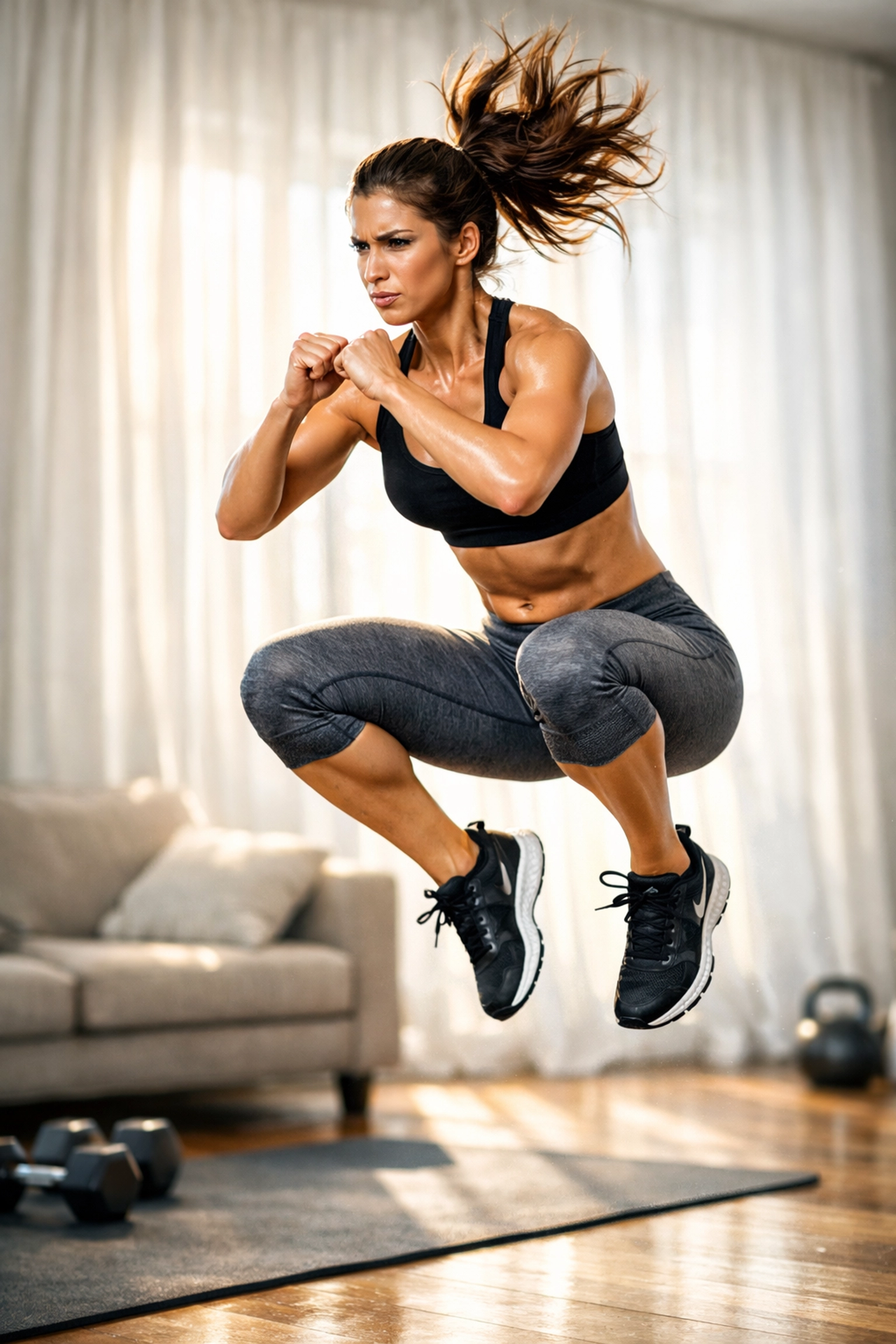
Add plyometric elements: Convert static movements into explosive ones. Regular squats become jump squats. Standard push-ups become clapping push-ups. This builds power and keeps your nervous system adapting.
Reduce leverage: Move your hands further apart on push-ups. Elevate your feet. Remove one limb from the equation entirely. These mechanical changes make familiar exercises significantly harder.
Minimize rest periods: If you can do 20 push-ups straight, try doing 10 sets of 10 with only 20 seconds rest between sets. The cumulative fatigue will humble you quickly.
When Equipment Enhances Your Bodyweight Training
Let's be clear: you can build an impressive physique with nothing but a pull-up bar and floor space. But strategic equipment additions can unlock movements and training angles that pure bodyweight work can't access.
This is where systems like the Resistance Rail from Bold Body Fitness become game-changers for serious home athletes. Instead of drilling holes in your ceiling or mounting permanent fixtures, you get a floor-to-ceiling adjustable system that opens up hundreds of exercise variations.
The beauty of the Resistance Rail isn't that it replaces bodyweight training: it's that it enhances it. Suddenly you can perform:
- Assisted one-arm pull-ups with perfect form
- Ring rows at any angle for progressive back development
- Suspended push-up variations that annihilate your stabilizers
- TRX-style training without the limitations of door anchors
- Hanging core work that builds granite abs
For CrossFit athletes training at home, this kind of versatility is non-negotiable. You need the ability to scale movements up or down depending on your daily capacity. For MMA fighters, the stability challenges of suspended training directly translate to grappling strength and control.
The system installs in seconds without permanent mounting, making it perfect for renters or anyone who doesn't want to destroy their walls. Check out the full range of options in the shop to see which setup fits your training space and goals.
Programming Pull Movements Without a Gym
Here's the harsh truth: you can't build a balanced physique without pulling exercises. Push-ups, dips, and planks will build your anterior chain, but you'll create massive muscle imbalances without horizontal and vertical pulls.
Horizontal pulls (rows): These build your mid-back, rear delts, and biceps. You can perform these using a sturdy table, a bedsheet wrapped around a door, or ideally, an adjustable system that lets you modify the angle.
Vertical pulls (pull-ups/chin-ups): Nothing builds a wide, powerful back like vertical pulling. A doorway pull-up bar works, but it limits your grip options and doesn't allow for assisted variations as you progress toward harder movements.
Isometric holds: If you truly have zero equipment, you can still build pulling strength through active hangs, doorframe hangs, and bodyweight rows under a table. It's not optimal, but it beats doing nothing.
The Mental Game: Why Bodyweight Training Demands More
Here's something most fitness articles won't tell you: bodyweight training is harder mentally than weight training. There's no loading a bar to prove how strong you are. There's no PR to chase that impresses people in a gym.
The wins are subtle: holding a plank 10 seconds longer, getting one more pull-up, finally nailing that first pistol squat. You need internal motivation because external validation is harder to find.
But this is also what makes bodyweight training perfect for home athletes. You're not training for Instagram or gym floor status. You're training for yourself, for your sport, for the pure satisfaction of mastery over your own body.
Common Mistakes That Kill Progress
Training without a plan: Random workouts create random results. Structure your training into phases with specific goals, whether that's building max strength, increasing endurance, or developing new skills.
Ignoring recovery: Bodyweight training still damages muscle tissue and stresses your nervous system. You need adequate rest, quality sleep, and proper nutrition to adapt and grow stronger.
Staying in your comfort zone: If you can complete every set with perfect form and energy to spare, you're not training hard enough. Push to technical failure, where you can't complete another rep with good form.
Skipping warm-ups: Bodyweight exercises create joint stress just like weights do. Take 5-10 minutes to elevate your heart rate, mobilize your joints, and prime your nervous system before attacking your workout.
Forgetting about legs: Don't be that person who does endless push-up variations but neglects lower body work. Your legs contain the largest muscles in your body and drive the most powerful movements.
Building Your Bodyweight Training Ecosystem
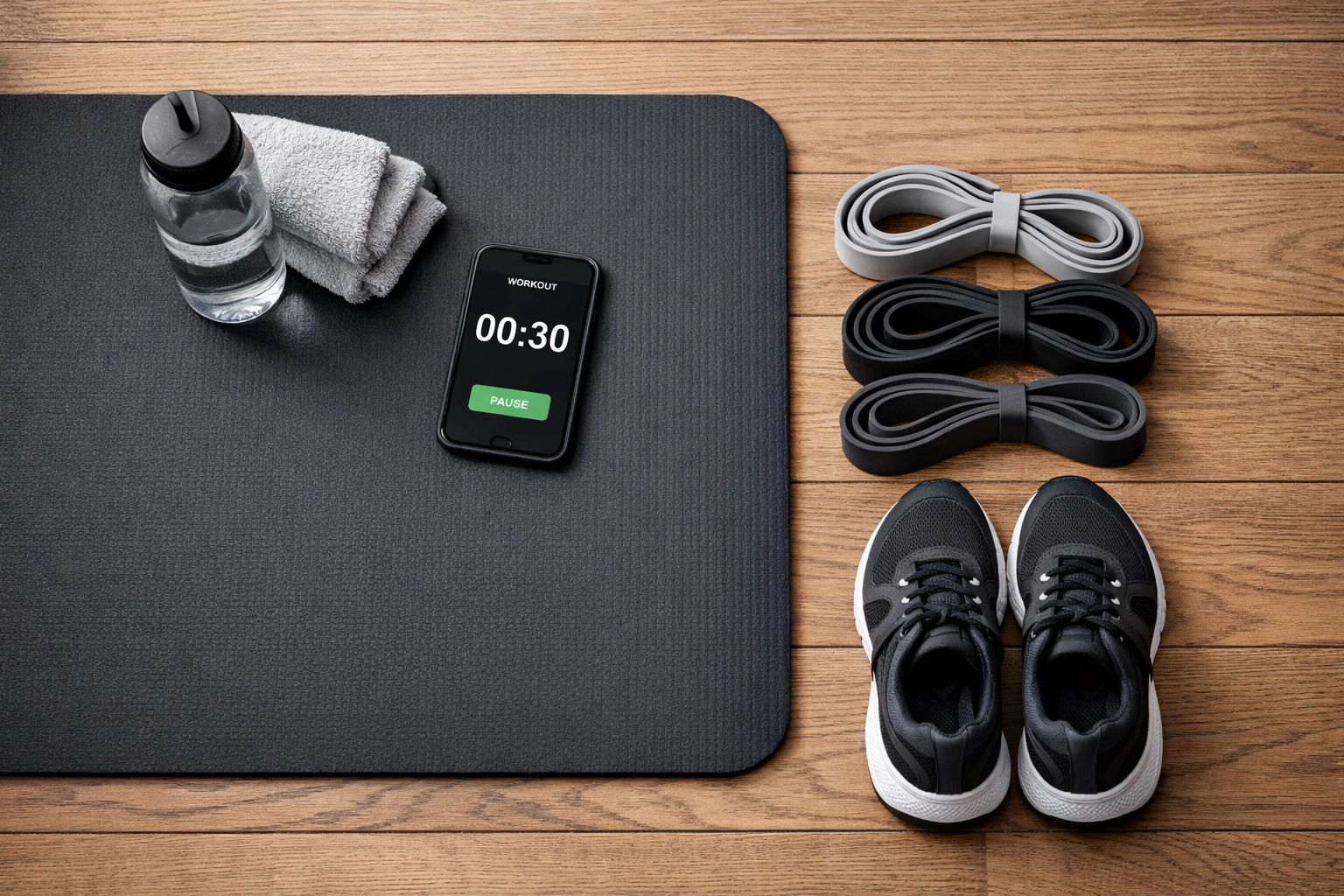
The beautiful thing about bodyweight training at home is how it scales with your commitment. Start with the basics: a small training space, maybe a mat for comfort, and a pull-up solution. As your training evolves, add strategic pieces that unlock new progressions.
The key is building a training environment that removes excuses. When your equipment is always there, always ready, you eliminate the friction that kills consistency. This is why Bold Body Fitness focuses on systems that install quickly and adjust easily: because the best workout is the one you'll actually do.
Your body is capable of incredible things. Stop waiting for the perfect gym membership or the ideal equipment setup. Start with what you have, master the fundamentals, and progressively challenge yourself with harder variations.
The weight room isn't going anywhere. But right now, in your home, with nothing but determination and intelligent programming, you can build genuine strength, athletic power, and a physique that reflects your commitment to excellence.
No more excuses. Just you, your body, and the willingness to push beyond what's comfortable. That's all you need.
