

Let's be real: traditional pull-up bars are a pain in the ass. Door frame bars leave paint chips and scuff marks. Wall-mounted setups require you to play amateur contractor with your security deposit on the line. And those ceiling-mounted rigs? Good luck explaining those drill holes to your landlord.
But here's the thing: you don't need to trash your home to build serious pulling strength. Whether you're training for American Ninja Warrior, prepping for your next MMA fight, or grinding through calisthenics progressions, there are legit pull-up bar alternatives that deliver results without the property damage.
We're not talking about half-measures or beginner nonsense. These are real training solutions for real athletes who need to maintain their pulling strength without sacrificing their living space: or their wallet.
Why Pull-Up Alternatives Matter for Serious Training
Pull-ups are foundational. They build lat width, grip strength, core stability, and functional pulling power that translates to everything from rope climbs to grappling. But the traditional setup isn't always practical.
Maybe you're renting. Maybe you move frequently for competitions. Maybe you're setting up a home gym in a space that can't accommodate permanent installations. Whatever your situation, you need options that don't compromise your training quality.
The alternatives below aren't workarounds: they're legitimate training tools that serious athletes use to build world-class pulling strength. Some offer unique advantages that standard pull-up bars can't match.
1. Resistance Rail Systems: The No-Damage Champion
Here's where things get interesting. Floor-to-ceiling resistance systems like the Resistance Rail are changing the game for home training setups. Unlike traditional pull-up bars that require drilling into walls or door frames, these systems use tension between floor and ceiling to create a stable anchor point.
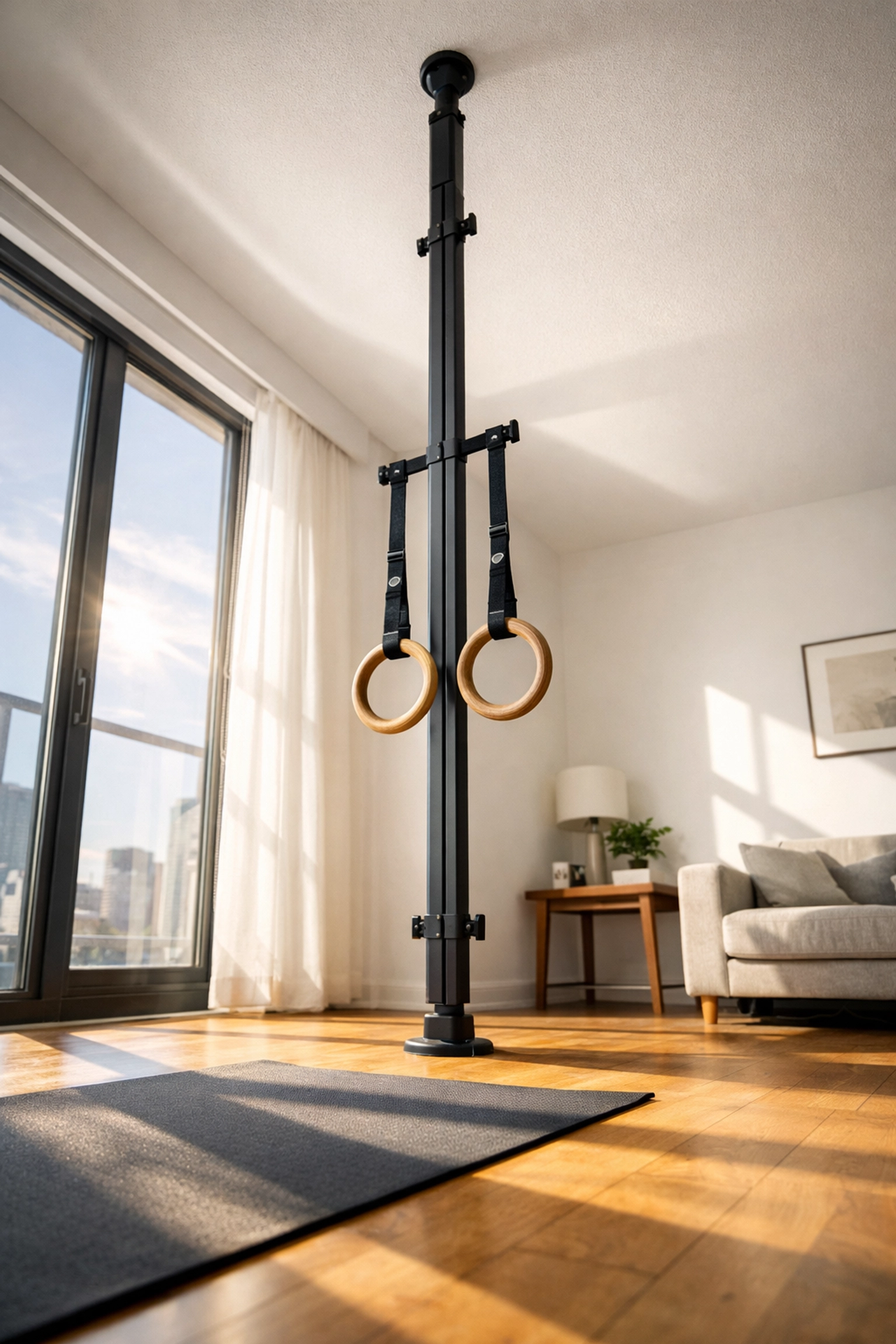
The beauty of this approach? Zero permanent damage. You adjust the height to fit your space, lock it in with pressure, and you've got a versatile training station that handles pull-ups, muscle-ups, ring work, and resistance training. When you move or need to reclaim your space, you simply release the tension and break it down.
For CrossFit athletes and calisthenics practitioners, this versatility is crucial. You're not limited to one exercise or one grip position. Mount rings, add resistance bands, or attach TRX straps: the system adapts to your training needs. It's the kind of versatile home gym setup that actually earns its space.
2. Suspension Trainer Rows: Portable Pulling Power
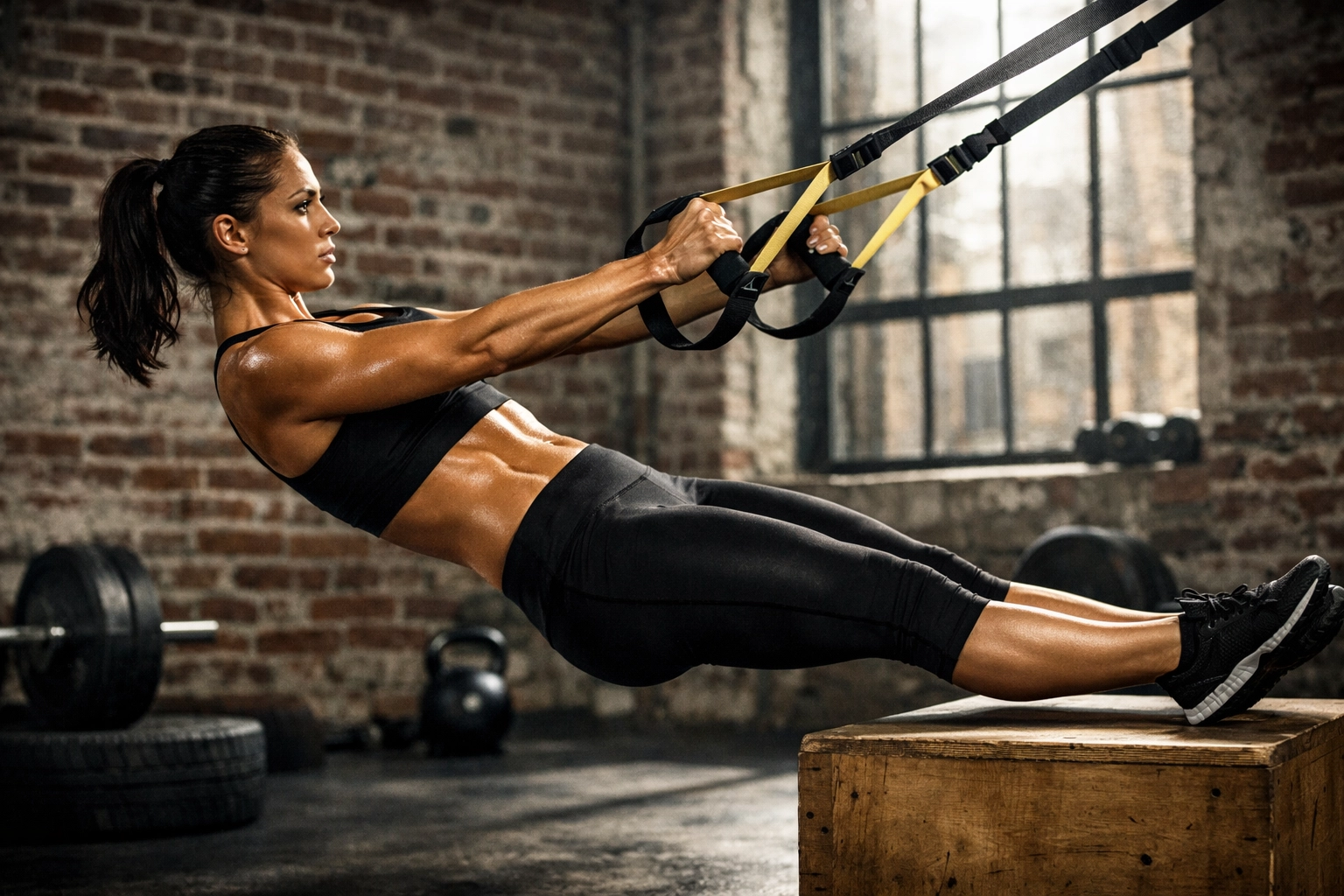
TRX straps and similar suspension trainers are brutally effective for building pulling strength. Anchor them to any stable overhead point: a sturdy beam, a door anchor, or yes, a Resistance Rail: and you've got instant access to scalable bodyweight rows.
The angle determines the difficulty. Feet closer to the anchor? Easier. Feet farther away or elevated? Welcome to the pain cave. This self-limiting nature makes suspension trainers perfect for progressive overload without adding weight.
Ninja warriors love these for developing the specific pulling endurance needed for obstacle courses. The instability forces your core and stabilizer muscles to work overtime, building the kind of functional strength that translates directly to competition performance.
Pro tip: Slow down the eccentric (lowering) phase. Three-second negatives on suspension rows build serious strength and prepare your muscles for the demands of actual pull-ups.
3. Resistance Band Assisted Pull-Ups: Progress Without Compromise
Loop a heavy resistance band over any stable overhead anchor and you've got instant assistance for pull-up progressions. Step one or both feet into the band, and it provides counterbalance at the bottom of the movement where you're weakest.
This isn't the assisted pull-up machine at commercial gyms that lets you cheat through the movement. Bands force you to control the entire range of motion while reducing just enough load to make the reps possible. As you build strength, you progress to lighter bands until you're cranking out unassisted reps.
For MMA fighters working on their pulling strength during fight camp, bands offer a crucial advantage: you can train to fatigue without risking injury from failed reps. When you're balancing multiple training demands, that safety margin matters.
The setup requires only a band and an anchor point: no installation, no damage, just results. Throw them in your gym bag and you can train anywhere.
4. Doorway Rows: Zero Equipment, Maximum Accessibility
Sometimes the simplest solutions are the most effective. Stand in a doorway, grab both sides of the frame, walk your feet forward until you're leaning back at an angle, and pull yourself forward.
It's primitive. It's effective. And it requires exactly zero equipment or setup.
Adjust the difficulty by changing your body angle: the more horizontal you get, the harder the movement becomes. For gymnasts working on specific pulling angles or maintaining strength while traveling, doorway rows are clutch.
The limitation? You're working at fixed grip widths determined by your doorframe. But for quick training sessions or maintaining strength on the road, you can't beat the accessibility.
5. Inverted Rows with Improvised Equipment
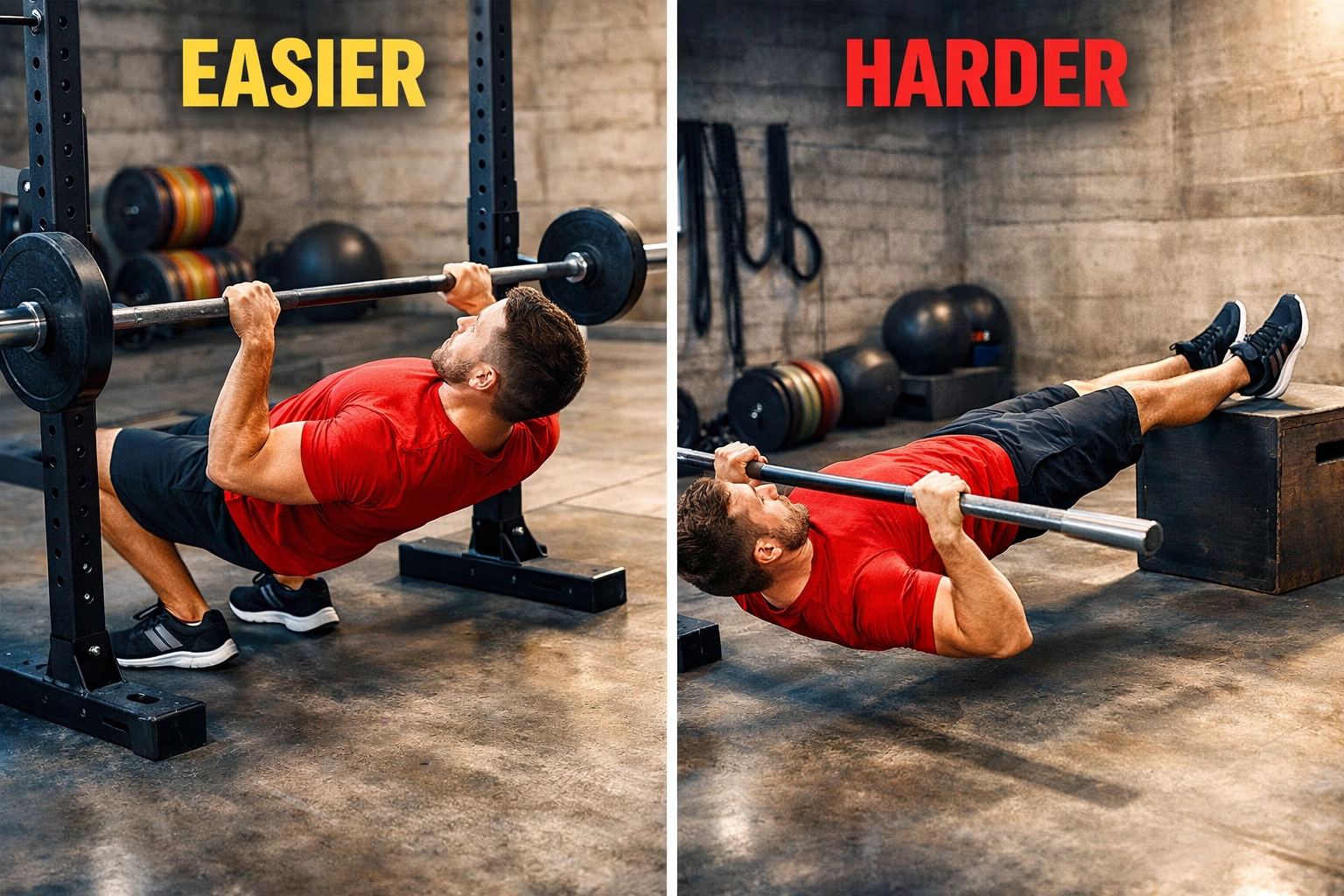
Get creative with what you've got. Two sturdy chairs and a broomstick or dowel create an instant rowing station. Position yourself underneath, grip the bar, keep your body straight, and pull your chest to the bar.
Safety check: Test your setup thoroughly before committing your full bodyweight. The last thing you need is a face-first meeting with your floor because a chair slipped.
This DIY approach works the same muscle groups as pull-ups from a different angle, building strength in the horizontal pulling plane. For calisthenics training and full body workouts at home, varying your pulling angles prevents imbalances and builds more complete strength.
Elevate your feet on a box or bench to increase difficulty. Add a weighted vest when bodyweight gets too easy. The scalability makes this setup legitimate for serious progression.
6. Heavy Bent-Over Rows: Build the Foundation
Pull-ups aren't the only way to build pulling strength. Bent-over rows with dumbbells, kettlebells, or barbells target the same muscle groups from a different position.
The advantage? You can precisely control the load, progressing in small increments as you build strength. This makes bent-over rows particularly valuable for athletes rehabbing injuries or working around limitations that make pull-ups temporarily difficult.
Maintain a neutral spine, hinge at the hips, and pull the weight to your ribcage while squeezing your shoulder blades together. The scapular retraction component is crucial: it mimics the shoulder mechanics of pull-ups and builds the posterior chain strength that prevents injuries.
CrossFit athletes already know the value of heavy rowing. For home training setups, all you need is adjustable dumbbells or a barbell: equipment that serves multiple purposes in your training arsenal.
7. Resistance Band Pull-Downs: Lat Development Anywhere
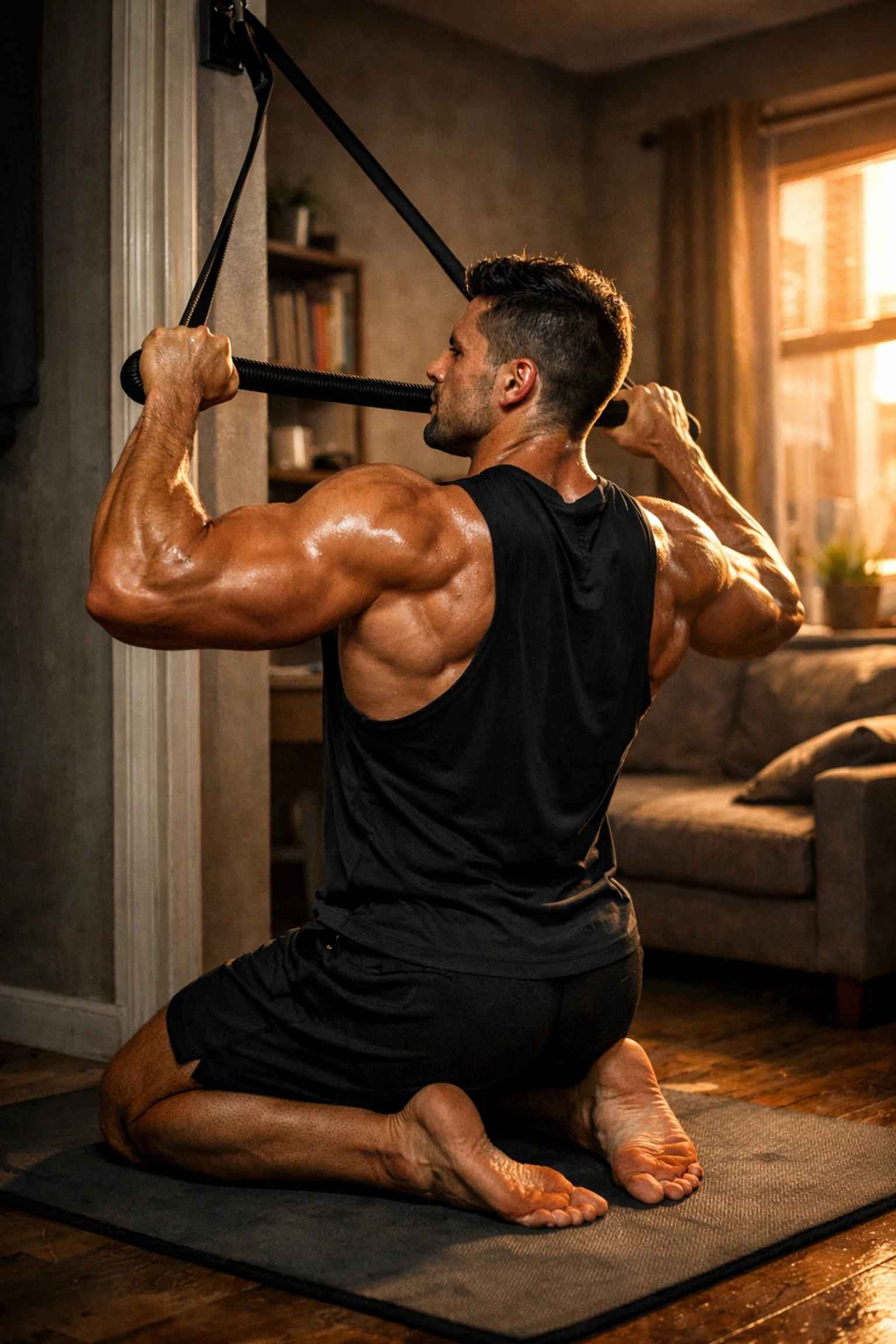
Anchor a heavy resistance band overhead and you've got instant lat pulldowns. Kneel or sit beneath the anchor point, grab the band, and pull down to your chest.
The constant tension from resistance bands creates a different stimulus than free weights or bodyweight exercises. Your lats stay under load throughout the entire range of motion, building strength and muscular endurance simultaneously.
For bodyweight training enthusiasts working toward their first strict pull-up, band pulldowns build the specific lat strength needed while teaching proper scapular mechanics. The movement pattern translates directly to pull-ups, making this a valuable progression tool.
Vary your grip width and hand position to target different areas of your back. Wide grip emphasizes lat width. Narrow grip brings more trap and rhomboid engagement. The versatility rivals cable machines without requiring a commercial gym setup.
Building Your Damage-Free Training Space
The reality of modern training is that not everyone has access to the perfect setup. You might be renting. You might be in a small apartment. You might need a training solution that adapts as your life changes.
The key is building a versatile home gym around equipment that delivers multiple functions without permanent installation requirements. Floor-to-ceiling systems, resistance bands, and portable training tools give you serious training capacity without the commitment of mounted equipment.
For athletes serious about their craft: whether that's crushing obstacle courses, dominating on the mats, or mastering advanced calisthenics: these alternatives aren't compromises. They're strategic choices that maintain training quality while respecting the reality of your living situation.
Progressive Overload Without the Holes
Building strength requires progressive overload: consistently increasing the demands on your muscles over time. The pull-up alternatives above all offer clear progression paths:
- Suspension trainers: Adjust body angle and foot elevation
- Resistance bands: Progress to lighter assistance bands or heavier resistance
- Inverted rows: Elevate feet, add weight vests, slow the tempo
- Bent-over rows: Increase weight in manageable increments
- Band pull-downs: Use heavier bands or increase rep volume
The progression doesn't require drilling new holes or buying new equipment every few months. You scale the difficulty using what you've already got, building strength systematically without the installation hassle.
The Bottom Line for Real Athletes
You don't need to destroy your rental deposit or invest in permanent installations to build serious pulling strength. Whether you're a ninja warrior training for competition, an MMA fighter maintaining conditioning, or a calisthenics athlete working toward advanced skills, these alternatives deliver results.
The best choice depends on your specific situation, training goals, and available space. But the common thread? Each option respects both your training needs and your living space, proving that serious strength development doesn't require permanent home modifications.
Stop letting your housing situation limit your training. Pick the alternative that fits your setup, commit to consistent progression, and watch your pulling strength climb: without your landlord climbing up your ass about property damage.
Your training matters. Your home matters. With the right approach, you don't have to sacrifice either.
