
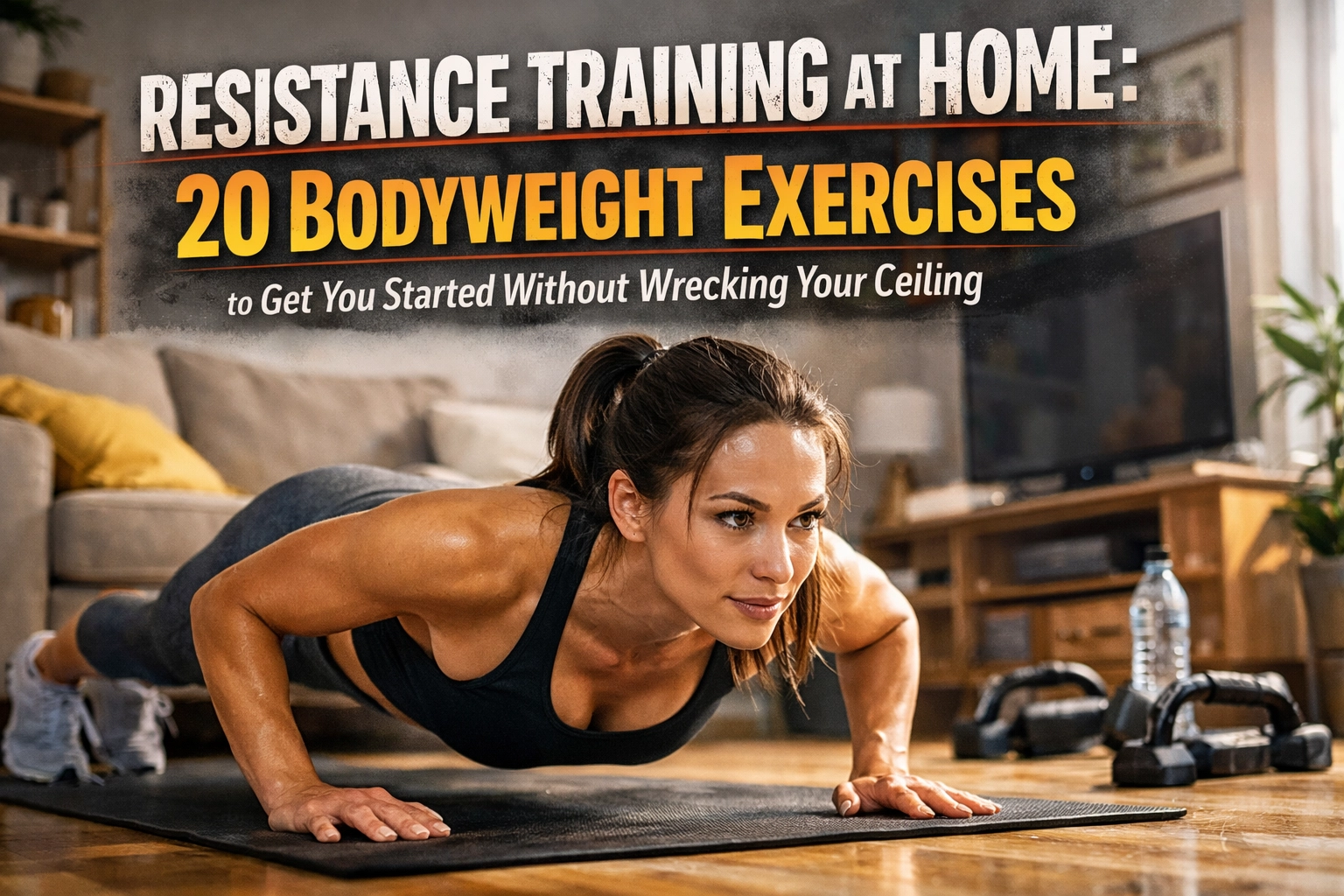
Look, we've all been there. You're pumped about crushing a home workout, you jump up for a pull-up on that "totally stable" door frame, and suddenly you're explaining to your landlord why there's a fist-sized hole in the ceiling. Or maybe you're mid-burpee when your downstairs neighbor starts pounding on their ceiling (your floor) because it sounds like you're hosting a demolition derby.
Here's the truth: You don't need to destroy your living space to build serious strength. In fact, some of the most effective resistance training happens with zero equipment and zero structural damage. Whether you're a ninja warrior preparing for your next competition, a CrossFit athlete stuck traveling, or an MMA fighter looking to add bodyweight conditioning to your routine, these 20 exercises will challenge you without requiring a contractor on speed dial.
Why Bodyweight Training Still Matters (Yes, Even for Serious Athletes)
Before we dive into the exercises, let's kill a myth: bodyweight training isn't just for beginners. Elite gymnasts have physiques that would make most gym bros weep, and they built that strength primarily through calisthenics. Navy SEALs use bodyweight exercises as a foundation. Top-level rock climbers? Same deal.
Bodyweight training teaches you to move your mass through space with control and power. That's functional strength that directly translates to nearly every sport and real-world situation. Plus, when you master your own body, adding external resistance becomes exponentially more effective.
The best part? You can do full body workouts at home without worrying about:
- Dropping weights on hardwood floors
- Swinging kettlebells into drywall
- Installing wall-mounted equipment that violates your lease
- Annoying everyone within a three-apartment radius
Upper Body Pushing: Build That Chest and Tricep Power
1. Wall Push-Ups
Start here if you're new or coming back from injury. Stand arm's length from a wall, place hands flat at shoulder height, lean in until your nose nearly touches, then press back. This isn't just a beginner move, slow it down to a 5-second eccentric (lowering phase) and feel the burn.
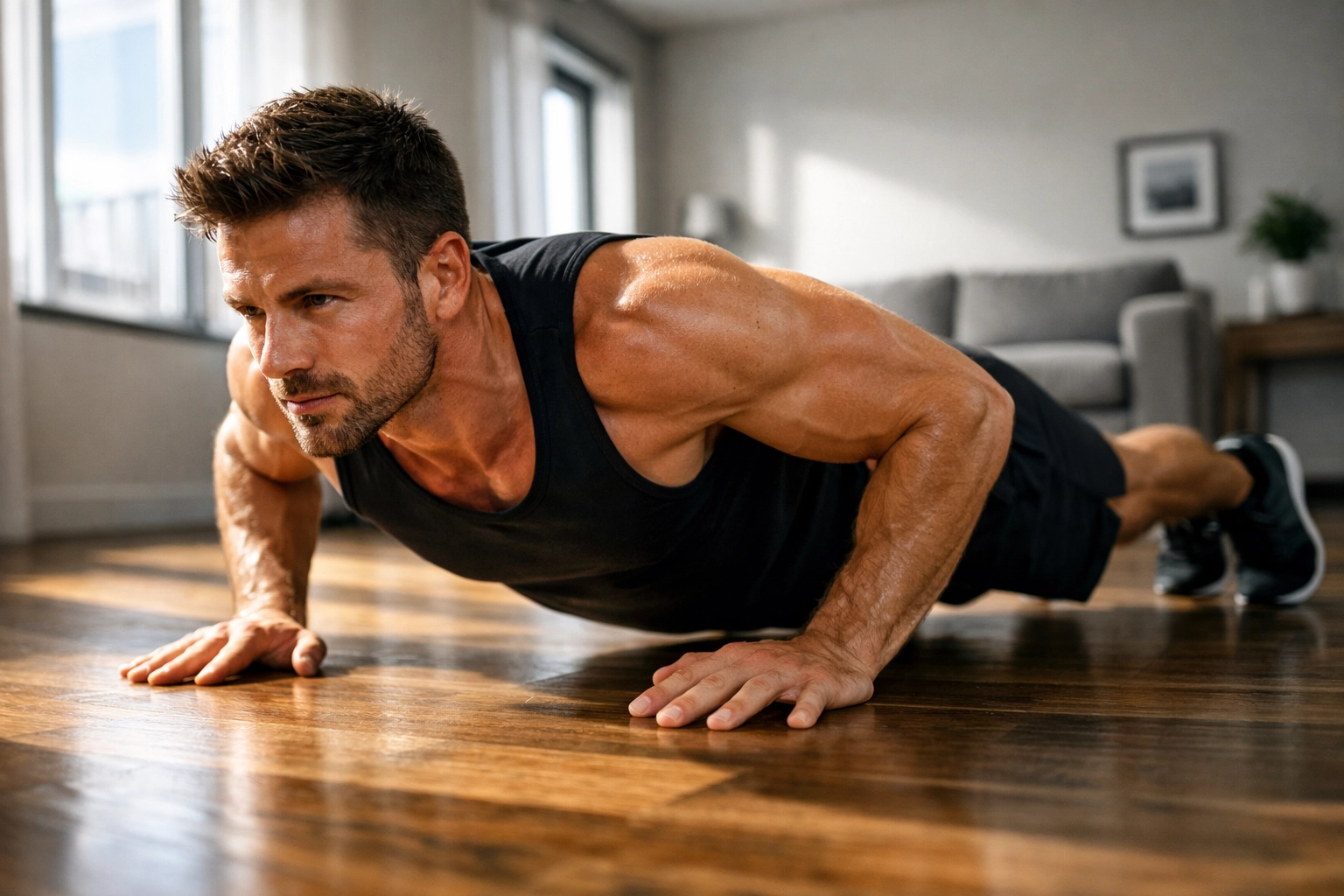
2. Standard Push-Ups
High plank position, palms directly below shoulders, lower your chest to within an inch of the ground while keeping elbows at 45 degrees. Press back up. Aim for 3 sets of 12-15 reps, but quality over quantity. A perfect push-up beats a sloppy 50 every time.
3. Close-Grip Push-Ups
Shift hands closer together (inside shoulder-width), tuck elbows tight to your ribs, and lower. This variation hammers your triceps and inner chest. Start with 3 sets of 10-12 reps.
4. Pseudo Planche Push-Ups
Hands positioned lower toward your hips, lean forward until shoulders go past your wrists, then perform push-ups. This advanced variation builds the straight-arm strength crucial for gymnastics movements and looks absolutely savage.
5. Archer Push-Ups
Start in a wide push-up position, shift your weight to one side while keeping the opposite arm straight, then push back to center. Alternate sides. This unilateral variation prepares you for one-arm push-ups.
6. Chair/Bench Dips
Sit on a sturdy chair or bench edge, walk feet forward, lower your body by bending elbows to 90 degrees, then press back up. Keep shoulders down and back. For added intensity, elevate your feet on another surface.
Core and Anti-Rotation: Build an Unbreakable Midsection
7. Standard Plank
Elbows directly below shoulders, body in a straight line from head to heels, core and glutes engaged. If you can hold this for over 2 minutes, you're ready for progressions.
8. Hollow Body Hold
The gymnastics secret weapon. Lie on your back, press lower back into the floor, lift feet 2 inches, raise shoulder blades while extending arms overhead. Hold 45-60 seconds. Your abs will hate you.
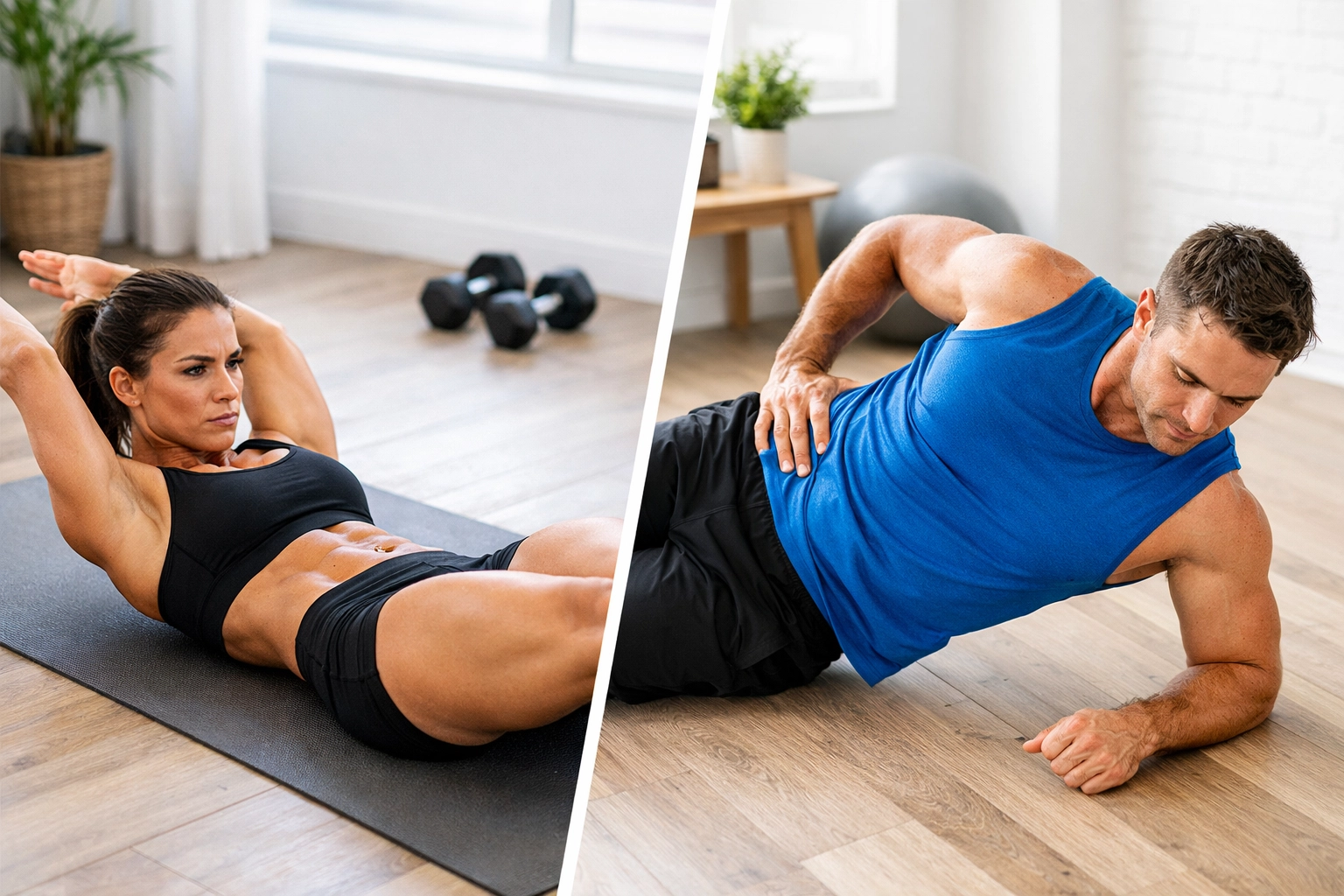
9. Plank Hip Dips
From plank position, rotate hips to dip one side toward the ground, return to center, alternate. This destroys obliques and builds rotational control.
10. Dead Bug
Lie on back, raise arms and legs in the air, slowly lower opposite arm and leg while keeping lower back pressed to the floor, return, and alternate. Moves slowly = works better.
11. Bird Dog
On all fours, extend one arm forward while raising opposite leg behind you. Pause, squeeze everything, return, alternate. Focus on stability over speed. Perform 3 sets of 8-10 reps per side.
Lower Body: Leg Day Without the Squat Rack
12. Bodyweight Squats
Feet shoulder-width, lower until thighs are parallel (or deeper), keep chest up and knees tracking over toes. Focus on the mind-muscle connection rather than just repping them out.
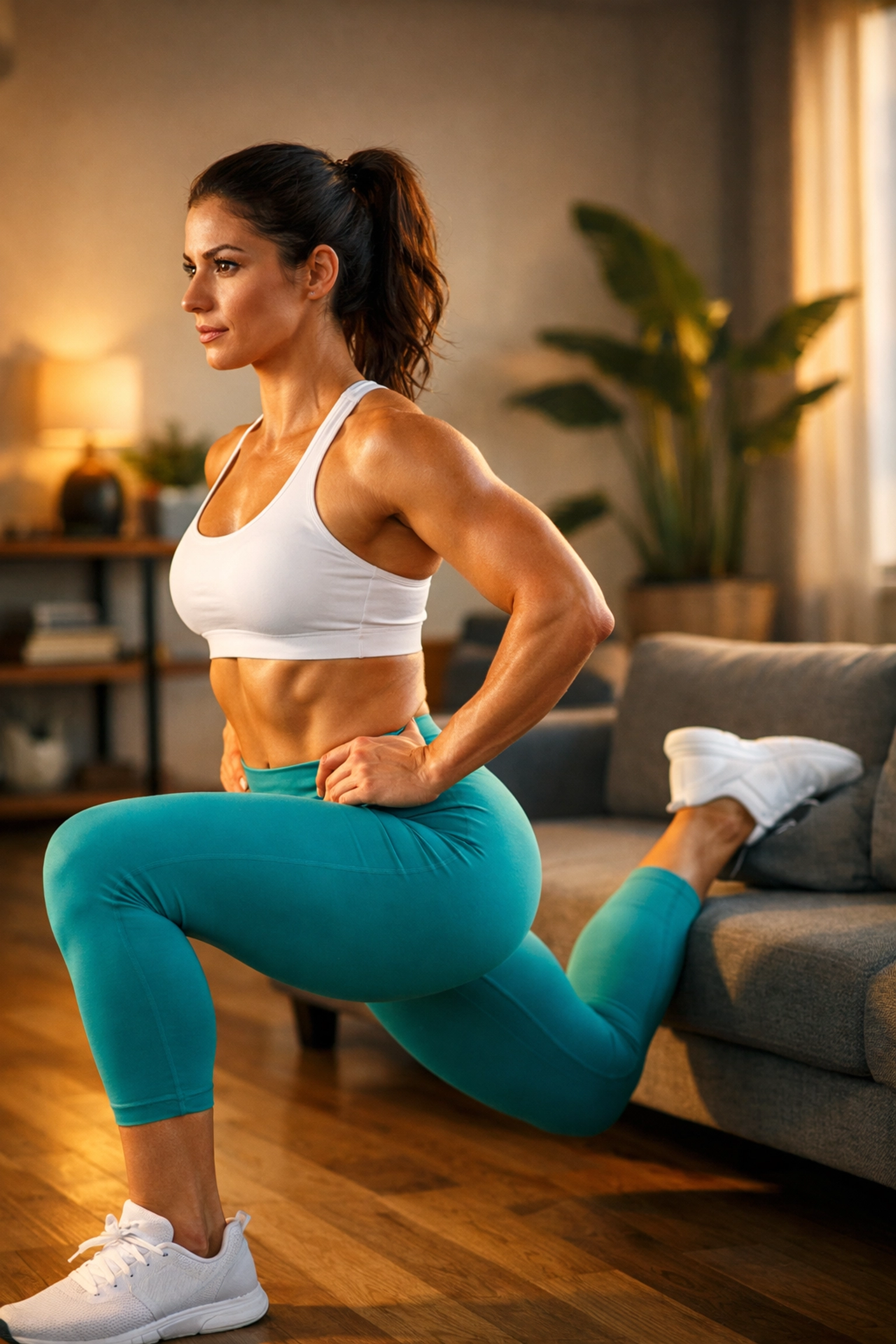
13. Bulgarian Split Squats
Rear foot elevated on a chair or couch, front foot planted, lower until rear knee nearly touches the ground. This unilateral exercise exposes strength imbalances and builds serious leg power. Hit 8-15 reps per leg.
14. Walking Lunges
Step forward into a lunge, drive through front heel to stand while bringing back leg forward into the next lunge. Keep torso upright. These are deceptively brutal.
15. Single-Leg Glute Bridge
Lie on back, one foot planted, opposite leg extended, drive hips up while squeezing glutes at the top. Lower with control. This builds hip stability and posterior chain strength that directly translates to running, jumping, and kicking power.
16. Pistol Squats (or Progression)
The king of bodyweight leg exercises. Stand on one leg, extend the other forward, squat down on the standing leg, then drive back up. Most people need to work up to these using assistance. Start with a counterweight, holding onto a stable surface, or using a box for depth.
Dynamic Full-Body Movements: Cardio Meets Strength
17. Mountain Climbers
High plank position, drive knees alternately toward chest as if running. Keep hips level and core tight. Try intervals: 20 seconds all-out, 10 seconds rest, repeat for 6-8 minutes.
18. Burpees (The Ceiling-Safe Version)
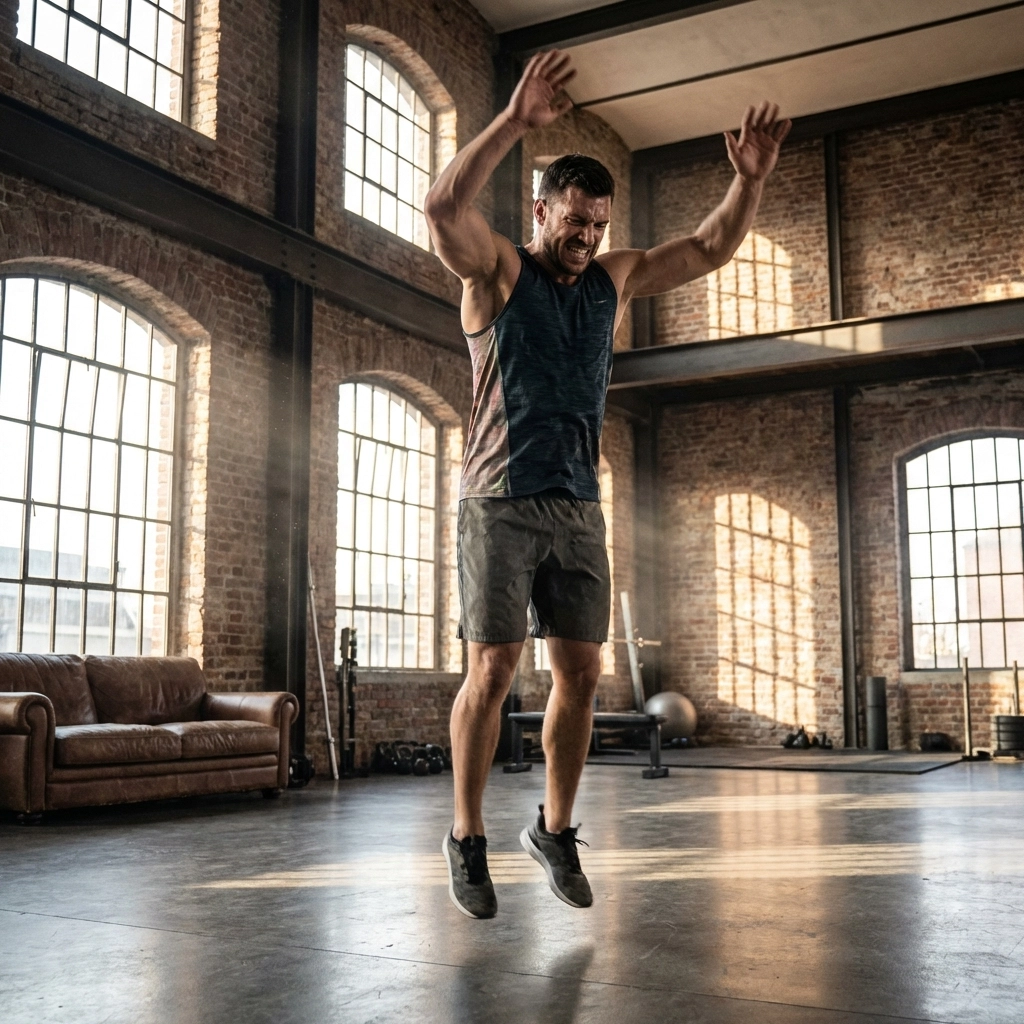
Squat down, place hands on floor, jump or step feet back to plank, perform a push-up, jump or step feet to hands, stand up with a jump (just don't go full vertical leap unless you have high ceilings). This full-body movement builds conditioning fast.
19. Inchworms
Stand tall, hinge at hips to place hands on floor (bend knees if needed), walk hands out to high plank, perform a push-up, walk hands back to feet, stand. This flows through multiple movement patterns.
20. Reverse Plank with Hip Flexion
Sit with legs extended, hands behind you, lift hips into reverse plank, then pull one knee toward chest, extend it, alternate legs. This crushes your posterior chain while building hip mobility.
Progression Strategies: Making Bodyweight Training Harder
Once these 20 exercises become manageable, you have several options to increase difficulty:
Slow Down the Tempo: A 5-second eccentric (lowering) phase makes any exercise significantly harder. Try 5-1-2-1 (5 seconds down, 1 second pause, 2 seconds up, 1 second pause).
Add Isometric Holds: Pause at the hardest point of each exercise for 3-5 seconds.
Increase Volume: More sets, more reps, shorter rest periods.
Advanced Variations: Progress toward one-arm push-ups, handstand push-ups, pistol squats, and other elite movements.
Add Angles: Elevate feet for push-ups, hands for rows, get creative with furniture positioning.
When Bodyweight Training Isn't Enough
Look, bodyweight exercises are phenomenal, but let's be real: at some point, serious athletes need progressive overload that bodyweight alone can't provide. You can only make a push-up so hard before you need external resistance.
That's where smart home gym equipment comes in. But here's the catch, most home gym setups either require permanent wall installation (goodbye, security deposit) or take up half your living room.
The Resistance Rail system solves both problems. It's a floor-to-ceiling tension system that requires zero wall damage and provides anchor points for resistance bands, suspension trainers, pull-up variations, and more. You get the versatility of a full gym without destroying your space.
For calisthenics practitioners and gymnasts especially, having stable overhead anchor points opens up an entirely new world of progressions: skin the cats, front levers, archer pull-ups, and muscle-ups all become possible. CrossFit athletes can set up for ring work. MMA fighters can add suspension training for grappling-specific conditioning.
Programming Your Bodyweight Training
Don't just randomly hammer through exercises. Structure matters:
Beginner Protocol: Pick 6-8 exercises (2 upper push, 2 upper pull equivalent, 2 lower, 2 core), perform 3 sets of 8-12 reps, 3x per week with a rest day between.
Intermediate Protocol: 10-12 exercises organized into push/pull/legs split or upper/lower split, 3-4 sets of 10-15 reps, 4-5x per week.
Advanced Protocol: Skill work (handstands, advanced progressions) followed by strength work (weighted variations or advanced movements), then conditioning circuits. 5-6x per week with strategic deload weeks.
The Bottom Line
You don't need a commercial gym membership or thousands in equipment to build serious strength. These 20 bodyweight exercises provide a solid foundation for any serious athlete. They're apartment-friendly, ceiling-safe, and brutally effective when programmed correctly.
Start with perfect form on the basics. Progress systematically. Stay consistent. When you're ready to add versatile home gym equipment that won't compromise your training or your living space, you'll know.
Now stop reading and start moving. Your body is the only machine you truly need( at least to start.)
