
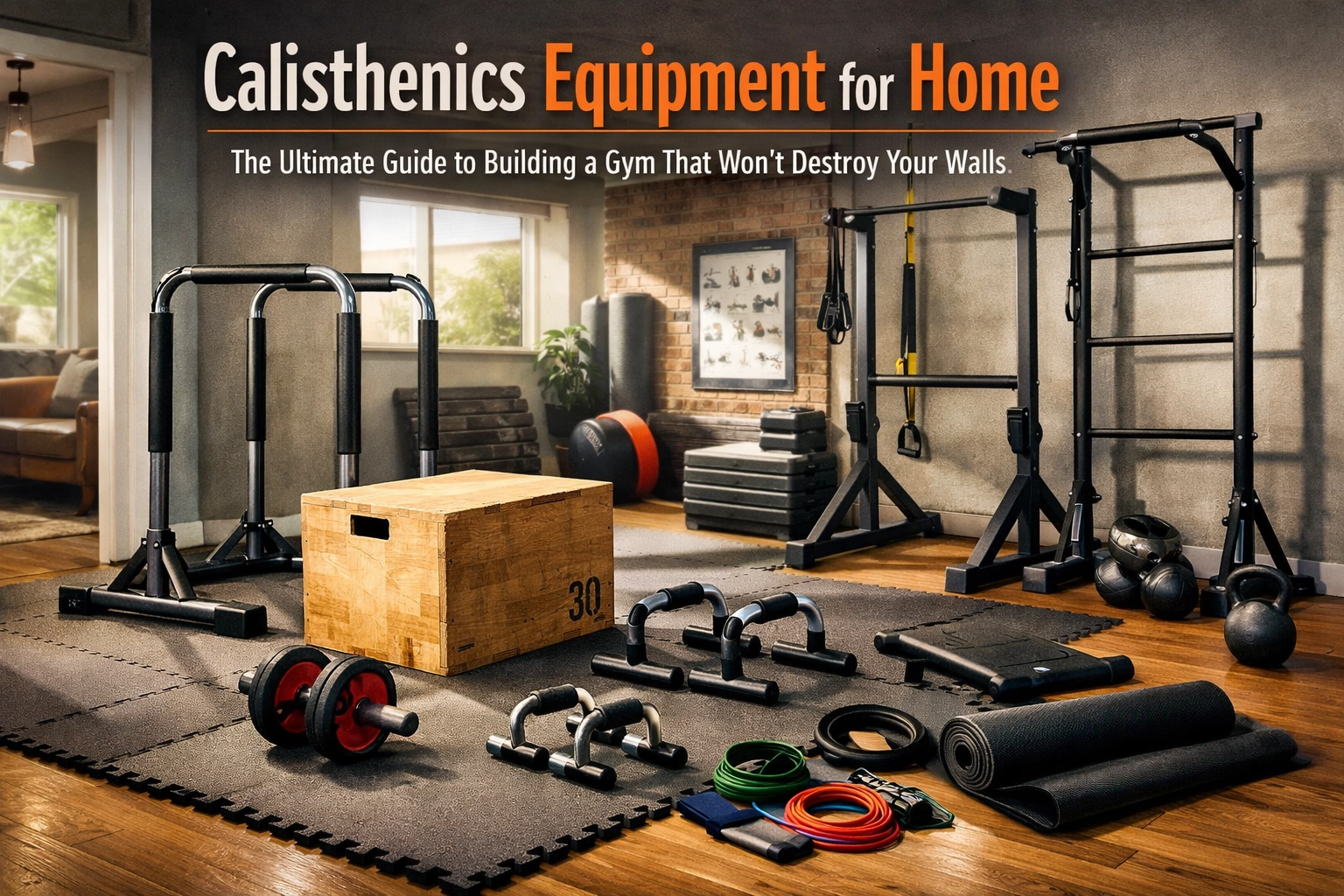
Let's get real: nothing kills your gains faster than a landlord threatening your security deposit. Or worse, punching holes in walls you actually own and having to explain to your spouse why there's drywall dust coating the entire living room.
If you're serious about calisthenics training at home, you've probably faced this dilemma. Wall-mounted pull-up bars look sleek in Instagram videos, but they require rock-solid studs and leave behind battle scars when you move. Door frame bars seem convenient until you're patching up paint chips and cracked trim.
Here's the truth: you can build a legitimate calisthenics training setup without turning your home into a demolition zone. Whether you're training for ninja warrior competitions, grinding out CrossFit WODs, or mastering advanced gymnastics skills, there are wall-safe equipment options that won't compromise your training intensity.
This guide breaks down exactly how to equip your home gym with professional-grade calisthenics gear, without a single screw, anchor bolt, or repair bill.
Why Wall Damage Should Dictate Your Equipment Choices
Before we dive into specific equipment, let's address why this matters beyond just aesthetics.
Structural integrity issues: Not all walls are created equal. Modern drywall construction can't handle the dynamic loads created by muscle-ups, kipping pull-ups, or explosive training. Even if you find studs, repeated stress fractures drywall around mounting points.
Mobility and flexibility: Wall-mounted equipment locks you into one training location. Freestanding options let you move your setup to your garage, backyard, or wherever you have space. For MMA fighters and athletes who train outdoors seasonally, this versatility is game-changing.
Rental restrictions: If you rent, you're likely prohibited from major installations anyway. But even homeowners benefit from equipment they can take to their next property without leaving behind a wall that looks like Swiss cheese.
Resale value: Real estate agents will tell you, visible wall damage is a red flag for buyers. Even repaired holes are often visible under certain lighting.
The solution isn't sacrificing your training goals. It's choosing equipment designed for serious athletes that happens to be wall-safe.
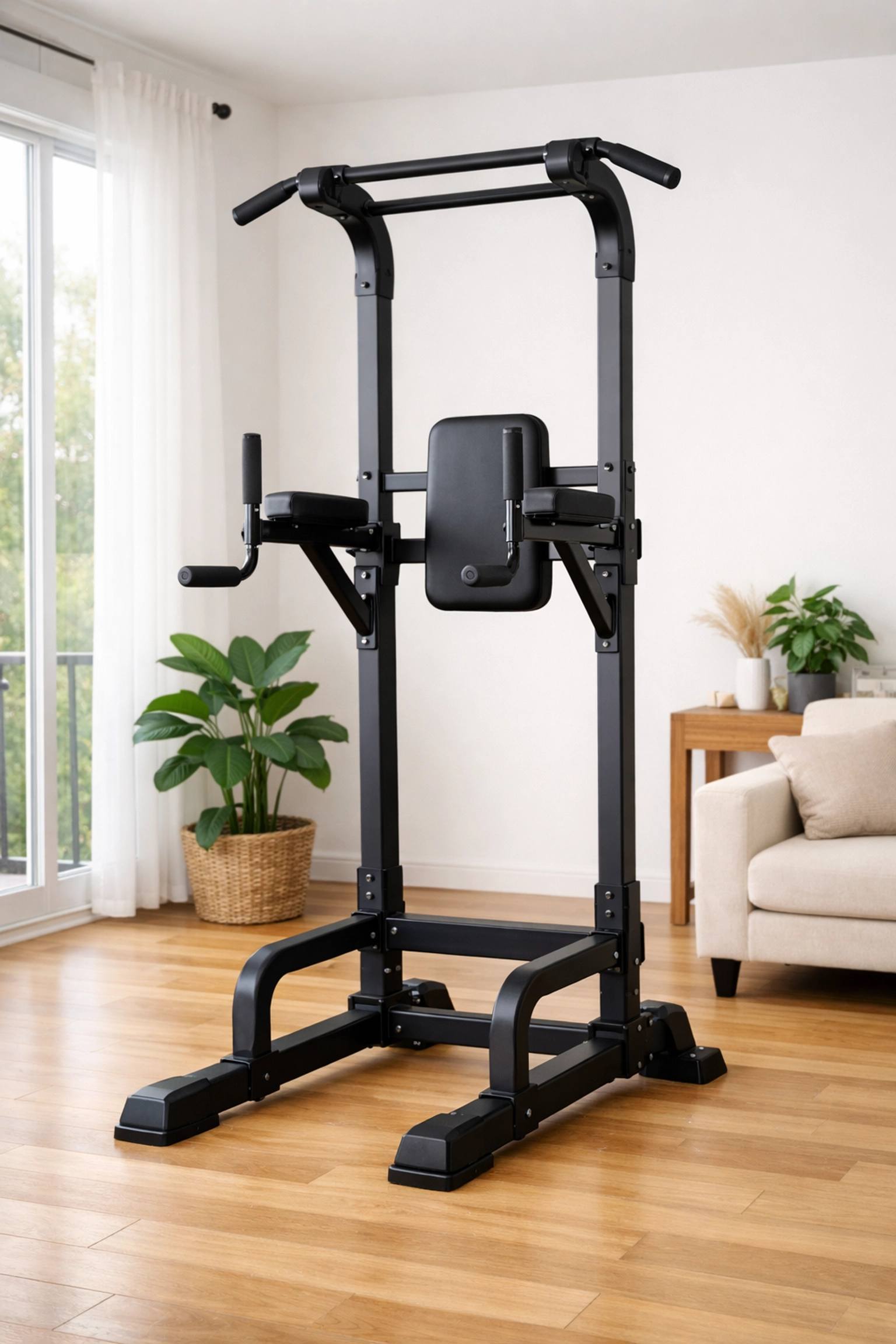
Freestanding Pull-Up Bars: Your Foundation for Upper Body Domination
Pull-ups are non-negotiable for calisthenics training. They build elite grip strength, develop your lats, and serve as the foundation for advanced skills like muscle-ups and front levers.
Here's what separates quality freestanding pull-up bars from garbage:
Weight capacity and stability: Look for units rated for at least 300 pounds, not because you weigh that much, but because dynamic movements create forces significantly higher than your body weight. When you're doing explosive pull-ups or muscle-up negatives, you need a bar that won't wobble or tip.
Multiple grip options: Premium freestanding stations include neutral grip, wide grip, and standard grip positions. This variation prevents overuse injuries and develops balanced strength across all pulling angles.
Height adjustability: The ability to adjust bar height lets you progress from assisted pull-ups to advanced skills like skin-the-cats and high pull-ups without buying new equipment.
Top freestanding options include heavy-duty power towers and dedicated pull-up racks. The Gravity Fitness Pull-Up Rack and Gornation Pull-Up Station are favorites among streetlifting athletes for their bomber construction and realistic bar feel.
For gymnasts and ninja warriors who need portability, the Bullbar 2.0 offers surprising stability in a compact footprint. You can move it between rooms or take it to outdoor training sessions.
Pro tip: Add weight plates to the base of freestanding bars for extra stability during kipping movements or weighted pull-ups.
Dip Stations and Parallettes: Unlocking Advanced Skills
While pull-ups get all the glory, dip stations might be the most versatile piece of calisthenics equipment you can own.
Quality freestanding dip bars enable:
- Standard dips for chest and triceps development
- L-sits and V-sits for core strength
- Support holds for planche progressions
- Negative muscle-up training
- Pike push-ups for shoulder strength
- Front lever progressions with proper bar height
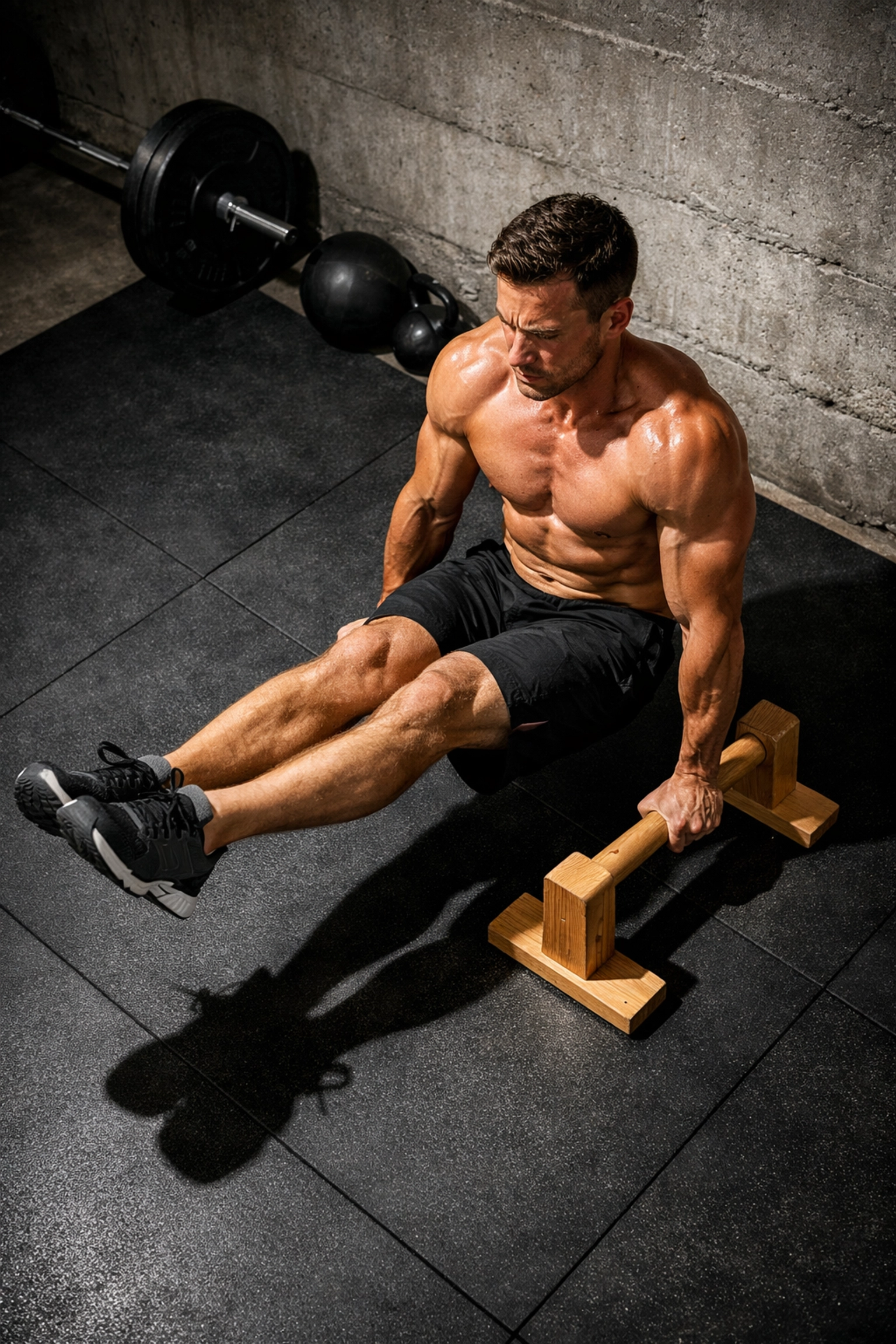
Parallettes (elevated push-up bars) complement dip stations perfectly. These simple tools create the hand elevation needed for advanced pushing movements without any wall contact.
Medium parallettes (12-15 inches tall) offer the sweet spot for most athletes. They're tall enough for proper L-sit form but stable enough for handstand training and planche work.
Use parallettes for:
- Extended range-of-motion push-ups
- Handstand push-up progressions
- Tuck planche and straddle planche holds
- Elevated pike push-ups
- L-sits with legs extended
The beauty of parallettes is they're completely portable, infinitely repositionable, and work on any floor surface. Carpet, hardwood, rubber matting, doesn't matter. Your walls remain pristine.
Gymnastic Rings: The Most Powerful Tool in Your Arsenal
Ask any elite calisthenics athlete what single piece of equipment they'd choose, and most will say gymnastic rings.
Rings enable every fundamental bodyweight movement plus advanced skills like:
- Ring dips (harder than bar dips)
- Ring push-ups (unstable and brutal)
- Ring rows (adjustable difficulty)
- Muscle-ups
- Iron crosses
- Pelican push-ups
- Skin-the-cats
- L-sits and front levers
The instability of rings activates stabilizer muscles you didn't know existed. A ring push-up engages 30% more muscle than the same movement on stable parallettes.
Wall-safe ring setup options:
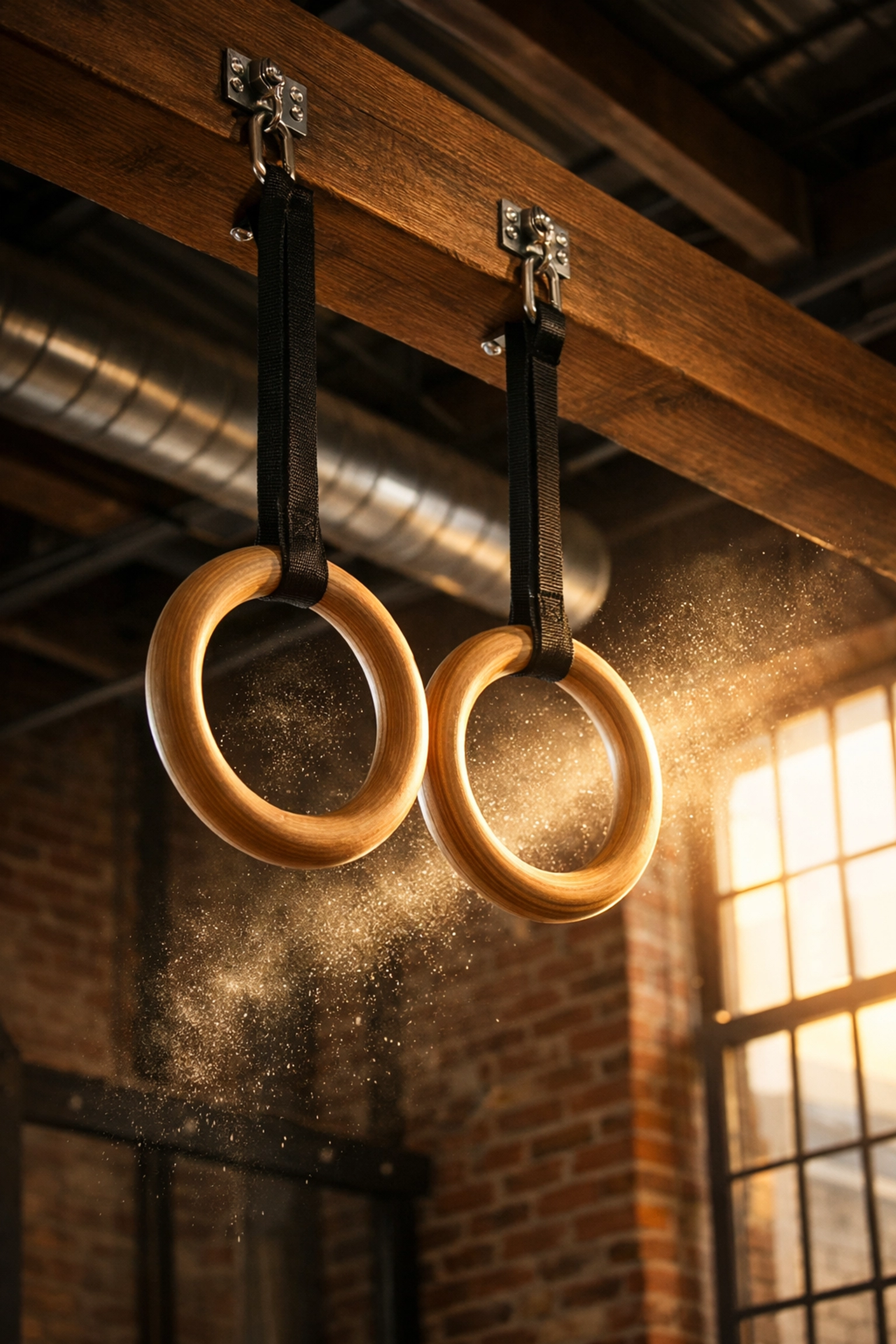
Ceiling beam mounting: If you have exposed beams or can attach to ceiling joists, this creates a permanent high-anchor point without touching walls. Use climbing-rated carabiners and inspect connections regularly.
Freestanding pull-up bar integration: Hang rings from your freestanding pull-up station. This adds versatility without additional floor space.
Doorway mounting: While technically using a door frame, quality doorway attachments distribute weight across the entire frame rather than concentrated stress points. They install and remove in seconds without tools.
For serious ring training, invest in wooden rings over plastic. They provide superior grip, won't slip when sweaty, and feel more natural for high-volume training.
The Floor-to-Ceiling Solution: Resistance Rail Systems
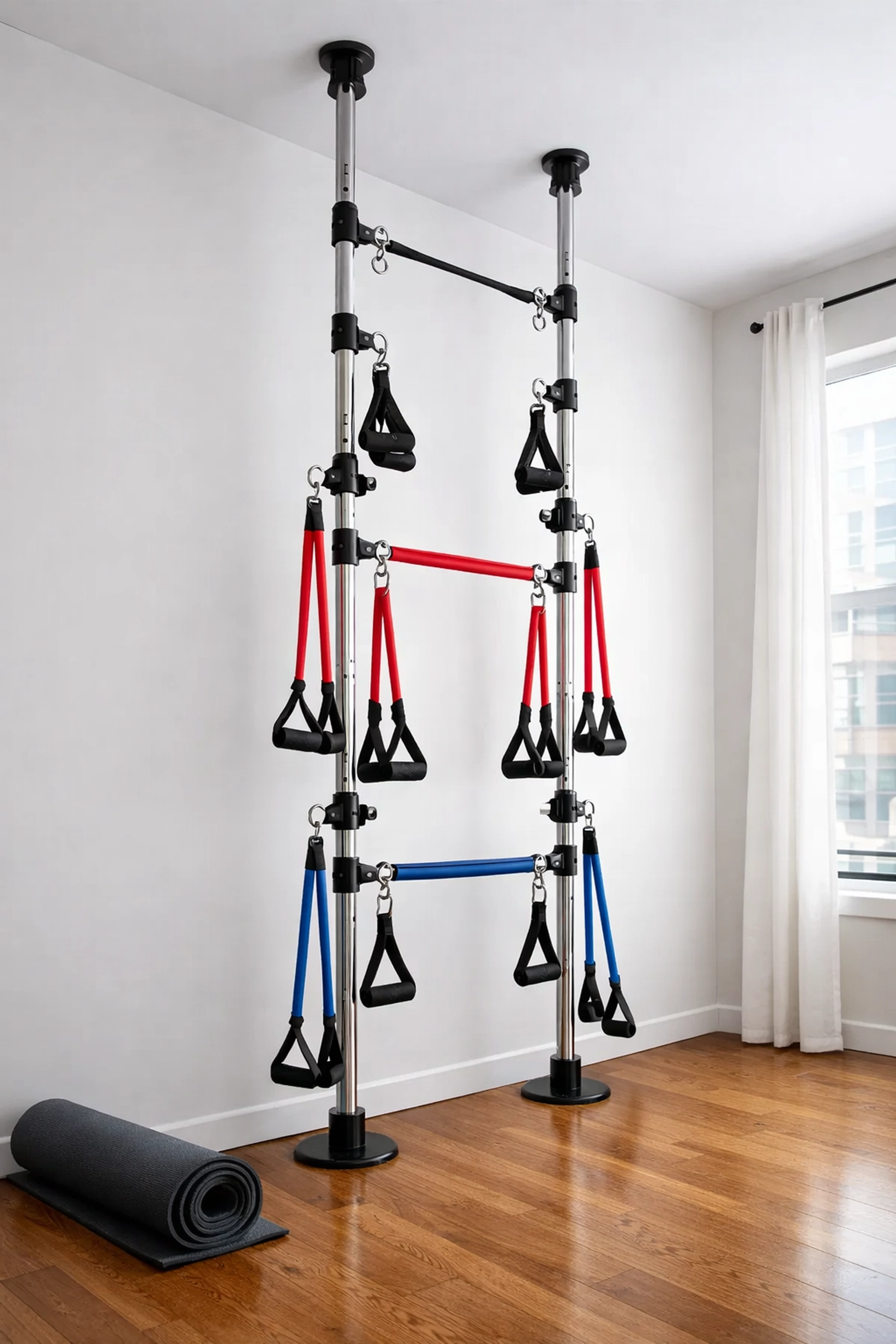
Here's where we introduce a game-changing option specifically designed for wall-safe home training: floor-to-ceiling resistance training systems.
The Resistance Rail from Bold Body Fitness represents a different approach to home gym equipment. Instead of mounting to walls or requiring heavy freestanding bases, it uses adjustable poles that create tension between your floor and ceiling.
Why this matters for calisthenics athletes:
Zero wall contact: The system stands independently using ceiling and floor pressure, no drilling, no anchors, no wall damage. Your security deposit remains intact.
Multiple exercise angles: Unlike fixed pull-up bars, adjustable attachment points let you set up for horizontal pulls, vertical pulls, ring work, and resistance band training at any height or angle.
Space efficiency: Floor-to-ceiling systems occupy minimal floor space compared to power racks or freestanding stations. Perfect for apartment training or multi-use rooms.
Legitimate load capacity: Quality systems handle serious training loads, muscle-ups, weighted pull-ups, explosive movements, without the instability issues of cheaper equipment.
For CrossFit athletes, MMA fighters, and gymnasts who need versatile training setups, this style of equipment solves the wall damage problem while maintaining training intensity. You can configure it for strict pull-ups in the morning, then adjust for ring work or resistance training in the evening.
The Resistance Rail specifically integrates with bands, rings, and various grip attachments, making it a central hub for a complete home gym setup.
Building Your Complete Wall-Safe Calisthenics Setup
Now let's put this together into actual training setups based on your goals and budget.
The Minimalist Warrior Setup ($300-500)
Perfect for ninja warriors, parkour athletes, and those with limited space:
- Quality gymnastic rings with ceiling mount
- Medium parallettes
- Resistance bands (5 different tensions)
- Exercise mat
- Liquid chalk
This combination enables every fundamental calisthenics movement. Rings handle all your pulling, parallettes cover pushing variations, and bands provide assistance for skill progressions plus standalone resistance work.
The Serious Athlete Setup ($800-1,200)
For CrossFit athletes, MMA fighters, and advanced calisthenics practitioners:
- Freestanding pull-up station with multiple grips
- Heavy-duty dip station
- Gymnastic rings (wood)
- Parallettes (set of two)
- Resistance Rail or similar floor-to-ceiling system
- Full resistance band set
- Weight vest
- Gymnastics mat
This setup eliminates training limitations. You have redundant pulling options, progressive overload through weighted vests, and enough variety to run legitimate strength cycles without touching commercial gym equipment.
The Competition-Level Setup ($1,500-2,500)
For competitors and athletes pursuing elite-level skills:
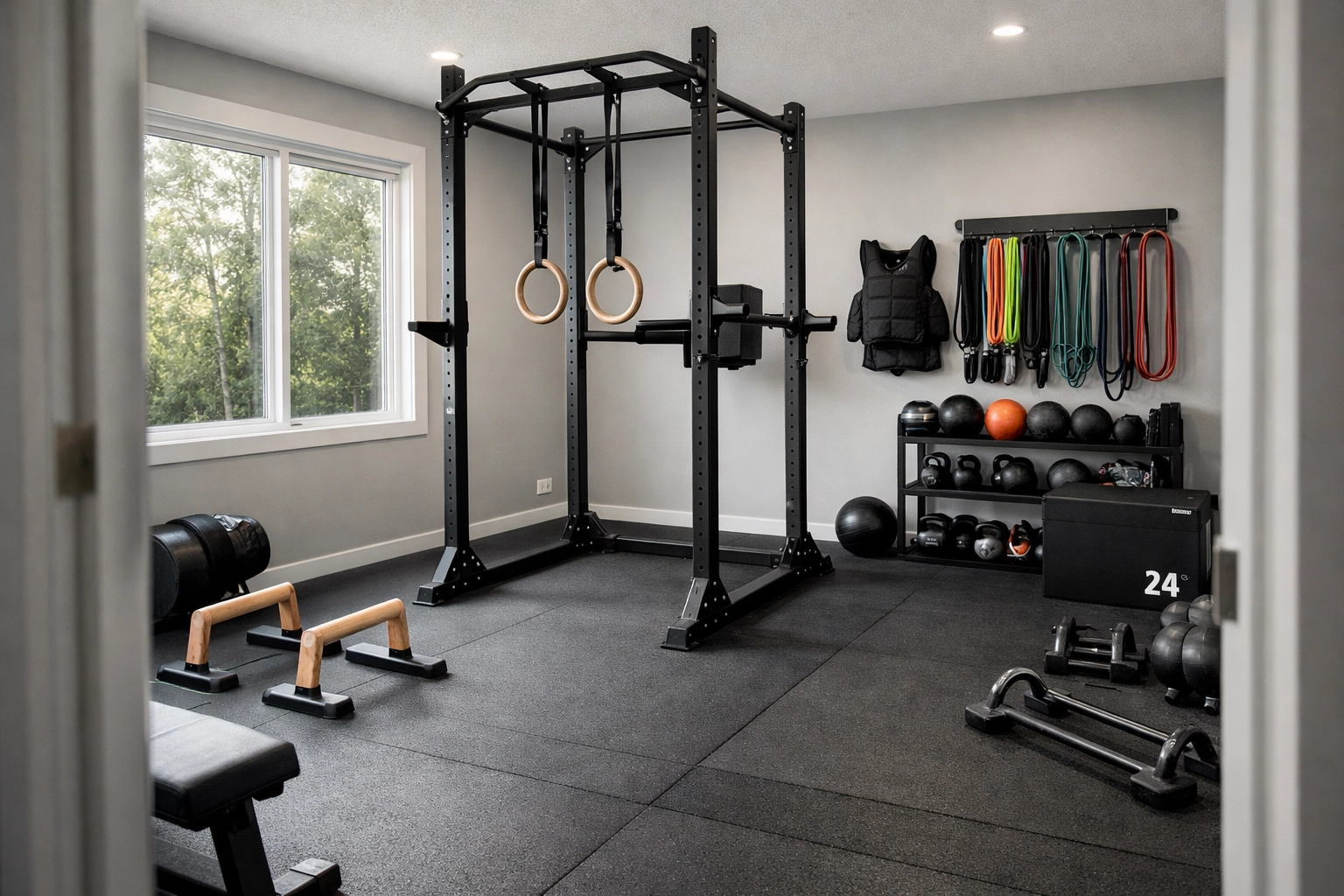
- Premium freestanding pull-up station (Gornation or equivalent)
- Professional parallettes (multiple heights)
- Competition-grade gymnastic rings
- Resistance Rail system with all attachments
- Complete resistance band collection
- Adjustable weight vest (up to 60 lbs)
- Gymnastics crash mat
- Freestanding dip station
- Plyo boxes (multiple heights)
This is a home gym that rivals dedicated calisthenics facilities: without compromising your walls, lease, or resale value.
The Budget-Conscious Approach
Training on a tight budget? Start here:
Month 1: Quality dip station and resistance bands ($150-200). This combination enables pushing progressions, assisted pulling work, and core training.
Month 2: Add gymnastic rings with doorway mount ($60-100). Now you have legitimate pulling capacity and can work toward muscle-ups.
Month 3: Invest in parallettes ($80-150). Your pushing movements gain variety and you can start planche progressions.
Month 4+: Add freestanding pull-up capacity or a Resistance Rail system once you've proven consistency.
This progressive approach keeps initial investment low while building a complete training system over time. Many athletes underestimate how much training volume you can generate from just dip bars and rings.
Protection and Maintenance Essentials
Even wall-safe equipment requires smart setup:
Floor protection: Use rubber matting under freestanding equipment. It prevents floor scratches, absorbs vibration, and adds stability. Horse stall mats (available at farm supply stores) offer professional-grade protection at budget prices.
Ceiling protection: For ceiling-mounted rings or Resistance Rail systems, use protective padding where poles contact ceilings. This prevents paint damage and distributes pressure.
Regular inspection: Check all connections, welds, and stress points monthly. Tighten bolts, inspect straps, and replace any worn components immediately. Your safety depends on equipment integrity.
Grip maintenance: Keep rings and bars clean. Chalk buildup becomes slippery over time. Wooden rings need occasional light sanding to maintain texture.
Making the Smart Investment
Wall damage isn't just about repair costs: it's lost training time while you patch holes, landlord conflicts, or equipment you can't take with you when you move.
Quality calisthenics equipment pays for itself through:
- Eliminated gym memberships ($50-100/month saved)
- Training consistency (no travel time or weather excuses)
- Skill progression (immediate access whenever you're ready to train)
- Longevity (premium equipment lasts decades with proper care)
A $1,000 investment in wall-safe home equipment equals 10-20 months of gym membership: except you own the equipment forever and can train at 2 AM if you want.
For serious athletes, that's not even accounting for the performance gains from training frequency and specificity. Ninja warriors can drill obstacle transitions. Gymnasts can accumulate ring volume. MMA fighters can integrate calisthenics into daily routines.
Your Next Steps
Building a wall-safe calisthenics gym isn't about compromising your training: it's about training smarter.
Start by assessing your space, budget, and primary training goals. If you're focused on pulling strength, prioritize a freestanding pull-up solution or Resistance Rail system. If pushing movements and skills are your focus, start with dip bars and parallettes.
The equipment exists to train at elite levels without damaging your home. You just need to choose tools designed by people who actually understand serious calisthenics training.
Check out the Bold Body Fitness collection to see how innovative design eliminates the wall damage problem while maintaining professional training capacity. Because your walls should stay pristine, but your training definitely shouldn't.
Now get out there and build something your landlord won't hate: and your body will thank you for.
