
Let's cut through the noise: traditional home gyms are gathering dust in basements across America. You know the ones: bulky weight machines that do exactly one thing, pull-up bars screwed permanently into doorframes, and enough barbells and plates to open your own iron museum.
Here's the problem: serious athletes don't train like bodybuilders from 1985 anymore. Ninja warriors need dynamic movement patterns. Gymnasts require overhead stability work. CrossFit athletes demand functional strength across multiple planes. MMA fighters need equipment that moves with them, not anchors them in place.
The fitness world has evolved, but most home gym setups haven't kept pace. That's changing fast, and if you're still married to traditional equipment, you're training with one hand tied behind your back.
The Traditional Home Gym Problem Nobody Talks About
Walk into most home gyms and you'll see the same story: a weight bench permanently occupying prime real estate, a squat rack bolted to the wall, maybe a treadmill serving as an expensive coat rack. These setups share one fatal flaw: they're built for single-purpose training.
Traditional home gym equipment forces you into rigid movement patterns. That leg press machine? Great for quads, useless for everything else. The cable crossover tower? Fantastic for chest flies, but it's eating up 6 feet of floor space for exercises you'll do twice a week.
For serious athletes, this approach is dead on arrival. When you're training for real-world performance: whether that's conquering a Ninja Warrior course, competing in a gymnastics meet, or stepping into the octagon: you need equipment that adapts to your training, not the other way around.
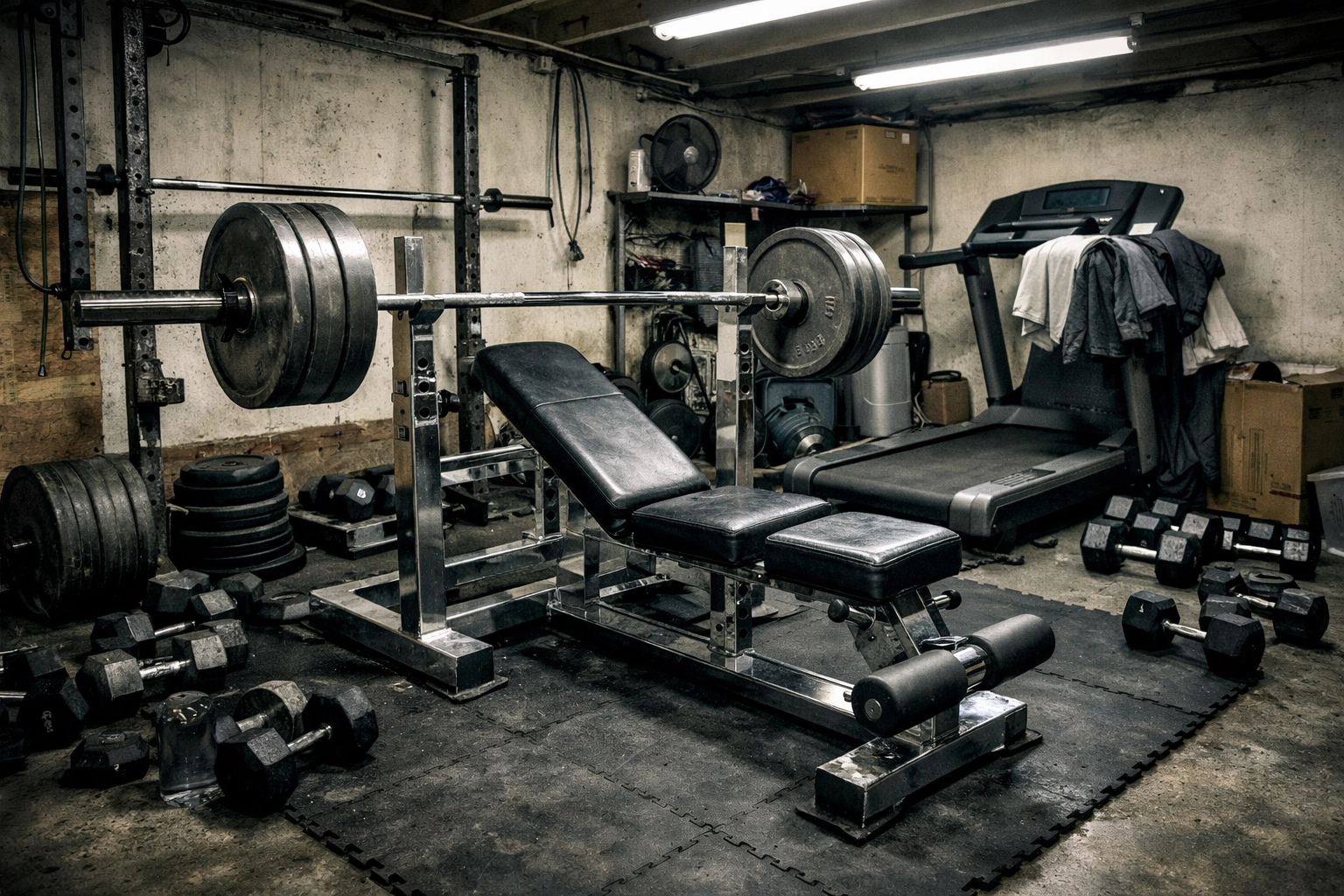
The space problem hits even harder. Most people don't have 500 square feet to dedicate to fitness. You're working with a spare bedroom, a garage corner, or if you're lucky, a basement. Traditional setups demand permanent installation, wall anchors, and enough square footage to make your spouse question your priorities.
And here's the kicker: all that specialized equipment still leaves massive gaps in your training. Want to work on grip strength? Better buy hangboards. Need suspension training? There's another piece of equipment. Practicing muscle-ups? Hope you've got ceiling clearance and a contractor on speed dial.
What Makes Home Gym Equipment Actually Versatile
True versatility in home gym equipment means three things: adaptability, minimal footprint, and progressive scalability.
Adaptability is non-negotiable. Your equipment should support dozens of exercises across multiple training modalities. We're talking resistance training, bodyweight movements, plyometrics, mobility work, and skill-specific drills: all from the same setup. If you can't transition from pull-ups to resistance band work to gymnastic holds in under 30 seconds, your equipment isn't versatile, it's just another single-purpose tool with good marketing.
Minimal footprint means the equipment either folds away, mounts temporarily, or occupies such little space that it disappears when not in use. The best versatile home gym setups work in apartments, spare rooms, even outdoor spaces. They don't require permanent modifications to your living space, and they definitely don't require a construction permit.
Progressive scalability is where most equipment fails spectacularly. Beginners and elite athletes should be able to use the same setup with equal effectiveness. That means adjustable resistance, variable positioning, and the ability to modify exercises on the fly. Your equipment should grow with you, not become obsolete when you level up.
Why Serious Athletes Are Making the Switch
The athletes crushing it in competition aren't spending hours in traditional gyms anymore. Here's why they're building calisthenics equipment for home setups instead:
Ninja Warriors need to train specific movement patterns that don't exist in traditional gyms. Lache transitions, precision jumps, dynamic swings: these require equipment that lets you practice the actual skills you'll face on course. A floor-to-ceiling setup that mimics obstacle heights and spacing beats a leg press machine every single time.
Gymnasts require overhead mobility work, hollow body progressions, and grip strength development. Traditional home gym equipment can't touch the training specificity they need. They're investing in pull up bar alternative solutions that offer multiple grip positions, adjustable heights, and the ability to practice release moves safely.
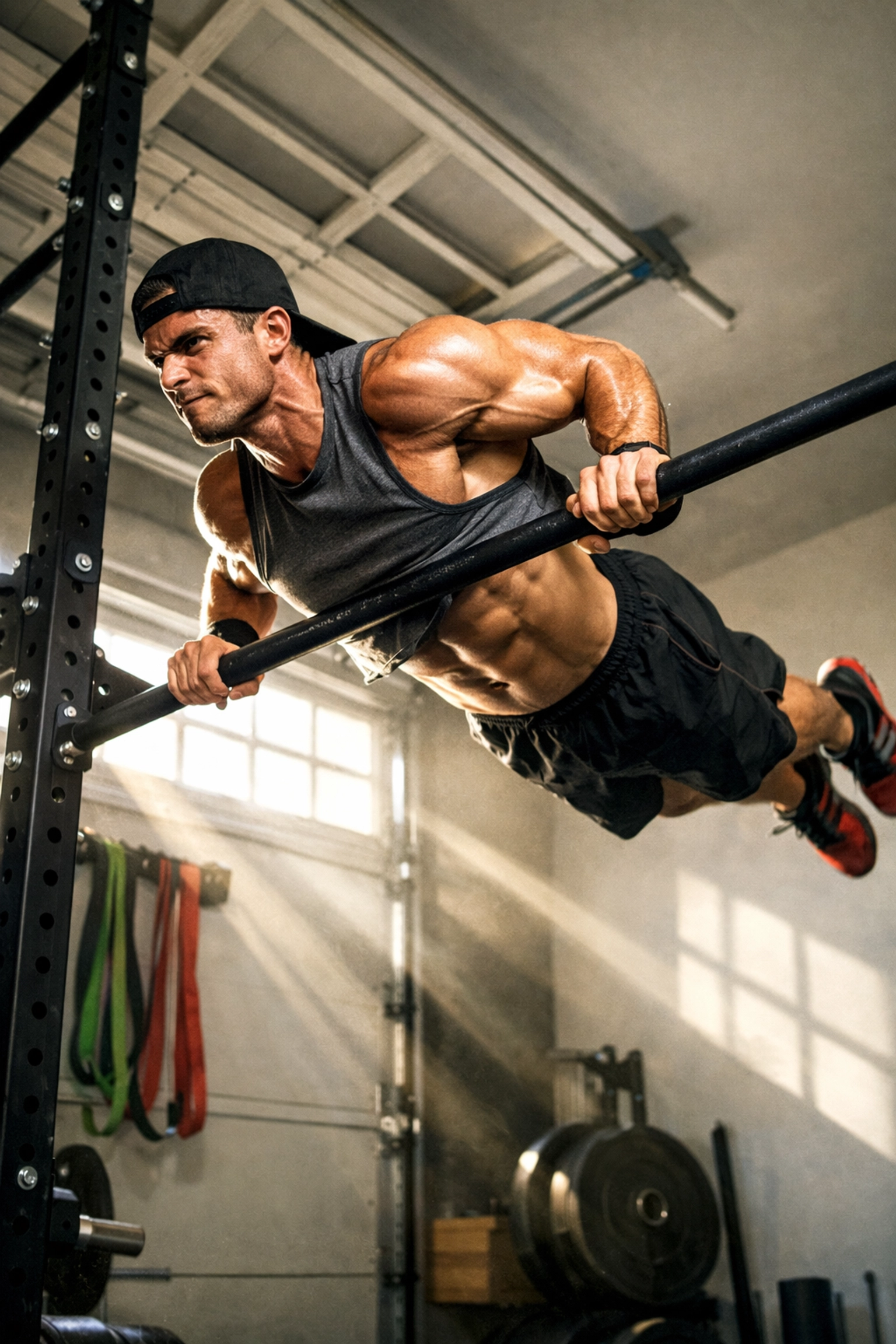
CrossFit Athletes know that the best WODs combine multiple movement patterns in rapid succession. Their home setups need to handle everything from strict pull-ups to kipping variations, from resistance band work to core stability exercises. The crossfit home gym that wins is the one that minimizes transition time between movements.
MMA Fighters can't afford to waste energy commuting to gyms. They're training 2-3 times daily, mixing strength work with skill sessions. Their equipment needs to support explosive power development, grip strength for grappling, and pull-up variations for back strength: all without requiring wall-mounted installations that landlords hate.
Calisthenics Practitioners have perhaps the most demanding equipment requirements. They need adjustable heights for progressive overload, multiple grip options for skill development, and rock-solid stability for advanced movements. Traditional pull-up bars fail the moment you attempt archer pull-ups or front lever progressions.
The Floor-to-Ceiling Revolution in Home Training
Here's where the conversation gets interesting: floor to ceiling gym systems are changing everything about home training.
Traditional thinking says you need to bolt equipment into walls or pour concrete footings for power racks. That's expensive, permanent, and completely unnecessary with modern engineering. Floor-to-ceiling systems use compression-based stability: they're anchored by pressure, not screws.
This matters because it solves the three biggest problems with home gyms:
- No permanent installation means you can train in apartments, rentals, or spaces you'll eventually need back for other purposes
- Full ceiling height utilization gives you the vertical space for rope climbs, muscle-up progressions, and advanced gymnastics movements
- Zero wall damage means your security deposit is safe and your spouse won't kill you
The Resistance Rail pioneered this approach, creating a no wall damage workout system that serious athletes actually use. It's not marketed to weekend warriors doing three sets of bicep curls: it's built for athletes who need professional-grade training equipment in home spaces.
Building Your Ultimate Versatile Home Gym
Let's talk practical application. If you're building a home gym from scratch or upgrading your current setup, here's the hierarchy of equipment value:
Foundation Layer: The Multi-Purpose Anchor System
Everything starts with a solid anchor point that can handle multiple exercises. This is your pull-up bar, your suspension trainer anchor, your resistance band connection point, and your grip training station: all in one.
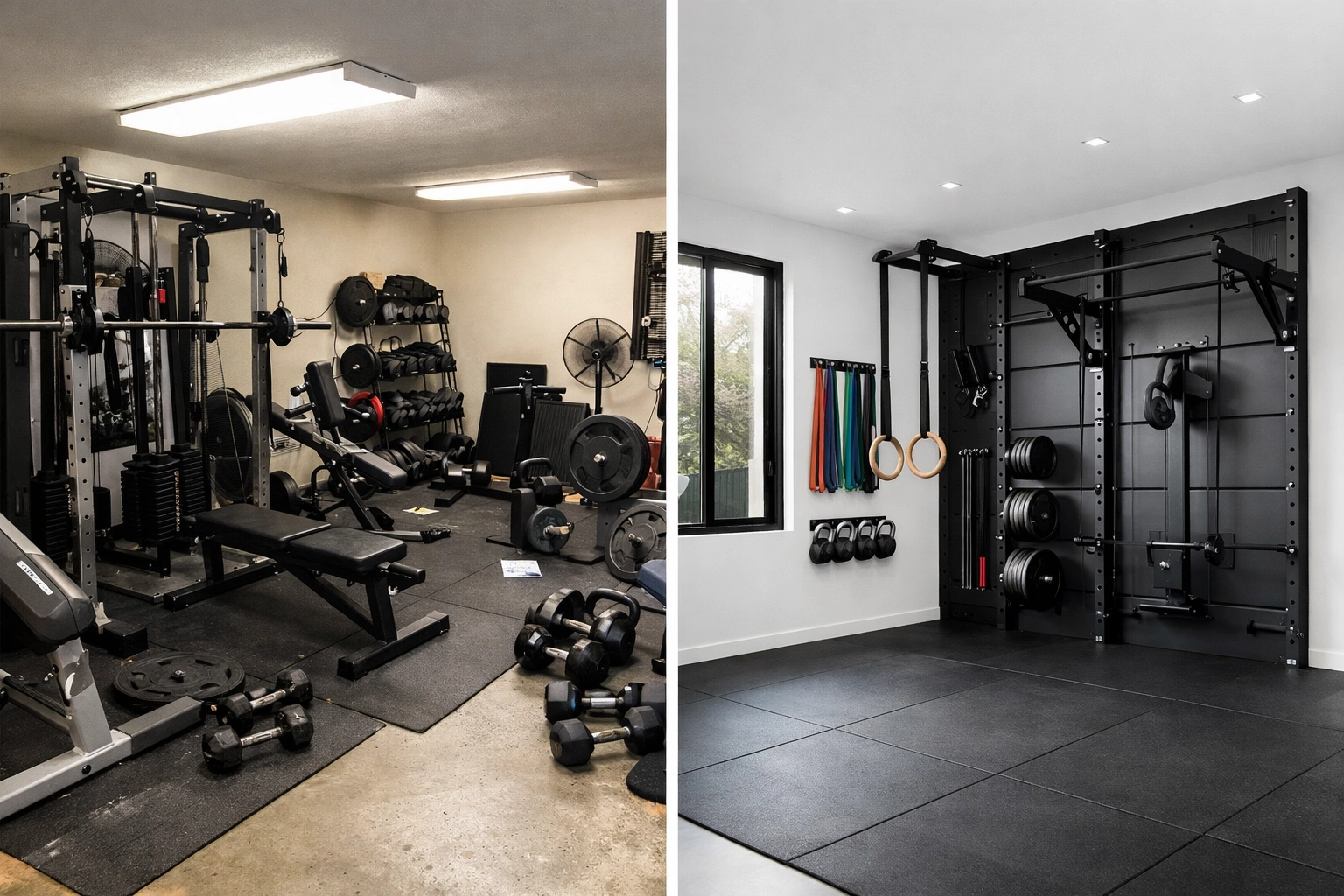
The mistake most people make is buying a doorframe pull-up bar and calling it done. Those work fine for basic pull-ups, but they fail for anything requiring varied grip positions, adjustable heights, or dynamic movements. You need something that can handle 400+ pounds of force, offers multiple mounting heights, and doesn't require you to destroy your doorframe or ceiling.
Secondary Layer: Adjustable Resistance
Resistance bands, rings, TRX-style suspension trainers: these tools multiply your exercise options exponentially. But they're only effective if you have solid anchor points. This is where most traditional setups fall apart. Wall-mounted anchors limit your movement patterns. Permanent installations restrict your training space.
The beauty of a floor-to-ceiling system is that it becomes an anchor point for everything. Bands, rings, ropes, even battle ropes if you're feeling particularly sadistic. One piece of equipment unlocks dozens of training modalities.
Tertiary Layer: Specialty Items
Once your foundation is solid, you can add specialty items based on your specific sport: parallettes for gymnastics, heavy bags for striking work, plyo boxes for explosive training. But here's the key: these items should complement your versatile foundation, not replace it.
Visit the Bold Body Fitness shop and you'll notice a pattern: equipment designed for serious athletes prioritizes versatility over specialization. That's intentional. Elite-level training requires adaptation, not repetition.
The Specific Edge: Training Modalities That Traditional Equipment Can't Touch
Let's get specific about exercises and training protocols that only versatile equipment can handle effectively:
Full Body Workout at Home Progressions
Traditional home gyms excel at isolation work but fail at compound movements that matter. A truly full body workout at home requires equipment that supports:
- Pull-up progressions from dead hangs to explosive muscle-ups
- Core stability work including hollow body holds and L-sit progressions
- Horizontal pulling variations like Australian pull-ups and front lever work
- Dynamic movements like kipping variations and bar muscle-ups
- Resistance band work for warm-ups, activation, and recovery
Try doing that circuit on a traditional weight bench. You can't. You'll spend more time moving between equipment than actually training.
Bodyweight Training at Home With Progressive Overload
The biggest myth in bodyweight training at home is that you hit a ceiling once you can do 20 pull-ups. That's nonsense. Progressive overload with bodyweight movements requires:
- One-arm pull-up progressions using offset grips
- Weighted variations using resistance bands or weight vests
- Tempo manipulations requiring stable equipment that won't shake apart
- Isometric holds at various positions throughout the movement
- Plyometric variations like clapping pull-ups or bar transfers
None of this is possible with a $30 doorframe bar. You need equipment engineered for serious training loads and dynamic forces.
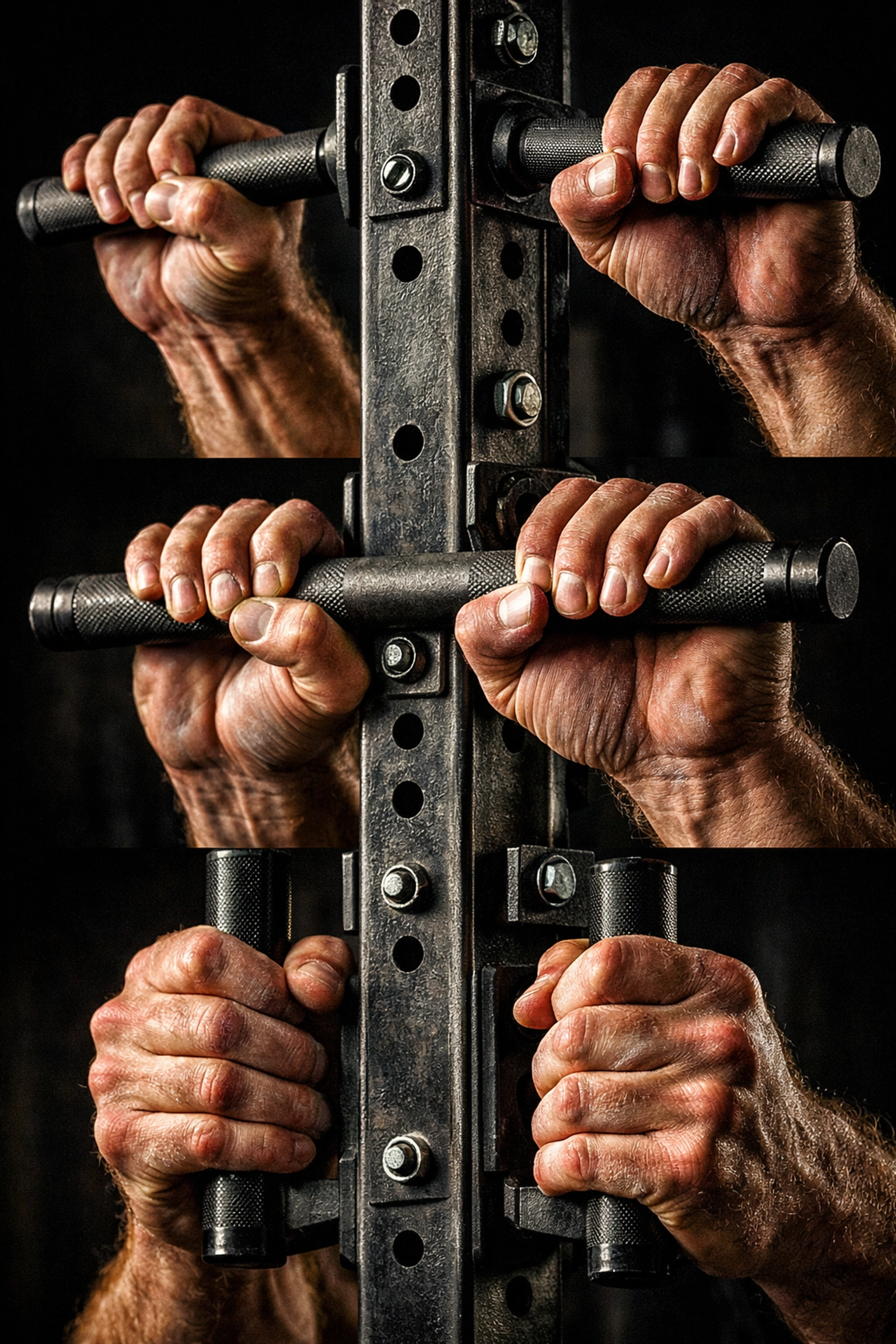
Resistance Training Beyond the Barbell
Modern resistance training has evolved past the classic bench-squat-deadlift trinity. Elite athletes incorporate:
- Banded resistance for accommodating loads during bodyweight exercises
- Suspension training for stability and core engagement
- Isometric holds at weak points in movement patterns
- Variable resistance profiles that match natural strength curves
The equipment that unlocks this training doesn't look like your grandfather's Nautilus machine. It looks more like a climbing wall met a suspension trainer and had a very functional baby.
Why the Resistance Rail Concept Wins
Full transparency: Bold Body Fitness built the Resistance Rail because traditional home gym equipment wasn't cutting it for serious athletes. The design criteria were simple but demanding:
- Support 400+ pounds of dynamic force
- Install and remove in under 5 minutes
- Leave zero permanent marks or damage
- Offer multiple grip positions and training heights
- Work in standard 8-foot ceiling spaces
- Cost less than a year of gym memberships
That combination doesn't exist in traditional pull-up bars, power racks, or wall-mounted systems. The floor-to-ceiling design solved all of it.
But here's what matters more than the engineering: it actually gets used. Traditional home gym equipment has an infamous problem: it becomes furniture within six months. The Resistance Rail stays in regular rotation because it supports the training serious athletes actually do.
Gymnasts use it for skill work. Ninja warriors practice obstacle-specific movements. CrossFit athletes hammer WODs without leaving their garage. MMA fighters build pull-up strength and grip endurance between rolling sessions. That's versatility with real-world proof.
The Cost-Benefit Reality Check
Let's talk money because versatile equipment isn't always cheaper upfront: but the math changes dramatically over time.
A traditional home gym setup with a power rack, bench, barbell, plates, and basic accessories runs $1,500-$3,000. That equipment does exactly what it's designed for, which is great until you want to train differently. Add specialty items: gymnastic rings, a rope, resistance bands, a proper pull-up bar: and you're pushing $4,000-$5,000.
Compare that to a versatile system: the Resistance Rail starts around $400-$500. Add quality resistance bands ($100), gymnastic rings ($50), and maybe a set of parallettes ($100), and you're at $750 total. Same training capacity, 85% less money, zero installation costs, and complete portability.
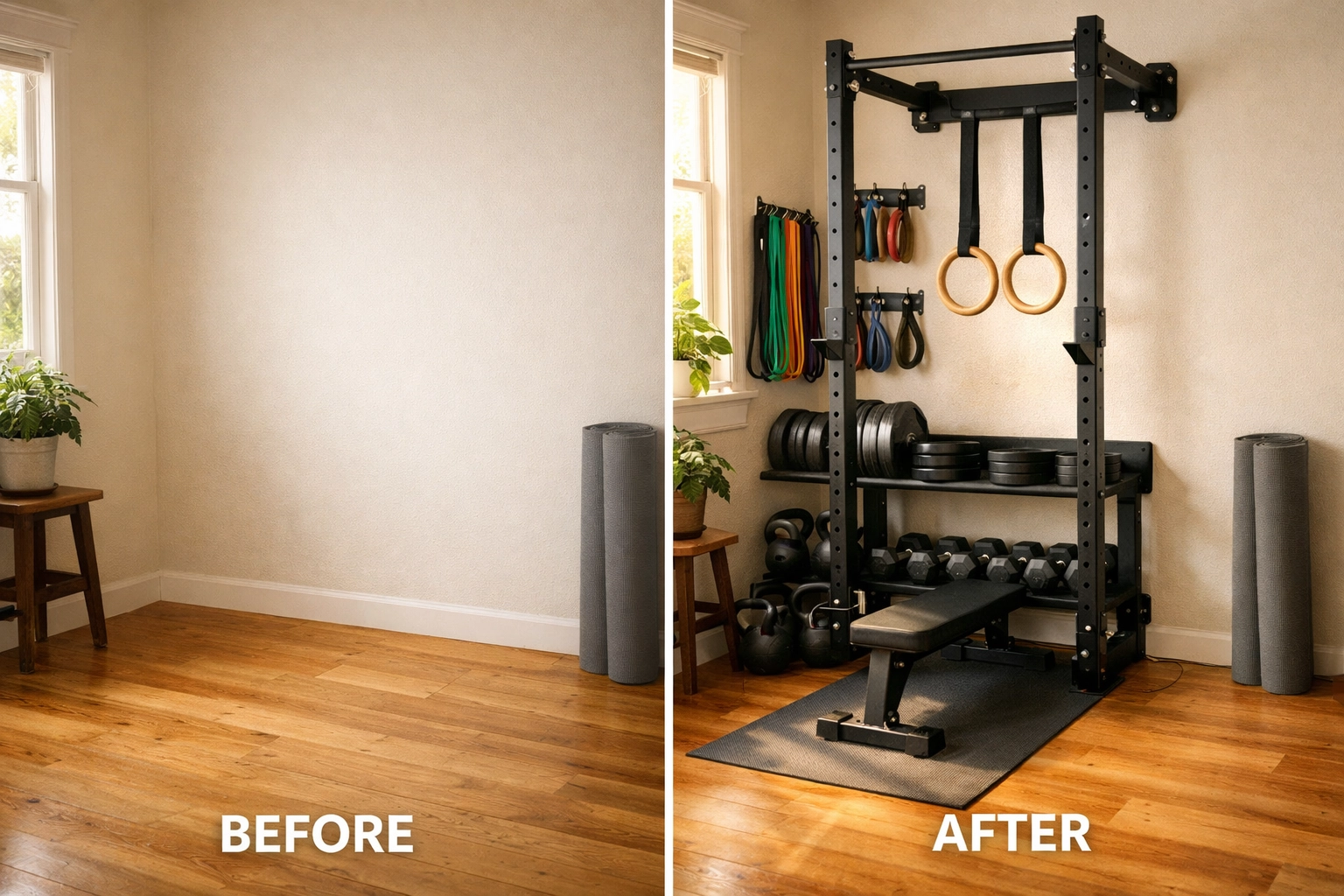
The hidden cost nobody calculates is obsolescence. Traditional equipment becomes useless when your training evolves. Versatile equipment adapts. That power rack you bought for strength training? Completely useless if you decide to focus on calisthenics for six months. A floor-to-ceiling system? Still your primary training tool regardless of programming.
Making the Switch: Practical Implementation
If you're convinced but unsure how to transition from traditional to versatile equipment, here's the playbook:
Phase 1: Identify Your Core Anchor System
Start with equipment that can handle multiple exercises. A floor-to-ceiling system checks this box perfectly: it becomes your pull-up station, your band anchor, your suspension trainer mount, everything. Install it first, train with it for two weeks, and watch your exercise library expand.
Phase 2: Add Adjustable Resistance
Invest in quality resistance bands and suspension trainers. These tools require minimal storage space but multiply your training options exponentially. Focus on versatility over specialization: a good set of bands beats a specialized cable machine every time.
Phase 3: Evaluate Specialty Needs
Once your foundation is solid, identify gaps specific to your sport. Gymnasts might need parallettes. Fighters might want a heavy bag mount. CrossFitters might add a rower. But these should complement your versatile foundation, not replace it.
Phase 4: Eliminate the Deadweight
Be ruthless about equipment that isn't earning its space. That bench press you use once a month? Gone. The leg extension machine gathering dust? Donate it. Traditional equipment has one job: if it's not doing that job regularly, it needs to go.
The Bottom Line on Versatile Home Gym Equipment
Serious athletes are making the switch because versatile home gym equipment simply performs better for real-world training demands. It adapts to your programming instead of forcing you into rigid movement patterns. It respects your space constraints instead of demanding permanent installations. And it grows with your abilities instead of becoming obsolete.
Traditional home gyms had their moment. That moment has passed. The future belongs to adaptable, space-efficient, multi-purpose systems that support how athletes actually train in 2026.
If you're ready to build a home gym that matches your ambition, start with equipment engineered for versatility. The training you'll unlock is worth infinitely more than the floor space you'll save.
