

Let's talk about the elephant in the room that home gym equipment manufacturers conveniently forget to mention: those "simple installations" they advertise? They're destroying your walls, tanking your property value, and locking you into equipment you can't easily move or upgrade.
I'm pulling back the curtain on what these companies don't want you to know about wall damage, installation nightmares, and why there's a better way to build your dream home gym without turning your rental deposit into a distant memory or your owned home into a patchwork of filled screw holes.
The Wall Damage Truth Bomb No One's Talking About
Here's what happens after you install that "revolutionary" wall-mounted pull-up bar or squat rack:
You drill 4-8 holes minimum into your studs. Those holes weaken the structural integrity of the wood. When you're cranking out muscle-ups or weighted pull-ups, you're applying hundreds of pounds of dynamic force directly into those compromised mounting points. Over time, the wood fibers compress, the drywall cracks spiderweb around the mounting plate, and suddenly your "permanent" gym equipment is wobbling like it's got a death wish.
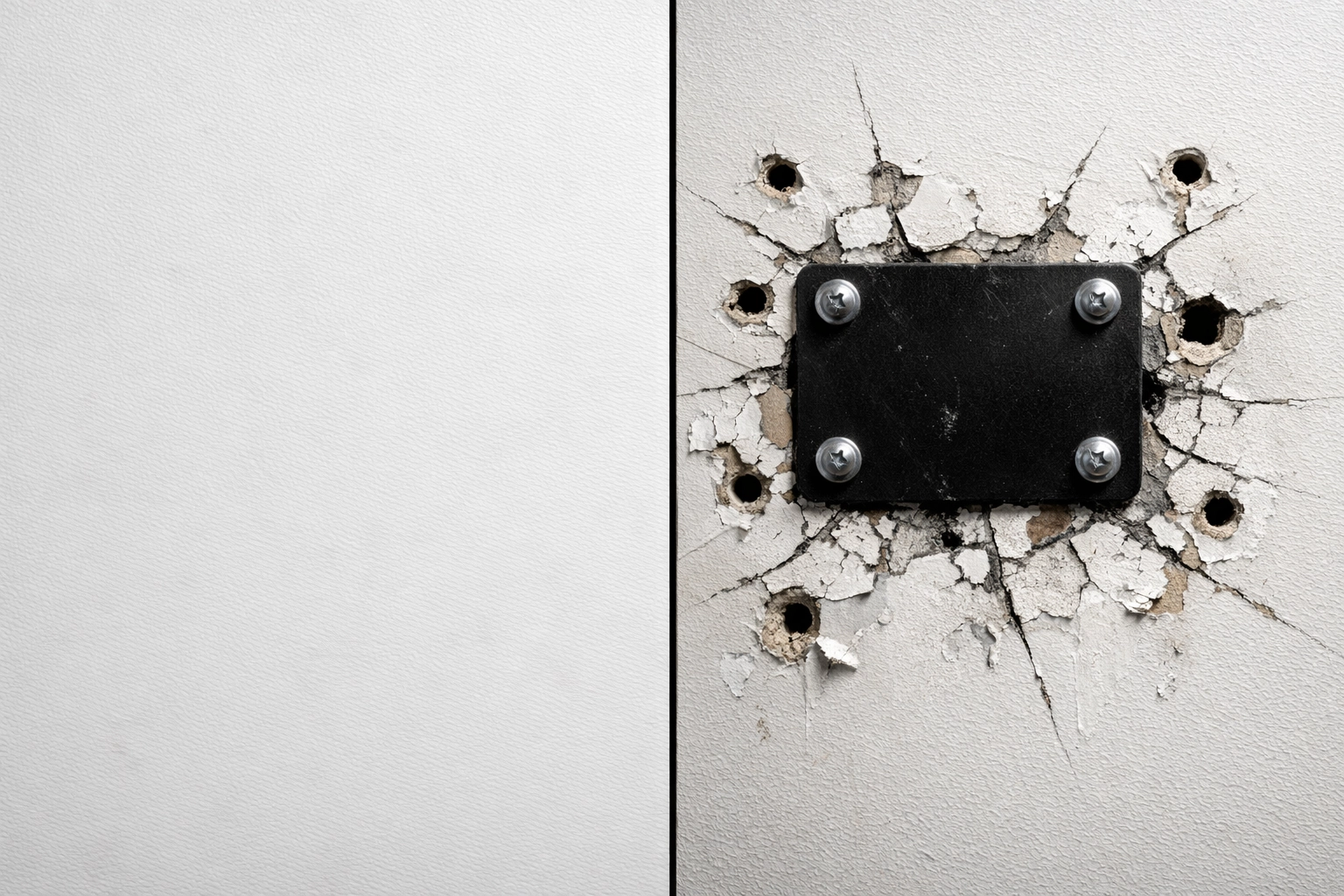
But the companies selling you this equipment? They're not sending you repair kits. They're already selling the next version with "improved mounting hardware" that requires more holes in different locations.
For renters, this is an absolute nightmare. That $500 security deposit? Gone. Add another $200-400 for professional drywall repair and painting to match the existing wall texture. And good luck explaining to your landlord why there are 12 bolt holes arranged in a perfect rectangle on their wall.
Why They Keep Pushing Wall-Mounted Systems
Follow the money. Wall-mounted equipment is cheaper to manufacture and easier to ship. A wall-mounted pull-up bar weighs 15 pounds and ships in a flat box. A freestanding power rack? 200+ pounds, bulky packaging, expensive freight costs.
Companies aren't designing for your needs: they're designing for their profit margins.
Plus, once you've drilled those holes and mounted that equipment, you're psychologically committed. Moving it means repairs. Upgrading means new holes. You're locked into their ecosystem, making it easier for them to upsell you accessories, warranty extensions, and eventually replacement units when that wall mounting inevitably fails.
The Hidden Costs of "Professional Installation"
Many calisthenics equipment for home setups and crossfit home gym rigs advertise "optional professional installation available." What they don't tell you upfront:
- Professional installation runs $150-500 depending on complexity
- Most installers won't guarantee the integrity of older walls or rental properties
- Insurance typically doesn't cover wall damage from gym equipment failures
- Load-bearing calculations aren't included: you're trusting the installer's "experience"
One CrossFit athlete I know paid $1,200 for a wall-mounted rig installation only to have it rip out of the wall during kipping pull-ups six months later. The installer blamed "user error" and denied any warranty claims. The wall repair? Another $800.
That "affordable" wall-mounted system just cost nearly $2,000 before you even started training.
Floor-to-Ceiling Systems: The Industry Secret
Here's where it gets interesting. The best no wall damage workout system options use floor-to-ceiling tension: and manufacturers have known this for decades.
Floor-to-ceiling systems distribute force across two surfaces: your floor and your ceiling. Instead of concentrating hundreds of pounds of stress into 6-8 screw holes, you're spreading that load across entire structural planes. The physics are simple: more surface area equals less stress per square inch.
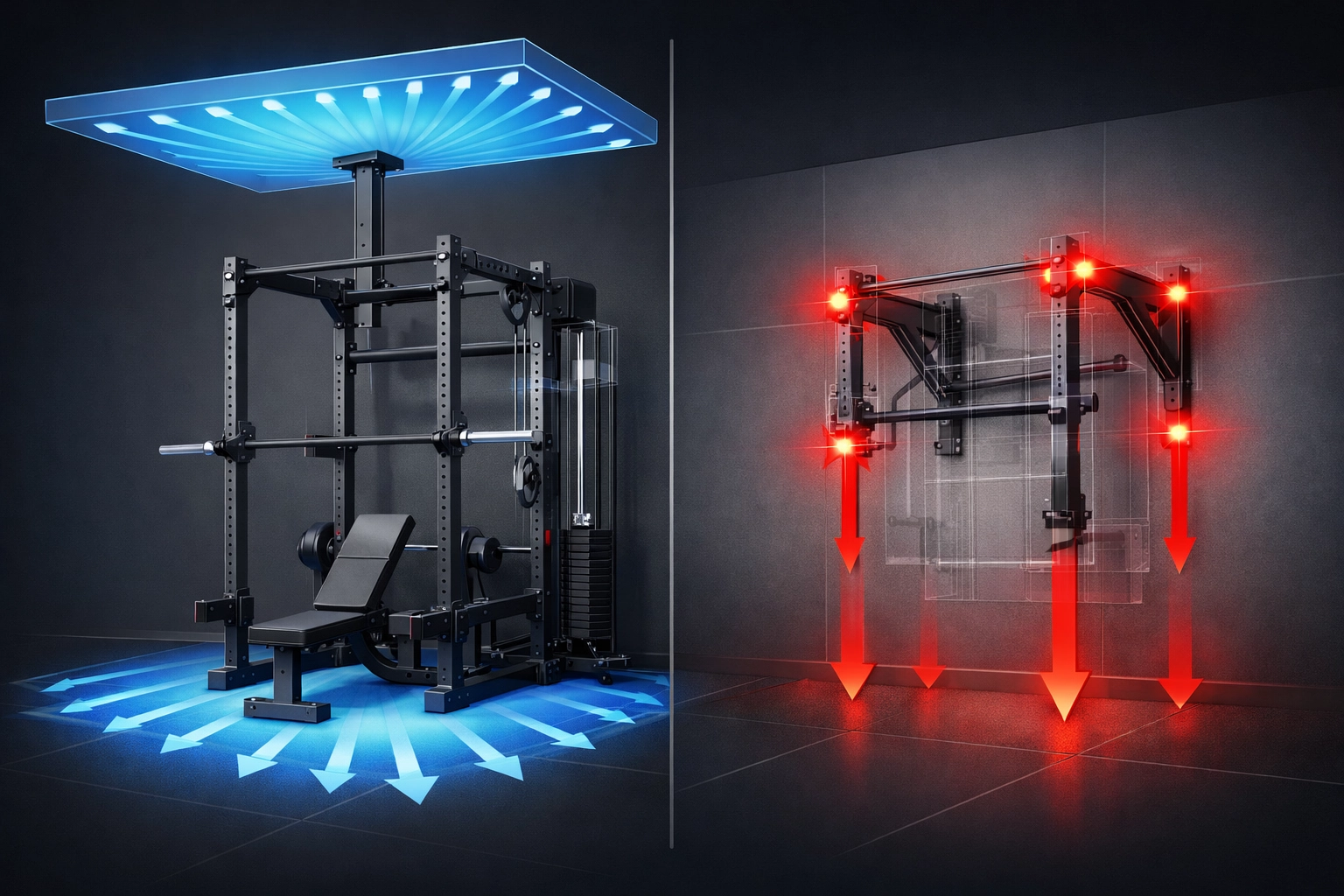
But here's the catch: most companies charge premium prices for floor-to-ceiling options because they know renters and homeowners concerned about damage will pay extra. It's the same equipment, just configured differently, yet they'll tag an extra $200-500 onto the price.
Why? Because they can. And because they've spent years training consumers to think wall-mounting is "normal" and floor-to-ceiling is "specialty."
What Serious Athletes Actually Need
Talk to any ninja warrior, elite gymnast, or MMA fighter training at home, and they'll tell you the same thing: versatility beats specialization every single time.
Wall-mounted equipment locks you into fixed positions. You can't adjust the height mid-workout. You can't reconfigure your training space for different exercises. You're stuck with what you bolted to the wall six months ago when you thought you'd only need basic pull-ups.
Bodyweight training at home and serious resistance training require adaptability. Your program changes. Your goals evolve. Your space needs to flow with you: not trap you into configurations that made sense in January but are limiting you by June.
At Bold Body Fitness, we've watched countless athletes struggle with this exact problem. They outgrow their wall-mounted setups within months but can't justify the expense and hassle of uninstalling, repairing walls, and starting over.
The Resistance Rail Approach: Floor-to-Ceiling Without the Premium Price Gouge
This is where we stopped playing by the industry's rules. The Resistance Rail uses floor-to-ceiling tension to create a versatile home gym that doesn't touch your walls. Period.

Zero drilling. Zero wall damage. Zero security deposit drama.
The system works by applying controlled pressure between your floor and ceiling: the same principle that makes those cheap tension shower rods work, except engineered to handle serious athletic loads. We're talking pull-ups, muscle-ups, rope climbs, resistance band training, and gymnastics ring work all from one pull up bar alternative system.
For full body workout at home enthusiasts, this changes everything. You can set it up in 15 minutes, train hard, and remove it just as quickly if you need the space back. Moving apartments? Pack it up. No repairs, no explanations, no lost deposits.
What This Means for Your Training
When you eliminate the wall-damage factor, your entire approach to home gym equipment changes:
Freedom to experiment: Try different grip widths, bar heights, and equipment configurations without permanent consequences.
Scalability: Start with basics and add attachments as your training evolves: no reinstallation required.
Portability: Train in your home gym all winter, then move the system outside when weather permits or pack it for extended stays elsewhere.
Resale value: Both for your equipment and your property. Your walls stay pristine, and your gear stays marketable.
The companies selling permanent wall-mounted systems don't want you thinking about these advantages because they know you'll realize you're paying more for less flexibility.
The Rental Revolution
Renters represent 36% of American households, but the fitness equipment industry largely ignores their needs: or worse, pretends wall damage "isn't that bad" or can be "easily fixed."
That's garbage, and everyone in the industry knows it.
A proper no wall damage workout system isn't a compromise: it's actually superior for most training applications. The only scenario where permanent wall-mounting makes sense is if you're building a dedicated gym space in a property you own and plan to stay in for 10+ years.
For everyone else? You're being sold convenience that isn't convenient and permanence you don't actually want.
Making the Smart Choice
When you're shopping for home gym equipment, ask these questions:
- Will this damage my walls, floor, or ceiling?
- Can I reconfigure it as my training evolves?
- How portable is it if I need to move?
- What's the real cost including installation and eventual removal?
- Does it lock me into specific exercises or training styles?
If a company won't give you straight answers about wall damage, installation costs, or removal difficulty, that tells you everything you need to know about their priorities.
Train Bold, Not Bound
The fitness equipment industry has trained consumers to accept wall damage as inevitable: a necessary sacrifice for home training. That's only true if you're buying from companies more interested in shipping costs and upsells than your actual training needs.
Floor-to-ceiling systems like the Resistance Rail prove there's a better way. No damage, no drilling, no compromises on workout quality or exercise variety. Just pure, adaptable training power that moves with your life instead of anchoring you to outdated equipment configurations.
Your walls should stay pristine. Your training should stay dynamic. And your home gym should adapt to you: not the other way around.
Ready to build a home gym that doesn't cost you your security deposit? Check out our complete Resistance Rail system and see why serious athletes are ditching wall-mounted limitations for floor-to-ceiling freedom.
