
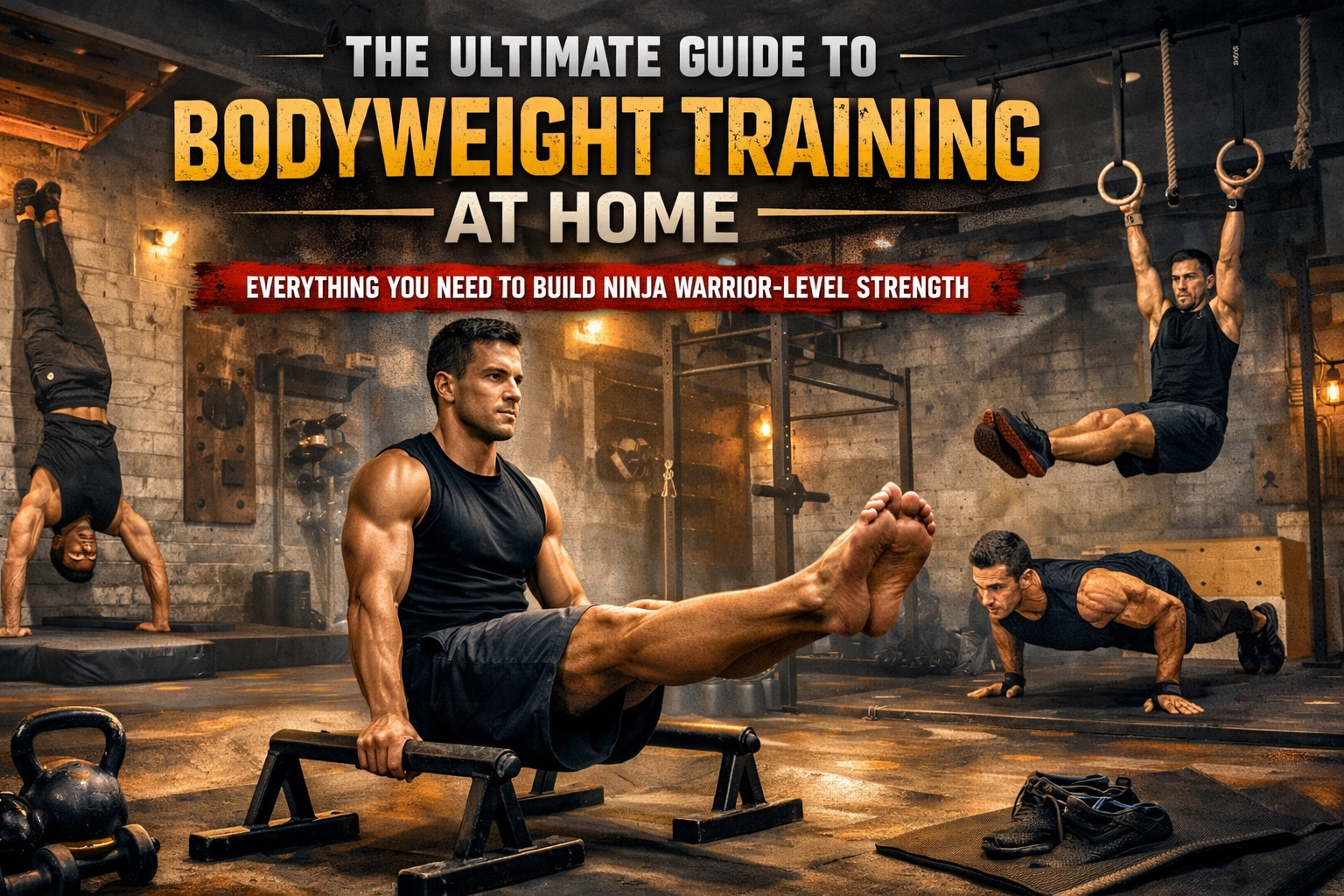
You want to build the kind of strength that makes people stop and stare. The kind that lets you conquer obstacles, dominate pull-up bars, and move your body like a weapon. Here's the truth: you don't need a fancy gym membership to get there. With the right approach to bodyweight training at home, you can build Ninja Warrior-level strength that translates to real-world performance.
Let's cut through the noise and get to what actually works.
Why Bodyweight Training Builds Functional Beasts
Bodyweight training isn't just for beginners or people who can't afford a gym. It's the foundation that elite athletes: from gymnasts to MMA fighters: use to develop mind-blowing strength-to-weight ratios. When you train with your own bodyweight, you're forced to move as a complete unit. No isolation. No cheating with momentum. Just pure, functional strength.
The beauty of full body workout at home routines is that they demand total-body tension, proprioception, and control. You're not just building muscle: you're building a body that actually knows how to use that muscle.

The Four Pillars of Elite Bodyweight Strength
Every serious bodyweight program is built on four fundamental movement patterns. Master these, and you'll have the foundation to tackle any variation or progression that comes your way.
1. Push Movements
Push-ups and their countless variations form the backbone of upper body pressing strength. Start with standard push-ups, but don't stop there. Progress to:
- Decline push-ups for increased difficulty
- Pseudo planche push-ups for straight-arm strength
- Explosive plyometric push-ups for power
- One-arm push-up progressions for serious bragging rights
2. Pull Movements
This is where most home trainers struggle: and where having the right home gym equipment becomes crucial. Pull-ups, chin-ups, and rows build the back strength essential for obstacle course domination. If you're serious about ninja warrior-level pulling power, you need a solid overhead pulling station.
The Resistance Rail system offers a game-changing solution for home athletes. Unlike traditional pull-up bars that damage doorframes or require permanent installation, this floor-to-ceiling setup gives you multiple grip positions and rock-solid stability for high-rep training and dynamic movements.
3. Lower Body Power
Bodyweight squats might seem basic, but they're the gateway to single-leg movements that separate pretenders from contenders. Your progression path:
- Air squats (20+ reps with perfect form)
- Bulgarian split squats
- Shrimp squats
- Full pistol squats
Add explosive variations like jump squats and broad jumps to build the explosive power ninja warriors need for obstacle transitions.

4. Core Control
Forget crunches. Real core strength comes from anti-rotation exercises, hollow body holds, L-sits, and dynamic movements that demand full-body tension. Your core is the link between upper and lower body power: neglect it at your own risk.
The Weekly Blueprint for Ninja Warrior Strength
Structure beats motivation every single time. Here's a battle-tested weekly schedule that balances intensity with recovery:
Monday: Upper Body Push + Core
- Push-up variations: 4 sets to near-failure
- Pike push-ups or handstand progressions: 3 sets
- Dips (using furniture or rings): 3 sets
- Plank variations and hollow holds: 3 rounds
Wednesday: Pull + Posterior Chain
- Pull-up/chin-up variations: 5 sets
- Inverted rows: 4 sets
- Nordic curls or single-leg deadlifts: 3 sets
- Hanging knee raises: 3 sets
Friday: Lower Body + Dynamic Power
- Pistol squat progressions: 4 sets each leg
- Jump squats: 3 sets of 10
- Step-ups or box jumps: 3 sets
- Sprint intervals or burpees: 5 rounds
Optional Saturday: Skill Work
- Handstand practice
- Muscle-up progressions
- Grip strength training
- Mobility and flexibility work

Progressive Overload Without Weights
Here's where most people get bodyweight training wrong: they do the same exercises at the same difficulty forever and wonder why they plateau. Progressive overload is just as important with bodyweight training: you just need to be smarter about it.
Five ways to increase difficulty:
- Leverage changes: Moving from bent-arm to straight-arm positions dramatically increases difficulty
- Tempo manipulation: Slow eccentrics (5-second lowers) build insane strength
- Range of motion: Deficit push-ups or deep squat variations add inches to your movement
- Unilateral progressions: Shifting from two limbs to one doubles the challenge
- Dynamic variations: Adding explosive or plyometric elements builds power
The key is making small, measurable progressions every 2-3 weeks. Can't do a full pistol squat? Start with box pistols. Can't do a muscle-up? Break it down into high pull-ups and deep dips separately.
Setting Up Your Home Training Space
You don't need much, but what you do need should be rock-solid reliable. At minimum, you want:
- A stable overhead pulling system (pull-up bar, rings, or comprehensive system like the Resistance Rail)
- Parallel bars or dip station (or sturdy furniture in a pinch)
- Clear floor space for push-ups and ground work
- Optional: resistance bands for assistance and added resistance
The biggest mistake home trainers make is using unstable or inadequate equipment. That wobbly doorframe pull-up bar? It's limiting your training intensity and potentially dangerous for dynamic movements. If you're serious about building elite-level strength, invest in equipment that won't hold you back.
Check out the Bold Body Fitness shop for equipment designed specifically for serious home athletes who demand performance without compromise.

Nutrition and Recovery for Maximum Gains
You can't out-train a bad diet or inadequate recovery. Bodyweight training might not feel as heavy as barbell work, but it's demanding on your central nervous system and connective tissues.
Protein timing matters: Aim for 0.8-1g of protein per pound of bodyweight, spread across 3-4 meals. Your muscles need the building blocks to adapt.
Sleep is non-negotiable: Elite athletes sleep 8-9 hours for a reason. Recovery happens when you're unconscious, not when you're crushing your tenth YouTube workout of the week.
Active recovery: Light movement, stretching, and mobility work on off days keeps you progressing without overtraining.
The Mind-Body Connection
Here's what separates ninja warriors from regular gym-goers: body awareness. Every rep should be intentional. Focus on the mind-muscle connection, maintain perfect tension throughout your entire body, and move with purpose.
Bodyweight training forces you to develop this awareness because you can't hide behind external resistance. Your proprioception, balance, and kinesthetic sense become finely tuned weapons.

Start Where You Are, Progress Where You're Going
The beauty of bodyweight training at home is that it meets you exactly where you are. Can't do a full push-up? Start elevated. Can't do a pull-up? Use bands or do negatives. The progressions are infinite, and the ceiling is incredibly high: higher than most people will ever reach.
The athletes you see floating up the warped wall or holding impossible static positions didn't start there. They started with the fundamentals and progressed consistently, week after week, month after month.
Your journey starts today. Set up your training space, commit to the progression, and trust the process. The strength will come.
Ready to take your home training to the next level? Visit Bold Body Fitness to explore equipment solutions that match your ambition. Because your body deserves better than makeshift setups and half-measures.
Now get out there and build something extraordinary.
