
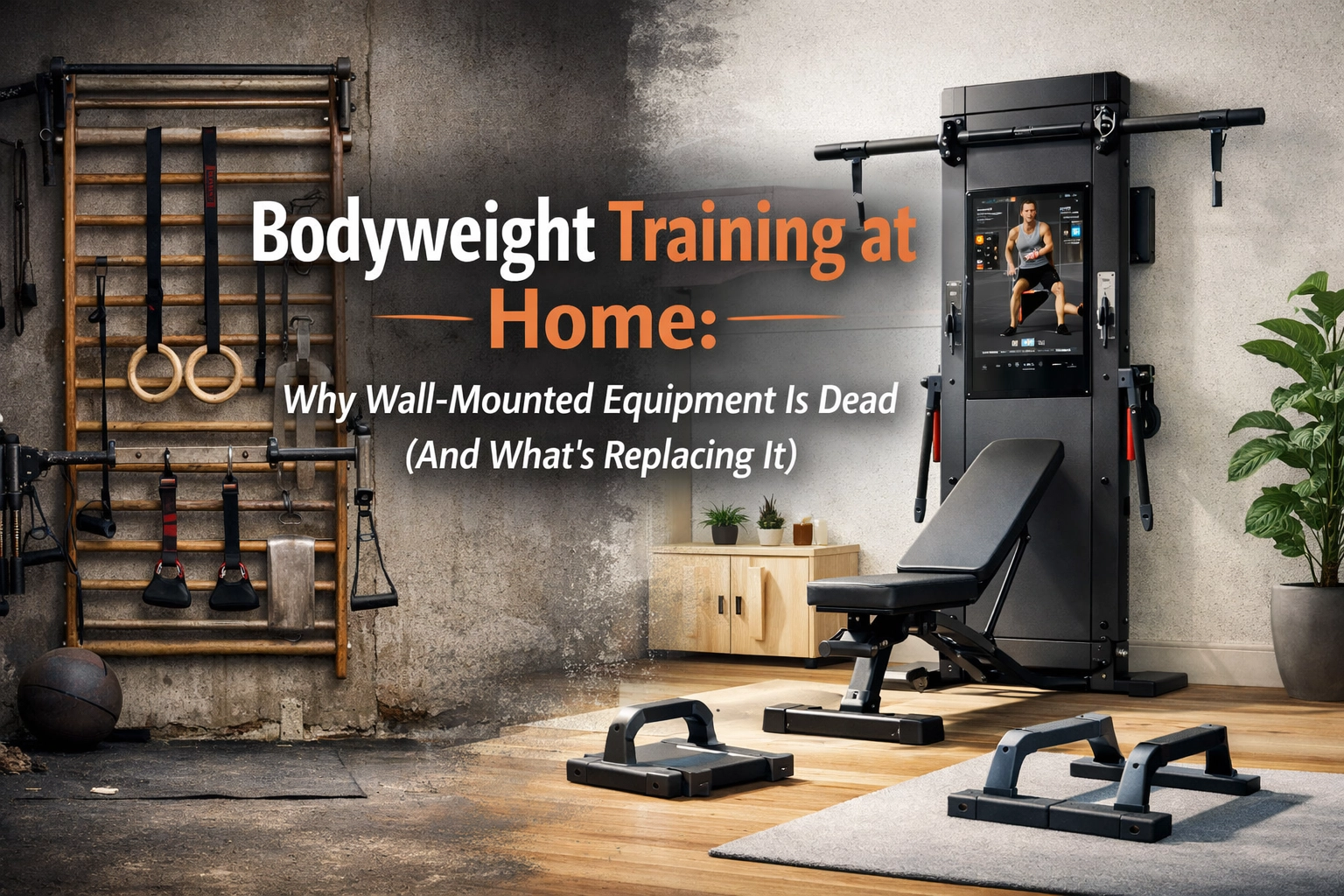
Let's get real for a second: wall-mounted pull-up bars and home gym equipment have been lying to you.
They promised convenience, stability, and the ability to train anywhere in your house. What they actually delivered? Holes in your walls, security deposit nightmares, and the kind of installation headaches that make you question why you didn't just join a commercial gym in the first place.
If you're serious about bodyweight training at home, whether you're grinding through calisthenics progressions, training for American Ninja Warrior, or building that gymnast-level strength, it's time to face the truth: wall-mounted equipment is becoming obsolete. And there's something better taking its place.
The Wall-Mounted Equipment Problem Nobody Talks About
Walk into any home gym forum or fitness subreddit, and you'll see the same story repeated a thousand times: someone installs a wall-mounted pull-up bar with dreams of daily muscle-ups, only to face reality a few weeks later.
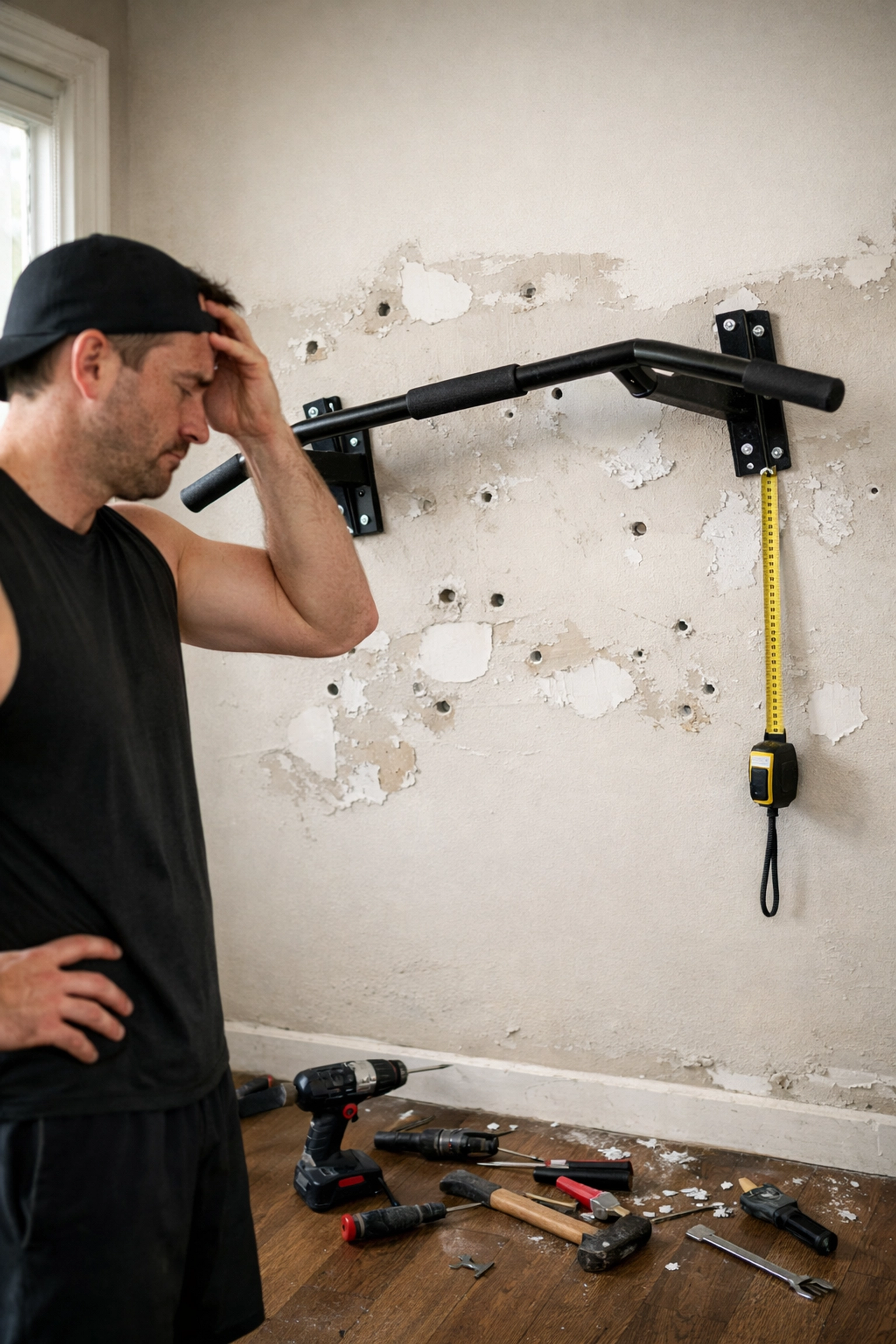
The installation nightmare is just the beginning. You need to find studs, drill precisely, worry about whether your walls can actually handle dynamic movements, and pray you measured correctly. Miss the mark by an inch? Congratulations, you just created abstract art on your drywall.
But here's what kills me about traditional wall-mounted systems: they're permanent solutions to temporary living situations. Renters are screwed. People who move frequently are screwed. Anyone who values their security deposit? Yeah, you're definitely screwed.
And even if you own your home, here's the kicker, wall-mounted bars lock you into one location. Want to train outside when the weather's perfect? Too bad. Need to move your setup to accommodate guests or furniture? Sorry, your pull-up bar is about as mobile as your foundation.
The stability argument doesn't hold up either. Sure, a properly installed wall-mounted bar can handle weight: approximately 250 kg according to most specs. But "properly installed" is doing a lot of heavy lifting in that sentence. One wrong stud, one compromised drywall anchor, and you're looking at catastrophic failure mid-rep.
What Serious Athletes Actually Need
Let's talk about what versatile home gym equipment should actually deliver.
Ninja warriors don't train in one spot. They need to transition between movements, adjust heights on the fly, and simulate the unpredictable nature of obstacle courses. Wall-mounted bars? They're stuck at one height, offering zero adaptability.
Gymnasts require precision. Ring work, pull-up variations, front levers, planches: these movements demand equipment that can handle dynamic loading from multiple angles. Traditional wall mounts? They're designed for vertical pull movements and not much else.
CrossFit athletes know that versatility wins. One minute you're doing strict pull-ups, the next you're working muscle-ups, then you're adding resistance bands for accommodating resistance work. Wall-mounted systems force you to work around their limitations instead of supporting your training evolution.
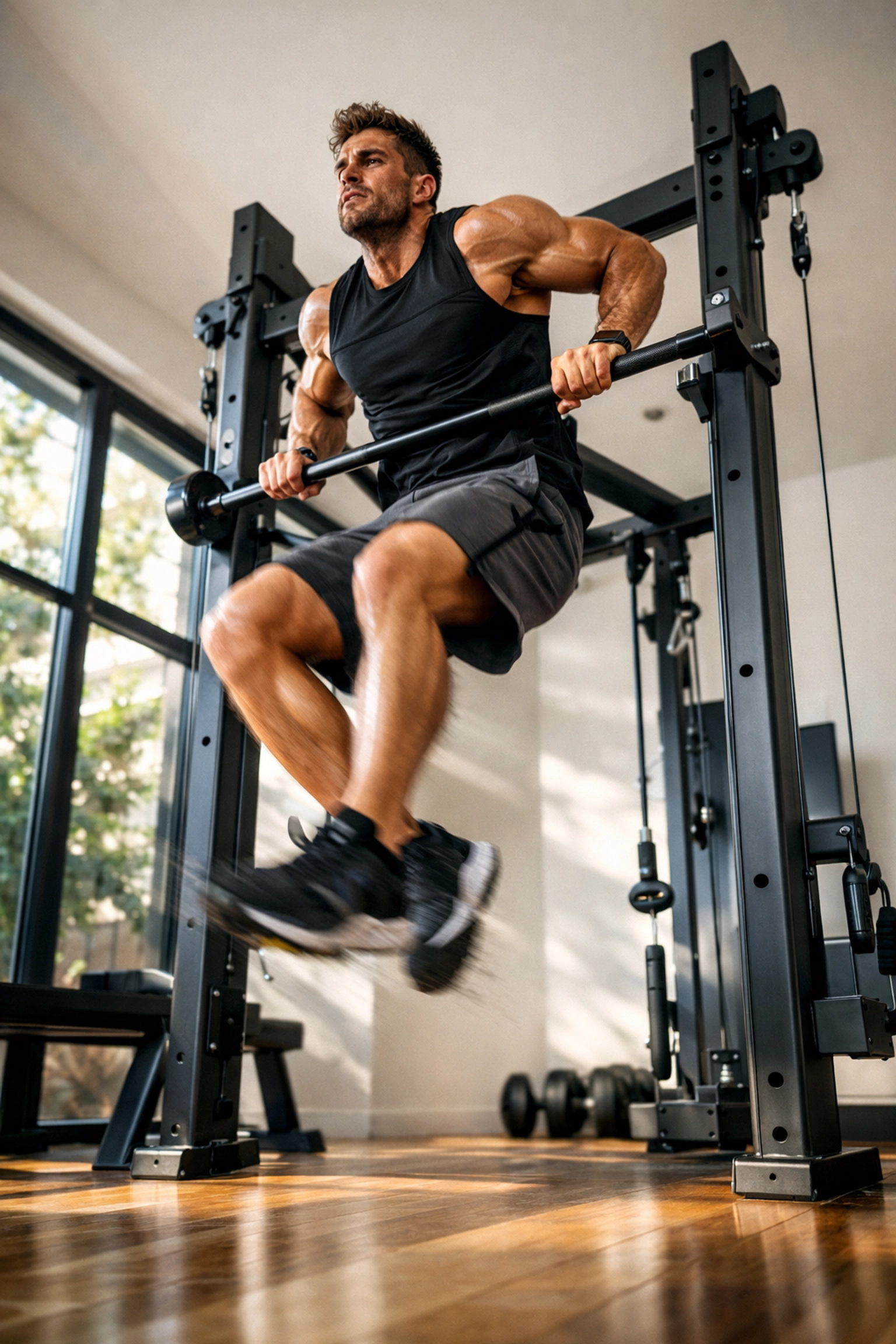
MMA fighters and grapplers need functional strength that translates to the cage. That means varied grip positions, the ability to train explosive movements, and equipment that won't become a liability when you're going hard. A fixed bar on a wall? That's not functional: that's restrictive.
The Floor-to-Ceiling Revolution
Here's where the game changes: floor to ceiling gym systems that require zero wall damage.
Think about it. Instead of drilling into walls and hoping your anchors hold, you're leveraging the most stable structure in your house: the actual framework holding your ceiling and floor together. The tension-based design means you're distributing force across the strongest points of your home's structure.
This isn't some flimsy doorway pull-up bar that rattles when you kip. We're talking about systems engineered to handle serious training volume: the kind of equipment that doesn't flinch when you're throwing around body weight plus additional resistance.
The Bold Body Fitness Resistance Rail represents exactly this evolution. It's a no wall damage workout system that sets up in minutes, handles dynamic movements that would make wall-mounted bars weep, and: here's the beautiful part: moves with you when life changes.
Why "No Wall Damage" Changes Everything
For renters, this is liberation. You're no longer choosing between serious training and keeping your security deposit. Set it up, train hard, take it down, and leave zero evidence you were ever there.
But even homeowners are catching on. Why commit to permanent alterations when you might want to renovate, rearrange, or convert your training space into something else down the line? Flexibility isn't just convenient: it's smart property management.
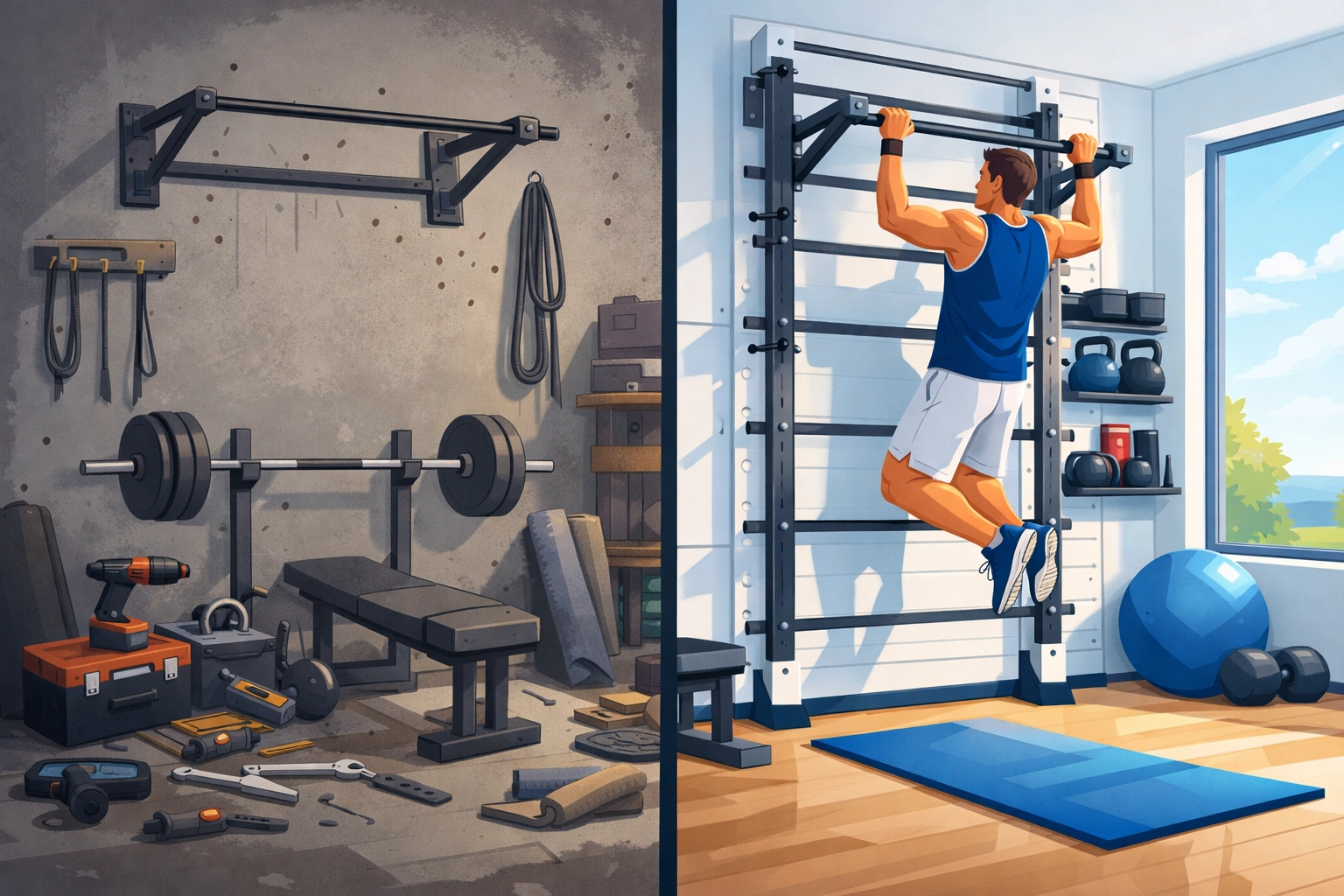
The pull up bar alternative conversation isn't about finding something "almost as good" as wall-mounted equipment. It's about recognizing that wall-mounted bars were never the gold standard: they were just the only option we had for a long time.
Floor-to-ceiling systems offer adjustment capabilities that wall mounts can't touch. Need the bar higher for muscle-ups? Lower for Australian pull-ups? At an angle for creative leverage work? Done, done, and done. Try adjusting a wall-mounted bar without breaking out the power tools.
The Equipment That Actually Works for Multiple Disciplines
Calisthenics equipment for home needs to support progressive overload and skill development. When you're working toward advanced movements like the front lever or one-arm pull-up, micro-adjustments in grip width, bar angle, and height make massive differences.
Traditional wall setups force you into their predetermined configurations. Modern floor-to-ceiling systems let you customize your training environment for exactly what your progression demands.
For a crossfit home gym, the benchmark is simple: can it handle everything from strict strength work to high-rep metcons without becoming unstable? Can you attach bands, add weight, and modify quickly between exercises? Wall-mounted equipment fails most of these tests.
The reality is that serious athletes train in multiple modalities. You're not just doing pull-ups. You're incorporating resistance bands for accommodating resistance. You're adding gymnastics rings. You're working core stabilization exercises. You're training explosive power movements.
Equipment that can't adapt to this reality isn't equipment: it's a limitation disguised as a solution.
What You Gain by Ditching the Drill
The practical advantages stack up fast:
Portability means you can train indoors when it's freezing and outdoors when the weather's perfect. Your equipment adapts to your life instead of forcing your life to adapt around permanent installations.
Flexibility in height adjustment unlocks exercise variations that wall-mounted bars simply can't accommodate. Lower positions for rows and horizontal pulling. Higher positions for strict strength work. Mid-range for skill practice.
Safety improves when your equipment is designed for dynamic movement from the ground up, rather than hoping drywall anchors hold under kipping force.
Cost efficiency emerges over time. No installation fees. No drywall repair when you move. No replacing equipment because you need different mounting heights.
The Bottom Line on Modern Bodyweight Training
Wall-mounted equipment had its moment. That moment is over.
The fitness industry evolves, and athletes who stay ahead recognize when legacy solutions no longer serve their needs. Bold Body Fitness built the Resistance Rail specifically because too many serious athletes were compromising their training due to equipment limitations.
If you're committed to full body workout at home that doesn't trash your living space or lock you into permanent configurations, the choice is clear. Floor-to-ceiling systems aren't the future: they're the present, and wall-mounted equipment is rapidly becoming the past.
Your walls will thank you. Your landlord will thank you. Most importantly, your training won't be held back by equipment that can't keep up with your progression.
The drill is dead. Long live training that actually works.
Ready to upgrade your setup? Check out what's possible with equipment designed for the modern athlete at the Bold Body Fitness shop.
