
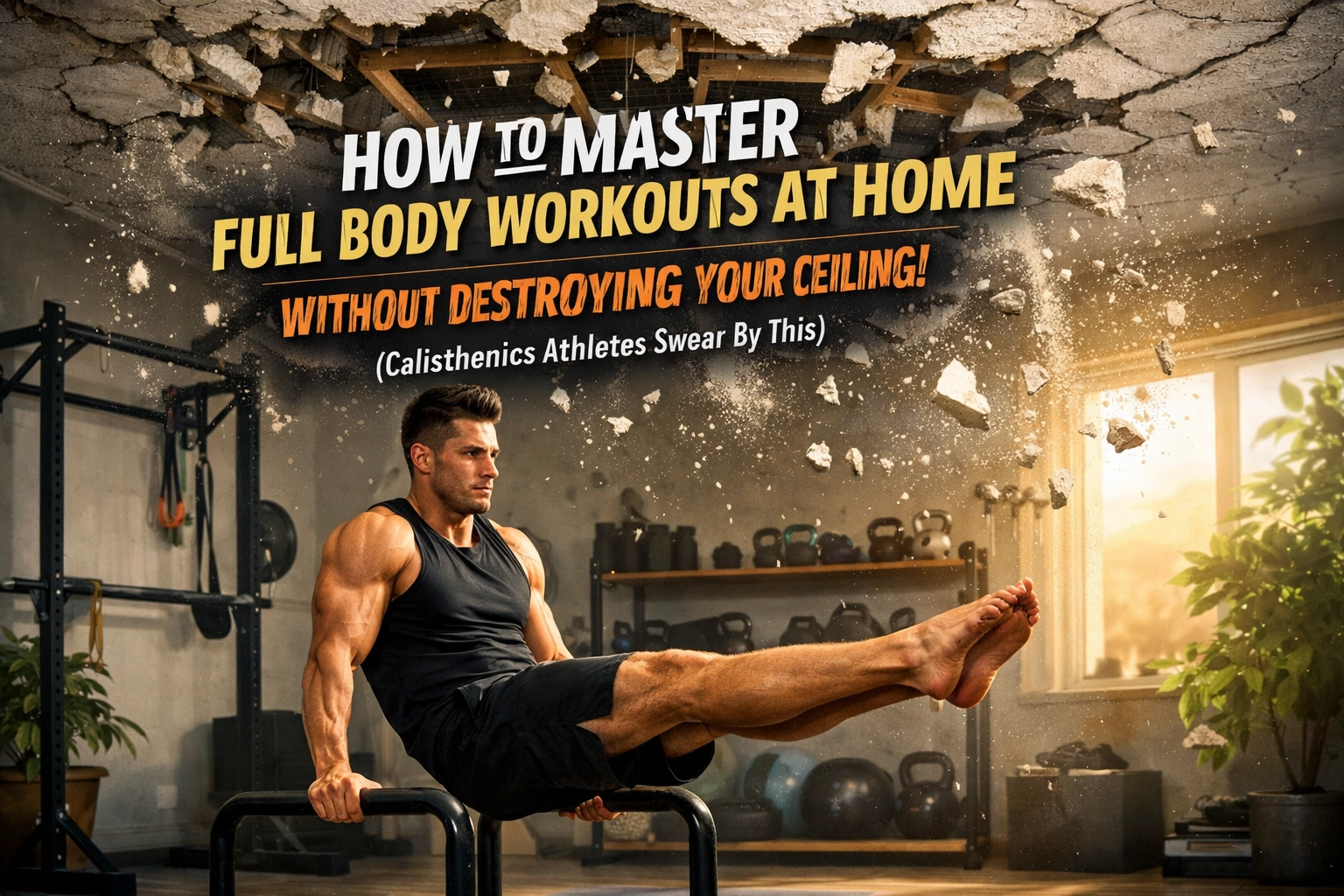
Let's be real, you've probably scared the hell out of your downstairs neighbors at least once. That explosive burpee session at 6 AM? The box jumps that rattled every light fixture in your apartment? Yeah, we've all been there. And if you're training in a place with low ceilings or cranky neighbors, you know the struggle of trying to get a legit full body workout at home without catching a noise complaint or putting your fist through the drywall.
Here's the good news: elite calisthenics athletes, gymnasts, and even CrossFit competitors have figured out how to build serious strength and muscle without turning their training space into a demolition zone. The secret isn't about going easier on yourself: it's about going smarter.
Why Most Home Workouts Are Ceiling Killers
Traditional high-intensity workouts are loud, chaotic, and ceiling-unfriendly for a reason. Jumping exercises like burpees, box jumps, and jump squats create massive impact forces that translate directly into noise and vibration. Throw in some kipping pull-ups on a doorway bar, and you're basically asking your landlord for an eviction notice.
But here's what most people don't realize: you don't need explosive movements to build explosive power. The most successful calisthenics equipment for home setups focus on controlled, tension-based movements that develop strength, muscle, and athleticism without the noise pollution.
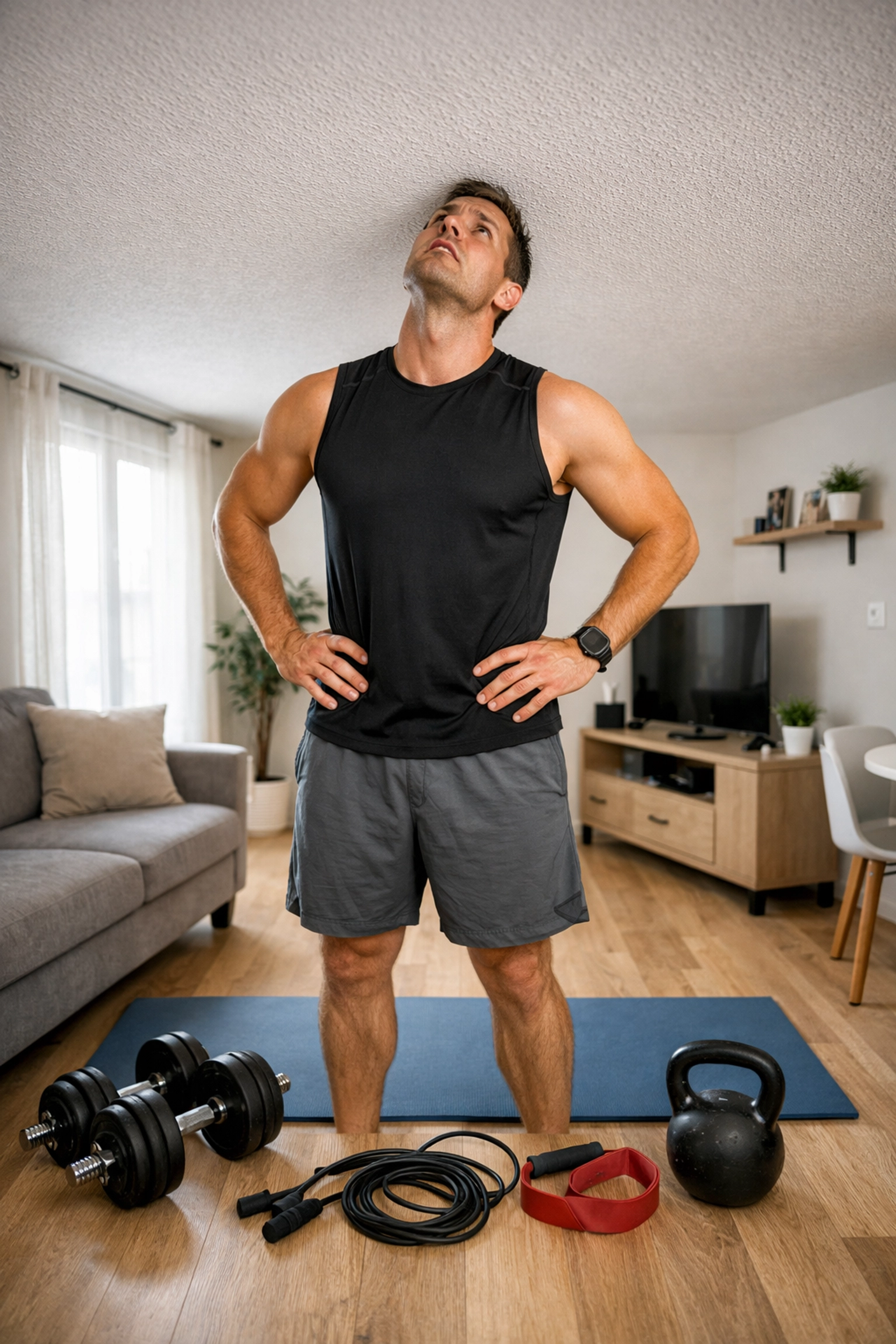
The Controlled Tension Method: How Calisthenics Athletes Actually Train
Elite bodyweight athletes aren't constantly launching themselves into the air. They're mastering slow, controlled movements that create maximum muscle tension without maximum noise. This approach: often called controlled tension training or tempo work: is exactly how gymnasts develop their insane strength-to-weight ratios.
The principle is simple: slow down, squeeze harder, and focus on perfect form through the entire range of motion. This doesn't just save your ceiling: it builds better muscle control, improves joint stability, and creates more time under tension (the actual driver of muscle growth).
Building Your Ceiling-Safe Movement Library
Let's break down a comprehensive bodyweight training at home system organized by movement patterns. This isn't some watered-down workout: it's the same foundation that MMA fighters and ninja warriors use to build functional, athletic strength.
Upper Body Push Movements
Standard Push-Ups (2-4 sets of 10-15 reps)
The push-up is king for a reason. Keep your core tight, lower yourself in a controlled 2-3 second descent, and press back up with intent. No noise, maximum tension.
Progressions:
- Incline push-ups (hands elevated) for beginners
- Diamond push-ups for tricep emphasis
- Archer push-ups for unilateral strength
- Pseudo planche push-ups for advanced athletes
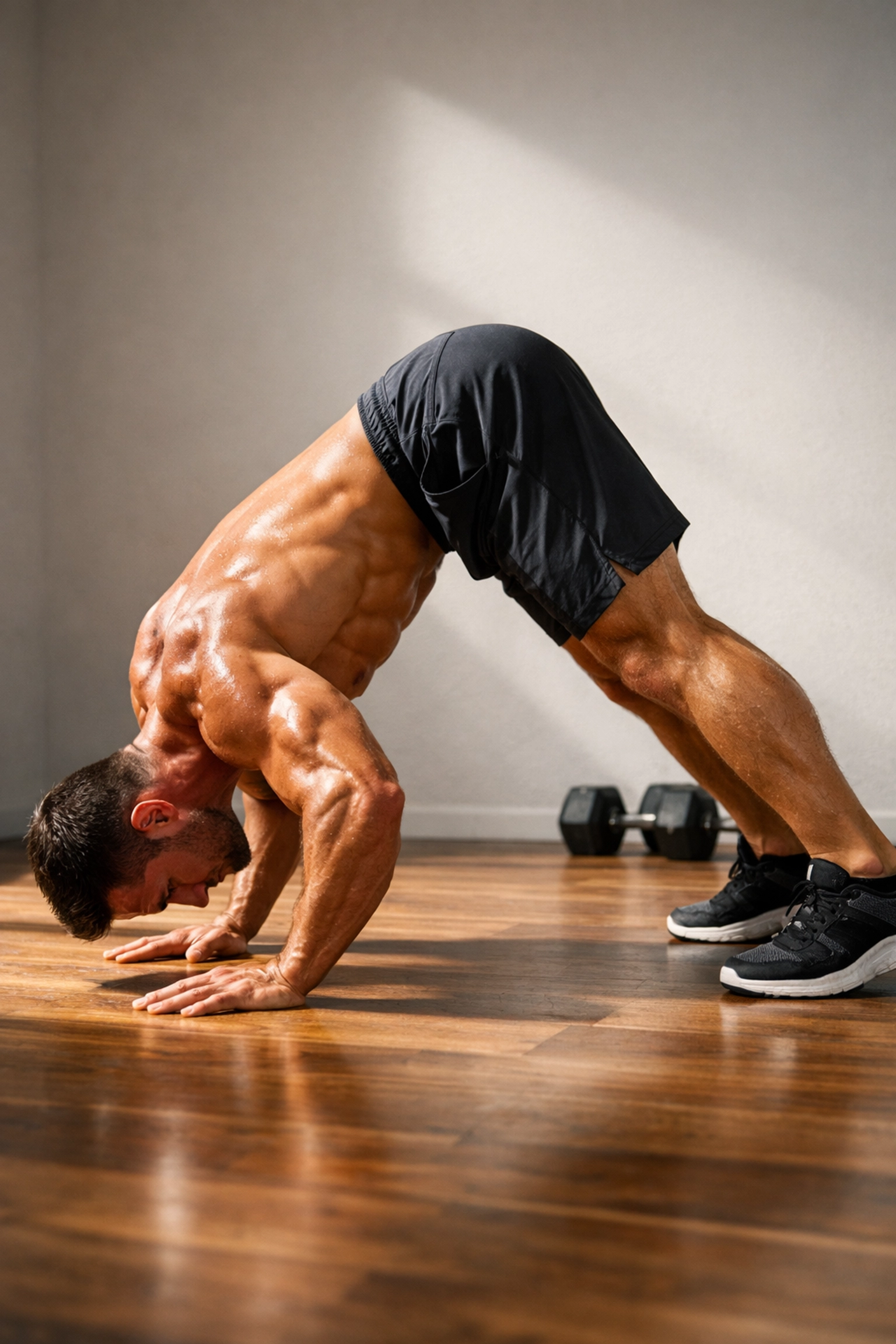
Pike Push-Ups (3-4 sets of 8-12 reps)
Want boulder shoulders without pressing dumbbells into your ceiling? Pike push-ups are your answer. Start in a downward dog position, bend your elbows to lower your head toward the floor, then press back up. Your shoulders will be screaming: your neighbors won't be.
Advanced variation: Elevate your feet on a chair or couch to increase the load and move closer to a handstand push-up position.
Upper Body Pull Movements
Here's where most home setups fall apart. Pull-ups are essential, but standard doorway bars damage frames and create noise. This is exactly why floor to ceiling gym systems have become the go-to for serious home athletes.
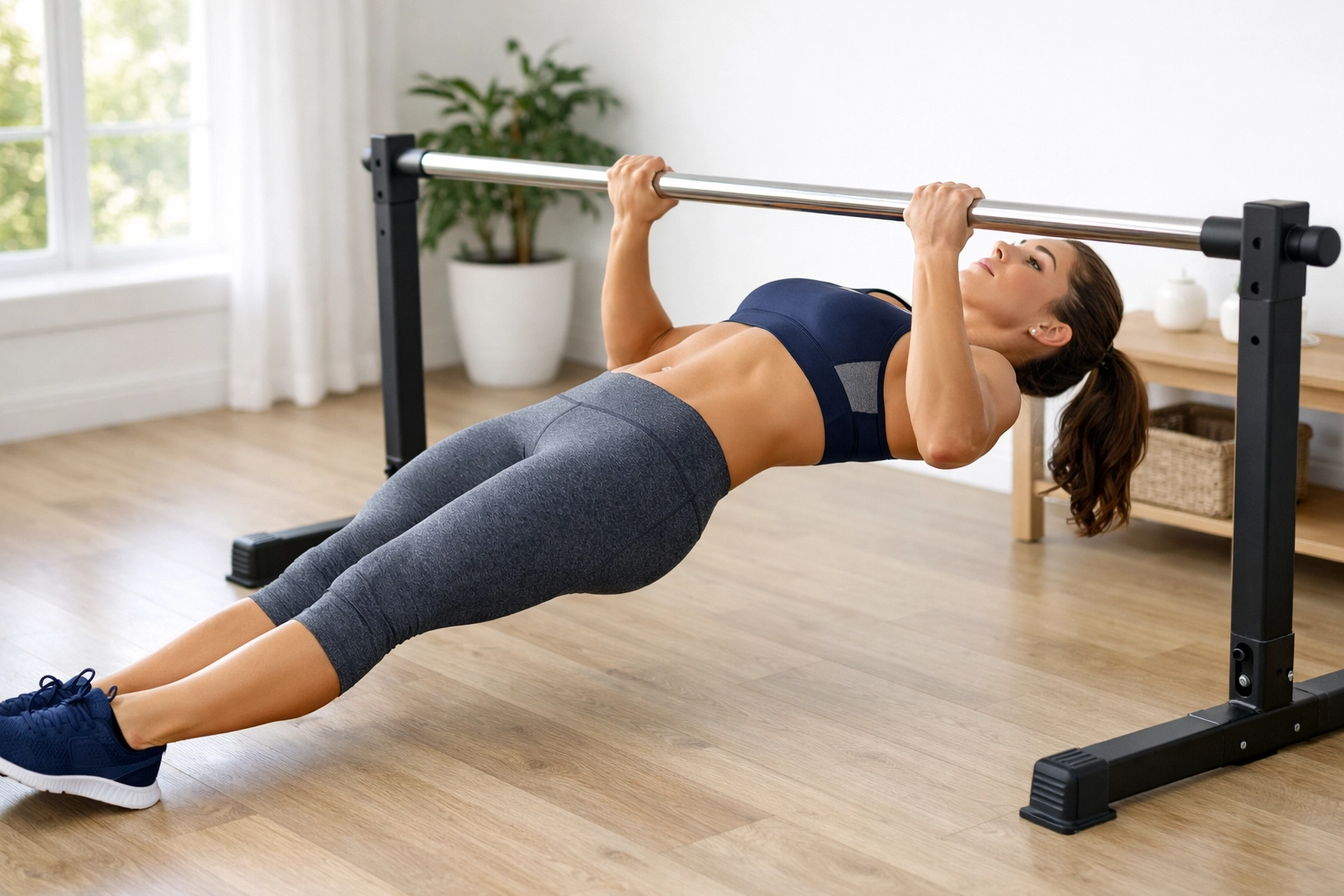
Australian Chin-Ups (4 sets of 8-12 reps)
Also called inverted rows, this exercise builds your entire back using a horizontal pull. You can use a sturdy table, a low bar, or a properly mounted system. Keep your body rigid like a plank, pull your chest to the bar, and control the descent.
Progressions:
- Elevate your feet for more difficulty
- Add a pause at the top
- Perform single-arm variations for advanced athletes
Bicep Curls Using Bodyweight
Get under a table or bar, grab the edge, and curl your body upward while keeping your feet planted. It sounds weird, but it works. Your biceps won't know the difference between this and a dumbbell curl.
Lower Body Power Without the Pounding
You can build tree-trunk legs without a single jump. The key is manipulating leverage, tempo, and range of motion.
Bodyweight Squats (3-4 sets of 15-20 reps)
Before you roll your eyes, slow these down to a 3-second descent and 1-second pause at the bottom. Your quads will be on fire by rep 12. Add a pulse at the bottom for extra punishment.
Bulgarian Split Squats (3 sets of 10-12 reps per leg)
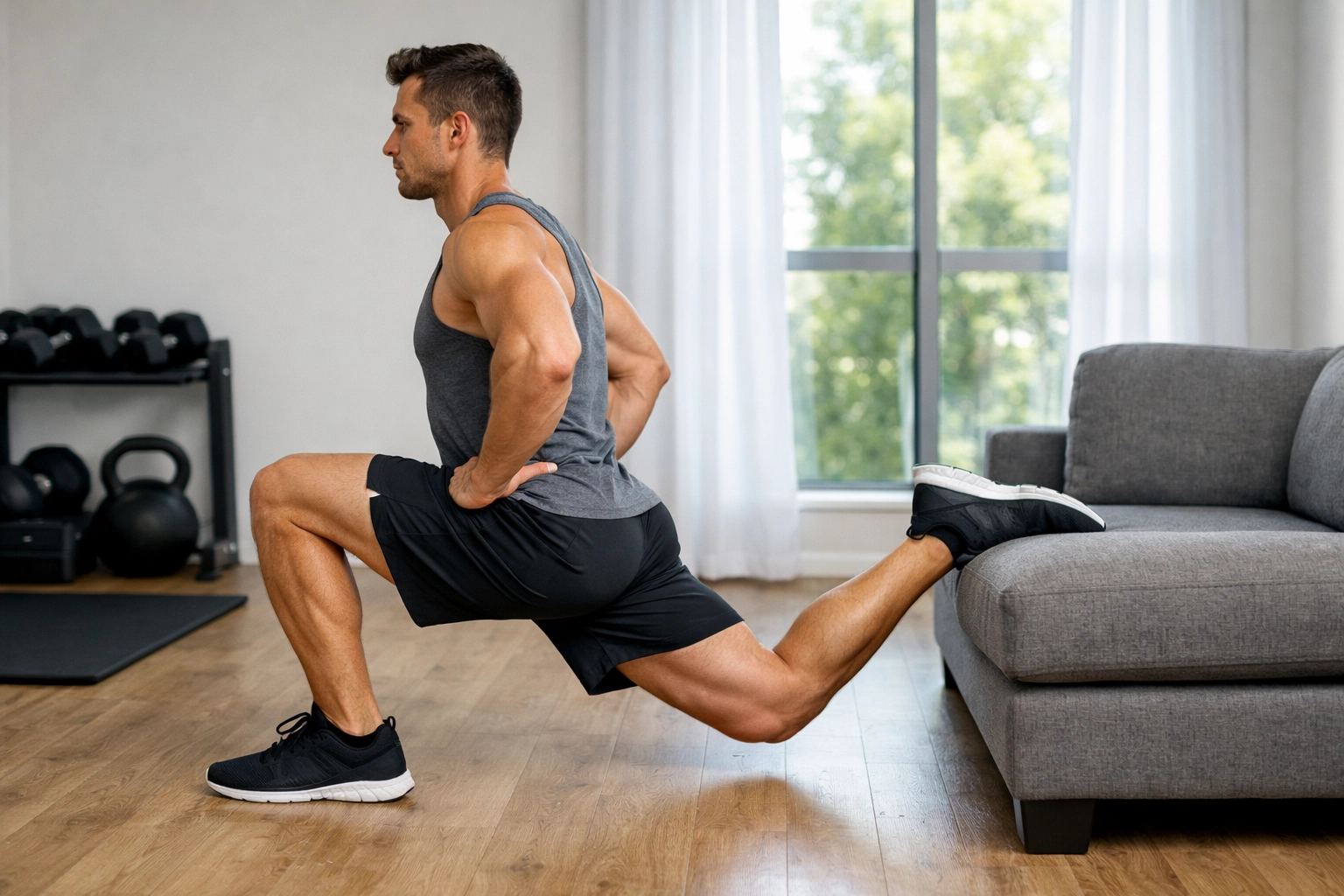
Elevate your rear foot on a couch or chair and squat down on your front leg. This unilateral movement builds serious leg strength and exposes strength imbalances. Zero impact, maximum burn.
Pistol Squat Progressions
The pistol squat: a single-leg squat to full depth: is the holy grail of leg development. Most people can't do them right away, so use progressions:
- Hold onto a doorframe or pole for assistance
- Lower to a box or bench for reduced range
- Use a counterweight held in front of your chest
Walking Lunges (3 sets of 8-10 reps per leg)
Controlled lunges are silent killers. Step forward, lower until your back knee nearly touches the ground, then drive through your front heel to stand. Keep the movement smooth and deliberate.
Core Work That Actually Builds Functional Strength
Forget crunches. Calisthenics athletes focus on isometric holds and anti-rotation movements that build real core stability.
Hollow Body Holds (3-4 sets of 20-40 seconds)
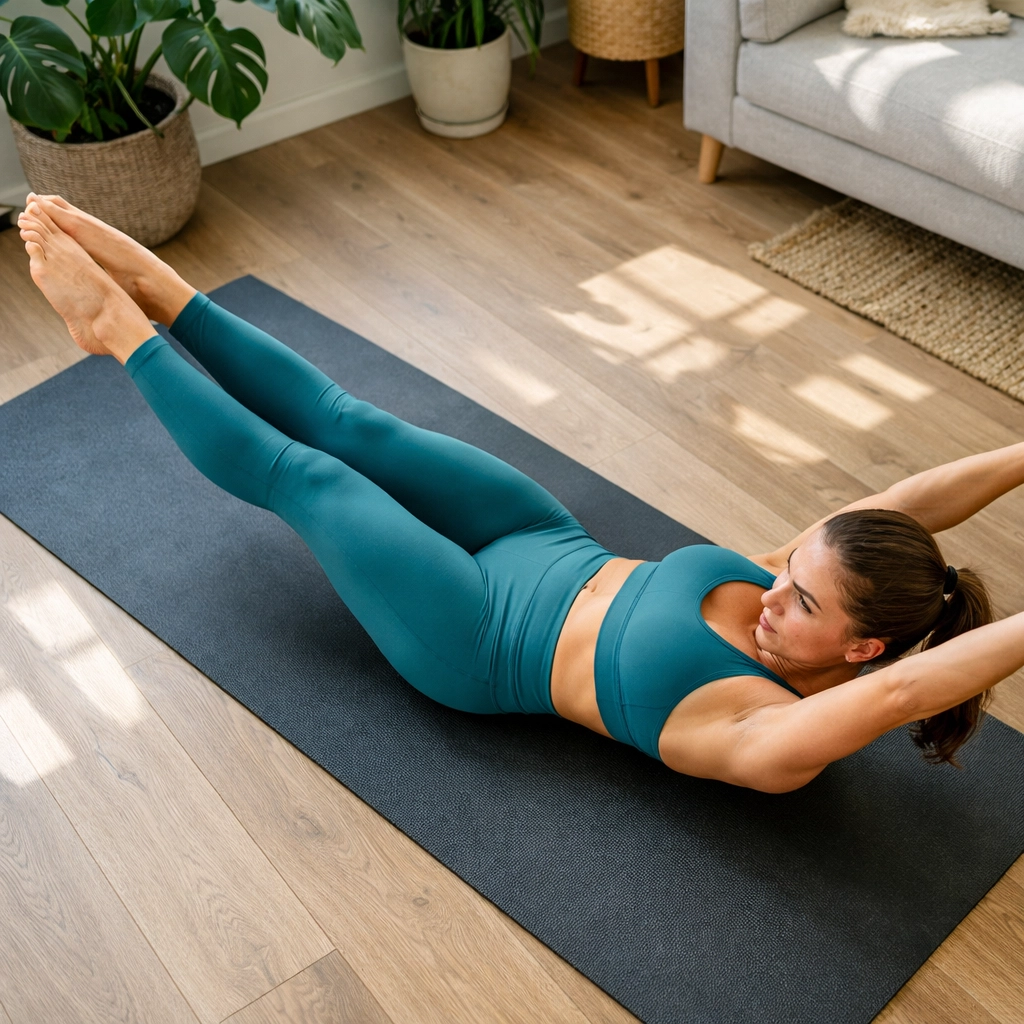
Lie on your back, press your lower back into the floor, extend your arms overhead and legs straight, then lift everything a few inches off the ground. This gymnastics staple builds insane core strength and teaches total-body tension.
Plank Variations
- Forearm planks: 3 sets of 45-60 seconds
- Side planks: 3 sets of 30-45 seconds per side
- Plank reaches: Extend one arm forward while holding the plank
- Plank shoulder taps: Tap opposite shoulder while maintaining stability
L-Sit Progressions
Sit on the floor, place your hands beside your hips, and press into the ground to lift your entire body off the floor with straight legs. Can't do it yet? Bend your knees and work your way up. This move builds crushing core and hip flexor strength.
The Equipment Solution: Training Smart Without Wall Damage
Look, you can go pretty far with pure bodyweight training. But if you're serious about calisthenics equipment for home, you need pull-up capability. The problem? Most solutions suck.
Doorway bars damage frames, create impact noise, and limit exercise variety. Wall-mounted bars require drilling holes that your landlord definitely didn't approve. And forget about traditional pull-up stands: they wobble, tip over, and take up half your living room.
This is where a no wall damage workout system becomes essential. Floor-to-ceiling systems like the Resistance Rail from Bold Body Fitness use tension-mounting between floor and ceiling: zero drilling, zero damage, maximum stability. You get a legitimate pull up bar alternative that supports pull-ups, chin-ups, muscle-ups, hanging leg raises, and basically any pull movement you can think of.
The versatility is what makes it a true versatile home gym. Add resistance bands, gymnastics rings, or a TRX system, and you've got a complete training setup that would make most commercial gyms jealous: all in a footprint smaller than a yoga mat.
The 3x Weekly Full-Body Protocol
Here's a practical full body workout at home structure that hits everything three times per week with adequate recovery:
Workout A - Monday
- Pike Push-Ups: 4x8-10
- Australian Chin-Ups: 4x10-12
- Bulgarian Split Squats: 3x10 per leg
- Hollow Body Holds: 4x30 seconds
- Plank Shoulder Taps: 3x10 per side
Workout B - Wednesday
- Standard Push-Ups: 4x12-15
- Inverted Rows (feet elevated): 4x8-10
- Pistol Squat Progressions: 3x5-8 per leg
- L-Sit Holds: 4x15-20 seconds
- Side Planks: 3x30 seconds per side
Workout C - Friday
- Diamond Push-Ups: 4x8-12
- Chin-Ups or Assisted Variations: 4x6-10
- Walking Lunges: 3x10 per leg
- Plank with Reaches: 3x8 per side
- Hollow Rocks: 3x15-20 reps
Rest 60-90 seconds between sets. The entire workout takes 30-40 minutes. No jumping, no noise, no destroyed ceilings.
Advanced Progressions for Elite Athletes
Once you've mastered the basics, level up with these ceiling-friendly advanced moves:
Handstand Push-Up Progressions: Work against a wall with your feet elevated, gradually working toward a freestanding handstand push-up.
Front Lever Progressions: Hang from your pull-up setup and work toward holding your body horizontal to the ground: pure pulling strength and core control.
Planche Push-Up Progressions: The ultimate bodyweight push exercise. Start with lean planches and gradually shift your weight forward over time.
Muscle-Up Training: Combine a pull-up with a dip in one explosive movement. Practice the transition separately using progressions.
One-Arm Push-Up/Pull-Up Work: The pinnacle of relative strength. These take years to master but are worth every minute of practice.
The CrossFit Home Gym Approach
CrossFit athletes need variety, intensity, and functional movements. The good news? You can replicate most CrossFit-style conditioning without the noise:
- EMOM (Every Minute on the Minute) formats: Set a timer and perform a set number of reps at the top of each minute
- AMRAP (As Many Rounds As Possible): Choose 3-5 exercises and cycle through as many rounds as possible in 10-20 minutes
- Tempo work: Slow down your reps to increase time under tension without adding weight
- Isometric holds: Build strength and mental toughness with extended holds at challenging positions
Create your own crossfit home gym workouts by combining upper push, upper pull, lower body, and core movements in timed formats. The intensity is there: the noise isn't.
Programming for Long-Term Gains
The biggest mistake people make with bodyweight training at home is treating every workout like a hero WOD. Sustainable progress requires intelligent programming:
Week 1-4: Focus on higher reps (12-15) and perfecting form
Week 5-8: Increase difficulty with tempo work and pauses
Week 9-12: Progress to harder variations or add resistance
Week 13: Deload week with reduced volume
Track your workouts. Add one rep per set each week. Chase progression, not perfection.
Your Ceiling Is Safe Now
You don't need to choose between serious training and peaceful coexistence with your neighbors. The smartest athletes figured this out years ago: controlled tension builds better strength, causes fewer injuries, and creates the kind of body control that translates to real-world performance.
Whether you're a ninja warrior training for the next season, a CrossFit athlete maintaining fitness between gym sessions, or a calisthenics practitioner building toward advanced skills, this ceiling-friendly approach gets results.
Ready to take your home training to the next level? Check out the complete selection of home gym equipment designed for serious athletes at the Bold Body Fitness shop. And if you're serious about adding pull-up capability without drilling holes or damaging your space, the Resistance Rail might be exactly what your training has been missing.
Now go train. Your ceiling will thank you.
