
Let's cut through the noise: if you want to build the kind of strength that lets you conquer obstacles, dominate competitions, and move like an absolute beast, you need to train like a ninja warrior. Not the weekend warrior dabbling in fitness, the real deal athletes who make warped walls and salmon ladders look effortless.
Here's the truth bomb: you don't need a massive commercial gym loaded with chrome machines to build this kind of strength. Ninja warriors, elite gymnasts, and top-level calisthenics athletes prove this every single day. They're developing insane functional strength, explosive power, and grip that could crush walnuts, all from bodyweight training at home.
This isn't your typical "10 easy exercises" fluff piece. We're diving deep into the actual framework elite obstacle course athletes use to build competition-level strength. This is the no-BS blueprint that transforms average home workouts into warrior-forging training sessions.
Why Ninja Warriors Dominate With Bodyweight Training
Here's what makes ninja warrior training different: it's not about how much you can bench press or how big your biceps look in a mirror. It's about relative strength, your power-to-weight ratio. Can you pull your entire body weight explosively? Can you hold positions that make your muscles scream? Can your grip outlast gravity?
That's why the best competitors in the world maintain lean, powerful physiques (typically 155-170 pounds) and dedicate 80-90% of their training time to upper body and climbing work. They're not bodybuilders. They're movement specialists who've mastered bodyweight training at home to build exactly the strength they need.
The advantage of bodyweight training goes beyond just physical capability. You're building:
- Functional strength that translates directly to real-world movements
- Body awareness that keeps you in control during complex movements
- Joint stability that prevents injury and extends your training lifespan
- Explosive power that launches you over obstacles
- Grip strength that never quits when you're hanging on for dear life

The Essential Home Gym Setup (Minimal but Mighty)
Before we dive into the framework, let's talk equipment. You don't need to drop five figures on a home gym. The core setup for ninja warrior-level bodyweight training is surprisingly minimal:
The non-negotiables:
- A solid pull-up bar or pull-up bar alternative
- Gymnastic rings
- A hangboard for grip training
That's it for the bare minimum. But here's where serious athletes level up their game.
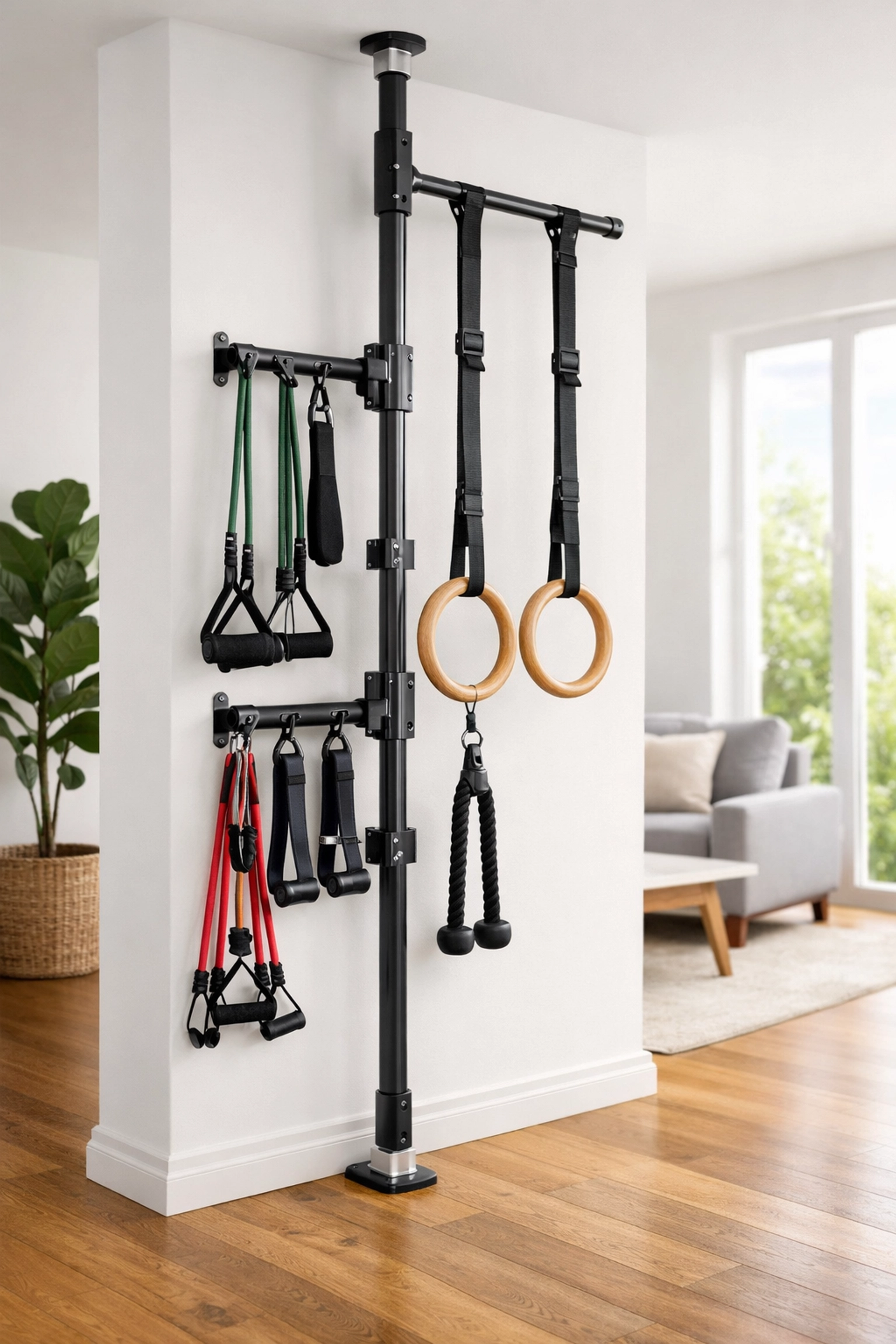
Traditional pull-up bars have limitations, they damage walls, drill permanent holes, or require doorway clearance that not everyone has. That's exactly why Bold Body Fitness developed the Resistance Rail as the ultimate versatile home gym solution. It's a floor-to-ceiling system that gives you all the functionality of a full calisthenics rig without destroying your walls or requiring professional installation.
Optional upgrades that amplify results:
- Dumbbells for weighted progressions
- Balance board for stability work
- BOSU ball for dynamic training
- Parallettes for advanced pushing movements
The beauty of a no wall damage workout system like the Resistance Rail is that you can create a legitimate home gym in any space, apartment, garage, spare bedroom, and take it with you when you move. Zero compromises on training capability, zero permanent damage to your home.
The 4-6 Day Training Framework That Builds Elite Strength
Ninja warriors aren't messing around with random workouts. They follow a structured framework that hits all major muscle groups 4-6 times per week. Here's how to structure your training for maximum gains:
Full-Body Training Split
Training frequency: 4-6 days per week with strategic rest days
Session duration: 45-75 minutes including warm-up and cool-down
Rest between full-body sessions: Minimum 1 day (you can train balance, mobility, or endurance on these days)
The golden rule: quality over quantity, every single time. You're building neural pathways and muscle coordination, not just pumping muscles until they burn.
The Pre-Workout Protocol
Never, and we mean NEVER, skip your warm-up. Minimum 2 minutes, but shoot for 5-10 minutes of dynamic movement that preps your body for the intensity ahead:
- Arm circles and shoulder rotations
- Wrist mobility work (crucial for hanging and pushing movements)
- Dead hangs for 20-30 seconds
- Scapular pull-ups
- Bodyweight squats and lunges
- Light cardio to elevate heart rate
Cold muscles are injured muscles. Warm muscles are powerful muscles.
Exercise Selection Strategy
Here's a crucial principle that separates smart training from junk volume: maximum 3 different exercises per major muscle group. More isn't better. Better is better.
Pick exercises that give you the most bang for your buck:
Pulling movements (back, biceps, grip):
- Pull-up variations: wide grip, narrow grip, neutral grip
- One-arm pull-up negatives
- Clapping pull-ups for explosive power
- High pull-ups (chest to bar)
- Front lever progressions
- Australian rows on rings
Core domination (abs, obliques, hip flexors):
- Toes-to-bar
- Hanging leg raises
- Hanging L-sit holds
- Windshield wipers
- Dragon flags
- Candlestick rolls (simultaneous quad, ab, and glute activation)
Pushing power (chest, shoulders, triceps):
- Spiderman push-ups
- Archer push-ups
- Handstand push-ups (or progressions)
- Ring dips
- Pseudo planche push-ups
- Pike push-ups
Lower body and explosiveness (legs, power):
- Alternating jumping lunges
- Burpees with tuck jumps
- Pistol squats
- Box jumps (use a sturdy platform)
- Broad jumps
Grip strength (forearms, endurance):
- Hangboard training (various holds)
- One-arm dead hangs
- Dead hangs with alternating grip switches
- Finger pull-ups on deeper holds
The Workout Structure That Delivers Results
Now let's put it all together into actual training sessions. Here's how to structure your workouts for maximum strength gains:
Work-to-Rest Ratios
Rest between sets: 30 seconds for conditioning focus, 60-90 seconds for pure strength
Rest between exercises: 1-2 minutes
Total workout time: Keep it under 90 minutes including warm-up
Your body builds strength during recovery, not during the workout itself. Respect the rest periods.
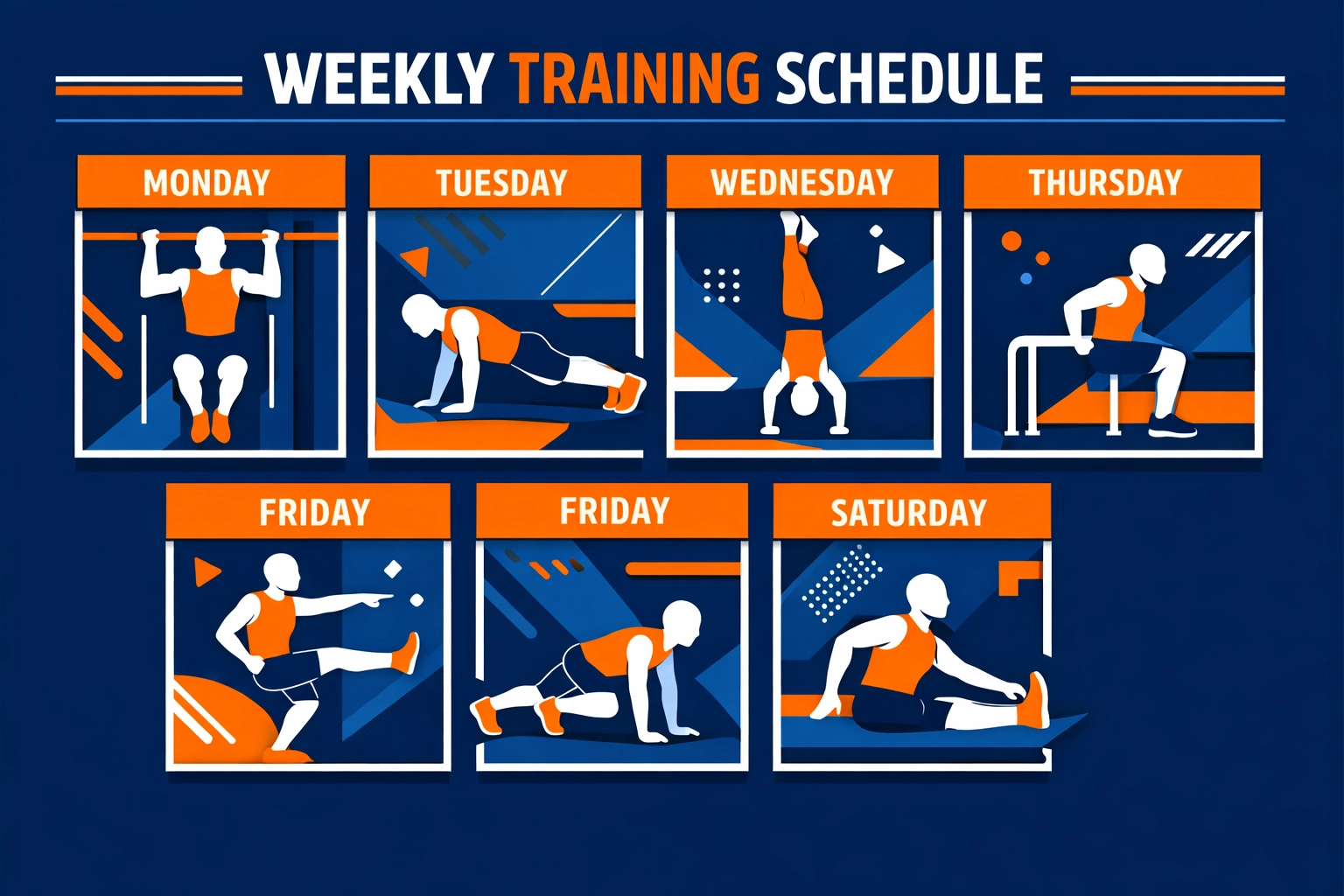
Sample Week Structure
Monday - Upper Body Pull Focus:
- Warm-up (10 minutes)
- Pull-up variations: 4 sets of max reps
- Front lever progressions: 4 sets of 10-15 seconds holds
- Toes-to-bar: 3 sets of 10-15 reps
- Hangboard training: 3 sets of various grips
- Cool-down and stretch
Tuesday - Push and Core:
- Warm-up (10 minutes)
- Handstand push-up progressions: 4 sets of 5-10 reps
- Ring dips: 4 sets of 8-12 reps
- Spiderman push-ups: 3 sets of 12-15 each side
- Hanging L-sit holds: 4 sets of max time
- Cool-down
Wednesday - Active Recovery:
- Light mobility work
- Balance training
- Steady-state cardio (20-30 minutes)
- Flexibility and stretching
Thursday - Full Body Explosive:
- Warm-up (10 minutes)
- Clapping pull-ups: 5 sets of 3-5 reps
- Burpees with tuck jumps: 4 sets of 10-12 reps
- Alternating jumping lunges: 3 sets of 20 total
- Hanging leg raises: 3 sets of 12-15 reps
- Dead hang practice: 3 sets of max time
Friday - Skill Work and Conditioning:
- Warm-up (10 minutes)
- Choose 2-3 advanced skills to practice (muscle-up progressions, human flag, etc.)
- Circuit training: 4 rounds of compound movements
- Grip endurance finisher
- Cool-down
Saturday - Heavy Pull Day:
- Warm-up (10 minutes)
- Weighted pull-ups: 5 sets of 5-8 reps
- One-arm pull-up negatives: 4 sets of 3-5 each arm
- Australian rows: 3 sets of 12-15 reps
- Dragon flags: 3 sets of 5-8 reps
- Hangboard training: 3 sets
Sunday - Full Rest or Light Activity
Critical Training Principles You Can't Ignore
The Grip Training Limitation
Your tendons recover slower than your muscles. Restrict hangboard and intense grip training to maximum 3 times per week. Push beyond this, and you're setting yourself up for chronic tendon issues that'll sideline you for months.

Progressive Overload for Bodyweight
You can't just add weight to the bar with bodyweight exercises. Instead, progress through:
- Increased volume: More reps, more sets
- Decreased leverage: Change body position to make exercises harder
- Tempo manipulation: Slow down the eccentric (lowering) phase
- Added complexity: Introduce instability or combine movements
- Reduced rest periods: Increase training density
- Added external load: Weight vests or resistance bands when appropriate
Body Composition Matters
Notice we mentioned ninja warriors typically maintain 155-170 pounds? That's strategic. Excess body mass: especially in the lower body: becomes dead weight you have to haul through obstacles. Focus on building lean, functional muscle rather than bulking up.
This doesn't mean neglecting legs (you still need explosive lower body power), but it does mean being strategic about leg training volume. Quality over quantity.
Setting Up Your Home Training Space
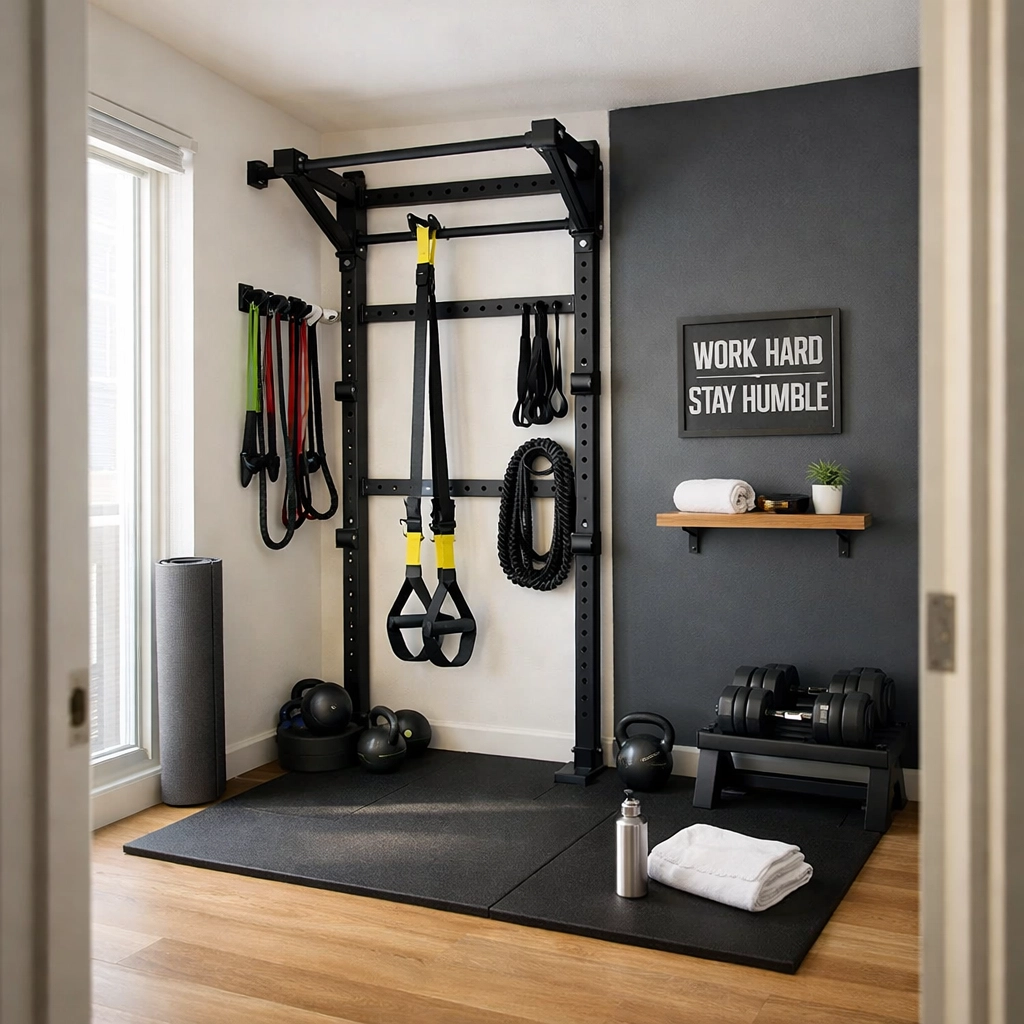
Creating an effective calisthenics equipment for home setup doesn't require a massive space or huge investment. With the right system, you can transform an 8x8 foot area into a complete training facility.
The Resistance Rail from Bold Body Fitness exemplifies what a modern floor to ceiling gym should be: versatile, damage-free, and capable of supporting every movement pattern you need. From pull-ups to dips to suspension training to resistance band work: all from one adjustable system.
For serious athletes looking to maximize their home training, check out the complete equipment lineup at the Bold Body Fitness shop. Whether you're setting up a CrossFit home gym or a dedicated bodyweight training space, having quality equipment that grows with your capabilities is non-negotiable.
The Mental Game: Training Like a Warrior
Physical strength is only half the equation. Ninja warriors succeed because they've developed mental toughness that matches their physical capabilities. Every training session is an opportunity to build both.
Embrace failure: Your last rep shouldn't be comfortable. Push to actual failure (safely) to trigger adaptation.
Practice visualization: Before attempting difficult movements, visualize perfect execution. Your nervous system doesn't distinguish between vivid visualization and actual practice.
Track everything: Keep a training log. Track reps, sets, hold times, and how exercises feel. You can't improve what you don't measure.
Stay consistent: Elite strength isn't built in weeks. It's built through months and years of consistent, progressive training. Show up even when you don't feel like it.
Your Path to Insane Strength Starts Now
Building ninja warrior-level strength at home isn't about having the perfect setup or following some magical program. It's about committing to a proven framework, training with intensity and intelligence, and staying consistent over time.
The bodyweight training framework outlined here is exactly what top competitors use to build competition-ready strength. It works for them, and it'll work for you: if you put in the work.
Your home gym doesn't need to be complicated. It needs to be functional, versatile, and support your progression from beginner movements to advanced skills. Start with the essentials, focus on mastering fundamental movement patterns, and progressively challenge yourself with harder variations and increased volume.
The warriors you see dominating obstacle courses didn't start with superhuman abilities. They started exactly where you are now: with a decision to commit to the process and a framework to follow.
Your journey to insane strength starts today. No excuses. No shortcuts. Just you, bodyweight training at home, and the proven framework that builds champions.
Now stop reading and go train.
