
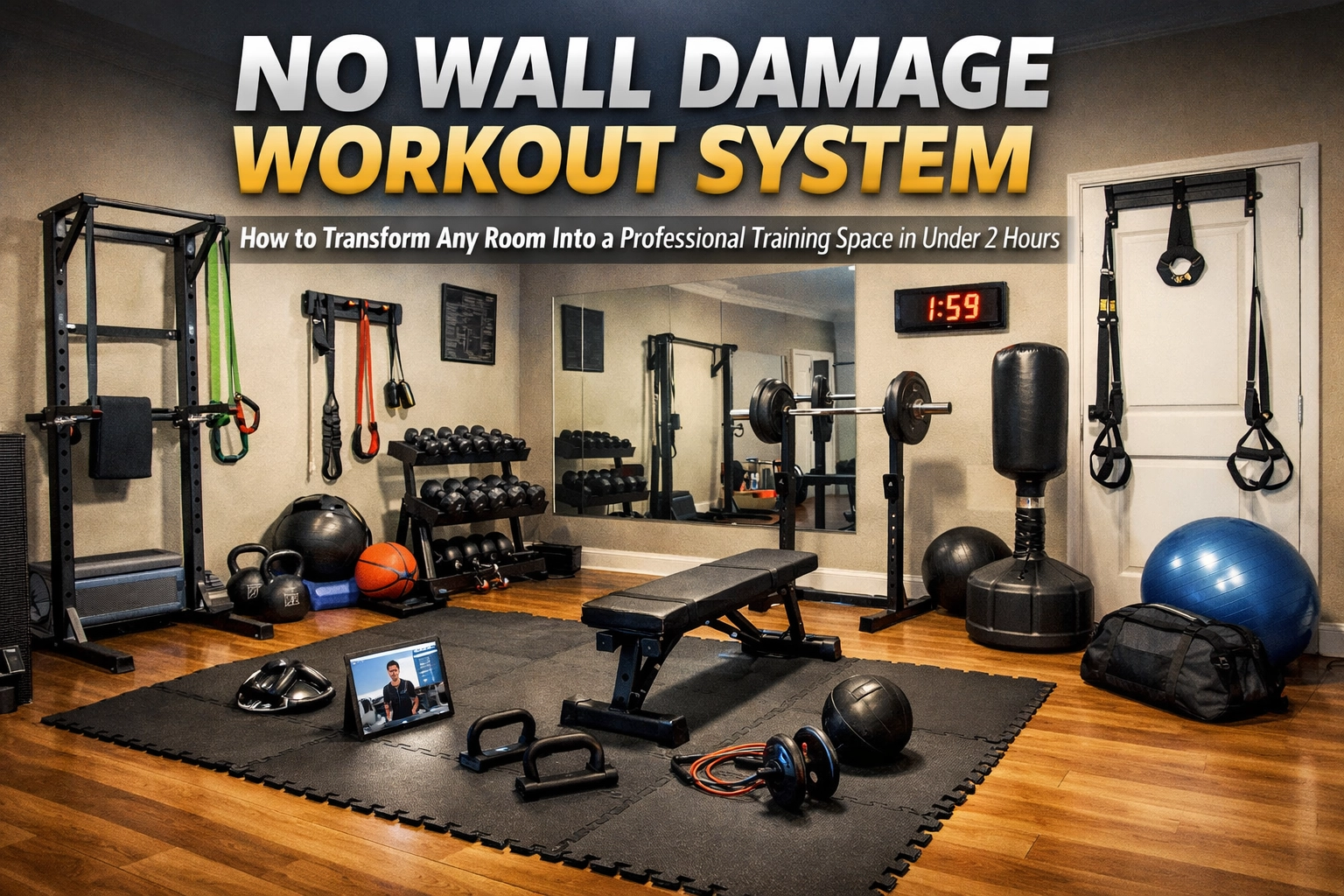
Here's the truth most fitness equipment companies won't tell you: you don't need to drill holes in your walls, hire a contractor, or sacrifice your security deposit to build a professional-grade training space at home.
Whether you're a ninja warrior preparing for the next season, a CrossFit athlete who trains at 5 AM before the box opens, or an MMA fighter who needs supplemental training between gym sessions, the game has changed. Today's no wall damage workout systems deliver the same intensity and versatility as a fully-equipped facility: without the permanent modifications.
Let's break down exactly how to transform any room in your home into a training space that rivals professional gyms, and why this matters more than ever in 2026.
Why Wall-Mounted Equipment Is Dead (And What Replaced It)
Wall-mounted pull-up bars and fixed anchor points served their purpose for decades. But they came with massive drawbacks that kept serious athletes from training at home:
The rental nightmare. Landlords hate holes in walls. So do future buyers if you own your place. One poorly placed anchor bolt can cost you hundreds in repairs or thousands from your security deposit.
Zero flexibility. Once those bolts are in the wall, you're locked into that configuration. Want to adjust your training space? Too bad. Moving to a new apartment? Start over.
Installation anxiety. Miss a stud by two inches and you're patching drywall. Hit electrical wiring or plumbing? Now you've got a real problem on your hands.
The solution isn't just about avoiding wall damage: it's about creating a versatile home gym that adapts to your training, not the other way around.
The Floor-to-Ceiling Revolution: Zero Damage, Maximum Performance
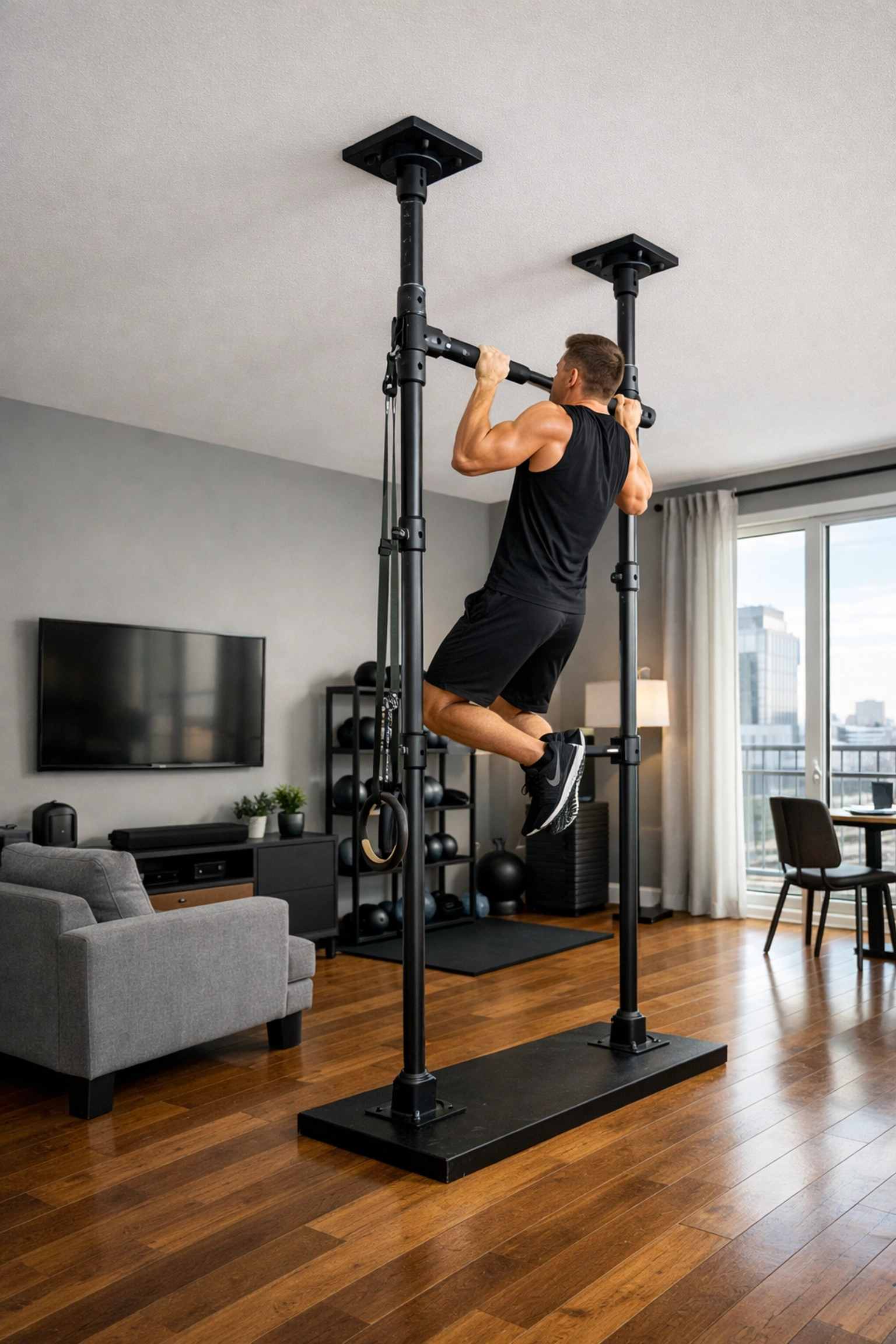
Modern floor-to-ceiling gym systems changed everything for home training. These setups use compression force between your floor and ceiling: no drilling, no bolts, no permanent modifications whatsoever.
The physics are simple but brilliant. By creating adjustable tension from floor to ceiling, these systems can support hundreds of pounds of dynamic force while remaining completely removable. Install it in under two hours, train for years, then pack it up and take it with you when you move.
This is precisely how the Resistance Rail works: a floor-to-ceiling training system that handles everything from explosive muscle-ups to controlled gymnastic holds without touching your walls.
Here's what makes this approach game-changing for serious athletes:
Instant adjustability. Move attachment points up or down in seconds. Train pull-ups at the top, do suspension rows in the middle, then drop to floor-level for resistance band work: all in the same workout.
True portability. Take your entire training setup on vacation, move it to different rooms based on your program, or relocate it completely when you change residences.
Renter-friendly. No landlord will complain about a system that leaves zero trace when removed. This opens up home training for millions of athletes who previously had no options.
What Can You Actually Train With a No Wall Damage System?
Let's be specific. If you're a competitive athlete or serious practitioner, you need to know whether a no-wall-damage setup can truly handle your training demands.
The answer: absolutely: if you choose the right system.
For Ninja Warriors: Grip training, lache progressions, precision obstacle work, and explosive pull-up variations all work perfectly on a floor-to-ceiling rail system. Add rings or a suspended obstacle, and you've got a professional training space that handles dynamic movement.
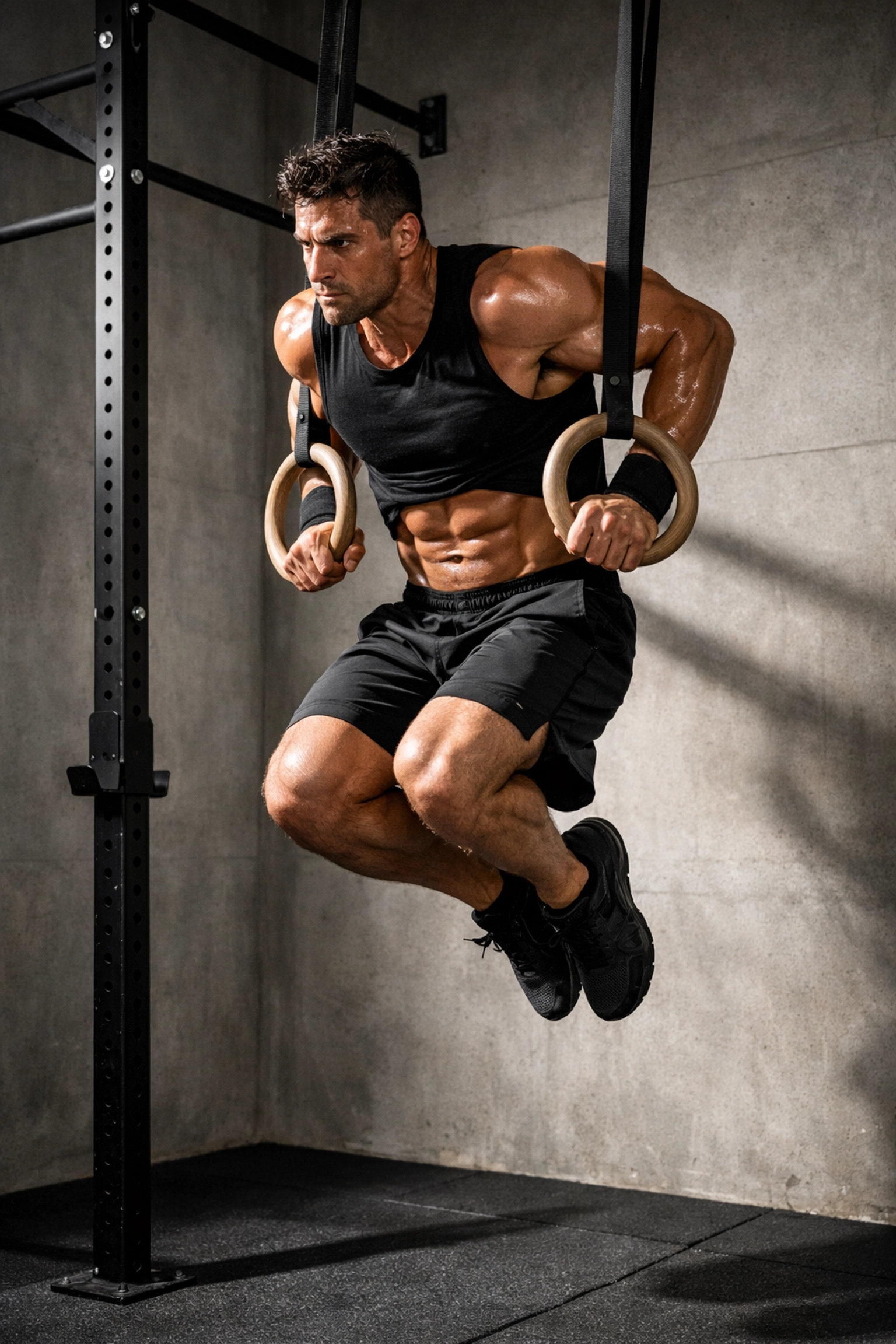
For Gymnasts: Still rings, muscle-up progressions, front lever work, and flexibility training require solid, stable anchor points that don't shift during movement. Floor-to-ceiling compression provides exactly that: rigid support that stays put under load.
For CrossFit Athletes: Kipping pull-ups, strict gymnastics movements, resistance band work, and suspension training all translate directly. Combine your system with a kettlebell, barbell, and some floor space, and you've got everything for a complete WOD.
For MMA Fighters: Suspension training for core stability, pull-up variations for back strength, and resistance band striking drills for power development. The versatility matters here: you need to flow between exercises quickly during conditioning circuits.
For Calisthenics Practitioners: This is where no-wall-damage systems truly shine. Pull-ups, dips (with attachment), muscle-ups, front levers, back levers, L-sits: every fundamental bodyweight training movement works. Add rings and you've got infinite progression options.
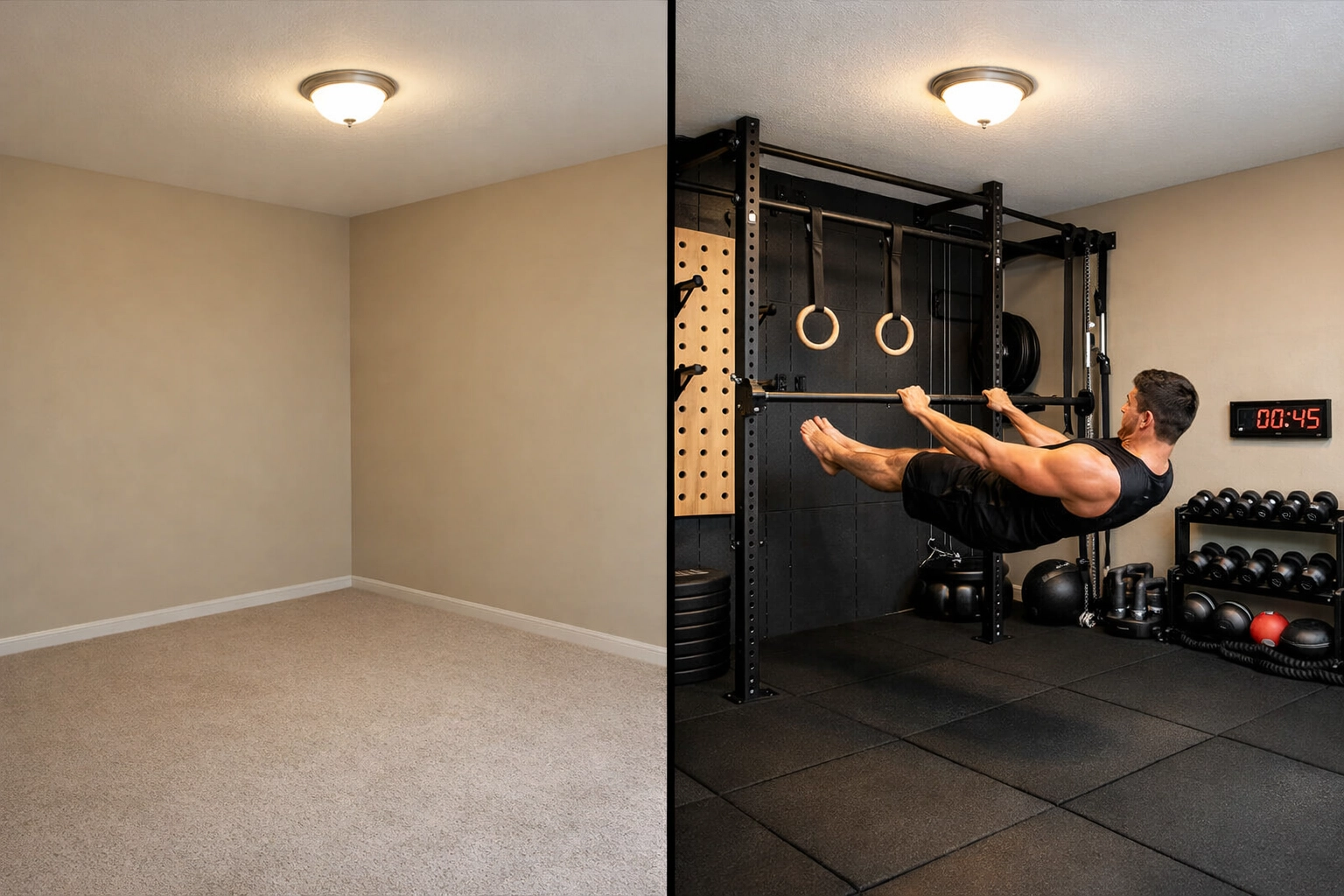
The 2-Hour Setup Blueprint: From Empty Room to Training Space
Here's your step-by-step process to go from zero to fully functional training space in under 120 minutes:
Hour 1: Planning and Placement (30 minutes)
Measure your ceiling height. Most compression systems work with ceilings between 7 and 10 feet: perfect for standard residential spaces. Check for any obstacles like ceiling fans, light fixtures, or smoke detectors.
Choose your location strategically. You need enough clearance for full range of motion: at least 3 feet in every direction. Consider flooring too. Carpet works, but rubber mats or hardwood give you more options for explosive movements.
Mark your spot and clear the area completely. Remove furniture, wall decorations, anything that might interfere with movement or installation.
Hour 1: Installation (30 minutes)
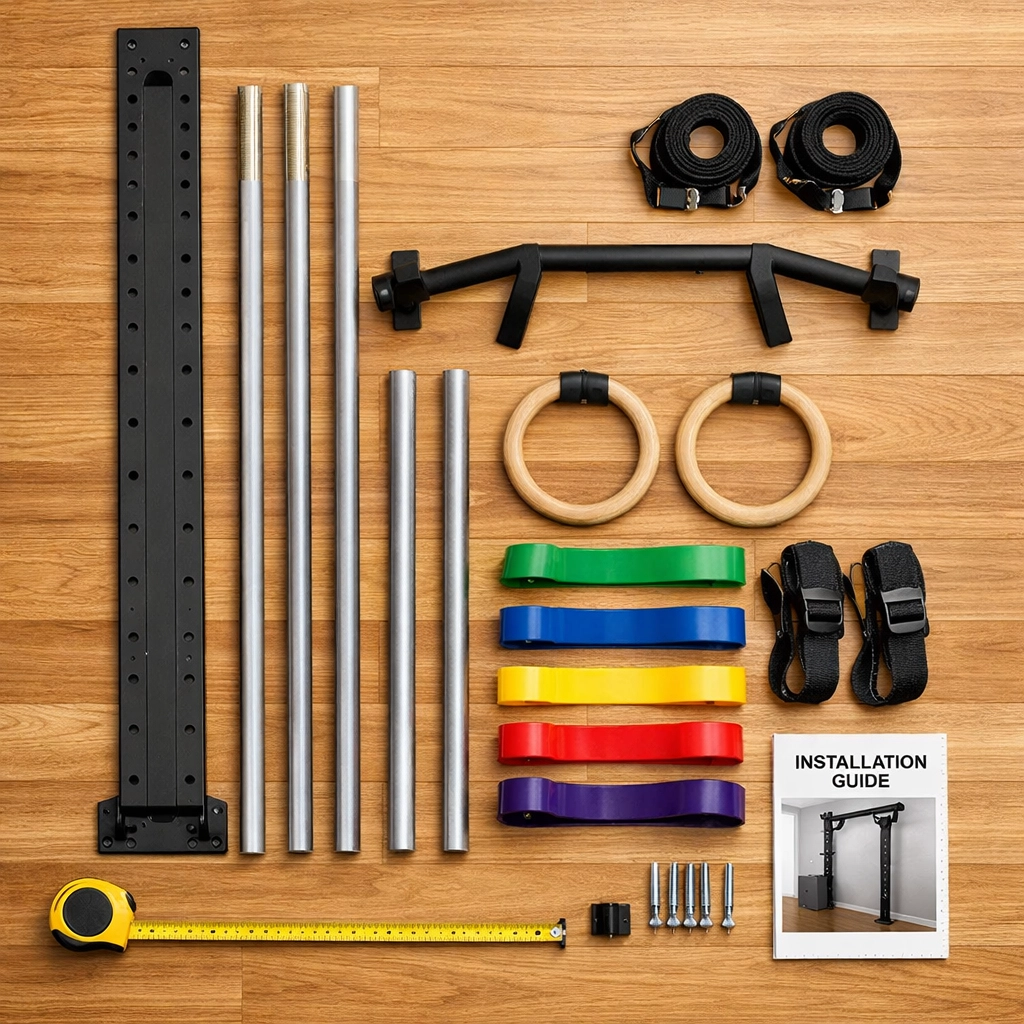
Unpack your system and verify all components. Most quality floor-to-ceiling systems like the Resistance Rail include everything needed: no additional purchases or hardware store runs required.
Position the base plate, extend the vertical rails, then adjust the top compression mechanism until it's firmly seated against your ceiling. The key here: firm pressure without overdoing it. You want solid contact, not crushed ceiling tiles.
Test stability by applying lateral force. The system shouldn't budge or shift. If it does, adjust compression until it's rock-solid.
Hour 2: Customization and Testing (60 minutes)
Add your attachments: pull-up bar, suspension straps, resistance bands, rings, or whatever your training requires. This is where personal preference takes over. Set up for your primary movements first, then add secondary options.
Run through your full range of exercises with progressive loading. Start with bodyweight, then add resistance gradually. This isn't just testing: it's familiarizing yourself with the system so your actual workouts flow smoothly.
Dial in your preferred configurations. Mark attachment heights for different exercises with tape or take photos for reference. This cuts setup time for future sessions down to seconds.
Why Bold Body Fitness Built the Resistance Rail
At Bold Body Fitness, we saw the same problem repeatedly: serious athletes wanted professional training capabilities at home, but existing solutions fell short.
Wall-mounted systems limited flexibility. Doorway pull-up bars maxed out at basic exercises. Portable equipment lacked the stability for advanced movements. Nothing bridged the gap between "beginner home gym" and "professional training space" without requiring permanent modifications.
The Resistance Rail solved this by combining floor-to-ceiling compression stability with true adjustability. It handles everything from explosive kipping pull-ups to controlled gymnastic holds, while remaining completely removable and portable.
This isn't equipment for casual fitness enthusiasts who work out twice a month. It's built for athletes who train seriously and need equipment that keeps pace with progression, variety, and intensity.
The Hidden Benefits Nobody Talks About
Beyond the obvious advantage of zero wall damage, no-wall-damage workout systems deliver benefits that fundamentally change how you train at home:
Training spontaneity. With traditional setups, the friction of accessing equipment kills motivation. Drive to the gym, deal with traffic, hope your preferred equipment is available. Home systems eliminate every barrier between decision and action.
Skill practice volume. Ninja warriors and gymnasts need massive practice volume to dial in technical movements. When your training space is 20 steps away, you can practice specific skills multiple times daily without it becoming a logistical nightmare.
Customized progression. Adjust difficulty instantly by changing attachment heights, angles, or resistance levels. This precision matters when you're working on specific strength curves or movement patterns.
Training flexibility for shift workers. CrossFit athletes and MMA fighters often train at odd hours due to work schedules. Home setups mean you train when your body is ready, not when facilities are open.
Quiet training. Apartments and shared living spaces benefit from bodyweight and resistance band training that doesn't involve dropping weights or loud impacts.
Choosing the Right System: What Actually Matters
Not all no-wall-damage systems are created equal. Here's what separates professional-grade equipment from beginner gear:
Load capacity. If you're doing explosive movements or weighted pull-ups, you need systems rated for dynamic loads, not just static weight. Check actual user weight limits plus additional resistance.
Stability under movement. Static holds are one thing. Kipping pull-ups, muscle-up transitions, and gymnastic movements create lateral forces that test stability differently. Quality systems handle this without shifting or flexing.
Adjustment speed. If changing attachment heights takes five minutes and requires tools, you won't do it. Look for tool-free adjustments that take seconds.
Build quality. Powder-coated steel, reinforced connection points, and industrial-grade components separate equipment that lasts decades from gear that fails after months of serious training.
Versatility. The best systems accept multiple attachment types: bars, straps, bands, rings: without requiring proprietary accessories or adapters.
The Resistance Rail checks every box because it was designed specifically for serious athletes who demand professional performance without permanent installation.
Making Your Training Space Complete
While a floor-to-ceiling system forms the foundation of your no-wall-damage workout space, consider these additions to maximize versatility:
Quality resistance bands in multiple resistances for warmups, assistance work, and resistance training. They store in a shoebox but add hundreds of exercise variations.
Suspension trainers for core work, unilateral movements, and angles impossible with fixed attachments. They clip on and off your main system in seconds.
Gymnastic rings if you're serious about bodyweight strength. They're the single most versatile training tool for upper body development and cost less than a month of gym membership.
Floor protection like rubber mats protects your flooring and provides better traction for explosive movements. They also define your training space psychologically.
Browse the complete selection of accessories at the Bold Body Fitness shop to customize your setup based on your specific training focus.
The Bottom Line: Professional Training, Zero Commitment
The revolution in home training isn't about matching gym equipment piece for piece. It's about creating focused, versatile training spaces that support serious progression without the permanence, cost, or limitations of traditional setups.
No wall damage workout systems make this possible. Install a complete training space in under two hours, train like a professional athlete for years, then pack it up and take it with you when life changes.
For ninja warriors, gymnasts, CrossFit athletes, MMA fighters, and calisthenics practitioners, this changes everything. Your training is no longer constrained by gym hours, membership costs, or lease agreements.
The only question left: what's stopping you from setting up your professional training space this weekend?
