
Let's cut through the noise: you don't need a $200/month gym membership to build serious strength, pack on muscle, or develop world-class athleticism. The truth? Some of the most explosive athletes: ninja warriors crushing obstacle courses, MMA fighters dominating the octagon, and CrossFit competitors setting PRs: built their foundation with full body workouts at home.
This isn't about convenience workouts or "just staying active." We're talking about intelligent programming that delivers real results. Whether you're a gymnast working on strength elements, a calisthenics athlete chasing that muscle-up, or a combat athlete maintaining fight-ready conditioning, full-body training at home can transform your physique and performance.
Why Full Body Workouts Dominate for Home Training
Full-body workouts prioritize compound exercises: movements that recruit multiple muscle groups simultaneously. This approach isn't just efficient; it's superior for building functional strength that translates to real-world performance.
Think about it: when do you ever isolate a single muscle in actual athletic movement? Never. You're always moving as a complete system. Full-body training mirrors this reality, developing coordination, mobility, and power that carries over to your sport or discipline.
The practical benefits stack up fast:
- Time efficiency: Hit every major muscle group in 30-45 minutes
- Metabolic boost: Compound movements torch calories and spike your heart rate
- Functional strength: Build movement patterns that matter outside the gym
- Flexibility: Train 2-3 times per week with full recovery between sessions
- Progressive potential: Scale from bodyweight to advanced resistance training
The data backs this up. Research shows that well-structured full-body routines 2-3 times weekly can build significant muscle mass and cardiovascular endurance: without spending hours training every day.
Equipment Options: From Bodyweight to Elite Home Gym Setup
Your equipment needs depend on your goals and training experience. Here's the honest breakdown:
Bodyweight Training at Home: The Foundation
Start here if you're new to strength training or coming back from a break. Bodyweight training at home builds legitimate strength when programmed correctly. Push-ups, pull-ups, squats, lunges, and core work form the foundation of elite calisthenics and gymnastics training.
The key? Progressive overload. You need to consistently increase difficulty through tempo changes, range of motion, or skill progressions. A strict one-arm push-up requires more raw strength than many barbell exercises.
Versatile Home Gym Equipment
Once you've mastered bodyweight basics, strategic equipment opens new training possibilities:
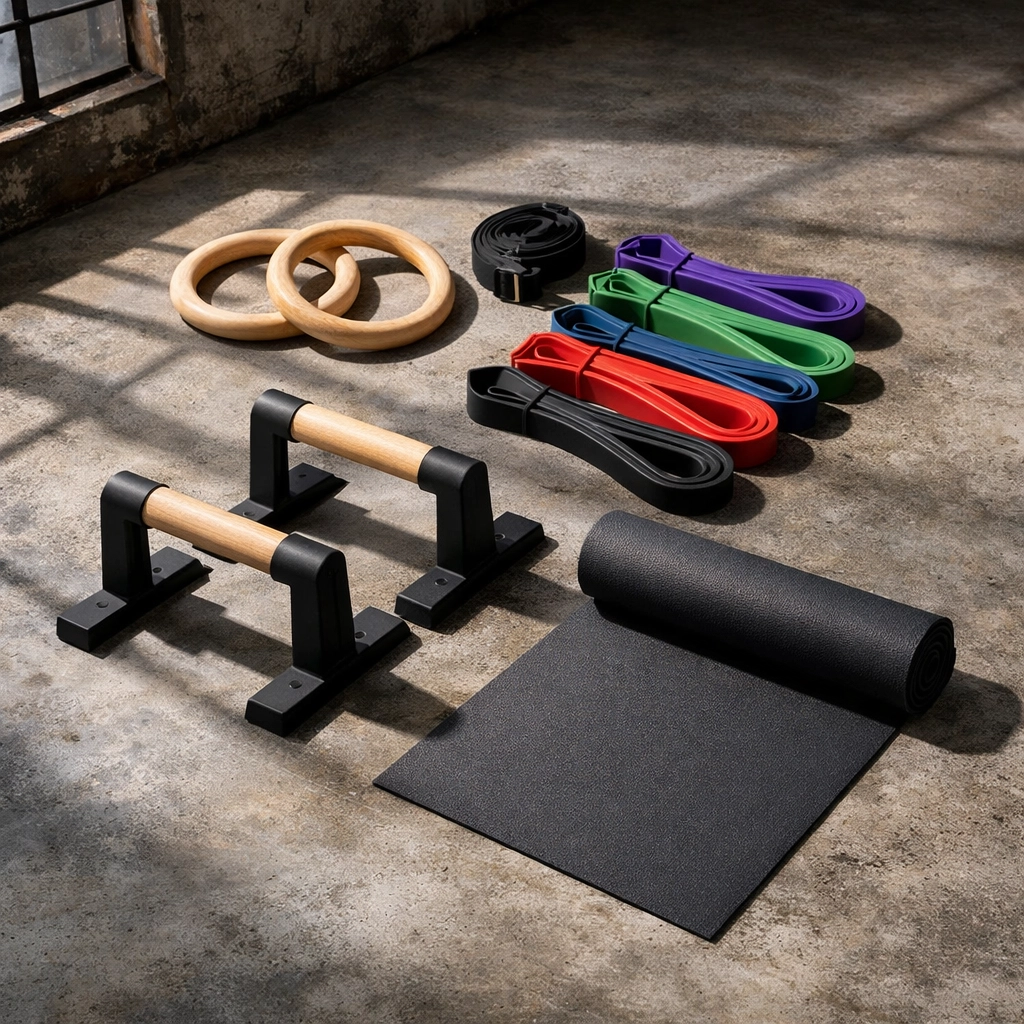
- Dumbbells or kettlebells: Variable resistance for upper body and loaded leg work
- Resistance bands: Accommodating resistance perfect for rehab or advanced athletes
- Parallettes or push-up bars: Deeper range of motion and wrist protection
- Gymnastics rings: The ultimate upper body tool for serious athletes
Floor to Ceiling Gym Systems: Next-Level Home Training
For athletes serious about building a complete home setup, a floor to ceiling gym system changes everything. Unlike wall-mounted equipment that damages your space, modern tension-based systems like the Resistance Rail from Bold Body Fitness create a full training station without drilling holes or permanent installation.
This approach gives you a legitimate pull up bar alternative plus attachment points for rings, resistance bands, TRX-style training, and more. It's essentially calisthenics equipment for home that adapts to your training style: whether that's bodyweight strength, CrossFit conditioning, or gymnastic skill work.
The beauty of a no wall damage workout system? Renters can train like they own the place, and homeowners avoid commitment to permanent installations. You get professional training capability with complete flexibility.
Building Your Full Body Workout Structure
Effective programming follows a proven template. Here's how to structure your full body workout at home sessions:
The Essential Framework
Warm-Up (5-8 minutes)
Dynamic movement prep gets blood flowing and nervous system firing. Skip static stretching: save that for cooldown. Focus on:
- Joint rotations (wrists, shoulders, hips, ankles)
- Movement-specific prep (inchworms, leg swings, arm circles)
- Gradual intensity build (jumping jacks, light jogging in place)
Main Training Block (25-35 minutes)
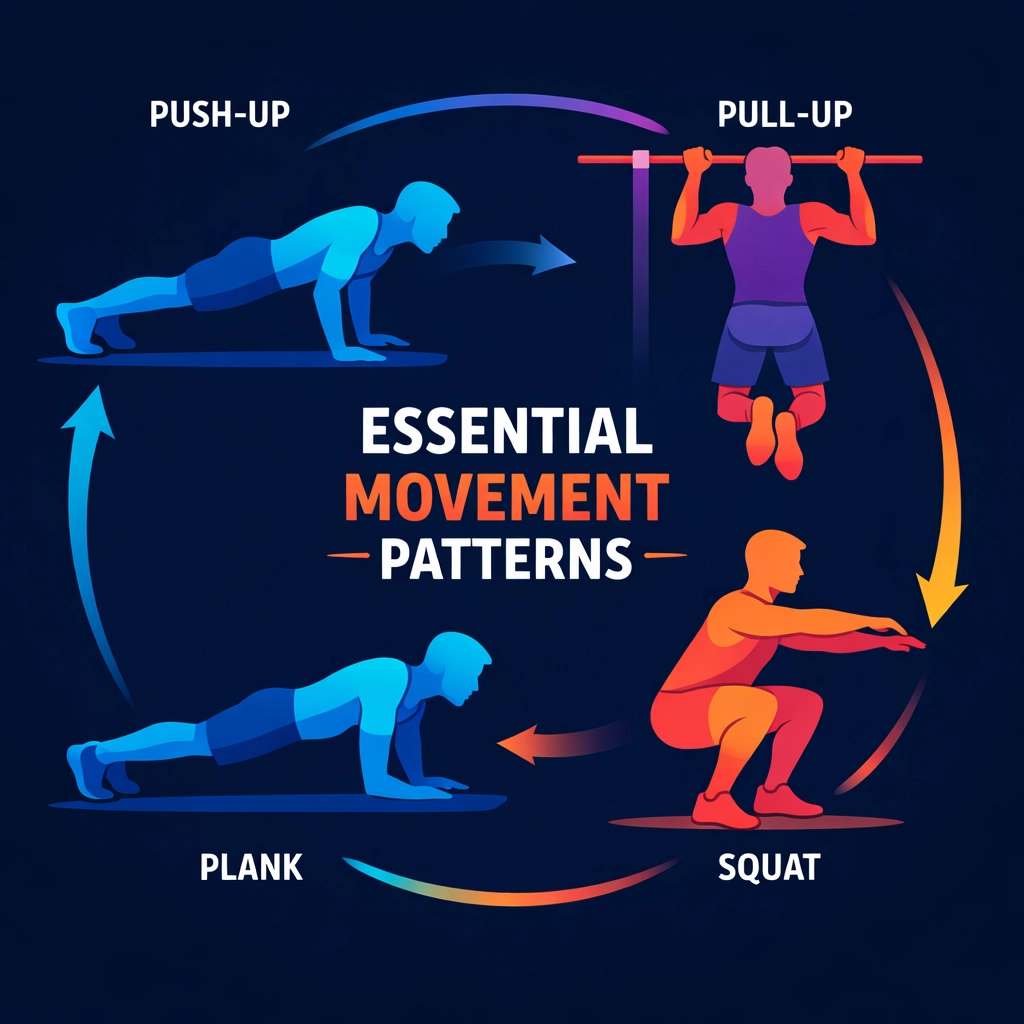
Structure your work around movement patterns, not body parts:
- Push movements: Push-ups, dips, handstand progressions
- Pull movements: Pull-ups, rows, front lever work
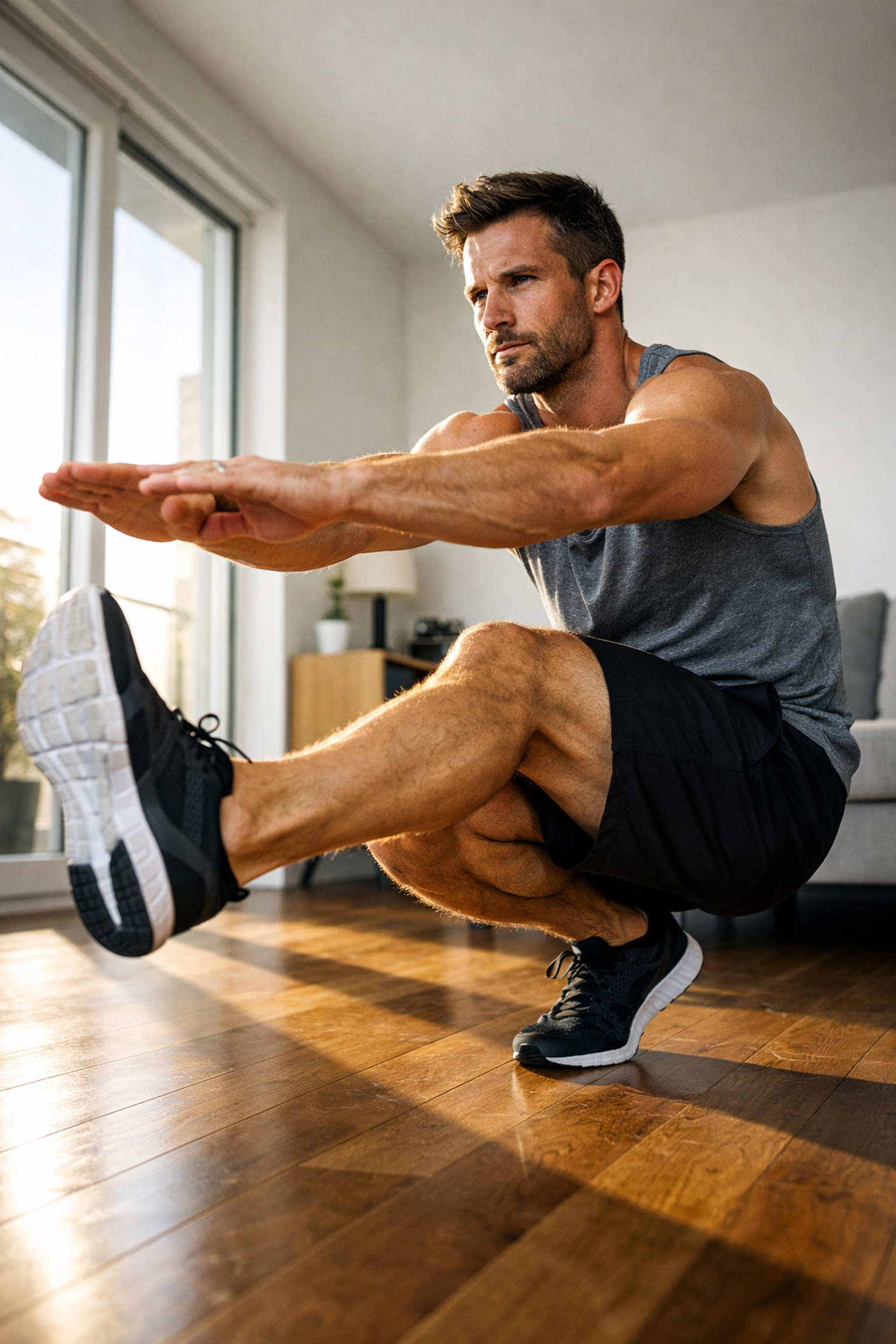
- Leg/hip dominant: Squats, lunges, pistol progressions
- Hip hinge: Single-leg deadlifts, Nordic curls, glute bridges
- Core/anti-movement: Planks, hollow holds, L-sits
Cool-Down (5-10 minutes)
Active recovery and mobility work. This is where static stretching belongs, along with breathing exercises and fascial release work.
The Essential Exercise Arsenal
Let's break down the movements that build serious strength and athleticism:
Upper Body Push
Push-Up Variations: The foundation of horizontal pressing strength. Progress from standard push-ups to archer push-ups, pseudo-planche push-ups, and one-arm variations. Hand position changes (wide, narrow, staggered) target different angles.
Dip Progressions: Whether using parallel bars, rings, or even sturdy chairs, dips build massive triceps and chest strength. Ring dips add instability that forces core engagement and shoulder stability.
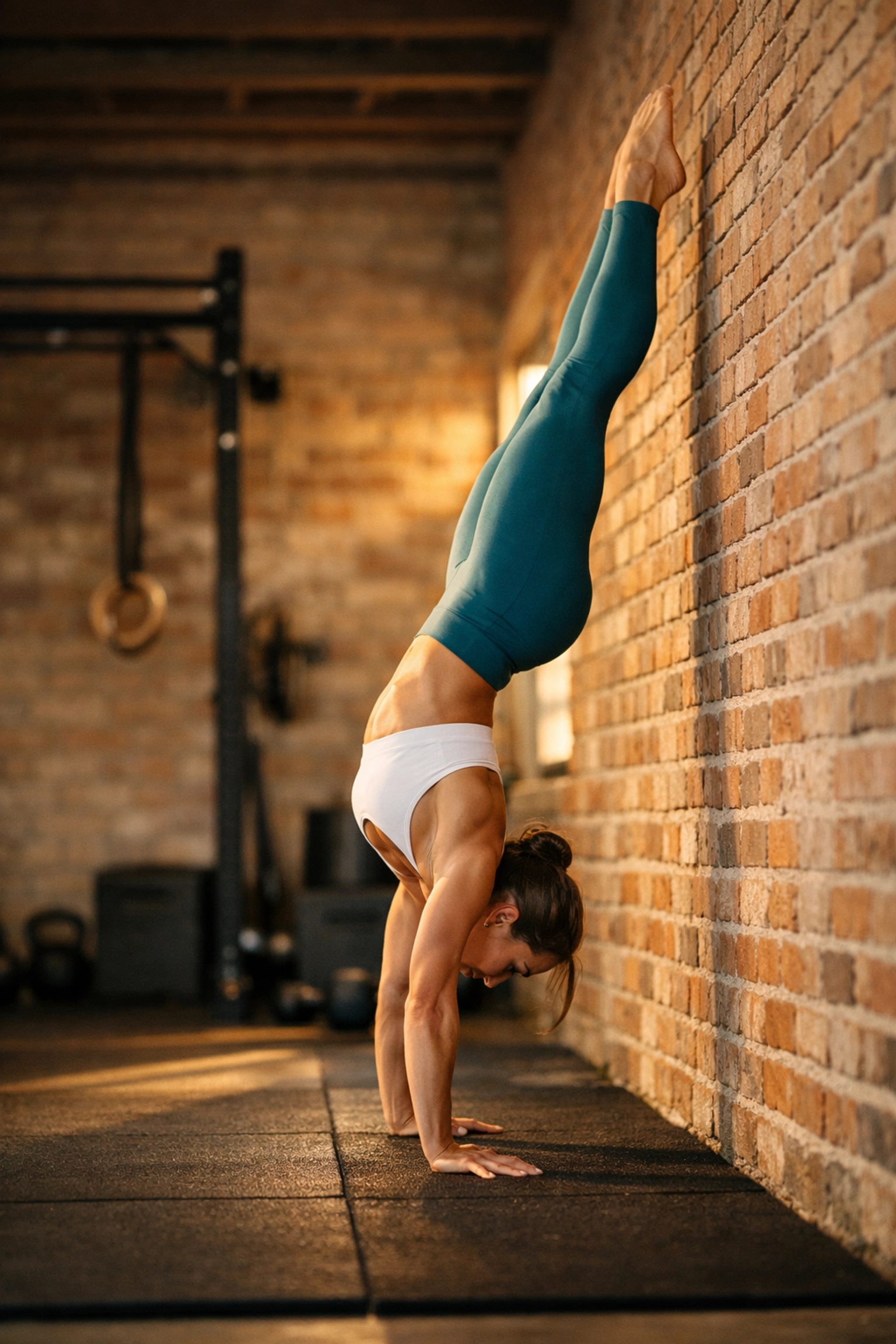
Handstand Work: The ultimate vertical push. Start with wall-supported holds, progress to freestanding balance, then add handstand push-ups. This builds shoulder strength that carries over to every overhead movement.
Upper Body Pull
Pull-Up Variations: The king of back development. Standard pull-ups, chin-ups, wide-grip, archer pull-ups, and eventually one-arm progressions. If you don't have a pull-up bar yet, resistance training with bands or rings can bridge the gap.
Horizontal Rows: Balance your pulling with horizontal work. Use rings, a sturdy table, or TRX-style equipment. Progress by lowering your body angle over time.
Front Lever Progressions: Advanced pulling strength that builds incredible core and lat strength simultaneously.
Lower Body Power
Squat Variations: Deep bodyweight squats, jump squats, pistol squat progressions, and Bulgarian split squats. Each variation targets slightly different strength qualities.
Lunge Patterns: Walking lunges, reverse lunges, jumping lunges for explosive power. Single-leg work reveals and fixes imbalances.
Hip Hinge Movements: Single-leg deadlifts, Nordic curls (if you have an anchor point), and glute bridge variations build posterior chain strength critical for athletic performance.
Core Integration
Forget endless crunches. Train your core like the stability system it is:
Anti-Extension: Planks, ab wheel rollouts, hollow holds
Anti-Rotation: Pallof press variations, side planks
Anti-Lateral Flexion: Suitcase carries, one-arm work
Dynamic Core: Leg raises, toes to bar, dragon flags
Sample Workout Routines That Deliver Results
Beginner Full Body Circuit (30 minutes)
Perform 3-4 rounds with 1-minute rest between rounds:
- Push-ups: 8-12 reps
- Bodyweight squats: 15-20 reps
- Inverted rows: 8-12 reps
- Reverse lunges: 10 reps per leg
- Plank hold: 30-45 seconds
- Glute bridges: 15-20 reps
Intermediate Athlete Routine (40 minutes)
Superset format (minimal rest between paired exercises):
A1. Pull-ups: 5-8 reps
A2. Jump squats: 10 reps
Rest 90 seconds, repeat 4 rounds
B1. Ring/parallel bar dips: 8-12 reps
B2. Single-leg deadlifts: 8 reps per leg
Rest 90 seconds, repeat 4 rounds
C1. Pike push-ups: 10-12 reps
C2. Hollow hold: 30-45 seconds
Rest 60 seconds, repeat 3 rounds
Advanced Crossfit Home Gym Session (45 minutes)
Strength Block:
- Handstand push-up progressions: 5 sets x max reps
- Pistol squats: 4 sets x 6 reps per leg
- Front lever holds: 5 sets x max time
Conditioning Finisher (15 minutes AMRAP):
- 10 burpees
- 15 ring rows
- 20 air squats
- 25 mountain climbers
Progressive Overload: The Non-Negotiable
You can't build strength without progressive overload. Period. For bodyweight training at home, progression looks different than adding weight to a barbell, but the principle remains:
Manipulation variables:
- Leverage: Change body position to increase difficulty (elevate feet, single limb work)
- Tempo: Slow down eccentric phase (3-5 seconds), add pauses, or explode concentrically
- Volume: Add sets, reps, or training frequency
- Intensity: Decrease rest periods, add resistance bands, or progress to harder variations
- Skill complexity: Move from fundamental movements to advanced progressions
Track your workouts. Write down sets, reps, and how movements felt. Progressive overload requires intentional progression, not random effort.
Common Mistakes That Kill Progress
Skipping warm-ups: Cold muscles and unprepared nervous systems increase injury risk and decrease performance. Take the damn 5 minutes.
Ego training: Form breaks down when you push beyond your capabilities. Perfect reps build strength; sloppy reps build bad patterns and injuries.
Neglecting recovery: Full-body workouts tax your entire system. You need 48-72 hours between intense sessions. More training isn't always better training.
Ignoring mobility work: Flexibility and mobility directly impact your ability to perform exercises correctly and safely. Spend time on it.
Random workout selection: Hopping between programs every week prevents adaptation. Commit to a structured approach for at least 8-12 weeks before changing direction.
Building Your Complete Home Training Setup
The right equipment transforms your training potential. Start with basics and build strategically:
Phase 1: Bodyweight foundations (Months 1-3)
Master fundamental movement patterns before adding complexity.
Phase 2: Strategic additions (Months 3-6)
Add rings, parallettes, or a quality versatile home gym system that grows with your needs.
Phase 3: Complete setup (Months 6+)
Invest in a comprehensive solution like Bold Body Fitness's Resistance Rail that supports pull-ups, ring work, suspension training, and resistance band applications: all without damaging your space.
For serious athletes training multiple disciplines, having a crossfit home gym setup means never missing sessions due to gym access, crowded equipment, or schedule conflicts. You train when you're ready, how you want, with zero compromises.
The Bottom Line
Full body workouts at home aren't a backup plan: they're a legitimate training approach that elite athletes worldwide use to build world-class strength and conditioning. The key is intelligent programming, progressive overload, and consistency over time.
You don't need fancy equipment to start, but having the right setup removes barriers and expands possibilities. Whether you're working with pure bodyweight or building a complete home training space, the principles remain: compound movements, progressive challenge, and dedicated effort.
Ready to stop making excuses and start building real strength? Browse the complete equipment lineup at Bold Body Fitness and transform any space into your personal training facility. Your strongest self is waiting( time to get after it.)
