
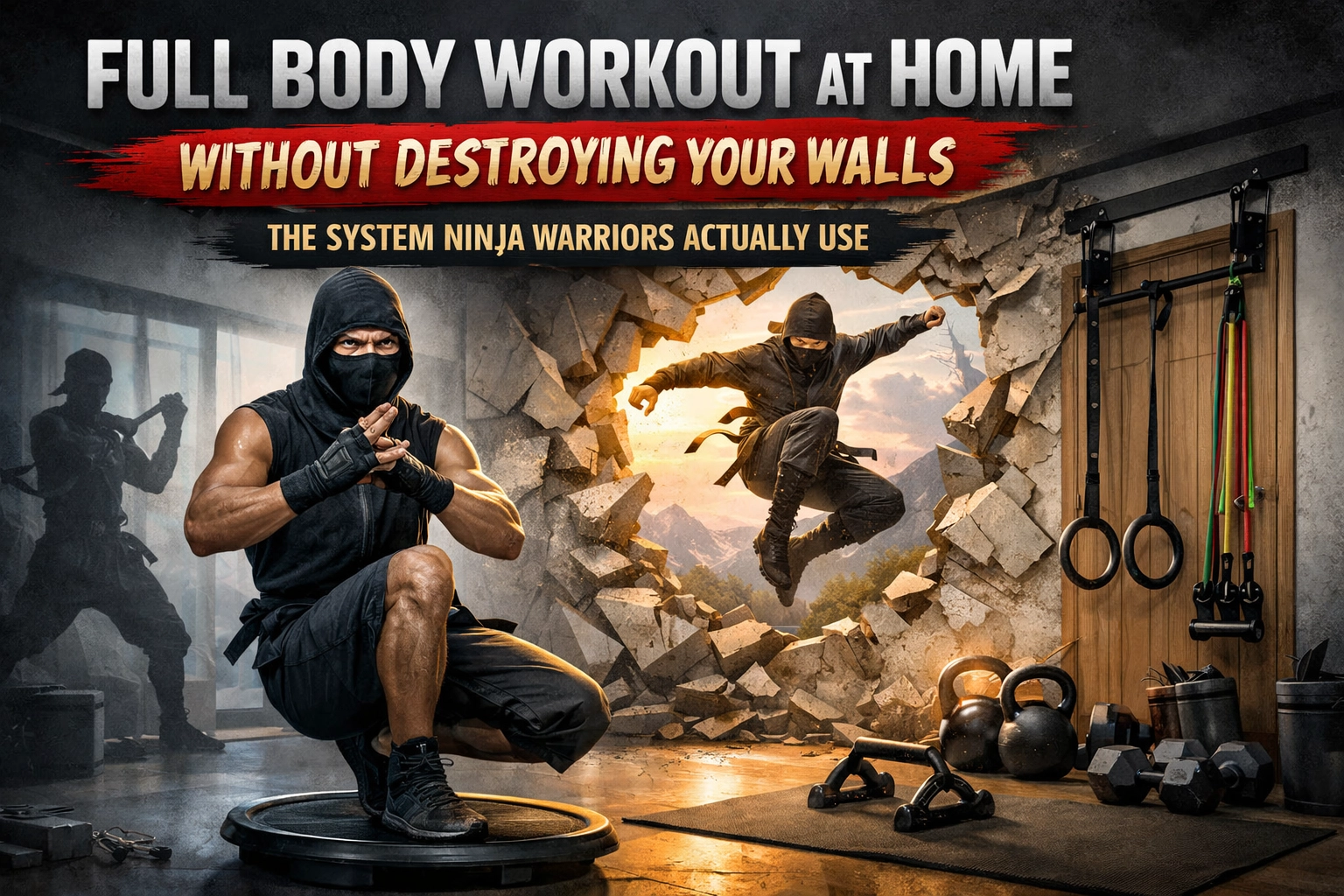
Look, we need to talk about the elephant in the room, or rather, the gaping holes in your wall where you tried to mount that pull-up bar last Tuesday.
You're serious about training. You watch American Ninja Warrior and think "I could do that." You've studied how gymnasts move, how MMA fighters explode with power, how calisthenics athletes make gravity look optional. You're ready to build a versatile home gym that lets you train like an elite athlete.
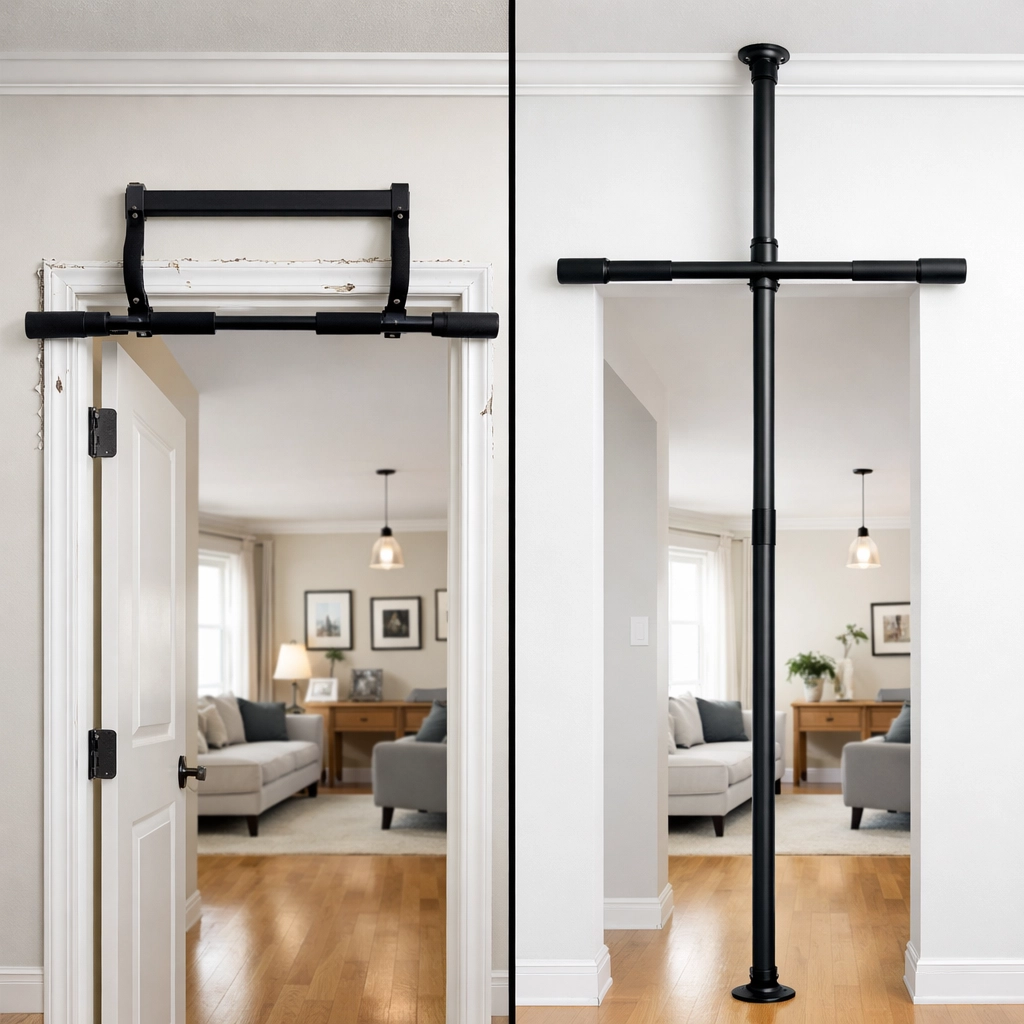
But here's the problem: most home workout setups either trash your walls or limit what you can actually do. Doorframe pull-up bars? They're unstable and restrict your movement patterns. Wall-mounted rigs? Great if you own your place and don't mind playing spackling contractor when you move. Floor stands? They wobble more than your commitment after leg day.
Professional ninja warriors and serious athletes don't train in facilities with equipment that moves when they move. They use stable, ceiling-to-floor systems that handle dynamic movements without creating a security deposit nightmare.
Let's break down the actual system these athletes use, and how you can replicate it without your landlord sending angry texts.
The Real Problem with Traditional Home Gym Equipment
Traditional pull-up bars and wall-mounted equipment create two major issues that most people don't think about until it's too late.
Structural damage you can't hide. Every screw hole, every anchor point, every "temporary" mount leaves evidence. And if you're renting? That's money straight out of your deposit. Even homeowners eventually want to rearrange or sell, and those mounting holes don't exactly scream "move-in ready."
Limited movement patterns. Here's what nobody tells you: doorframe pull-up bars restrict your range of motion. Your knees hit the door behind you during kipping movements. You can't do full muscle-ups. Forget about practicing anything dynamic or explosive. It's like trying to train for a marathon on a treadmill that only goes 3 mph.
Ninja warriors need to practice explosive pulls, hanging obstacle transitions, and dynamic swings. Gymnasts require stable points for ring work and various grips. CrossFit athletes want to string together multiple movements without worrying if their bar will rip out of the drywall mid-kip.

What Professional Athletes Actually Use: Floor-to-Ceiling Systems
Walk into any serious training facility and you'll notice something: the equipment goes from floor to ceiling. Not through your walls, not bolted into studs you hope exist, actual floor to ceiling gym systems that use tension to create rock-solid stability.
This is the secret sauce. Tension-based systems work by creating pressure between your floor and ceiling. No drilling. No anchors. No permanent damage. Just physics doing what physics does best.
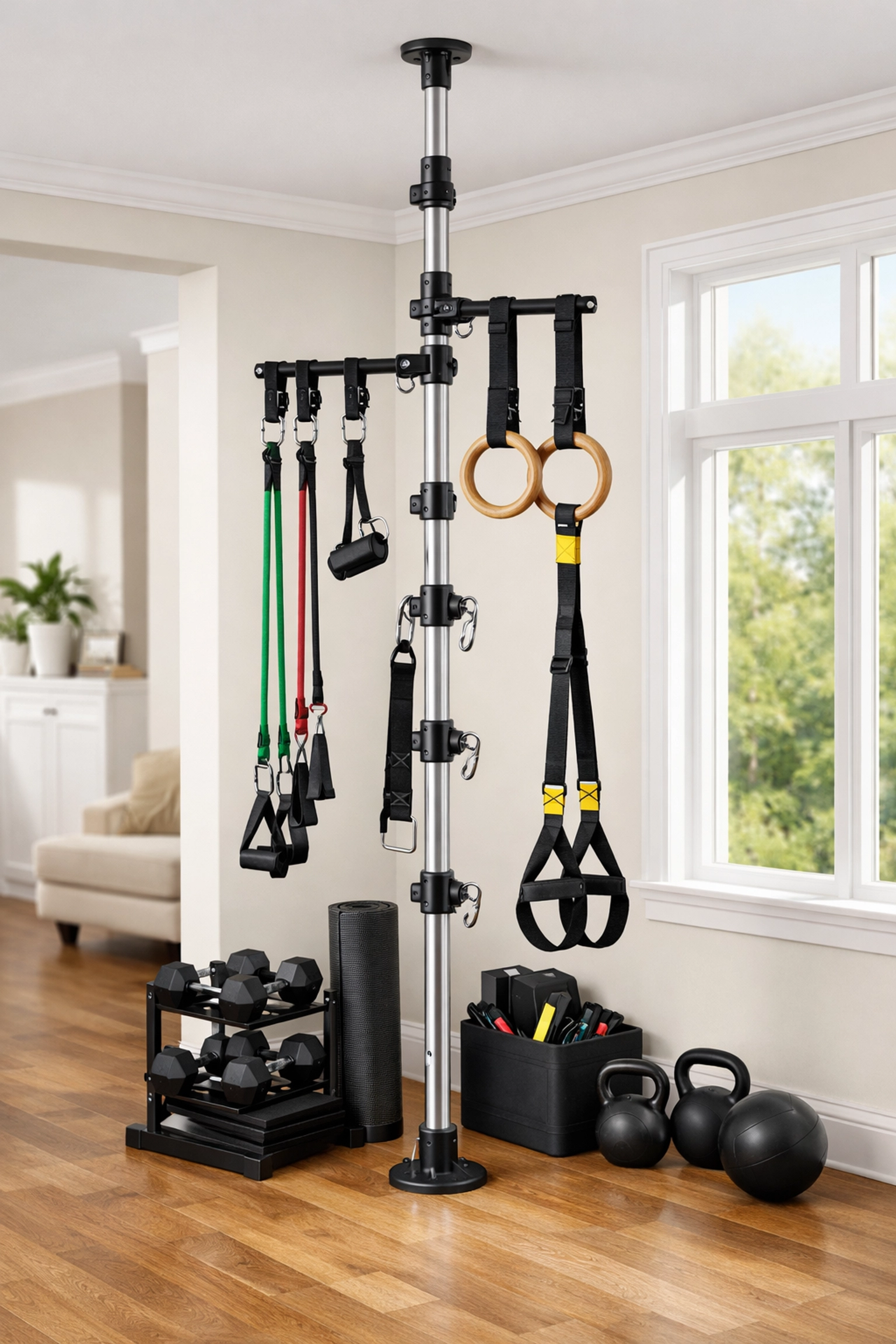
The Resistance Rail system at Bold Body Fitness uses this exact principle. It's the same concept professional training facilities use, scaled for home gyms. You get a stable, ceiling-height system that handles pull-ups, muscle-ups, resistance band work, gymnastics rings, and pretty much any bodyweight movement you can think of.
Because here's the thing: if your equipment wobbles, your training suffers. Period. You can't build explosive power when you're worried about stability. You can't practice dynamic movements when your bar shifts every time you generate momentum.
Building Your No-Damage Training System
Let's get practical. What do you actually need to train like a ninja warrior without destroying your living space?
The foundation: A stable vertical structure. This is non-negotiable. You need something that goes floor-to-ceiling and doesn't move. A proper pull up bar alternative that actually works for serious training, not some flimsy doorframe contraption.
Attachment points at multiple heights. Ninja warrior training isn't just about pull-ups. You need the ability to attach resistance bands, gymnastics rings, suspension trainers, and other equipment at various heights for different movement patterns.
Weight capacity that matches your ambitions. If you're doing explosive movements, adding weight vests, or progressing to advanced calisthenics, your system needs to handle significantly more than just your body weight. Look for systems rated for at least 300+ pounds of dynamic load.
Portability matters more than you think. Life happens. You move apartments. You rearrange rooms. You want to take your training outside in summer. A system you can relocate without calling a contractor is worth its weight in chalk.
The Bold Body Fitness Resistance Rail checks all these boxes. It's basically a vertical training surface that transforms any room into a functional training space. No wall damage. No permanent installation. Just tension-mounted, rock-solid stability.
The Ninja Warrior Full-Body Workout Structure
Now that you've got stable equipment, let's talk programming. Ninja warriors don't just randomly do exercises, they follow a structured system designed for maximum results with minimal wasted effort.
Training frequency: Hit full-body workouts 3-4 times per week. This is the sweet spot that allows adequate recovery while maintaining high training frequency. Professional athletes know that consistency beats intensity every single time.
Workout structure:
- Warm up for at least 5-10 minutes (yes, actually do this)
- Maximum 3 different exercises per major muscle group
- 30-60 seconds rest between sets
- Optional conditioning work at the end
- One full rest day between sessions
This structure prevents overtraining while giving you enough volume to actually progress. You're not trying to annihilate yourself every session: you're building sustainable strength and skill over time.
Upper Body Exercises That Build Ninja Warrior Strength
Let's start where it matters most: pulling power. Watch any ninja warrior course and you'll see why upper body strength is the difference between qualifying and falling into cold water on national television.
Pull-up variations are your foundation:
- Wide-grip pull-ups build lat width and grip strength
- Narrow-grip chin-ups hammer your biceps and forearms
- One-arm negatives develop unilateral strength
- Archer pull-ups prepare you for actual one-arm pulls
The key is progression. Start with standard pull-ups until you can bang out 10-12 clean reps. Then add variations. A proper calisthenics equipment for home setup lets you adjust grip width and attack angles, mimicking the varied grips you'll face on actual obstacles.
Hanging exercises develop grip endurance:
- Dead hangs for time (start with 30 seconds, build to 2+ minutes)
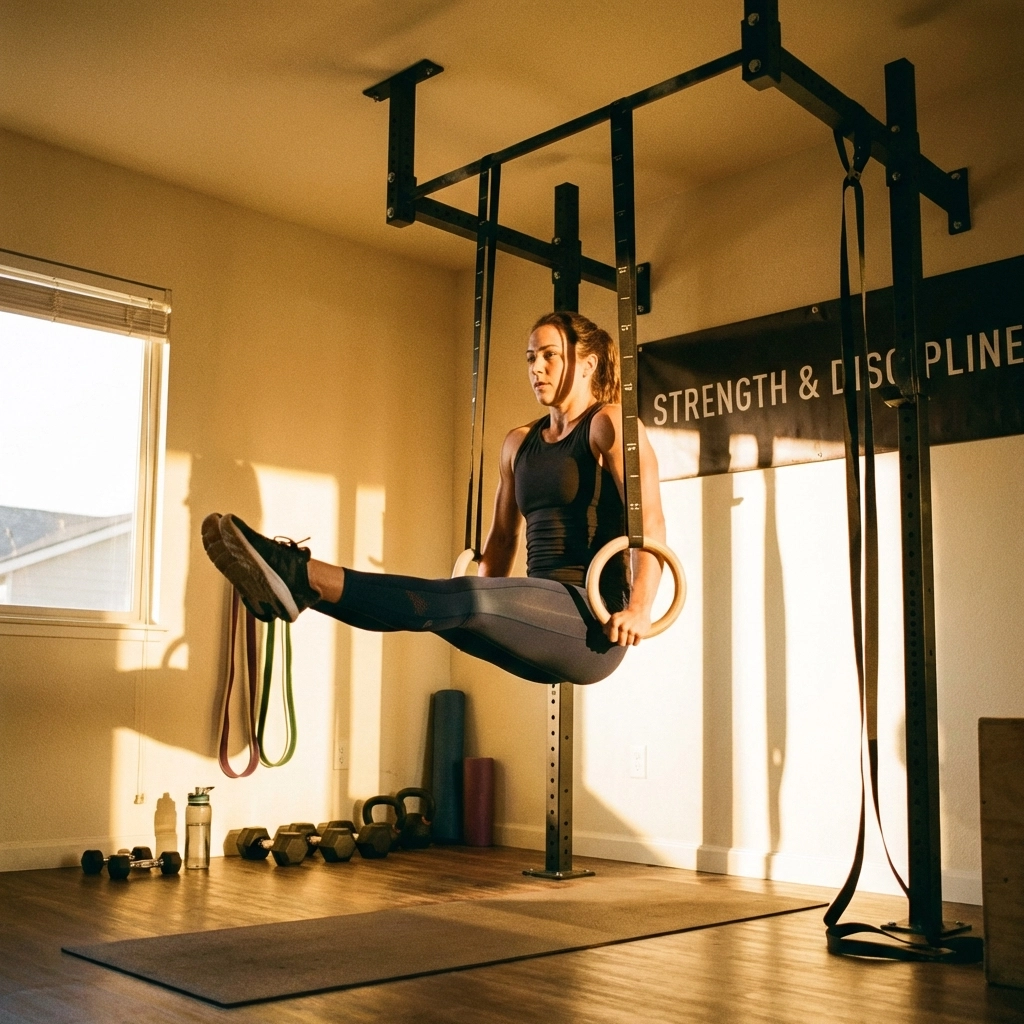
- Hanging L-sits engage your core while building grip
- Toes-to-bar movements prepare you for dynamic hanging obstacles
- Skin-the-cats for shoulder mobility and strength
These aren't glamorous exercises, but they're what separate amateurs from athletes who actually complete courses. Your grip fails, you fall. Simple as that.
Dynamic movements build explosive power:
- Kipping pull-ups (when you have stable equipment)
- Muscle-ups from dead hang
- Bar-to-bar transitions
- Clapping pull-ups for pure explosive strength
These are the movements that actually translate to obstacle success. But you absolutely need stable equipment. Trying to kip on a shaky doorframe bar is how you end up on YouTube's fail compilations.
Core and Stability: The Secret Weapon
Here's what beginners don't realize: ninja warriors aren't falling because their arms get tired. They're falling because their core gives out and their body position falls apart.
Bodyweight core builders:
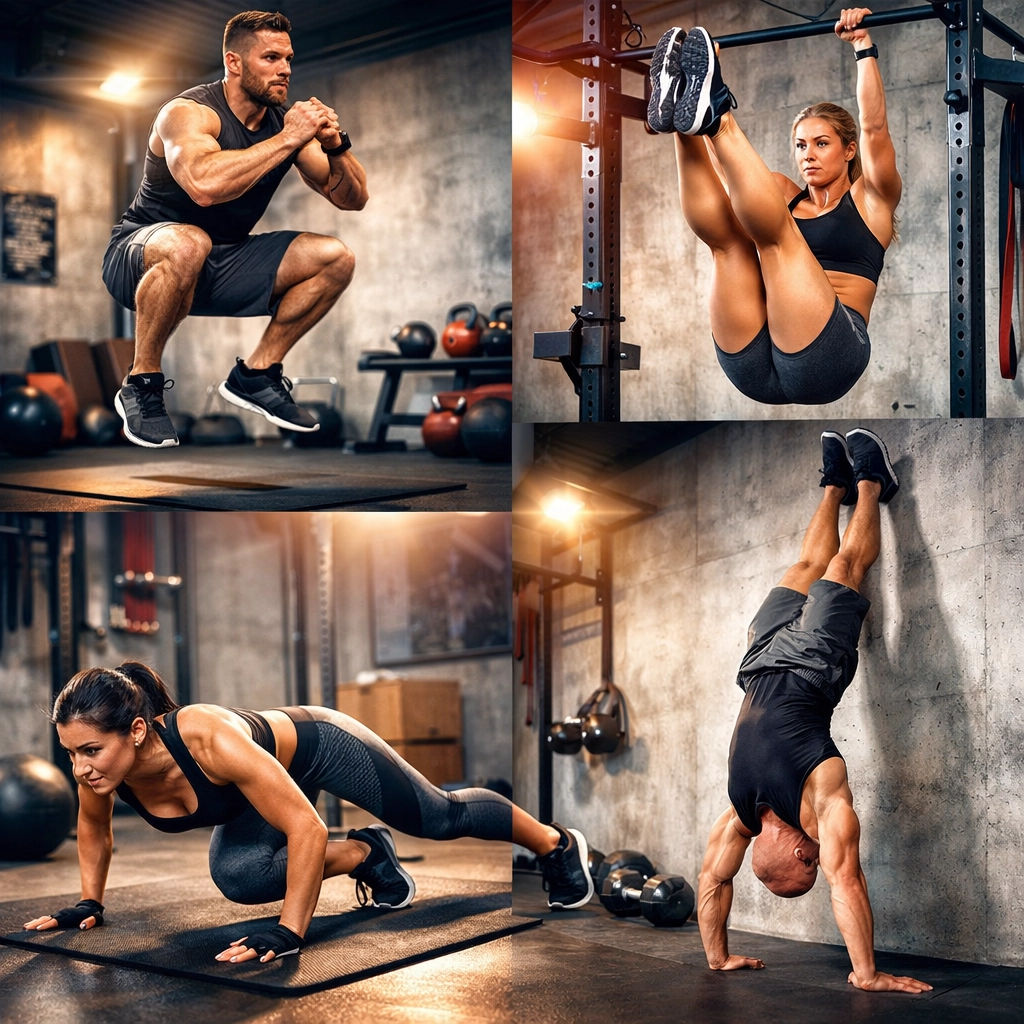
- Spiderman push-ups force anti-rotation stability
- Handstand holds (wall-assisted at first) build shoulder and core strength
- Hanging windshield wipers for oblique power
- Plank variations with limb lifts
The beauty of bodyweight training at home is that core work requires zero equipment. Your body is the resistance. But having a stable vertical structure like a Resistance Rail lets you add hanging core work, which is specifically relevant for obstacle training.
Balance and proprioception work:
- Single-leg movements on unstable surfaces
- Balance board exercises while performing upper body work
- Close-grip positions that challenge stabilizers
Professional ninja warriors spend significant time on balance work because obstacle courses constantly force you to stabilize in awkward positions. You might have the strength to hang on, but if you can't stabilize your body, you're still going down.
Lower Body Power Without Heavy Equipment
Most people assume ninja warriors don't train legs. Wrong. Dead wrong. Your legs generate the explosive power for jumping obstacles, provide stability for landings, and keep you from gassing out midway through a course.
Explosive movements build the power you need:
- Jump squats for vertical explosion
- Alternating jumping lunges for unilateral power
- Broad jumps for horizontal distance
- Box jumps (or step jumps if space limited)
These movements don't require barbells or heavy plates. They just require commitment and space. This is where full body workout at home setups shine: you're not limited by equipment availability.
Strength-endurance keeps you moving:
- Sumo squats with leg lifts
- Bulgarian split squats
- Pistol squat progressions
- Wall sits for time
Ninja warrior courses can last 90+ seconds of sustained effort. Your legs need both power and endurance. These exercises build that combination without requiring a squat rack or hundreds of pounds of plates.
The Progression System That Actually Works
Here's where most home training programs fall apart: no clear progression strategy. You do the same workout for weeks, wonder why you're not improving, then give up and go back to scrolling Instagram instead.
Professional athletes follow progressive overload: consistently increasing training demands in measurable ways.
Progression methods for bodyweight training:
Volume progression: Add more reps or sets. If you can do 3 sets of 8 pull-ups, work toward 3 sets of 12, then 4 sets of 10, then 4 sets of 12.
Density progression: Decrease rest periods. Cut your rest from 60 seconds to 45, then 30. Suddenly the same workout becomes significantly harder.
Mechanical progression: Move to harder exercise variations. Standard push-ups become archer push-ups, then one-arm push-up negatives, then full one-arm push-ups.
Tempo progression: Slow down the eccentric (lowering) phase. Take 5 seconds to lower yourself from a pull-up. Your muscles will hate you, but they'll grow stronger.
Load progression: Add external resistance via weight vests, resistance bands, or weighted backpacks. This is where having a versatile home gym with attachment points at various heights becomes crucial.
The key is picking ONE progression method at a time and working it for 4-6 weeks before switching. Don't try to progress everything simultaneously: that's how you end up injured or overtrained.
Why Tension-Based Systems Dominate
Let's get real about why floor-to-ceiling tension systems are superior for serious training at home.
Zero compromise on stability. When you're attempting your first muscle-up or practicing explosive kipping movements, your equipment cannot move. Period. Tension-based systems like the Resistance Rail provide commercial gym stability in your living room.
Infinite adjustability. Want to practice ring work? Attach your rings. Need to do resistance band face pulls? Done. Want suspension trainer rows? Just clip them on. A single vertical structure becomes dozens of different training stations.
No installation anxiety. You're not wondering if your wall studs can handle the load. You're not worried about lease agreements or security deposits. You're just training. Set it up in 15 minutes. Take it down when you move. Zero stress.
Scales with your progression. As you get stronger and need more challenging variations, your equipment doesn't need upgrading. The same system that supported your first assisted pull-up will support your weighted muscle-ups two years later.
This is exactly why facilities training elite athletes use similar systems. The equipment isn't the limiting factor: you are. And that's how it should be.
Making It All Work Together
Look, you can have the best equipment in the world and still not progress if you don't actually use it consistently. Here's the brutal truth about home gym equipment: it only works if you work.
Build a schedule and stick to it. Monday, Wednesday, Friday, Sunday. Or Tuesday, Thursday, Saturday. Whatever works for your life. But make it non-negotiable. You don't skip sessions because you "don't feel like it." You skip sessions when you're actually sick or injured. That's it.
Track your workouts. Write down sets, reps, rest periods, and how exercises felt. This isn't optional. You cannot improve what you don't measure. Keep a training journal or use an app: just track something.
Focus on movement quality over quantity. Ten perfect pull-ups build more strength than twenty sloppy ones where you're kipping with your legs and barely reaching the bar. Leave your ego at the door.
Rest is training. Your muscles don't grow during workouts: they grow during recovery. Sleep 7-8 hours. Eat enough protein. Take your rest days seriously.
The ninja warriors you see on TV didn't get there by occasionally working out when they felt motivated. They got there by consistently showing up and putting in the work, whether they felt like it or not. Your home training setup removes every excuse about gym access, equipment availability, or inconvenient hours.
You've got everything you need. The question is: are you actually going to use it?
Your Next Step
Stop letting equipment limitations hold back your training. Whether you're working toward your first pull-up or training for an actual ninja warrior competition, you need a no wall damage workout system that matches your ambitions.
Check out the complete Bold Body Fitness training systems designed specifically for serious athletes training at home. The Resistance Rail gives you the stability and versatility of a commercial gym facility without permanent installation or wall damage.
Set it up this weekend. Start the ninja warrior workout system on Monday. Watch what happens when you remove every excuse between you and your training goals.
Your walls will thank you. Your landlord will thank you. And six months from now, you'll thank yourself when you're crushing movements you never thought possible.
