

Look, you don't need a $200 monthly gym membership or a garage packed with chrome-plated equipment to build serious strength. The athletes crushing American Ninja Warrior obstacles? Most of them built their foundation with bodyweight training. The MMA fighters submitting opponents in the octagon? They're mastering their own body weight before adding external loads. And those calisthenics athletes defying gravity on Instagram? Pure bodyweight mastery.
The truth is, your body is the most versatile piece of gym equipment you'll ever own. And if you're serious about building functional, real-world strength that translates to athletic performance, not just mirror muscles, bodyweight training at home is your ticket.
Why Bodyweight Training Builds Ninja Warrior-Level Strength
Here's what most people miss: bodyweight training isn't just "exercise when you can't get to the gym." It's a superior method for developing the kind of relative strength, body control, and movement quality that separates weekend warriors from elite athletes.
When you're hauling yourself through a muscle-up, holding a front lever, or sticking a pistol squat, you're not just building strength, you're forging neuromuscular coordination, proprioception, and the kind of body awareness that makes you move like an athlete instead of a robot.
The best part? You can start today, right now, wherever you are. No equipment necessary. Though if you want to accelerate your progress and unlock advanced movements, having the right setup at home, like a solid pull-up system, takes your training to another level.
The Six Pillars of Bodyweight Strength
To build a complete physique and avoid the lopsided development that plagues most gym-goers, you need to master six fundamental movement patterns:
1. Lower Body Anterior Chain (Front of Legs)
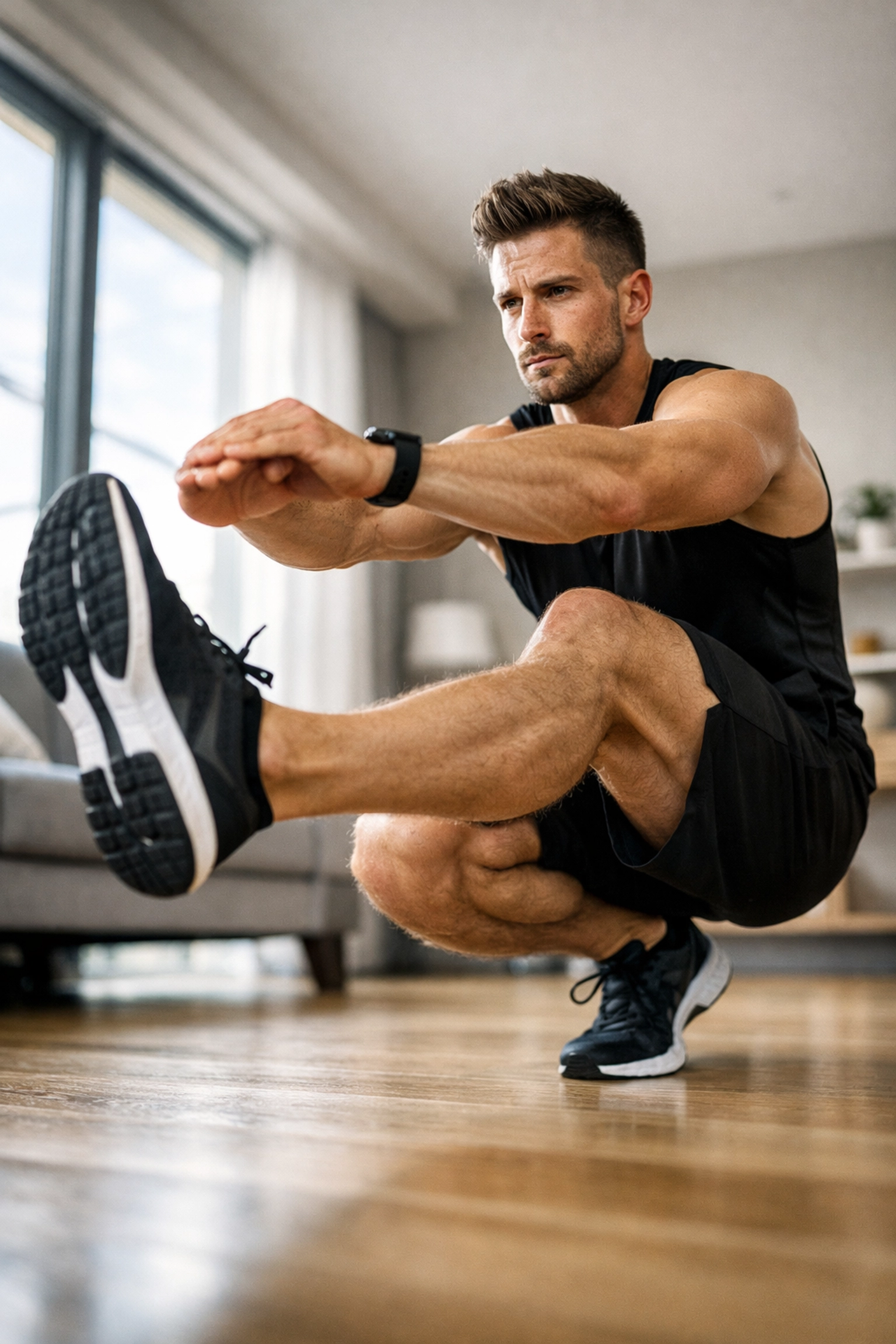
This is your squat pattern, the foundation of explosive power and lower body strength. Start with basic bodyweight squats, progress to jump squats, then tackle the ultimate challenge: pistol squats. Single-leg work builds incredible stability and addresses strength imbalances that bilateral exercises mask.
Key exercises:
- Squats (standard, jump, sissy)
- Lunges (forward, reverse, walking)
- Bulgarian split squats
- Pistol squats
2. Upper Body Push
Push-ups are just the beginning. This movement pattern encompasses everything from basic floor push-ups to handstand push-ups that would make a gymnast proud. The beauty of push exercises is the nearly infinite progression available without adding weight.
Key exercises:
- Push-ups (standard, wide, diamond, archer)
- Dips (bench, parallel bar)
- Pike push-ups
- Handstand push-ups
3. Lower Body Posterior Chain (Back of Legs and Glutes)
Your posterior chain, glutes, hamstrings, and lower back, is the engine of athletic power. It's what drives you forward in a sprint, powers your jump, and keeps your lower back bulletproof. Neglect this, and you're asking for injury and performance plateaus.
Key exercises:
- Glute bridges (single-leg, elevated)
- Nordic curls
- Single-leg deadlifts
- Superman holds
4. Upper Body Pull
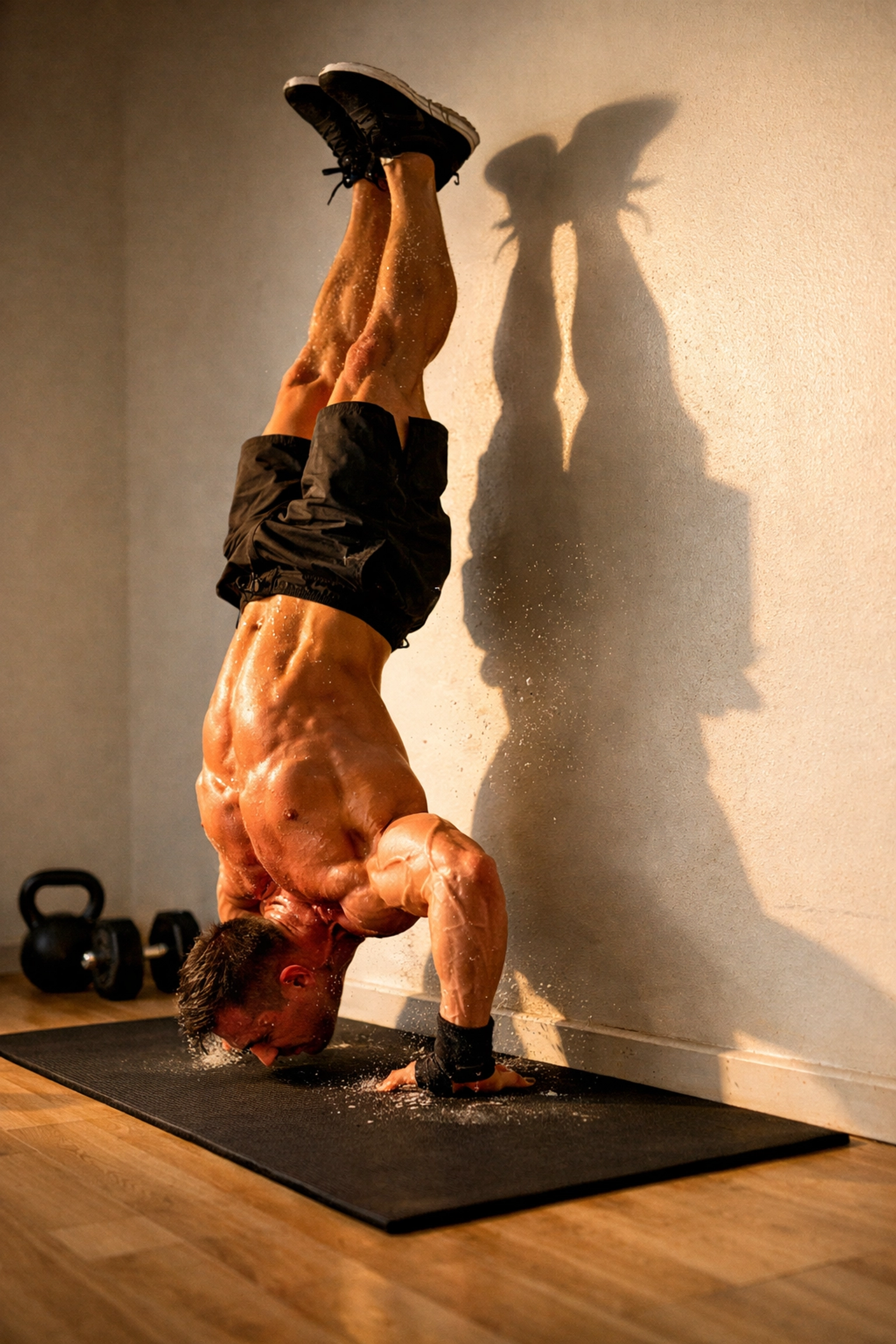
Here's where most home training programs fall apart. You can push until the cows come home, but without pull exercises, you're building a chest-dominant physique with rounded shoulders and back pain. Pull-ups are non-negotiable for complete upper body development.
This is where having a proper pull-up bar setup becomes crucial. Sure, you can jerry-rig something with a broomstick and two chairs, but if you're serious about building elite pulling strength, invest in real equipment. The Resistance Rail from Bold Body Fitness is designed specifically for athletes who want versatile, ceiling-mounted training options without destroying their walls or worrying about safety.
Key exercises:
- Pull-ups (overhand, underhand, neutral grip)
- Chin-ups
- Australian rows
- Inverted rows
5. Core Stability and Anti-Rotation
Forget endless crunches. Real core training is about resisting unwanted movement: anti-extension, anti-rotation, and anti-lateral flexion. This is what protects your spine under load and generates power transfer from your lower to upper body.
Key exercises:
- Planks (standard, side, RKC)
- Dead bugs
- Hollow body holds
- Pallof press variations
6. Corrective and Mobility Work
This is the unsexy stuff that separates athletes who train for decades from those who burn out in 18 months. Mobility work, shoulder health exercises, and movement preparation aren't optional: they're the foundation that allows you to train hard and recover well.
Key exercises:
- Wall slides
- Thoracic rotations
- Hip flexor stretches
- Shoulder dislocations (with band or PVC)
Progressive Overload Without Weights: The Real Secret
The biggest misconception about bodyweight training is that you'll eventually outgrow it. That's laughable. How many people can do 10 strict muscle-ups? A 60-second front lever? Freestanding handstand push-ups?
Progressive overload doesn't require adding weight. You can manipulate:
Leverage: Moving your body further from the fulcrum increases difficulty dramatically. Push-ups become pseudo planche push-ups. Rows become front lever progressions.
Tempo: Slow down the eccentric (lowering) phase. A 5-second negative pull-up builds more strength than sloppy reps bouncing off momentum.
Range of Motion: Full range deficit push-ups with your chest dropping between parallettes is a completely different beast than standard floor push-ups.
Unilateral Work: Two-leg squats are manageable. Single-leg pistol squats are humbling. Always.
Isometric Holds: Can you hold the bottom of a squat for 60 seconds? The top of a pull-up? These builds strength in positions where you're typically weakest.
The Minimal Equipment Maximum Results Approach
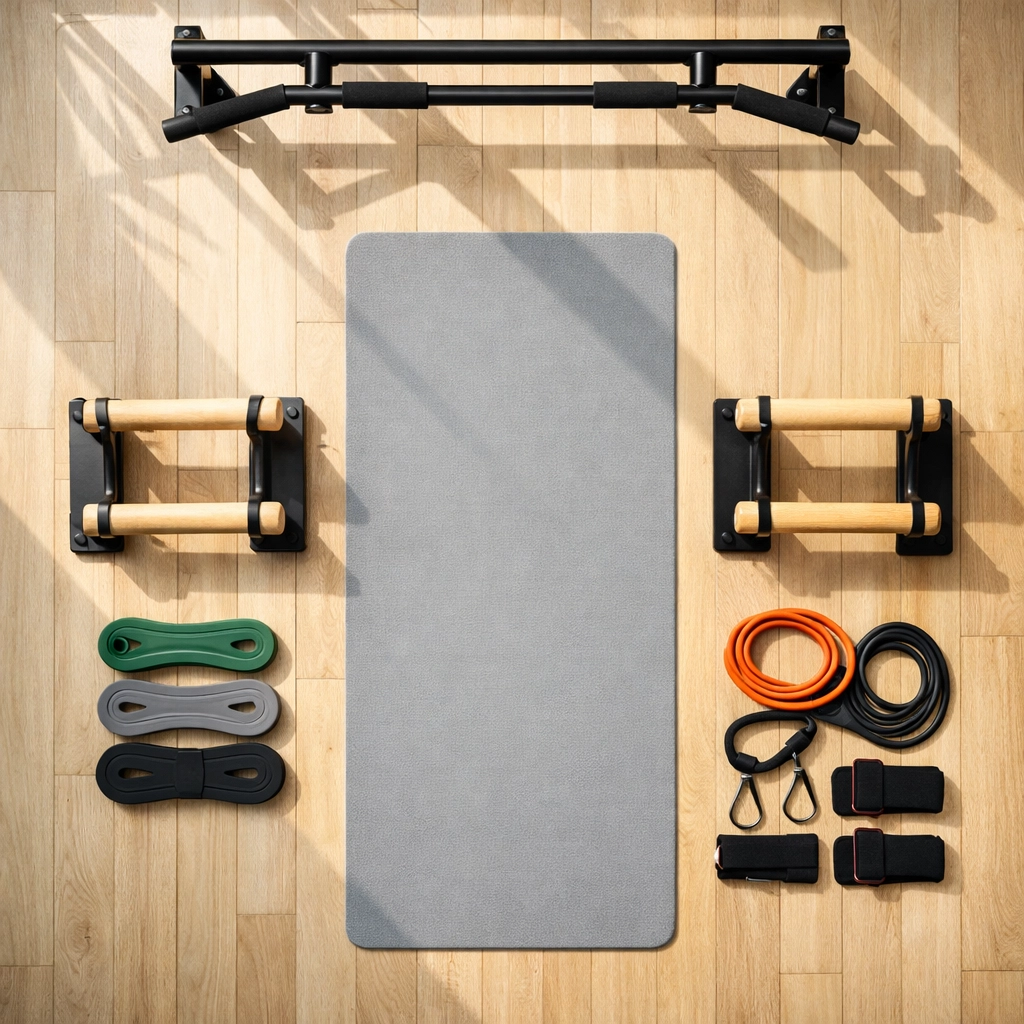
While you can build impressive strength with absolutely zero equipment, a few strategic additions to your home gym unlock exponentially more exercises and progression paths:
A Pull-Up Bar or Overhead System: Non-negotiable. You cannot build a complete physique without vertical pulling. The Resistance Rail system solves the biggest problem with home pull-up training: installation without wall damage and versatility for multiple grip positions. It's the difference between doing the same basic pull-up for years versus progressing through different grips, adding weighted variations, and even training ninja warrior-style obstacles.
Parallettes or Push-Up Handles: These extend your range of motion on push exercises and unlock skills like L-sits and planche progressions.
Resistance Bands: Perfect for assistance on difficult movements (like pull-ups) and adding resistance to exercises where bodyweight alone isn't enough.
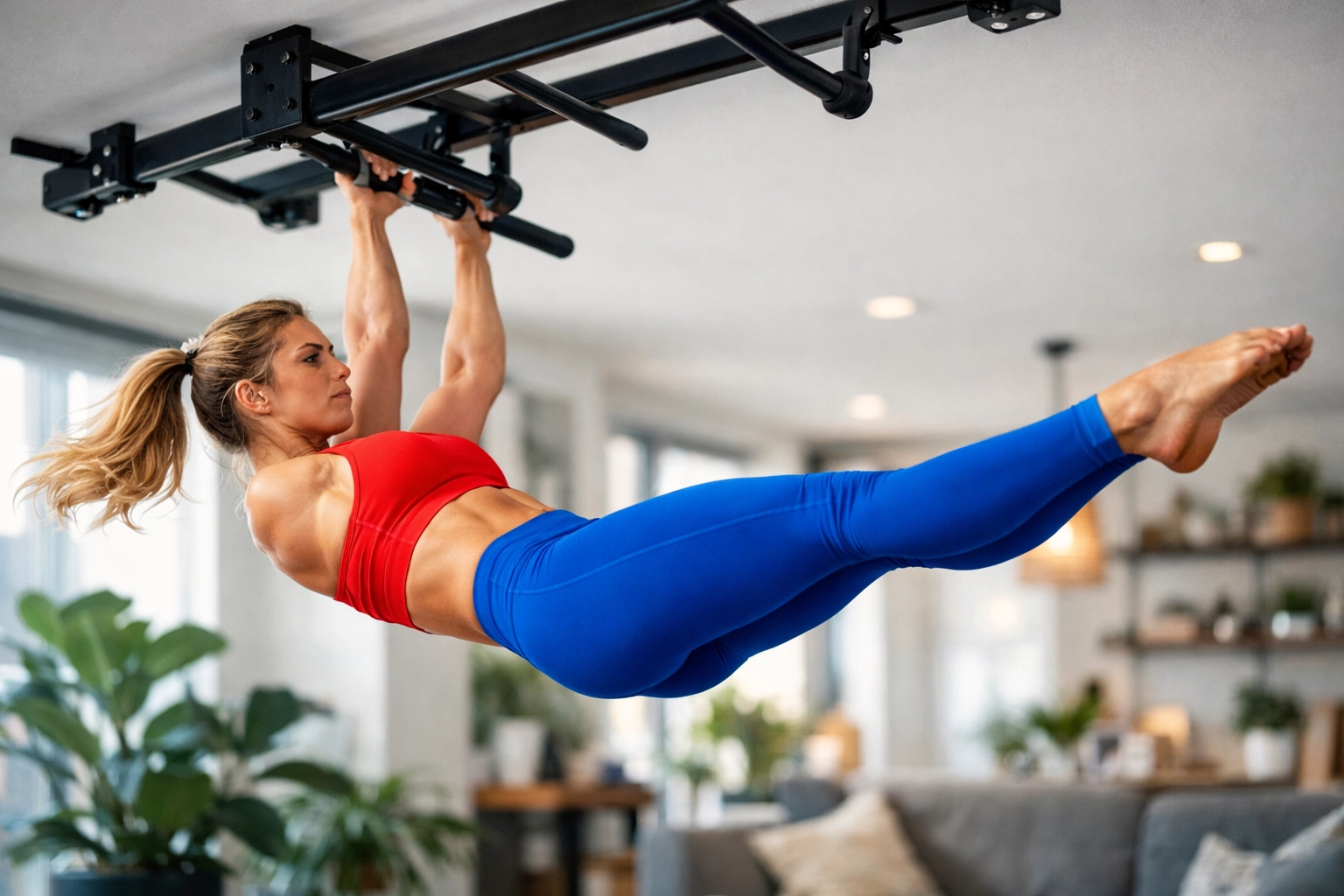
Gymnastics Rings: The king of bodyweight training equipment. Unstable, infinitely adjustable, and capable of facilitating every upper body exercise imaginable.
Sample Training Split: The Ninja Warrior Protocol
Here's a proven three-day-per-week structure that builds complete bodyweight strength without overtraining:
Monday: Push + Lower Anterior Focus
- Handstand practice (5-10 min)
- Push-up variations: 4 sets to near-failure
- Pike push-ups: 3 sets of 8-12
- Pistol squats (or progression): 3 sets of 5 per leg
- Jump squats: 3 sets of 10
- Core circuit: Planks, dead bugs, hollow holds (3 rounds)
Wednesday: Pull + Lower Posterior Focus
- Pull-up practice and variations: 5 sets (vary grips)
- Australian rows: 3 sets of 12-15
- Nordic curl progressions: 3 sets of 5-8
- Single-leg glute bridges: 3 sets of 12 per leg
- Hanging leg raises: 3 sets of 10
- Mobility work: 10 minutes
Friday: Full Body Power + Skills
- Skill work: Muscle-up progressions or handstand training (15 min)
- Explosive push-ups: 4 sets of 6
- Explosive pull-ups: 4 sets of 5
- Jump lunges: 3 sets of 8 per leg
- Dips: 3 sets to near-failure
- L-sit practice: 5 sets of max hold
- Core finisher
Common Mistakes That Kill Progress
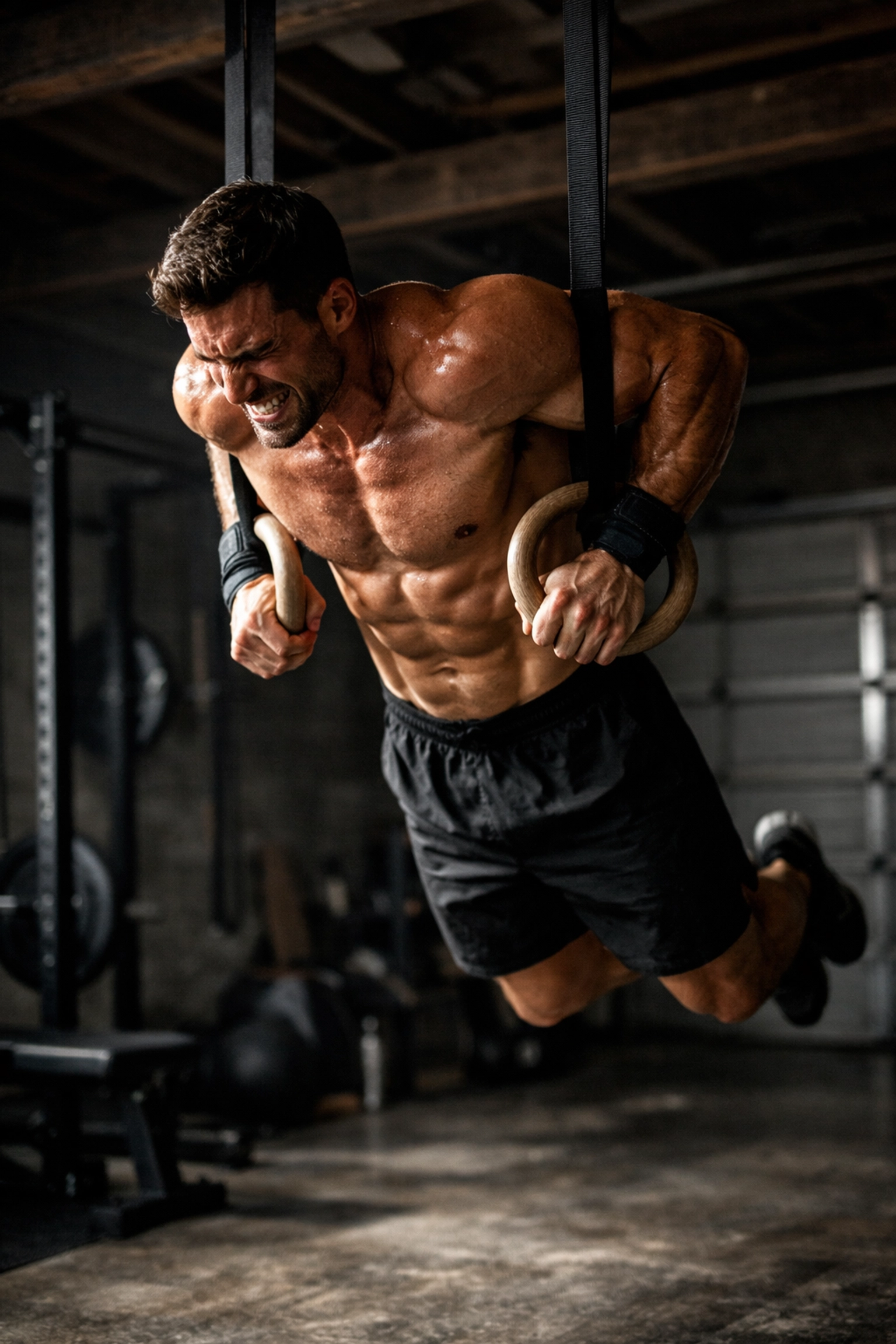
Going to Failure Every Set: Bodyweight training taxes your nervous system differently than weights. Leave 1-2 reps in the tank on most sets. Burn out your CNS, and you'll regress fast.
Neglecting Progression Tracking: "I did some push-ups" isn't a training program. Track your reps, sets, rest periods, and progression variations. What gets measured gets managed.
Ignoring the Posterior Chain: Everyone loves push-ups. Few people love Nordic curls or glute bridges. Guess which athletes have knee pain and which don't?
Skipping Warm-Ups: Your body isn't a light switch. Ten minutes of mobility and movement prep prevents months of injury recovery.
Training Through Pain: Discomfort during training is normal. Sharp pain isn't. Learn the difference, and respect your body's warning signals.
Making Your Home Training Space Work
You don't need a dedicated gym room, but you do need a designated training space. Even if it's just a 6x6 foot area in your living room, claim it. Keep your minimal equipment there. Make it inviting.
For pull-up training in apartments or homes where you can't drill into studs, a floor-to-ceiling system like the Resistance Rail creates a legitimate training station without permanent modifications. No landlord headaches, no patched drywall when you move. Just serious training equipment for serious athletes.
The Bottom Line
Bodyweight training at home isn't a compromise: it's a choice to prioritize movement quality, relative strength, and functional athleticism over arbitrary numbers on a barbell. It's the training method of ninjas, fighters, gymnasts, and anyone who values what their body can do over how it looks in a mirror.
Start with the basics. Master the fundamentals. Progress intelligently. And if you're ready to take your home training seriously, invest in equipment that matches your commitment. Check out the full range of training solutions at Bold Body Fitness designed specifically for athletes who train at home without sacrificing quality or results.
Your body is waiting. Your living room is ready. The only question is: are you?
