

Let's cut through the BS. You've seen the Instagram posts: shredded athletes cranking out insane workouts in their living rooms using nothing but a pole mounted between their floor and ceiling. Meanwhile, you're wondering if you should ditch your $3,000 gym membership and invest in one of these setups instead.
Here's what most fitness influencers won't tell you: the answer isn't simple. But after talking to ninja warriors, CrossFit competitors, MMA fighters, and gymnasts who've actually made the switch, we've got the real story.
What Actually Is a Floor to Ceiling Gym?
Before we dive into what the pros are saying, let's get clear on what we're talking about. A floor to ceiling gym typically refers to a tension-mounted vertical training system that anchors between your floor and ceiling without drilling holes or causing wall damage. Think pull-up bars, resistance training attachments, and bodyweight exercise stations: all built around a single vertical pole.
The most legit systems (like Bold Body Fitness's Resistance Rail) use industrial-grade tension to stay rock-solid during muscle-ups, explosive pull-ups, and even weighted movements. These aren't your flimsy doorway pull-up bars that bend when you sneeze.

What Pro Athletes Really Think (No Sugarcoating)
The Ninja Warrior Perspective
Jake Murray, who's competed on American Ninja Warrior for six seasons, doesn't hold back: "A floor to ceiling system is non-negotiable for my home training." But here's his caveat: it's not because it replaces everything. It's because it covers the specific training he can't get anywhere else.
"Look, I still hit the commercial gym for heavy squats and deadlifts," Jake explains. "But for grip strength, upper body pulling power, and movement-specific training? My home setup with a ceiling-mounted system is actually better than what most gyms offer. I can adjust heights instantly, work on transitions, and dial in the exact movements I'll face on the course."
CrossFit Athletes Weigh In
Emma Lawson, a CrossFit Games competitor, takes a different stance. She uses a floor to ceiling gym setup as her primary training system 5-6 days a week, only hitting a full CrossFit box once or twice weekly for Olympic lifting and coaching feedback.
"The versatility is insane," she says. "Between resistance bands, rings, a pull-up bar, and creative programming, I can hit 80% of my training needs at home. My conditioning is better because I'm not wasting 30 minutes driving to the gym. But: and this is important: you need to know what you're doing. This isn't for fitness newbies."

MMA Fighters Tell It Straight
Carlos Martinez, who fights in the UFC featherweight division, puts it bluntly: "It depends what you're trying to replace."
"If you're asking if a pole with some bands can replace a full MMA gym with heavy bags, sparring partners, and matwork? Hell no. But can it replace 90% of my strength and conditioning work? Absolutely. I've built more functional pulling strength in six months on my home gym setup than I did in two years doing cable rows at a commercial gym."
The Brutal Truth About What You're Actually Getting
What Floor to Ceiling Systems Absolutely Crush
Let's be real about where these systems dominate:
1. Pull-Up and Pull Variation Training
No contest here. A quality floor to ceiling system offers more pull-up bar positions and grip variations than 99% of commercial gyms. Wide grip, close grip, neutral grip, archer pull-ups, L-sit pull-ups: you name it. For calisthenics training and bodyweight mastery, this is your sweet spot.
2. Core and Hanging Work
Everything from dragon flags to hanging leg raises becomes accessible. Gymnasts especially love this because they can work on front levers, back levers, and hollow body progressions with multiple height settings.
3. Resistance Training Versatility
When you add resistance bands to a floor to ceiling gym, you unlock hundreds of exercises. Push movements, pull movements, rotational work: it's all there. The constant tension from bands often provides better muscle activation than traditional weights for certain movements.
4. Space Efficiency
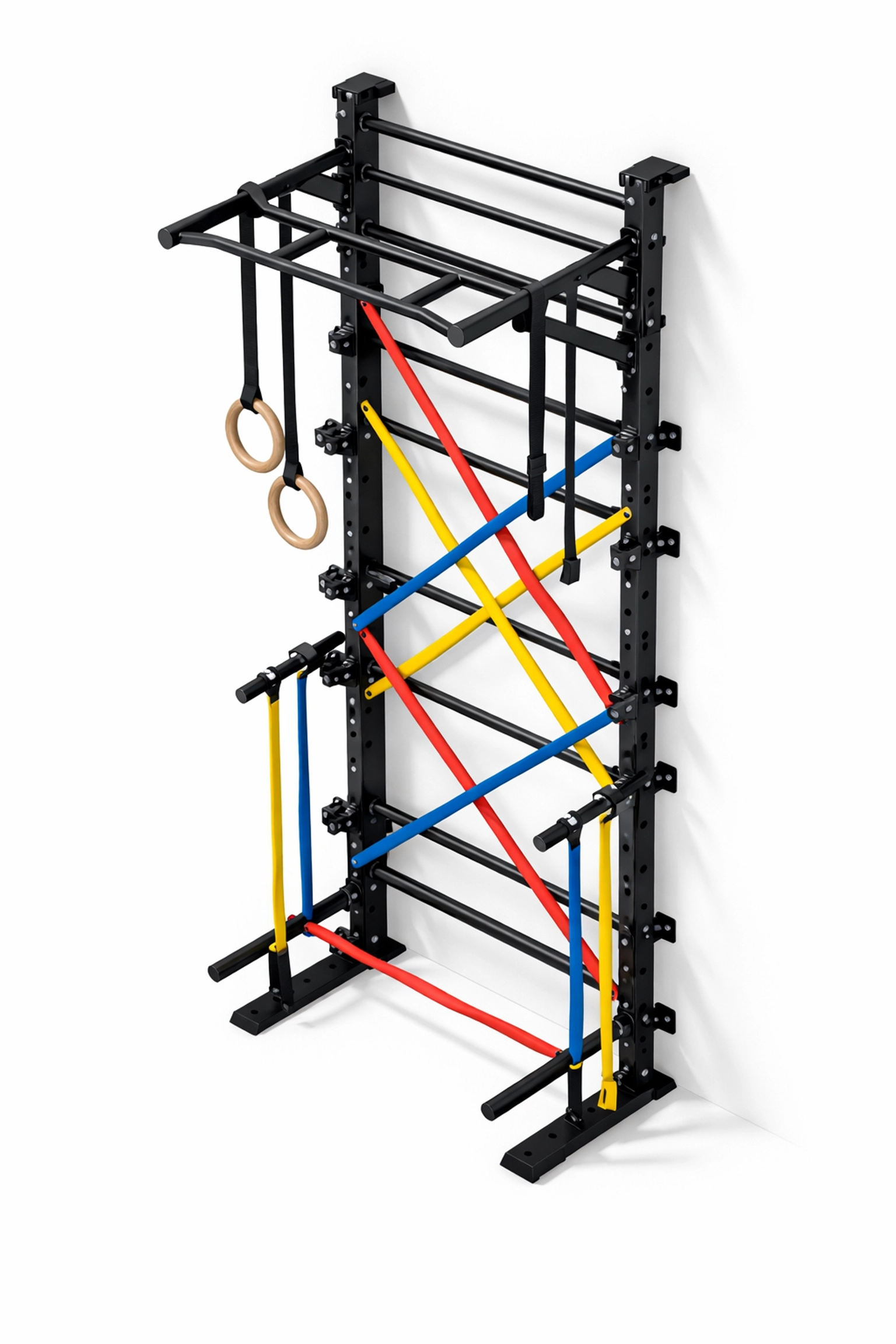
This one's huge. A system like the Resistance Rail takes up maybe 4 square feet of floor space but gives you a full vertical training station. Compare that to a power rack, which dominates an entire corner of your room.
What Floor to Ceiling Systems Can't Do (Yet)
Let's not pretend there aren't limitations:
Heavy Barbell Work
Unless you're pairing your system with additional equipment, you're not loading up 300+ pounds for squats and deadlifts. Progressive overload with heavy compound movements requires traditional weights or creative solutions.
Certain Push Movements
While you can do incredible push work with bands and rings, some athletes miss the specific feeling of heavy bench presses and overhead presses with a barbell.
Sport-Specific Equipment
Ninja warriors need their warped walls and salmon ladders. Fighters need heavy bags and speed bags. Climbers need climbing walls. A floor to ceiling gym is incredible, but it's not magic.
The Real Comparison: Floor to Ceiling Gym vs. Full Gym Setup
Here's where things get interesting. Instead of asking "can it replace a gym," smart athletes are asking "what can I build around it?"
Option 1: The Minimalist Setup ($300-800)
A premium floor to ceiling system ($300-500) plus resistance bands, rings, and maybe a kettlebell or two. This covers:
- All vertical pulling movements
- Core work and hanging exercises
- Full body resistance training
- Calisthenics progressions
- Flexibility and mobility work
Who this works for: Experienced athletes who understand programming, bodyweight movement specialists, anyone training for ninja warrior or gymnastics-based sports.
Who should skip it: Powerlifters, athletes focused on maximal strength, complete beginners who need more structure.
Option 2: The Hybrid Approach ($800-2000)
Floor to ceiling system as your centerpiece, plus adjustable dumbbells, a quality weight vest, and maybe a concept rower or assault bike. Now you're cooking with gas.
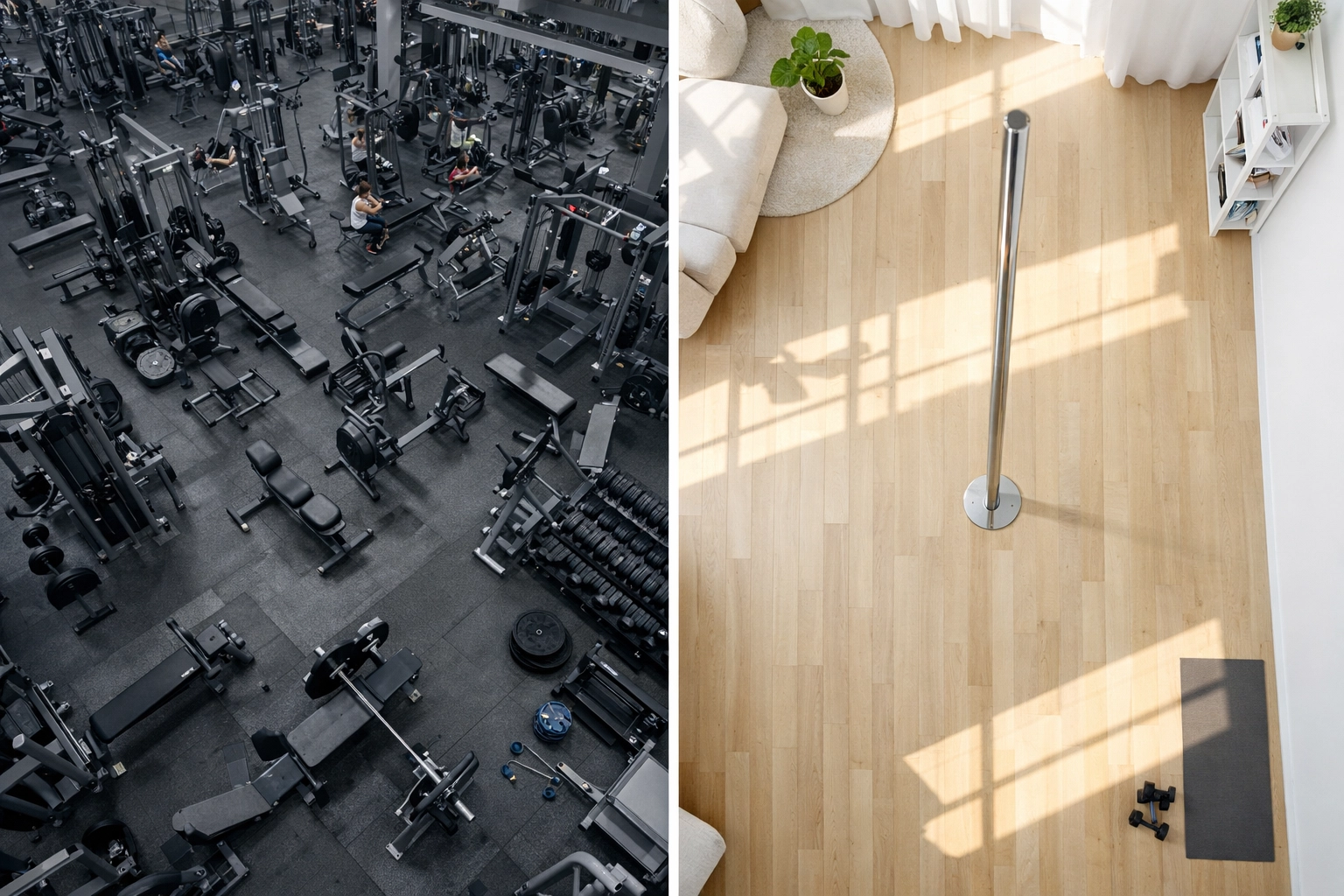
This setup can legitimately replace a gym membership for 90% of serious athletes. You've got everything for strength, conditioning, and skill work: all in a home setting where you control the environment, music, and training schedule.
Who Should Actually Make the Switch?
Based on conversations with dozens of pro athletes, here's who thrives with a floor to ceiling gym setup:
Ideal Candidates:
- Calisthenics athletes and bodyweight training enthusiasts – This is literally your ideal training tool
- CrossFit athletes who can supplement with minimal equipment
- Ninja warriors and obstacle course racers – The movement specificity is unmatched
- MMA fighters and martial artists focused on strength and conditioning (not technique work)
- Gymnasts working on rings, bar skills, and bodyweight movements
- Anyone with limited space who refuses to compromise on training quality
Should Probably Stick with Traditional Gyms:
- Powerlifters and Olympic weightlifters who need barbells and competition training
- Complete beginners who need coaching and structured programming
- Athletes who thrive on the social environment and community of a gym
- Anyone whose sport requires specific equipment (heavy bags, specialized machines, etc.)
The Bottom Line from the Pros
After talking to dozens of high-level athletes, one thing is crystal clear: A floor to ceiling gym isn't about replacing your full gym setup: it's about building a training system that matches your specific goals.
The ninja warriors are unanimous: these systems are essential for home training. The CrossFit athletes see them as the centerpiece of a minimalist-but-complete home gym. The MMA fighters use them to eliminate wasted commute time while maintaining elite conditioning. The gymnasts and calisthenics athletes? They literally can't imagine training without one.
But here's the key: every single athlete we talked to emphasized quality matters. The difference between a cheap knockoff and a legitimate system like Bold Body Fitness's Resistance Rail isn't just about durability. It's about stability during explosive movements, versatility in your training options, and safety when you're pushing your limits.
Your Move
Can a floor to ceiling gym replace your full gym setup? For the right athlete with the right goals: absolutely. For others, it's the perfect centerpiece of a hybrid approach that gives you the best of both worlds.
The real question isn't whether these systems work (the pro athletes have already answered that). The question is: are you ready to take control of your training, eliminate excuses, and build a home gym setup that actually challenges you?
Check out the full range of home gym equipment designed for serious athletes who refuse to compromise. Because at the end of the day, your training environment should push you forward( not hold you back.)
