
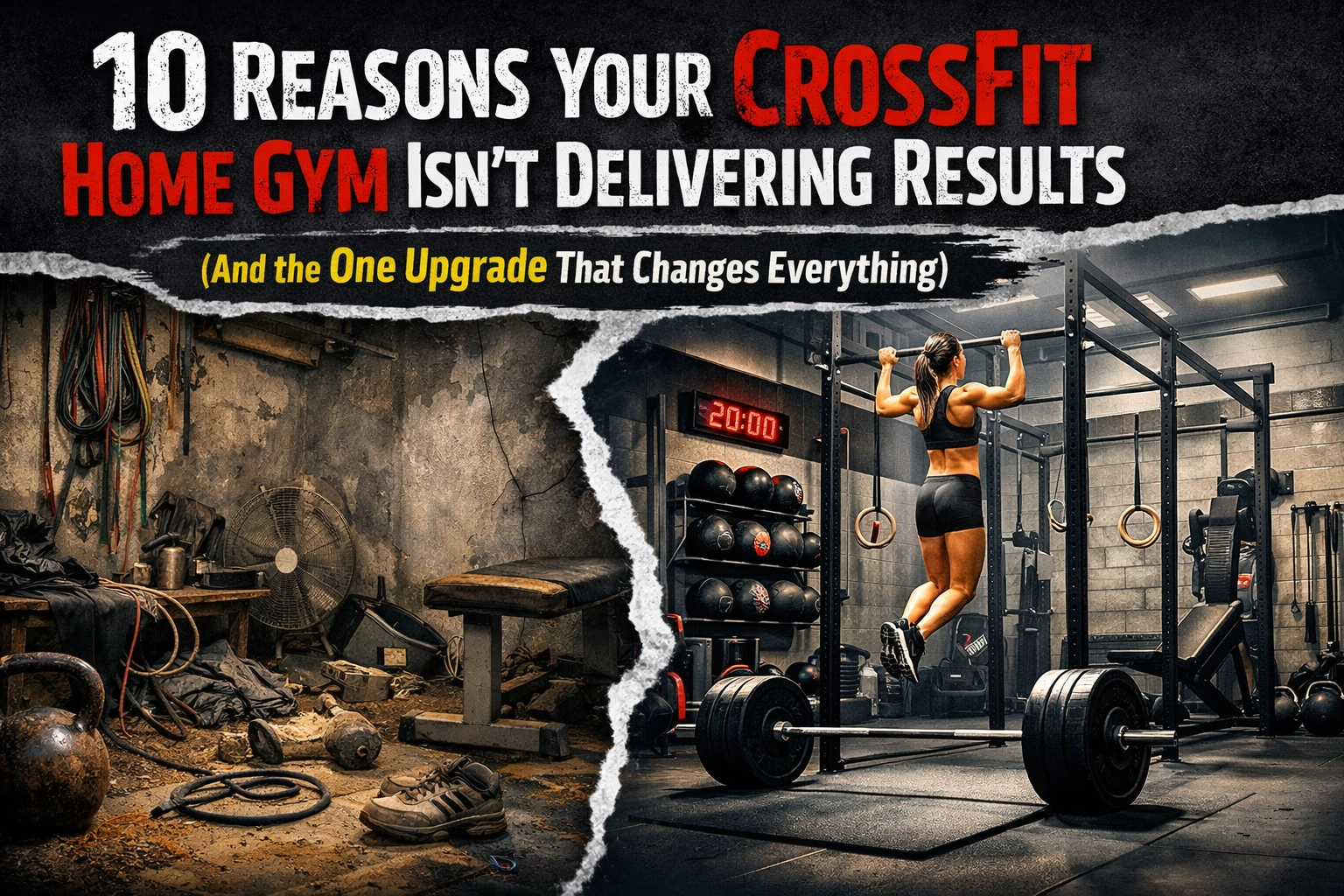
You dropped serious cash on your CrossFit home gym. Barbell? Check. Plyo box? Check. Kettlebells collecting dust in the corner? Double check.
Yet six months in, you're still not hitting the PRs you imagined. Your muscle-ups are still a pipe dream. And that body composition goal you had? It's laughing at you from across the room while you do your third half-hearted AMRAP of the week.
Here's the uncomfortable truth: Your home gym isn't the problem. How you're using it is.
Most CrossFit athletes build their home setups backwards. They buy what looks cool on Instagram, chase equipment instead of fundamentals, and wonder why their garage gym delivers garage-tier results.
Let's fix that. Here are the 10 brutal reasons your CrossFit home gym is failing you: and the single piece of equipment that flips the script entirely.
1. You Built Your Gym Without a Training Foundation
Walk into any legitimate CrossFit box and you'll find programming on a whiteboard. Walk into most home gyms and you'll find chaos dressed up as "intuitive training."
The mistake: You bought equipment first, methodology second.
You grabbed a pull-up bar because you want to do pull-ups. You snagged rings because they look hardcore. But without a structured training philosophy: progressive overload, periodization, skill development cycles: you're just flailing with fancy toys.
Elite gymnasts don't randomly swing on apparatus. MMA fighters don't shadowbox without a game plan. And you can't build a legitimate CrossFit home gym around vibes and motivation quotes.
The fix: Start with movement patterns, not equipment. Your gym should facilitate a training system, not replace one.
2. Your Equipment Can't Grow With You
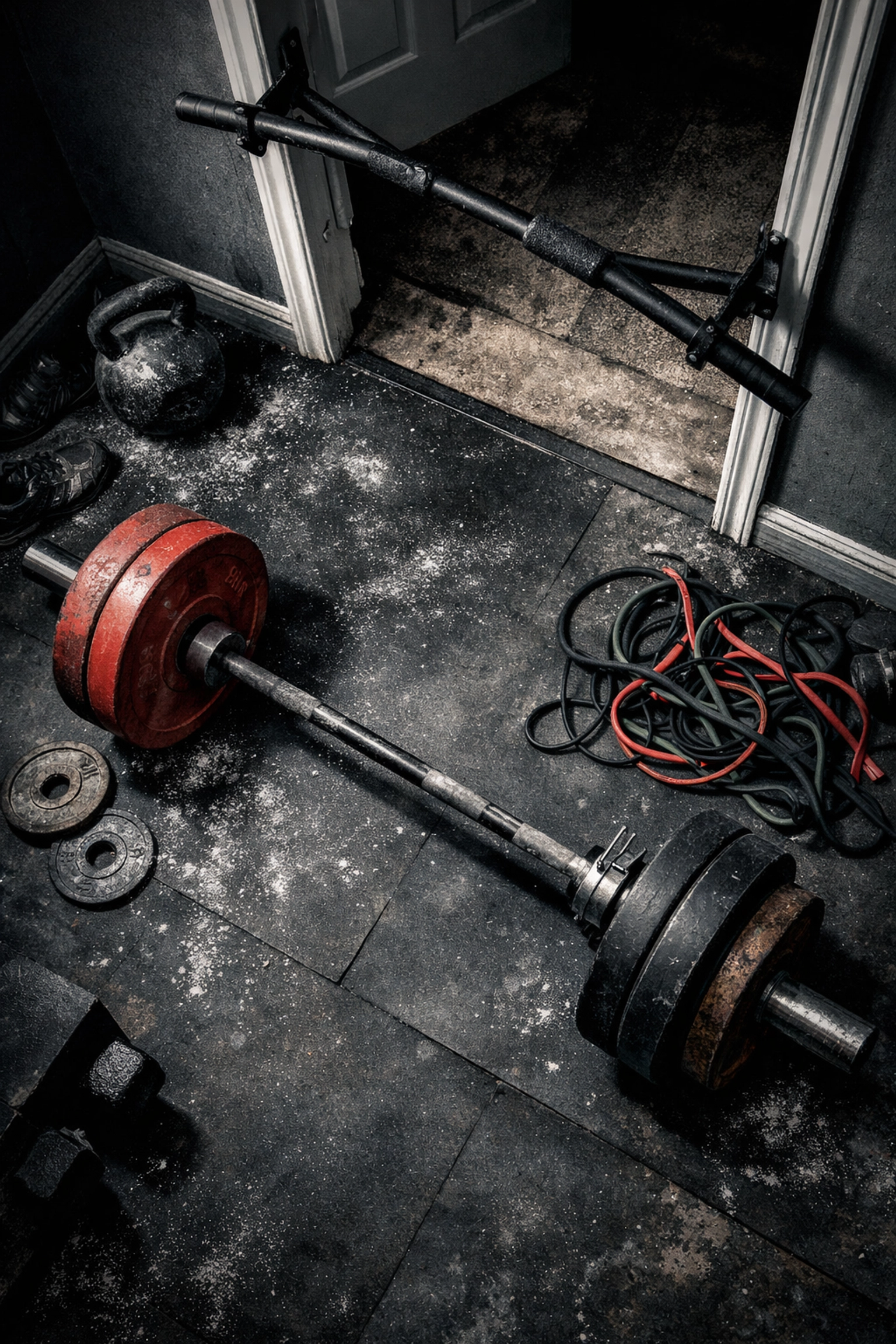
That doorframe pull-up bar worked great when you were doing assisted negatives. Now that you're cranking out strict pull-ups, it's maxed out. Where do you add weight? How do you progress to muscle-ups? What about explosive movements?
The mistake: You bought equipment with an expiration date built in.
Most home gym gear is designed for beginners or casual fitness enthusiasts. It gets you started, then becomes a ceiling. A static pull-up bar is a perfect example: once you master bodyweight pull-ups, you're stuck. You can't easily add accommodating resistance, can't transition to ring work at variable heights, and definitely can't practice the dynamic movements that separate advanced athletes from weekend warriors.
The reality: Serious CrossFit athletes need versatile home gym equipment that scales with their strength. Equipment that offers regression options for skills you're building AND progression paths for movements you've mastered.
3. You're Training With Garbage Form (And You Don't Even Know It)
In a box, coaches correct your butterfly pull-ups before you develop a shoulder impingement. At home? You've been doing kipping pull-ups with the technique of a dying fish for eight weeks straight.
The mistake: No feedback loop, no progress.
Poor form doesn't just limit gains: it builds faulty movement patterns that become harder to break the longer they persist. That rounded-back deadlift? Those internally rotated shoulders during push-ups? Every rep you grind out with bad positioning is a rep that trains your nervous system to move incorrectly.
The fix: Film yourself. Religiously. Compare your movements to elite athletes. Better yet, choose equipment and exercise variations that naturally encourage proper positioning. Floor to ceiling gym setups, for instance, allow you to train pull movements at multiple angles, helping you identify and correct form issues across different ranges of motion.
4. You Went Beast Mode Before Building the Engine
There's a special kind of CrossFit athlete who thinks every workout should end with them collapsed on the floor, gasping for air, questioning their life choices.
The mistake: Confusing intensity with effectiveness.
Going hard isn't the same as training smart. When you jump straight to Rx weights and benchmark WODs without building work capacity, you're not accelerating progress: you're courting injury and burnout. Your central nervous system can't recover. Your technique deteriorates under fatigue. And your results plateau faster than your ego can admit it.
Elite CrossFit athletes periodize intensity. They have volume phases, strength phases, and skill development cycles. They understand that some training days should feel easy: because that's how you build the aerobic base and movement quality that make the hard days actually productive.
5. Your Warm-Up Is a Joke
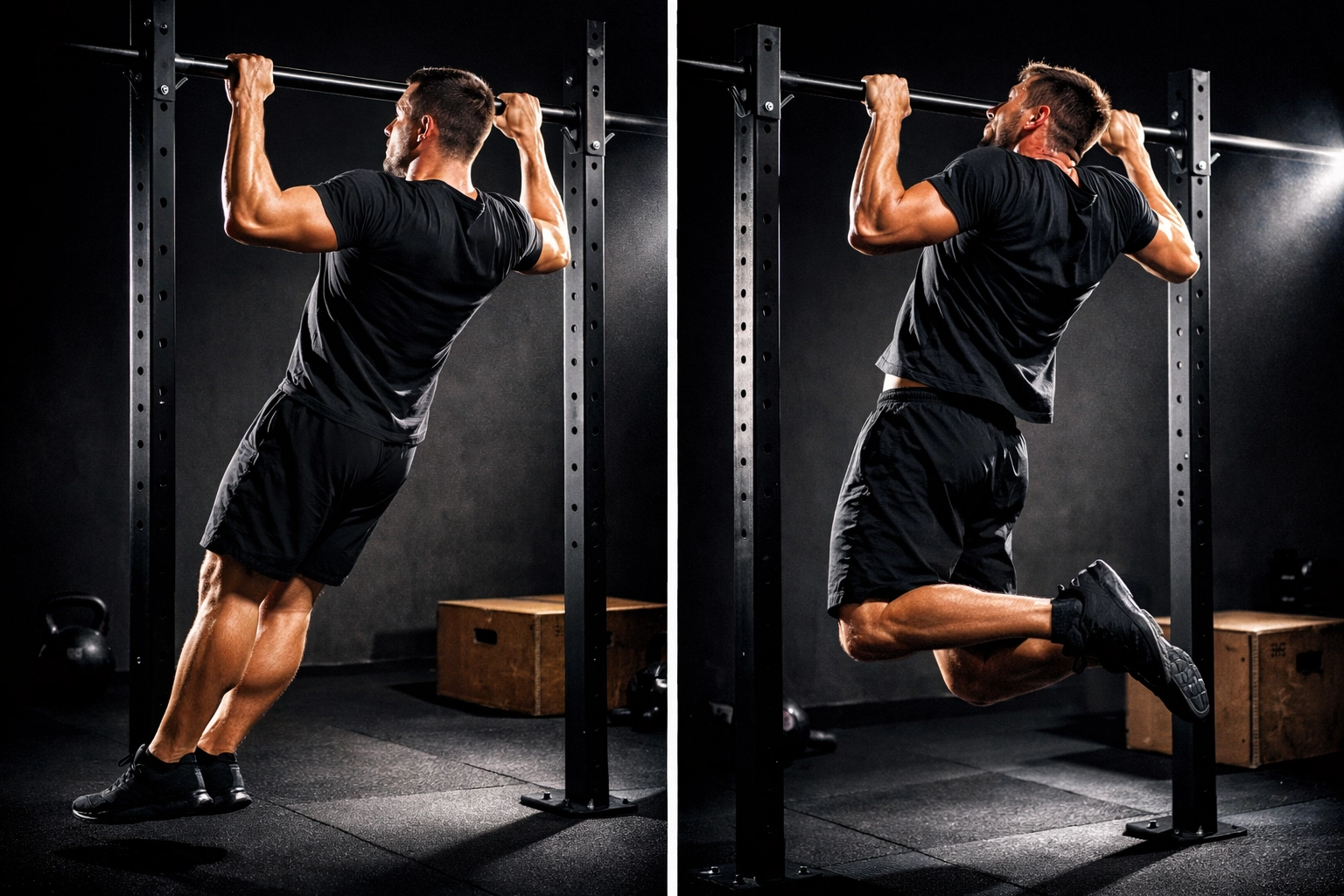
"Warm-up" shouldn't mean scrolling through Instagram while you do three arm circles and call it good.
The mistake: Treating warm-up like an inconvenient formality.
Your body isn't a light switch. It's a complex system that needs gradual activation: increased blood flow, neural pathway priming, joint mobility preparation, and movement pattern rehearsal. Skip that, and you're training on a cold engine. Your force production suffers. Your injury risk skyrockets. And your progress slows to a crawl.
The fix: Dedicate 10-15 minutes to intentional warm-up. Dynamic stretching, movement prep specific to your workout, and ramping sets that bridge the gap between cold tissue and working sets. For bodyweight training at home, this might mean practicing hollow body holds, scapular pull-ups, and progressive hang variations before attacking your strength work.
6. Your Space Is Sabotaging Your Training
You can't do a proper overhead squat in a 7-foot basement. You can't practice handstand push-ups in a cluttered garage where you're terrified of kicking over your toolbox.
The mistake: Inadequate training space that limits movement quality.
Lack of floor space doesn't just restrict what you can do: it affects how you do it. When you're cramped, you compensate. Your squat stance narrows. Your Olympic lift catch position gets compromised. Your gymnastic movements become tentative instead of explosive.
CrossFit demands space for ballistic movements, full range-of-motion lifts, and dynamic transitions. If your home gym setup doesn't provide that, you're not training CrossFit: you're doing a watered-down approximation.
The reality: Sometimes the smartest equipment choice isn't what takes up the most space: it's what maximizes training options within the space you have. A no wall damage workout system that mounts floor-to-ceiling, for example, can transform a 6x6 footprint into a complete pull, press, and core training station.
7. You're Treating Fitness Like a Hobby Instead of a Commitment
Hobbies are for Sunday afternoons when you feel motivated. Results require showing up when you don't.
The mistake: Inconsistent training frequency disguised as "listening to your body."
Look, rest days matter. Recovery is real. But if you're only hitting your home gym when the mood strikes, when your playlist is fire, when Mercury isn't in retrograde: you're not building fitness. You're dabbling.
Elite athletes train whether they feel like it or not. They have scheduled sessions. They track volume and intensity. They treat training like the non-negotiable commitment it is.
The fix: Program your week. Even if it's just three days, make them sacred. No negotiation, no excuses. Your home gym equipment isn't magic: consistency is.
8. You Don't Have the Tools to Track Progress
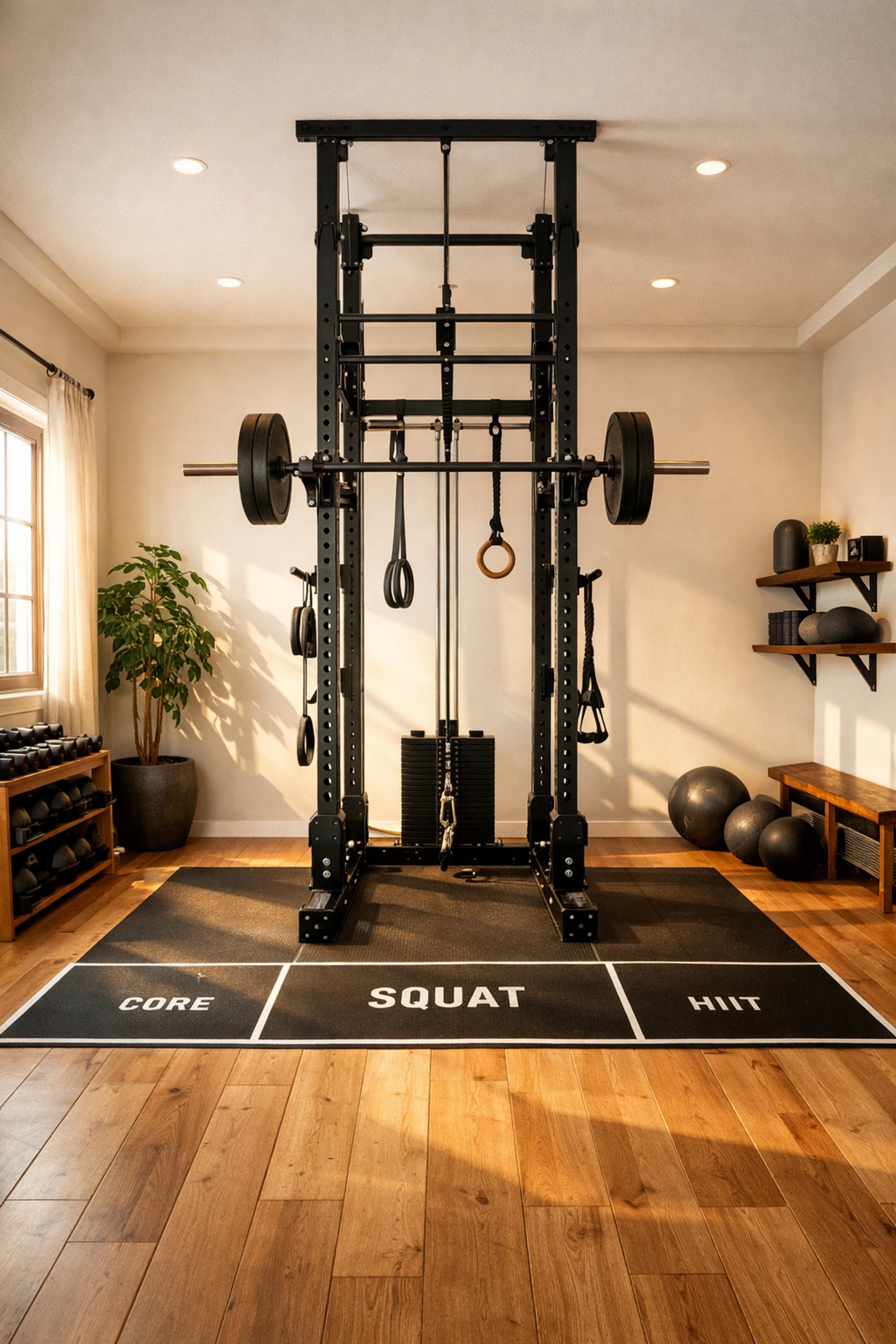
"I think I'm getting stronger" isn't a training metric. It's a guess.
The mistake: Flying blind without data, accountability, or objective feedback.
In a CrossFit box, there's a timer on the wall. There's a whiteboard with your name and your score. There's built-in accountability. At home? It's just you, your inner dialogue, and the very human tendency to overestimate effort and undercount rest periods.
Without tracking, you can't identify weak points. You can't ensure progressive overload. And you definitely can't tell if that new program you're running is actually working or just making you tired.
The fix: Get a gym timer. Log your workouts. Track your volumes, intensities, and rest intervals. Treat your training like the serious athletic pursuit it is.
9. You're Missing the Most Important Training Variable
It's not your programming. It's not your nutrition. It's not even your recovery protocol.
The mistake: Lack of exercise variation and movement complexity.
CrossFit's effectiveness comes from constantly varied functional movements performed at high intensity. The "constantly varied" part isn't optional: it's the engine of adaptation. When your home gym limits you to the same three pull-up variations, the same barbell complexes, the same box jumps... your body adapts, then plateaus.
Calisthenics practitioners understand this instinctively. They're always chasing new skills, new movement patterns, new ways to challenge their bodies through space. Gymnasts rotate through rings, bars, floor work, and vault. They never let their nervous system get comfortable.
The reality: A truly versatile home gym shouldn't limit movement options: it should expand them. The ability to train pull-ups, muscle-ups, rope climbs, leg raises, levers, and isometric holds from a single piece of equipment? That's not luxury. For serious athletes, that's baseline.
10. You're Following Instagram Trends Instead of Training Principles
Some influencer with a six-pack posted their "killer home WOD" and now you're doing deficit handstand push-ups even though you can't hold a wall handstand for ten seconds.
The mistake: Chasing advanced variations before mastering fundamentals.
There's a progression ladder for a reason. You don't teach someone to snatch before they can front squat. You don't program ring muscle-ups for someone who can't do ten strict pull-ups. And you don't build a capable CrossFit athlete by copying workouts designed for people ten levels above you.
The fix: Respect the progression. Master the basics. Build strength in fundamental patterns before adding complexity. Your ego will recover. Your joints will thank you.
The One Upgrade That Changes Everything
Here's where most articles would try to sell you a complete gym overhaul. New barbell. New plates. New everything.
We're not going to do that.
Because the real game-changer isn't more equipment: it's smarter equipment. The kind that addresses multiple failure points simultaneously.
Enter the concept of resistance training systems that scale with you.
Bold Body Fitness designed the Resistance Rail specifically to solve the versatility problem that plagues most CrossFit home gyms. It's a floor-to-ceiling system that doesn't require wall mounting (perfect for renters and anyone who values their walls), adjusts to multiple heights instantly, and supports everything from beginner progressions to advanced gymnastic strength work.
Think about it:
- Pull-up bar alternative? Check. Multiple grip positions at variable heights.
- Muscle-up station? Absolutely. Adjust the height as you build the skill.
- Ring work? Rings mount directly to the rail at any height you need.
- Leg raises, L-sits, and core work? Dial in the perfect height for proper form.
- No wall damage? Pressure-mounted system. Zero drilling, zero permanent installation.
It's one piece of equipment that replaces six: while actually improving your training options compared to having those six pieces separately.
The Bottom Line
Your CrossFit home gym isn't failing because you bought the wrong barbell or because you need more square footage.
It's failing because you built it around equipment instead of training principles. You prioritized what looked cool over what drives results. And you treated your setup like a collection of individual tools instead of an integrated training system.
Fix the fundamentals:
- Build a structured training program before buying more gear
- Choose versatile equipment that grows with your abilities
- Train with intention, not just intensity
- Track your progress objectively
- Respect progression and master basics first
And when you're ready to upgrade, choose equipment that solves multiple problems simultaneously. Equipment that works for today's skill level and next year's goals. Equipment designed for athletes who are serious about results, not just aesthetics.
Your garage gym can deliver elite-level results. But only if you stop training like a hobbyist and start training like the athlete you're capable of becoming.
Check out the full range of equipment at Bold Body Fitness designed specifically for serious athletes who refuse to compromise on their training. Because your home gym should be your competitive advantage( not your limiting factor.)
