
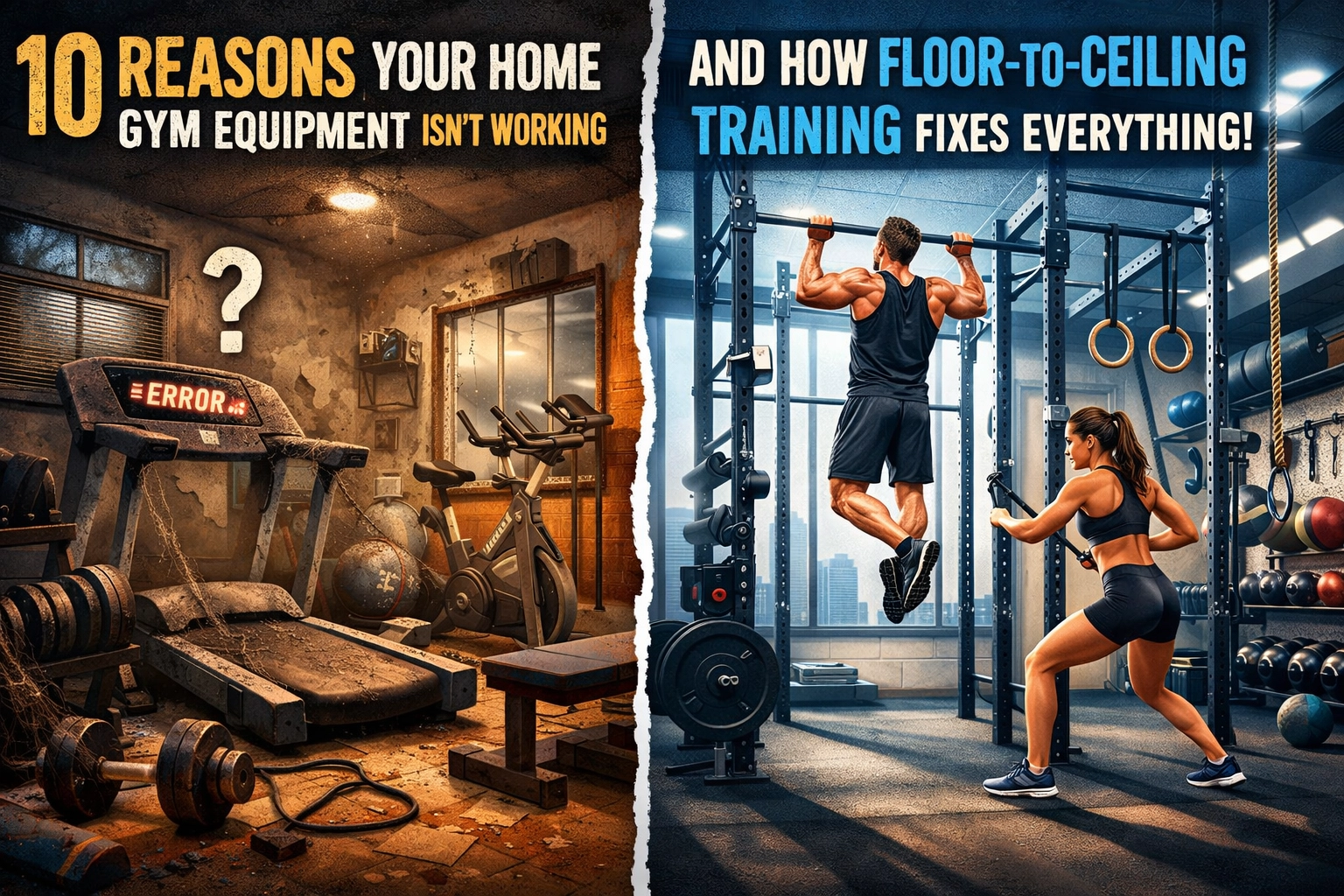
Let's cut through the noise: Your home gym probably sucks.
Not because you didn't spend enough money. Not because you lack motivation. But because most home gym equipment is fundamentally flawed from day one. You bought the Instagram-famous resistance bands, the adjustable dumbbells, the fancy doorframe pull-up bar. And now they're collecting dust while you scroll through workout videos wondering why you can't stay consistent.
The truth? Traditional home gym setups are designed for casual exercisers, not athletes who actually want to get stronger, faster, and more capable. If you're a ninja warrior tackling obstacles, a CrossFit athlete chasing PRs, a gymnast perfecting skills, an MMA fighter building functional strength, or a calisthenics practitioner mastering movement: you need something better.
Enter floor-to-ceiling training: a game-changing approach that transforms how you train at home. Here are the 10 brutal truths about why your current setup is failing you, and how vertical training systems fix every single one.
1. Your Equipment Destroys Your Walls (And Your Security Deposit)
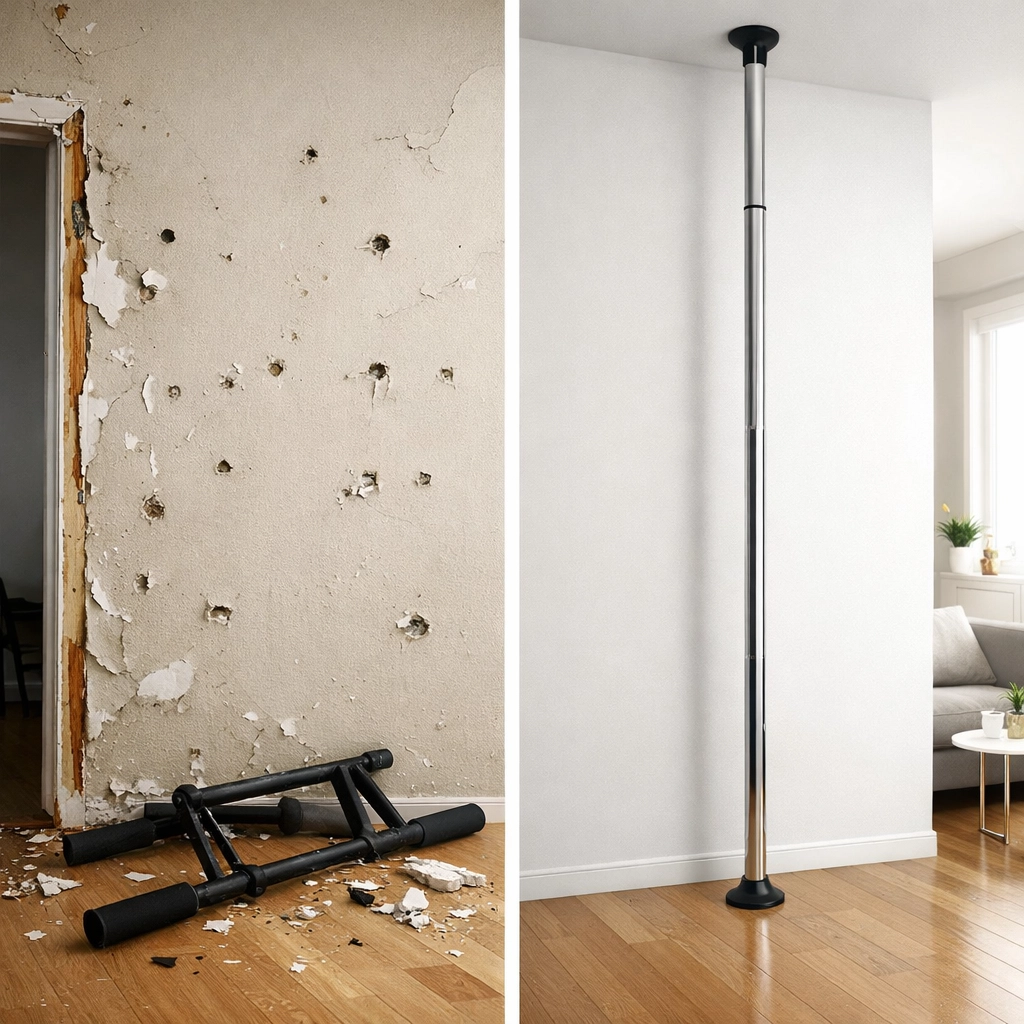
Traditional pull-up bars and suspension trainers require drilling massive holes into doorframes, studs, or walls. That's fine if you own your place and don't mind permanent damage. But for renters? You're risking your entire security deposit on a few workouts.
Door-mounted pull-up bars seem like the solution until they gouge paint, crack doorframes, or: worse: come crashing down mid-set. Those "damage-free" adhesive hooks? They're leaving residue and peeling paint whether the package admits it or not.
The floor-to-ceiling solution: A no wall damage workout system uses tension between floor and ceiling to create rock-solid anchor points. No drilling. No screws. No holes. Just pressure-mounted security that holds hundreds of pounds while keeping your walls pristine. When you move, it breaks down in minutes and goes with you.
2. Limited Exercise Variety Kills Your Progress
Check your current home gym setup. How many unique movement patterns can you actually perform? Most traditional equipment locks you into 5-10 exercises maximum. Dumbbells give you presses and curls. Resistance bands offer lateral raises and rows if you're creative. That doorframe pull-up bar? Literally just pull-ups.
Athletes need variety for adaptation. Your nervous system craves new stimuli. Your muscles require different angles, grips, and loading patterns. Stagnation isn't laziness: it's inadequate equipment.
The floor-to-ceiling solution: A properly designed floor to ceiling gym transforms your vertical space into infinite training options. Attach rings for gymnastic progressions. Add a TRX for suspension training. Mount resistance bands at any height for cable machine simulation. Practice muscle-ups, skin-the-cats, front levers, and movements impossible with traditional setups. One system, hundreds of exercises.
3. It Takes Up Your Entire Living Space
That home gym you built? It's eaten your spare bedroom, your garage, or half your living room. The squat rack in the corner. The bench press blocking the closet. The dumbbells creating a minefield on the floor. You wanted versatile home gym equipment but got a permanent obstacle course instead.
Most people don't have 200 square feet to dedicate to fitness. When your equipment requires floor space to function, you're forced to choose between working out and living comfortably. Eventually, living comfortably wins.
The floor-to-ceiling solution: Vertical training uses height, not width. Your system mounts in minutes anywhere you have 7-8 feet of ceiling clearance and 2 feet of floor space. Train in doorways, corners, or narrow hallways. When you're done, everything detaches and stores in a closet. Reclaim your space while maintaining full training capacity.
4. Your "Progressive Overload" Maxes Out in Weeks
Progressive overload: the foundation of strength building: requires continually increasing resistance. Your adjustable dumbbells go to 50 pounds. Great for month one. But serious resistance training demands more weight, more resistance, more challenge as you adapt.
Traditional home equipment hits hard limits. You can't add plates to resistance bands. Bodyweight exercises require complex progressions most people execute incorrectly. That $600 you spent on dumbbells? Obsolete once you can press them for 20 reps.
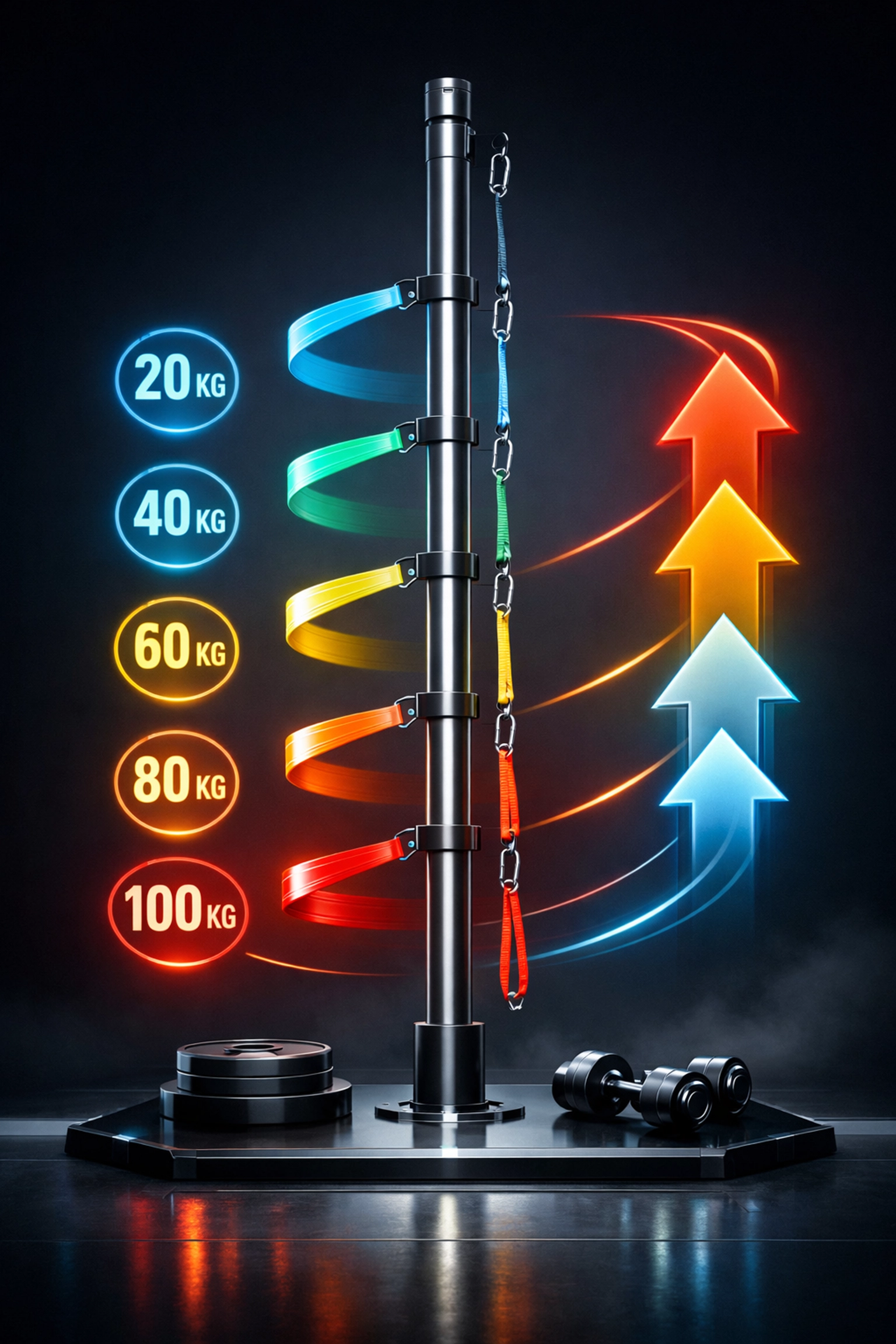
The floor-to-ceiling solution: Floor-to-ceiling systems scale infinitely with your strength. Add heavier resistance bands. Increase leverage disadvantage on movements. Chain multiple attachment points for compound resistance. Practice advanced calisthenics progressions with adjustable assistance. The system grows with you from beginner to elite without buying new equipment.

5. Installation Requires Engineering Expertise
Mounting a pull-up bar to wall studs shouldn't require a structural engineering degree, but here we are. Find the studs. Measure correctly. Drill pilot holes. Use the right anchors. Torque bolts to specification. One mistake and your "secure" installation becomes a hospital visit mid-pull-up.
Most people skip professional installation to save money, then compromise safety or give up entirely when faced with complex mounting requirements. Your fitness goals shouldn't require power tools and carpentry skills.
The floor-to-ceiling solution: Installation takes 60 seconds with zero tools. Extend the pole to your ceiling height. Twist to create tension. Done. A 12-year-old could do it. The pressure-based system distributes load safely across floor and ceiling without permanent mounting. Move it between rooms in under two minutes when you need flexibility.
6. It's Optimized for Beginners, Not Athletes
Here's what the fitness industry won't tell you: Most home gym equipment is designed for people who'll quit in 3 months. The manufacturers know this. They optimize for initial purchase appeal, not long-term athletic development.
That's why resistance bands max out at laughably light tensions. Why doorframe pull-up bars only support 300 pounds. Why suspension trainers use flimsy anchors that can't handle dynamic movements. If you're actually serious about training: if you're a CrossFit athlete working toward muscle-ups or an MMA fighter building explosive power: standard equipment betrays you fast.
The floor-to-ceiling solution: Systems built for serious athletes support 500+ pound capacities. They're tested by gymnasts, ninja warriors, and calisthenics practitioners who demand equipment that won't fail during advanced movements. When your training involves weighted pull-ups, ring muscle-ups, or dynamic kipping movements, you need professional-grade capacity in your home setup.
7. You Can't Train the Movements That Actually Matter
Functional fitness isn't about bicep curls. Elite athletes train movement patterns: pulling variations at multiple angles, rotational power, anti-rotation stability, explosive plyometrics, locomotion skills. Your dumbbells and bands can't replicate these patterns effectively.
Want to practice the obstacles you'll face in a ninja warrior competition? Need to drill the pull-up variations that translate to climbing? Training for the gymnastic skills that dominate CrossFit workouts? Traditional home equipment leaves you doing watered-down substitutions that don't transfer to real performance.
The floor-to-ceiling solution: A calisthenics equipment for home setup using vertical mounting enables authentic movement training. Practice actual rope climbs, not rowing machines. Train ring dips and muscle-ups, not push-up variations. Develop hanging grip strength for obstacle courses, not farmer's carries. The movements you train are the movements you'll use.
8. Your "Pull-Up Bar Alternative" Isn't Actually Alternative
The fitness market is flooded with "pull-up bar alternatives" that promise the same benefits without the hassle. Resistance band pull-down systems. Suspension trainers with door anchors. Bodyweight row progressions.
These aren't alternatives: they're compromises. The biomechanics differ fundamentally. The stability requirements change. The strength carryover diminishes. You're not training pull-ups; you're training something that vaguely resembles pull-ups while missing the key elements that build actual pulling strength.
The floor-to-ceiling solution: Real pull-up bars mounted to vertical systems give you authentic pull-up training without wall damage. Multiple grip positions. Adjustable heights for progressions. Rock-solid stability for kipping, butterfly, and weighted variations. It's not an alternative: it's the real thing, just smarter installation.
9. Maintenance Is a Nightmare You Didn't Sign Up For
Remember that internet research about gym equipment problems? Treadmill belts that slip. Resistance mechanisms that fail. Squeaky pulleys. Display consoles that malfunction. Weight stacks that jam. Traditional home gym equipment requires constant maintenance you're not equipped to handle.
You're an athlete, not a mechanic. But your expensive equipment needs regular lubrication, tension adjustments, bolt tightening, and component replacement. Skip maintenance and performance degrades. Stay on top of it and you're spending hours on upkeep instead of training.
The floor-to-ceiling solution: Minimal moving parts mean minimal maintenance. The core system is a tension-mounted pole: no motors, no cables, no electronics. Attachments like rings and bands are simple, durable, and easily replaceable. Spend your time training, not troubleshooting mechanical failures.
10. It Doesn't Support Full-Body Integrated Training
The biggest lie in home fitness? That you can build a complete training program with isolated equipment pieces. A set of dumbbells for upper body. A resistance band for lower body assistance. A pull-up bar for back. A yoga mat for core.
Elite athletes don't train in isolation. They perform integrated, full body workout at home sessions that combine pulling, pushing, core stability, and dynamic movement in seamless flows. Your disconnected equipment collection can't support this training style without constant setup changes that kill workout momentum.
The floor-to-ceiling solution: One central system supports infinite exercise combinations without reconfiguration. Transition from pull-ups to dips to leg raises to ring rows without stopping. Circuit through movements that challenge total body coordination. The vertical structure becomes your training hub where everything connects seamlessly.

The Floor-to-Ceiling Revolution: How Bold Body Fitness Changes Everything
If you're serious about bodyweight training at home: actually serious, not Instagram-caption serious: you need equipment that matches your commitment. Bold Body Fitness built the Resistance Rail specifically for athletes who refuse to compromise.
The Resistance Rail is a floor-to-ceiling training system that solves every problem we've covered. No wall damage for renters. Infinite exercise variety through modular attachments. Takes up zero floor space when not in use. Installs in 60 seconds without tools. Supports 500+ pounds for advanced athletes. Enables authentic pull-ups, muscle-ups, and gymnastic movements. Requires virtually zero maintenance. Creates a unified training hub for total-body integration.
Whether you're building a CrossFit home gym to supplement box workouts, setting up calisthenics equipment for home practice, or creating a training space that won't destroy your apartment: the floor-to-ceiling approach outperforms traditional setups in every measurable way.
Transform Your Training Space Today
Your current home gym isn't working because it was never designed to work for serious athletes. It's designed to sell quickly, break down slowly, and get replaced repeatedly. That model profits manufacturers while leaving you frustrated.
Floor-to-ceiling training represents a fundamental shift in how we approach home fitness. It prioritizes functionality over marketing, longevity over profit margins, and athletic performance over casual convenience.
Ready to stop compromising? Check out the complete Resistance Rail system and see why gymnasts, ninja warriors, CrossFit athletes, and calisthenics practitioners are ditching traditional equipment for vertical training solutions. Your walls, your wallet, and your workout will thank you.
Visit the Bold Body Fitness shop to explore how floor-to-ceiling training can transform your home into a legitimate athletic development facility: no contractor required.
Your home gym equipment isn't working. Now you know why, and you know exactly how to fix it.
