
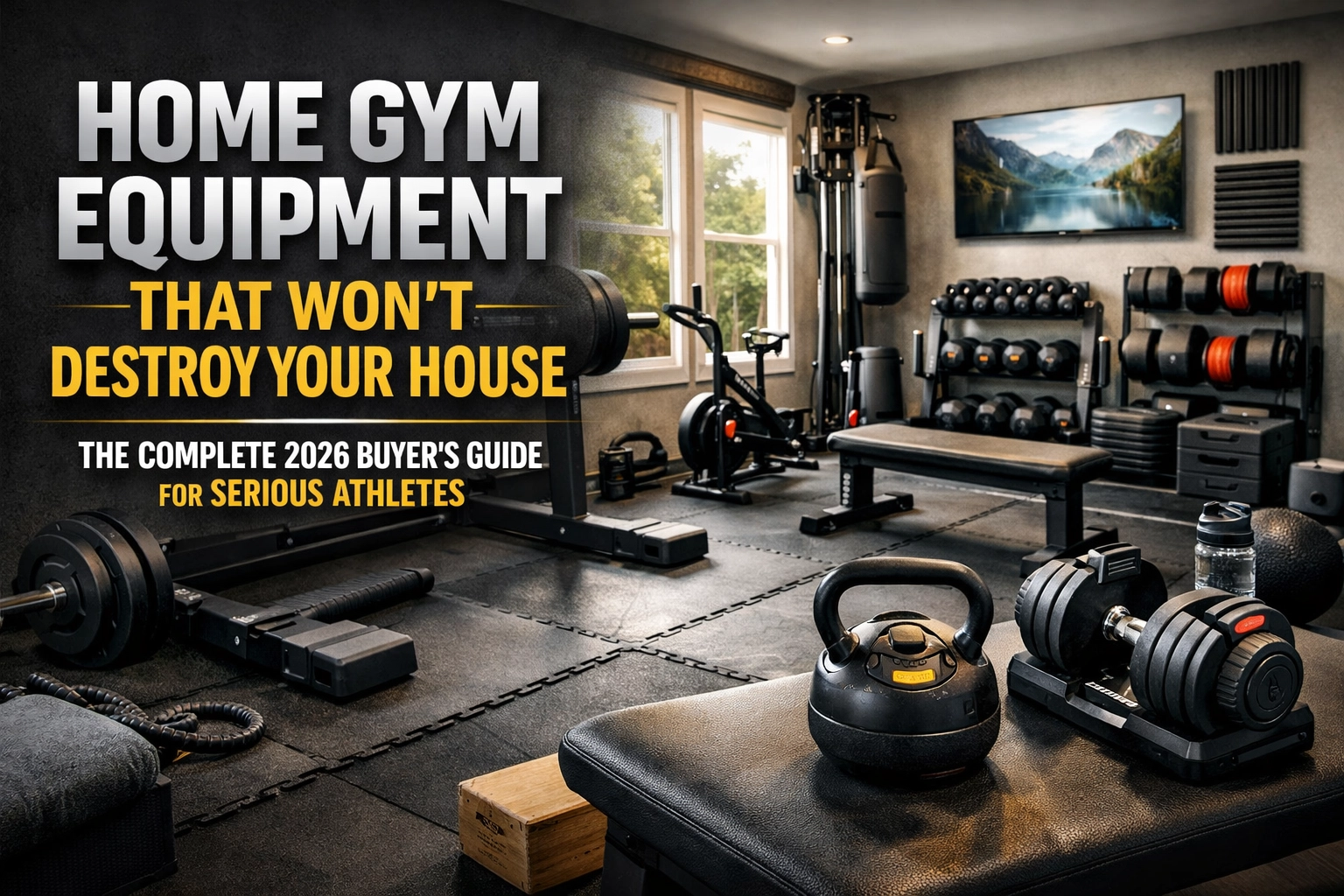
Look, we need to talk about the elephant in the room, or more accurately, the massive deadlift platform that's currently cracking your foundation.
If you're serious about training at home, you've probably already faced this brutal reality: most home gym equipment is designed for commercial facilities with reinforced concrete floors and neighbors who are three walls away. But here you are, trying to get your reps in without turning your ceiling into your downstairs neighbor's new skylight.
The good news? 2026 has brought us some seriously impressive solutions for athletes who refuse to compromise on training intensity but also don't want to pay for structural repairs. Let's break down what actually works.
The Real Cost of Traditional Home Gyms (Hint: It's Not Just Money)
Before we dive into solutions, let's be honest about what happens when you go the conventional route.
That Olympic barbell set you're eyeing? Yeah, it sounds amazing until you drop 315 pounds after a failed PR attempt and watch the shock wave ripple through your entire house. Traditional iron plates create impact forces that residential floors weren't designed to handle. We're talking about stress cracks in drywall, complaints from neighbors, and the constant paranoia that comes with every heavy lift.
Squat racks bolted into drywall? That's a disaster waiting to happen during your first muscle-up attempt. Wall-mounted pull-up bars that rely on finding studs? Great, until they're not, and you're explaining to your landlord why there's a body-sized hole in the wall.
The reality is that serious athletes need serious equipment, but your house isn't a CrossFit box. It needs a different approach entirely.
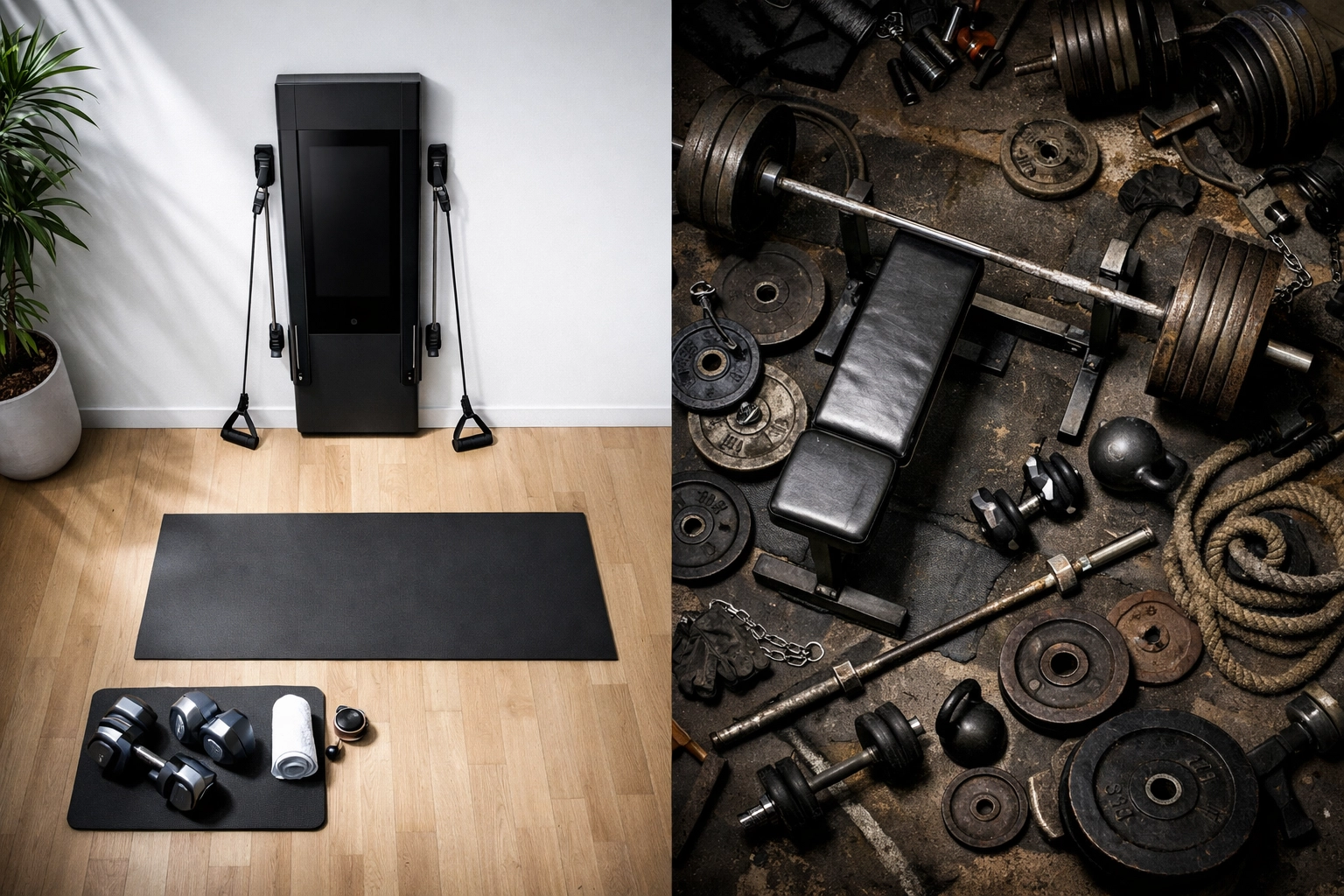
The Non-Negotiables for House-Friendly Home Gym Equipment
After working with everyone from ninja warriors to MMA fighters setting up home training spaces, here's what actually matters:
Weight distribution is king. Equipment that spreads force across larger surface areas prevents the concentrated stress that causes damage. This is why a 200-pound slam ball is worse for your floors than a 200-pound person doing burpees, the impact zone matters.
Vibration dampening separates amateur setups from pro solutions. Every rep shouldn't announce itself to the entire neighborhood. If your downstairs neighbors know your workout schedule by heart, your equipment is failing you.
Modular mounting systems beat permanent installations every time. The best no wall damage workout system options use tension-based mounting or door frame integration that doesn't require drilling holes you'll regret later.
Vertical space utilization is your secret weapon. Most home gyms waste the most valuable real estate, the space between your floor and ceiling. Smart athletes think three-dimensional.
Floor-to-Ceiling Systems: The Game-Changer for Serious Athletes
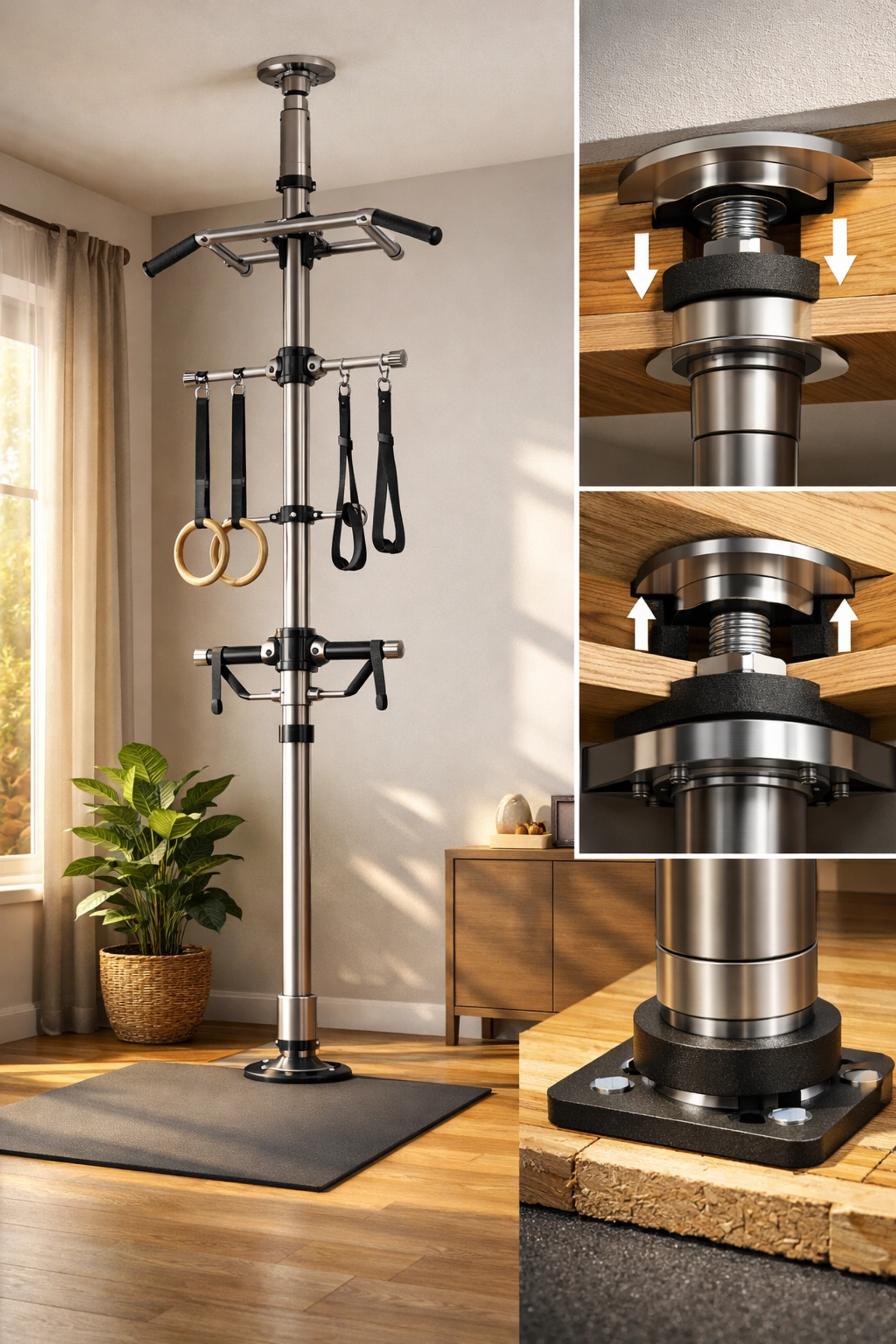
Here's where things get interesting. Floor to ceiling gym setups revolutionize home training because they use physics instead of fighting it.
Instead of drilling into walls or relying on questionable anchoring points, these systems create stable training environments through vertical compression. Think of it like a high-end closet organizer, except instead of holding clothes, it's supporting your bodyweight through pull-ups, muscle-ups, and advanced calisthenics movements.
The Resistance Rail from Bold Body Fitness exemplifies this approach. It installs between floor and ceiling using adjustable pressure, no holes, no permanent damage, no angry landlords. For calisthenics equipment for home setups, this is about as close to perfect as you'll find.
What makes this approach brilliant for serious training? You're not limited by wall stud placement or weight capacity concerns. The entire system distributes force vertically, which is exactly how buildings are engineered to handle loads. Your ceiling joists are designed for this kind of stress. Your drywall definitely isn't.
The Pull-Up Bar Alternative You Actually Need
Let's address the pull-up bar situation because it's where most home gym dreams go to die.
Standard door frame pull-up bars? They're fine if you weigh 150 pounds and never do kipping movements. But for CrossFit athletes, gymnasts, or anyone training explosive movements, they're a lawsuit waiting to happen. The pressure points on door frames create stress concentrations that damage trim work and eventually compromise the frame itself.
Wall-mounted bars seem like the solution until you realize you're putting 200+ pounds of dynamic force onto four lag screws. Unless you hit studs perfectly (and most walls aren't conveniently configured for optimal grip width), you're playing Russian roulette with your security deposit.
The pull-up bar alternative that serious athletes need combines stability with adaptability. Floor-to-ceiling systems eliminate the guesswork because they're not depending on finding the perfect mounting point, they create their own structural integrity through compression.
This matters more than you might think. When you're doing muscle-ups, bar dips, or weighted pull-ups, the bar needs to be absolutely solid. Any flex or give in the system doesn't just feel sketchy, it actively limits your performance and increases injury risk.
Building Your Versatile Home Gym Without the Damage
Here's the framework that actually works for creating a versatile home gym in 2026:
Start with the foundation. And no, I don't mean literally pouring concrete (though if you own your place and want to, more power to you). I mean establishing your primary training structure. For most serious athletes, this is a floor-to-ceiling system that supports bodyweight training, resistance bands, and suspension training.
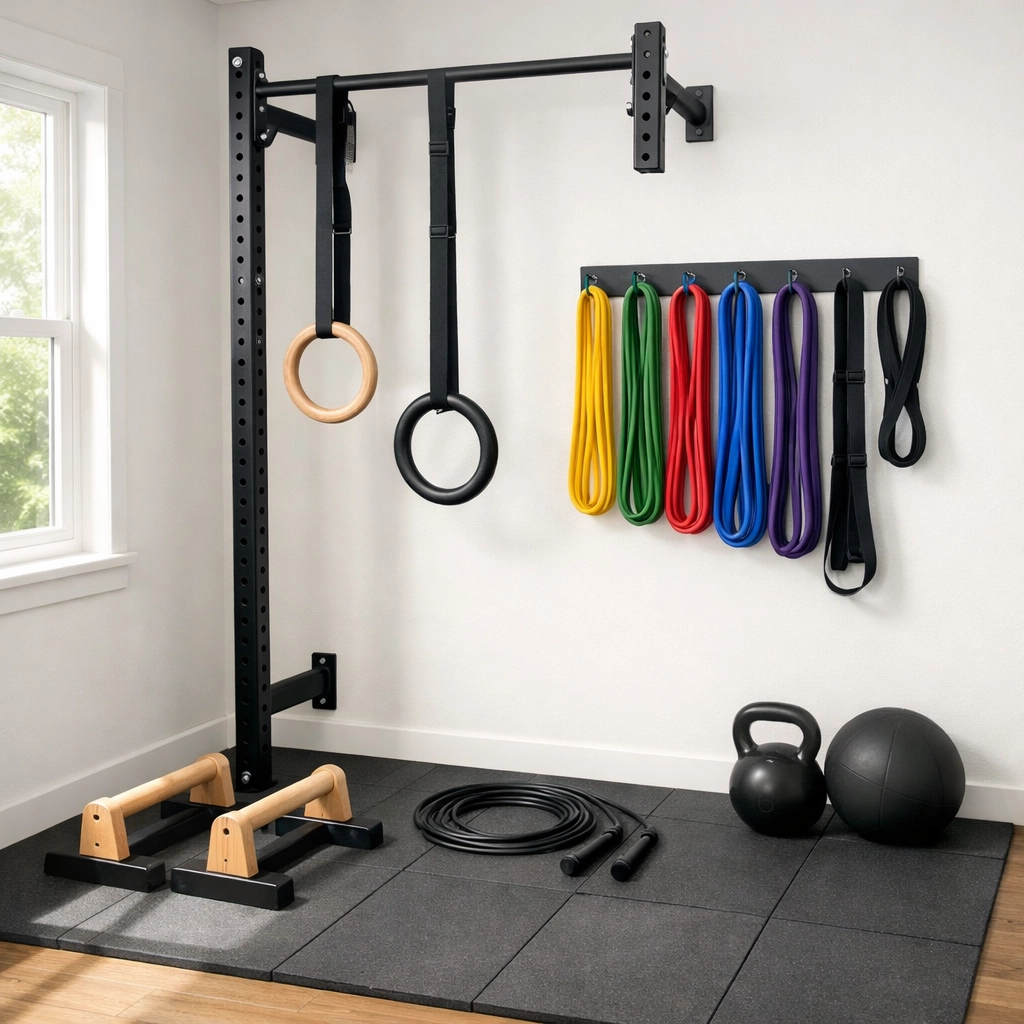
Layer in complementary equipment. Once you've got your vertical structure sorted, add equipment that enhances rather than duplicates. Gymnastic rings, resistance bands at various tensions, and perhaps a quality suspension trainer. Notice what's missing? Heavy plates and gear that creates impact stress.
Protect what you've got. Even with smart equipment choices, add rubber flooring or high-density foam tiles under your training area. This isn't about preventing damage from the equipment: it's about protecting your floors from you. Because let's face it, you're going to drop into burpees, and those create their own impact forces.

Full Body Workout at Home: Programming for Reality
Having the right equipment is only half the battle. The other half is programming full body workout at home sessions that make sense for your space and goals.
The beauty of modern bodyweight training at home combined with intelligent resistance systems is that you can hit every muscle group hard without needing a gym full of machines. But you need to think differently about exercise selection.
Instead of barbell squats, you're doing pistol squats and Bulgarian split squats with resistance bands. Your deadlift is replaced with Nordic curls and single-leg RDLs. Bench press? Try ring push-ups at various angles with band resistance.
This isn't about compromise: it's about adaptation. MMA fighters and calisthenics practitioners have known for years that bodyweight training with progressive resistance builds functional strength that actually transfers to performance. You're just applying that wisdom to a space-conscious environment.
The key is progressive overload through angles, leverage, and time under tension rather than adding more weight. A proper front lever progression will humble even experienced lifters, and it won't put a single crack in your ceiling.
The CrossFit Home Gym Reality Check
Let's talk about CrossFit home gym setups because this is where people get really ambitious and really broke (financially and structurally).
Can you replicate a full CrossFit box at home? No. Should you try? Also no. But can you maintain and even improve your CrossFit performance training at home? Absolutely.
The secret is focusing on the movements that translate rather than trying to duplicate every piece of equipment. You don't need a full rig if you've got a solid floor-to-ceiling system that handles pull-ups, muscle-ups, and gymnastics movements. You don't need a full set of bumper plates if you've got resistance bands that provide the same training stimulus without the impact.
EMOM workouts, AMRAP sessions, and skill development all work beautifully in a home environment. You're just substituting smart equipment choices for expensive, space-consuming, house-damaging alternatives.
Resistance Training Revolution: Bands vs. Barbells
Here's something that's going to ruffle some feathers: for most training goals, resistance training with quality bands provides identical or superior results compared to free weights: without any of the drawbacks.
Progressive resistance? Check. Variable tension throughout the movement? That's actually an advantage over fixed-weight implements. Ability to train explosive movements safely? Bands win every time.
The Bold Body Fitness shop offers resistance options specifically designed for serious athletes who understand that adaptation is about stimulus, not about how much iron you're slinging around.
This doesn't mean abandoning all weight training. But it does mean being strategic. If you've got a barbell, great: use it for the movements where it provides unique benefits. But don't feel obligated to build your entire program around equipment that's actively working against your housing situation.
The Ultimate House-Friendly Setup for Serious Athletes
If you're ready to build something that actually works, here's the blueprint:
Primary structure: Floor-to-ceiling training system (Resistance Rail or equivalent) that handles pull-ups, muscle-ups, suspension training, and resistance band anchoring.
Resistance options: Complete set of resistance bands from light to heavy, allowing progressive overload across all movement patterns.
Gymnastics equipment: High-quality rings and parallettes for advanced bodyweight progressions.
Floor protection: Rubber tiles or high-density foam mats in your training zone.
Accessories: Jump rope, ab wheel, foam roller, and mobility tools.
Total footprint? Maybe 8x8 feet. Total damage to your house? Zero. Total training potential? Unlimited.

Making It Happen Without Making a Mess
Look, the goal isn't to build a gym that looks like everyone else's. The goal is to build a training space that serves your needs without creating problems you don't need.
You're a serious athlete. You know that adaptation is about consistent, progressive training: not about having every piece of equipment imaginable. The athletes crushing it in 2026 understand that constraints breed creativity, and a well-designed home gym with smart equipment choices outperforms a poorly planned commercial setup every time.
The equipment exists. The programming works. The only question is whether you're ready to train smarter instead of just harder.
Your house will thank you. Your training won't suffer. And you'll sleep better knowing that your ceiling fan isn't one failed muscle-up away from becoming a floor fan.
Ready to build your house-friendly training space? Check out the complete range of solutions at Bold Body Fitness and start training without the stress: literal and structural.
Your PR awaits. Your security deposit is safe. Get after it.
