
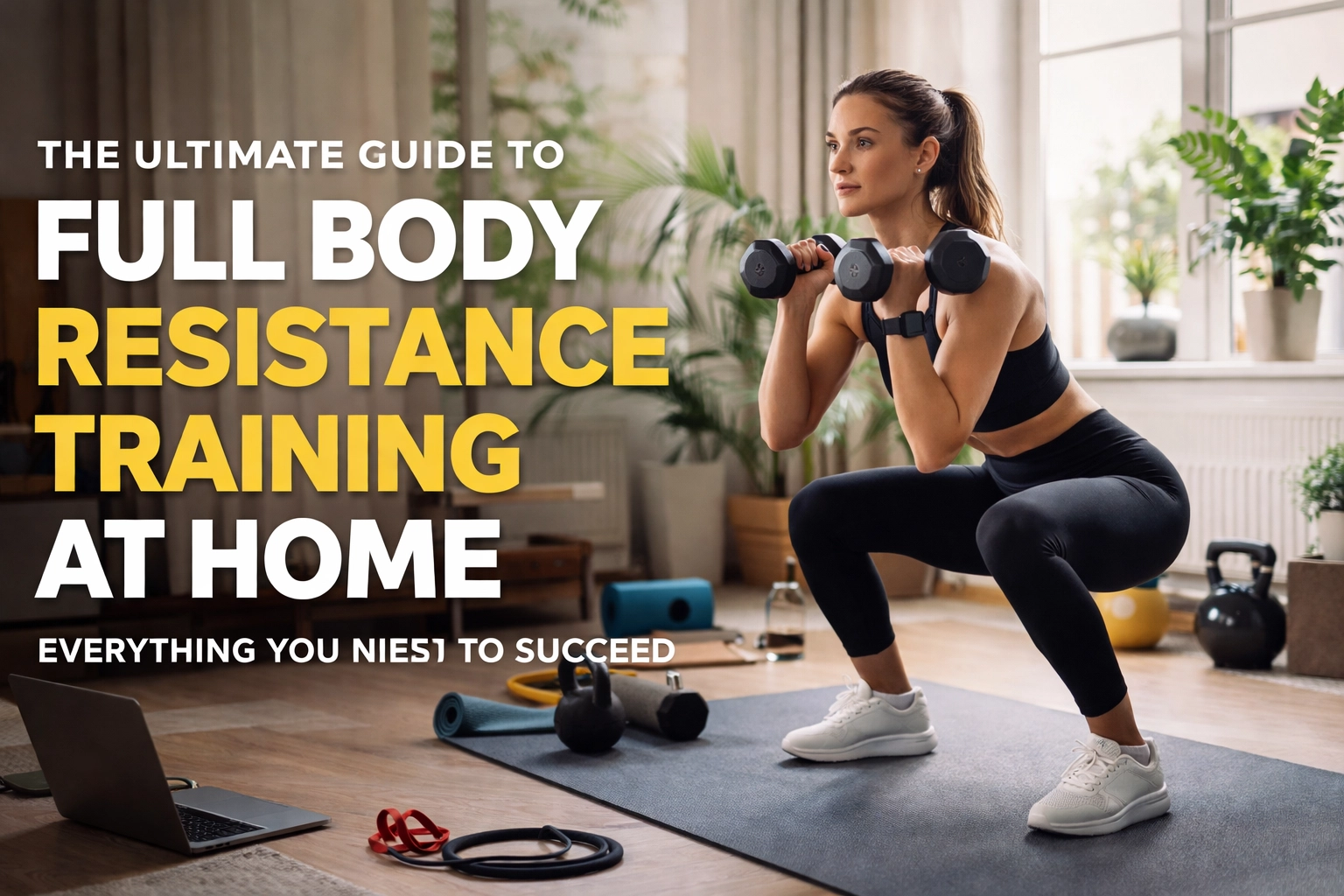
Let's cut the fluff. You're here because you want to build serious strength, pack on functional muscle, and do it all without leaving your house. Whether you're a calisthenics beast, a ninja warrior in training, a CrossFit junkie, or an MMA fighter looking to stay sharp between sessions: this guide has your back.
Full body resistance training at home isn't just possible. It's powerful. And when you dial in the right equipment, exercises, and programming, you can build a physique and performance level that rivals any commercial gym rat.
Time to get after it.
Why Full Body Resistance Training Dominates
Here's the deal: compound movements that hit multiple muscle groups at once are your golden ticket to efficient, effective training. You don't need two-hour sessions isolating every muscle fiber. Research shows that a 30-minute full-body resistance workout is enough to build strength and muscle: if you're smart about exercise selection and intensity.
Full body workouts deliver:
- Maximum efficiency – Hit every major muscle group in one session
- Better recovery – Train 3-4 times per week without burnout
- Functional strength – Build real-world power that transfers to sport and life
- Metabolic fire – Compound exercises torch calories and boost your metabolism
For serious athletes: whether you're training for American Ninja Warrior, prepping for a grappling competition, or chasing your next CrossFit PR: full body training builds the kind of integrated strength you actually need.
The Home Gym Equipment Equation
You don't need a warehouse full of gear to get strong. But you do need the right tools. The best home gym equipment combines versatility with functionality: allowing you to perform dozens of exercises without cluttering your space.
Here's the hierarchy of home gym equipment that actually matters:
Bodyweight Training Foundation
Bodyweight training at home is the bedrock of any solid program. Push-ups, pull-ups, dips, squats, lunges, and core work require zero equipment and deliver serious results. The catch? You need something to hang from, push against, and anchor your movements.
Resistance Bands and Weights
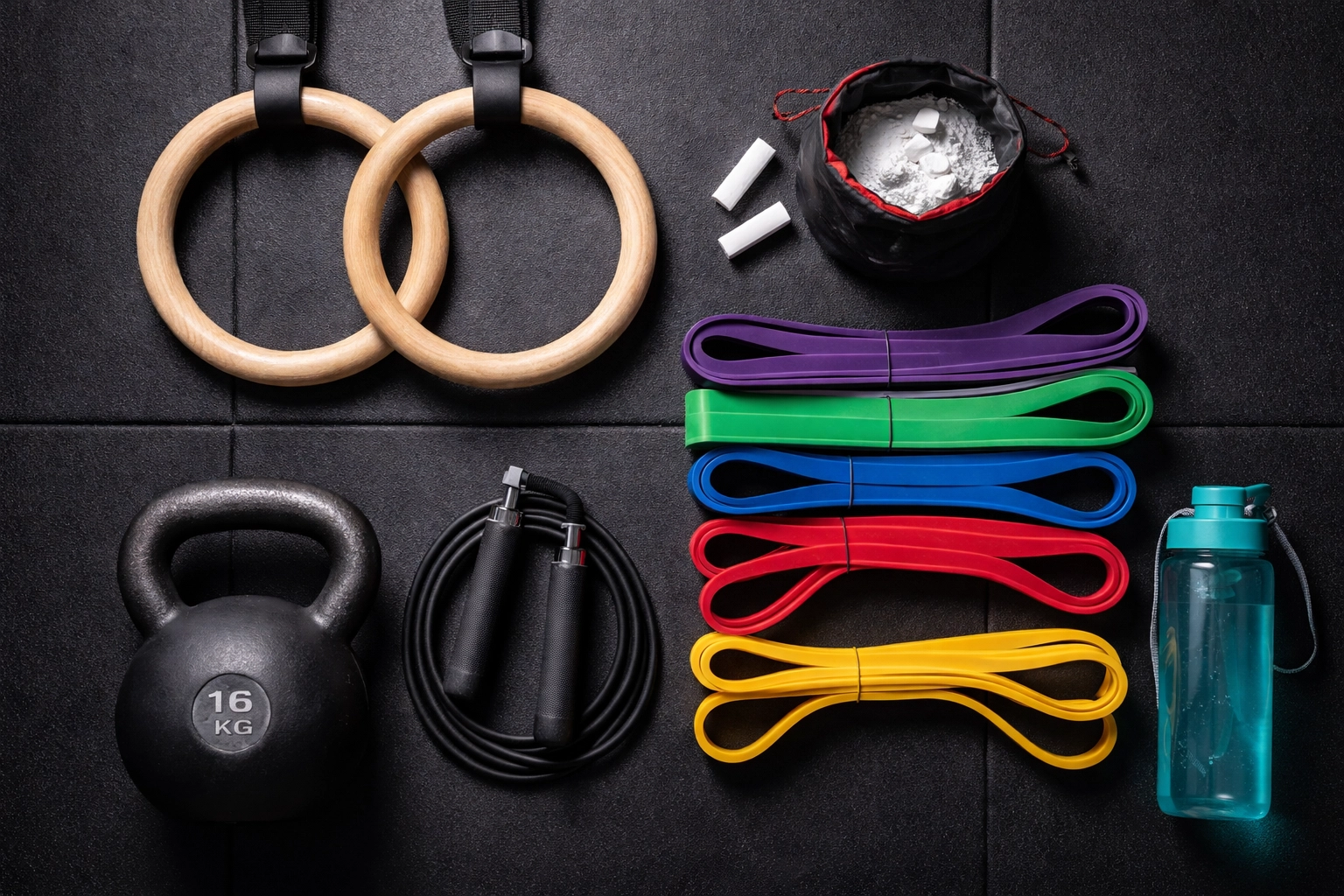
Medium-to-heavy dumbbells (8-20 lbs depending on your level) add loading options for progressive overload. Resistance bands are portable, versatile, and perfect for accommodating resistance.
A Versatile Home Gym System
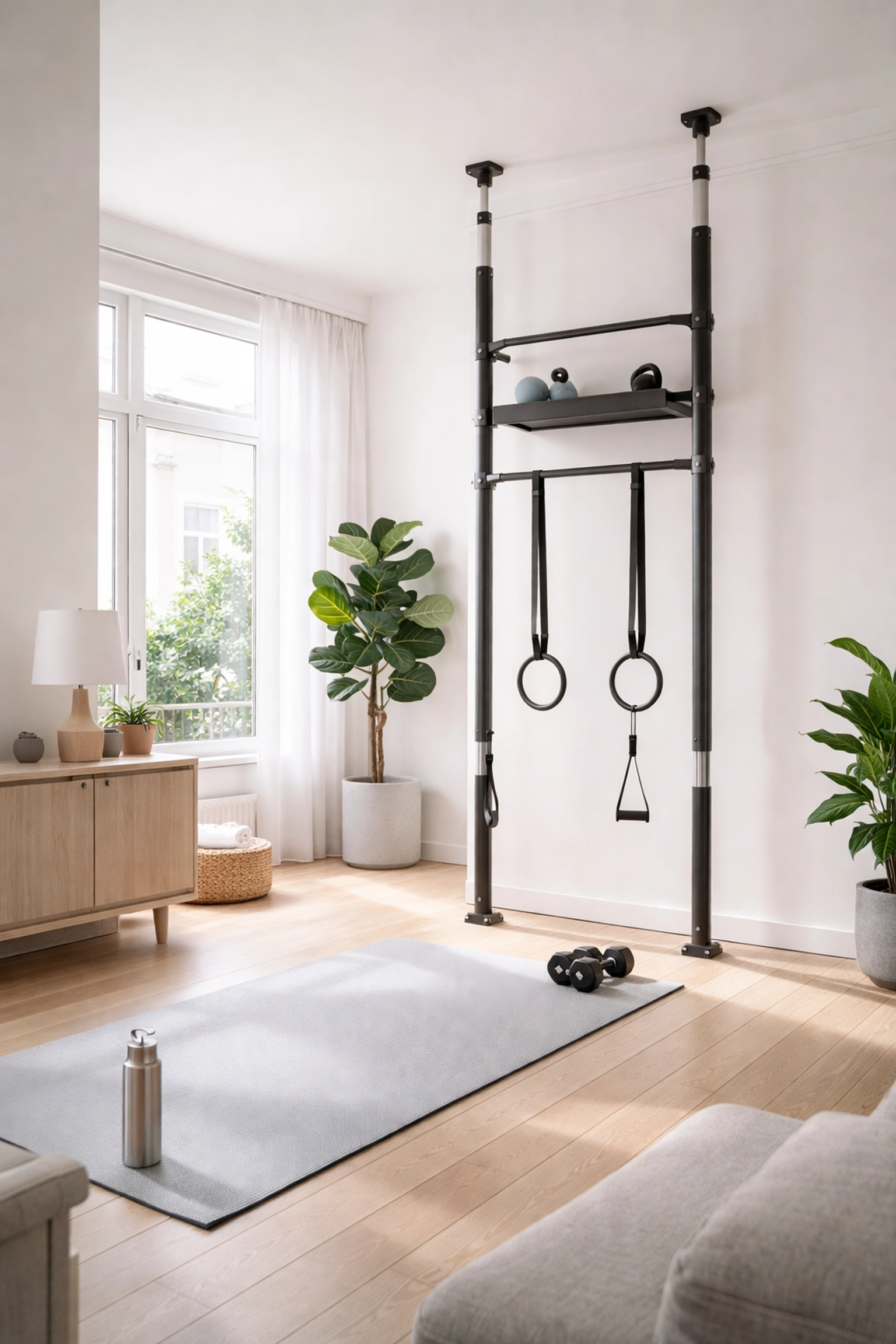
This is where most home setups fall short. You need a pull up bar alternative that doesn't require wall mounting, ceiling bolts, or a structural engineer's approval. You need calisthenics equipment for home that handles rings, bands, suspension trainers, and loaded movements.
Enter the floor to ceiling gym concept: a no wall damage workout system that delivers commercial-gym capability in your living room, garage, or spare bedroom.
At Bold Body Fitness, we built the Resistance Rail specifically for athletes who demand more from their home setup. It's a tension-mounted system that handles pull-ups, muscle-ups, ring work, band exercises, and dozens of other movements: without drilling a single hole in your walls or ceiling.
Building Your No-Damage Home Gym Setup
Let's talk real estate. Most of us don't have dedicated gym space. We're working with living rooms, basements, apartments, garages: spaces that serve multiple purposes and can't look like a CrossFit box 24/7.
A truly versatile home gym needs to:
- Take up minimal floor space – Under 10 square feet is the sweet spot
- Install without permanent modifications – Renters, homeowners protecting their investment, and anyone who values their walls
- Support serious training loads – Bodyweight movements, weighted exercises, explosive work
- Adapt to multiple training styles – Calisthenics, CrossFit, gymnastics, general strength
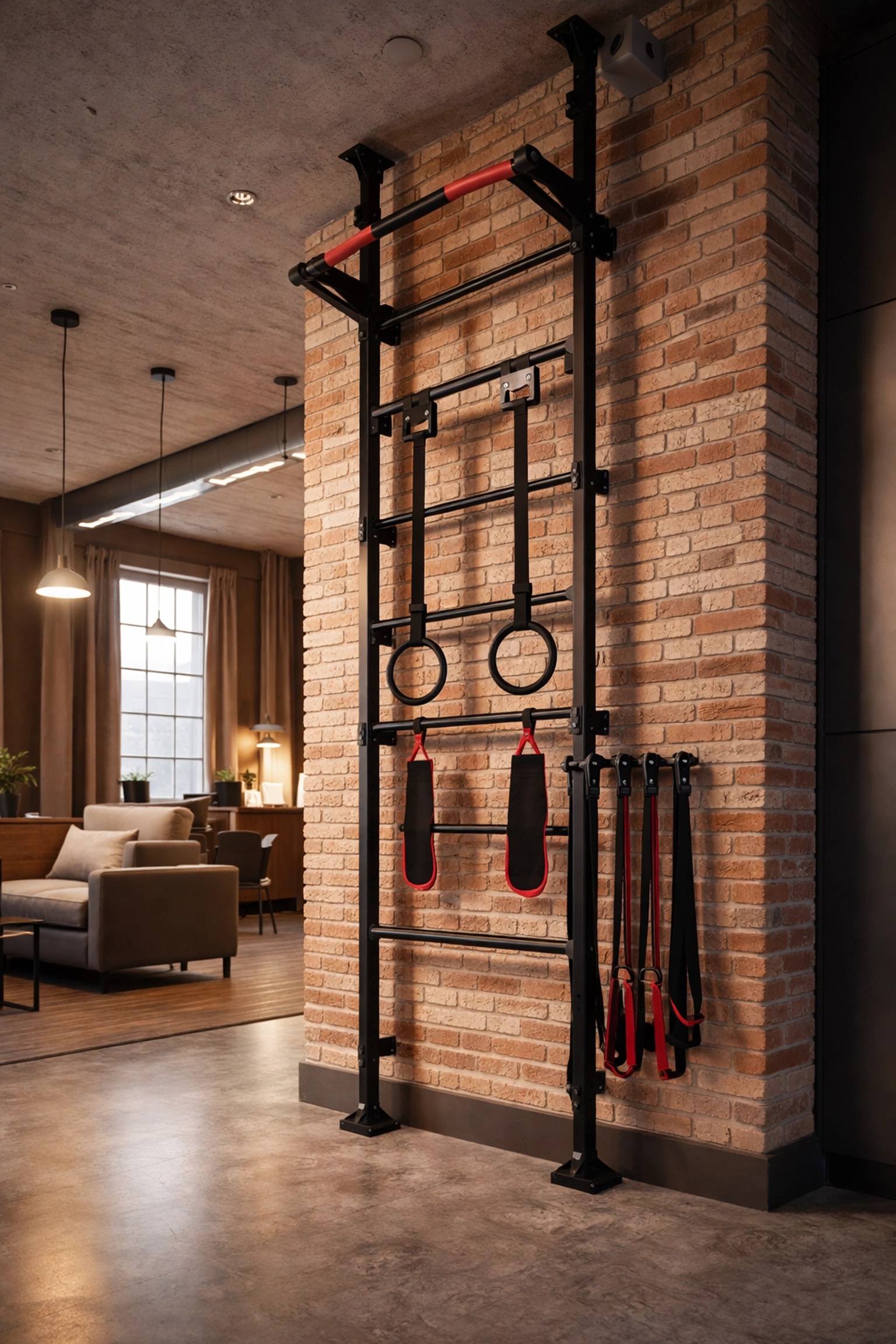
The Resistance Rail Deluxe checks every box. It's a floor to ceiling gym that handles the full spectrum of resistance training without the commitment of wall-mounted equipment or the limitations of doorway pull-up bars.
For calisthenics practitioners and gymnasts, you can hang rings at any height. For CrossFit athletes, attach bands for assisted pull-ups or resistance work. For MMA fighters and ninja warriors, the system handles explosive movements and grip training without wobbling or shifting.
The Essential Exercises for Full Body Training at Home
Now for the meat. These are the movements that build complete, functional strength. Master these, and you'll outperform 90% of gym-goers who waste time on machines.
Lower Body Power
Squats – The king of leg exercises. Bodyweight, goblet, or band-resisted: they all build quad, glute, and core strength.
Lunges and Split Squats – Single-leg work builds balance, corrects imbalances, and hammers your legs in ways bilateral movements miss.
Hip Thrusts – Glute strength is athletic strength. Period.
Jump Variations – Box jumps, squat jumps, and lunge jumps develop explosive power for sports performance.
Upper Body Strength
Pull-Ups and Chin-Ups – The ultimate upper body builder. Multiple grip variations hit your back, biceps, and forearms from every angle. A solid pull up bar alternative like the Resistance Rail makes these accessible without doorway limitations.
Push-Ups – Chest, shoulders, triceps. Progress from standard to archer to one-arm for continuous challenge.
Rows – Dumbbell rows, band rows, or inverted rows on rings balance your pushing work and build a bulletproof back.
Dips – Ring dips or parallel bar dips crush your chest and triceps while demanding serious stabilization.

Full Body Movements
Burpees – Love them or hate them, they work. Every muscle, elevated heart rate, zero equipment required.
Muscle-Ups – The gold standard of calisthenics. A combination of pull-up and dip that demonstrates total upper body control.
Kettlebell or Dumbbell Swings – Posterior chain power and conditioning in one explosive movement.
Core Stability
Planks and Hollow Body Holds – Isometric core strength that transfers to every other movement.
Hanging Leg Raises – Grip, hip flexors, and abs working overtime.
Rotational Work – Pallof presses, Russian twists, and wood chops build the anti-rotation strength athletes need.
Programming Your Full Body Workout at Home
Structure matters. Here's how to organize your sessions for maximum results:
The Circuit Approach
Build 3 circuits, each containing:
- One lower body exercise
- One upper body push
- One upper body pull
- One core movement
Perform each circuit 3-4 times with 60-90 seconds rest between rounds. This structure hits every muscle group while keeping your heart rate elevated.
Sample Workout
Circuit 1 (Repeat 3x)
- Goblet Squats x 12
- Push-Ups x 15
- Pull-Ups x 8
- Plank Hold x 45 seconds
Circuit 2 (Repeat 3x)
- Reverse Lunges x 10 each leg
- Ring Dips x 10
- Inverted Rows x 12
- Hanging Knee Raises x 12
Circuit 3 (Repeat 3x)
- Hip Thrusts x 15
- Pike Push-Ups x 10
- Band Pull-Aparts x 15
- Dead Bug x 10 each side
Total time: 30-40 minutes. Total body coverage: 100%.
Training Frequency
For most athletes, 3-4 full body sessions per week delivers optimal results. This allows adequate recovery while maintaining training frequency. Serious practitioners can train up to 5-6 days with proper programming and recovery protocols.
Sport-Specific Considerations
For Ninja Warriors
Focus on grip endurance, explosive pulling power, and core stability. Ring work, towel pull-ups, and hanging movements should feature heavily. Check out our guide on building a beast-mode home gym for calisthenics athletes.
For CrossFit Athletes
Your CrossFit home gym needs to support Olympic lifting accessories, gymnastics movements, and conditioning work. The Resistance Rail handles pull-ups, muscle-ups, and ring work while leaving floor space for dumbbells and cardio.
For MMA Fighters and Grapplers
Grip strength, rotational power, and posterior chain development are your priorities. Band work, explosive movements, and isometric holds build the functional strength that wins fights.
For Gymnasts and Calisthenics Athletes
Progressive skill work requires stable equipment. Rings, parallettes, and a reliable overhead anchor point are non-negotiable. Your calisthenics equipment for home should support front levers, back levers, and muscle-up progressions without wobbling or shifting.
Common Mistakes That Kill Progress
Mistake #1: Equipment limitations – Doorway pull-up bars limit your grip options and movement variety. Invest in proper equipment.
Mistake #2: Program hopping – Pick a structure and stick with it for 8-12 weeks minimum.
Mistake #3: Ignoring progressive overload – Add reps, sets, weight, or difficulty every week. Progress is non-negotiable.
Mistake #4: Skipping the warm-up – 5-10 minutes of dynamic movement prevents injury and improves performance.
Mistake #5: All intensity, no recovery – Sleep, nutrition, and rest days are when gains actually happen.
The Bottom Line
Full body resistance training at home works. It works for beginners building their foundation. It works for elite athletes maintaining competition readiness. It works for everyone in between who wants to build strength, improve performance, and look better naked.
The key is smart programming, consistent effort, and the right equipment. A versatile home gym setup: especially one that doesn't require destroying your walls: opens up training possibilities that rival any commercial facility.
Ready to build your setup? Explore the Resistance Rail and see how a true floor to ceiling gym transforms your home training.
No excuses. No limitations. Just results.
