
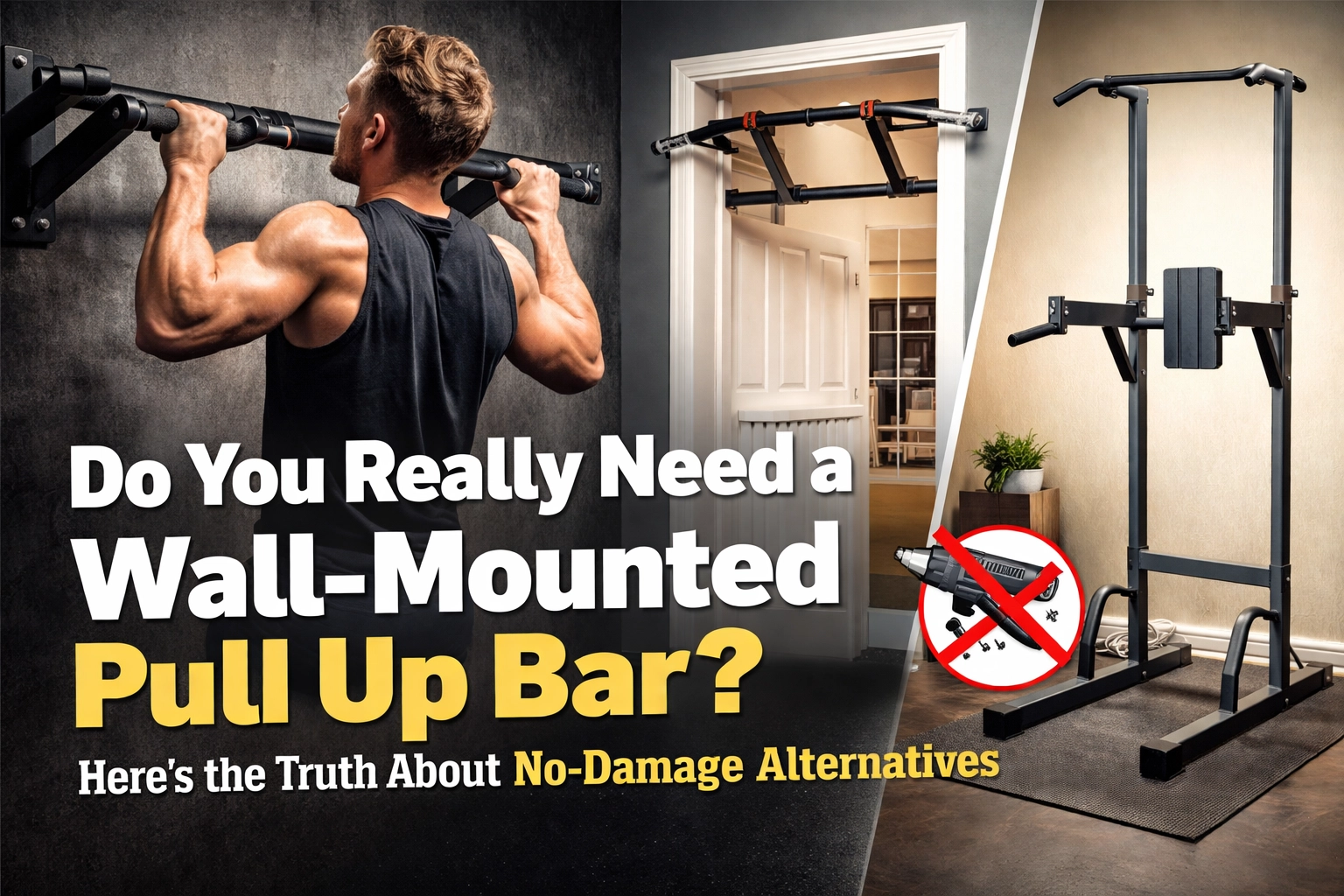
Let's cut straight to it. You want to build a serious home gym. You're eyeing that wall-mounted pull-up bar, imagining yourself cranking out muscle-ups, weighted pull-ups, and gymnastic-level skills. But then reality hits: drilling into walls, potential structural concerns, angry landlords, or a spouse who's definitely not cool with holes in the drywall.
So what's the move?
Here's the truth that most fitness equipment companies won't tell you: you don't need a wall-mounted pull-up bar to train like a beast. Whether you're a ninja warrior prepping for competition, a CrossFit athlete building your garage gym, or an MMA fighter who needs functional strength, there are powerful no-damage alternatives that can match, or even exceed, what a wall-mounted setup offers.
Let's break down your options and figure out what actually makes sense for your training goals.
The Wall-Mounted Pull-Up Bar: What You're Really Getting
First, let's give credit where it's due. Wall-mounted pull-up bars have earned their reputation for a reason. They're rock-solid stable, provide plenty of clearance for taller athletes, and allow for advanced movements without wobbling or concern.
If you're doing heavy weighted pull-ups, explosive kipping movements, or practicing muscle-ups, that stability matters. A lot.
But here's what nobody's talking about: wall-mounted bars come with serious trade-offs.
- Permanent installation means drilling into studs or concrete
- Zero flexibility once it's up, you're committed to that spot
- Rental restrictions can make installation impossible
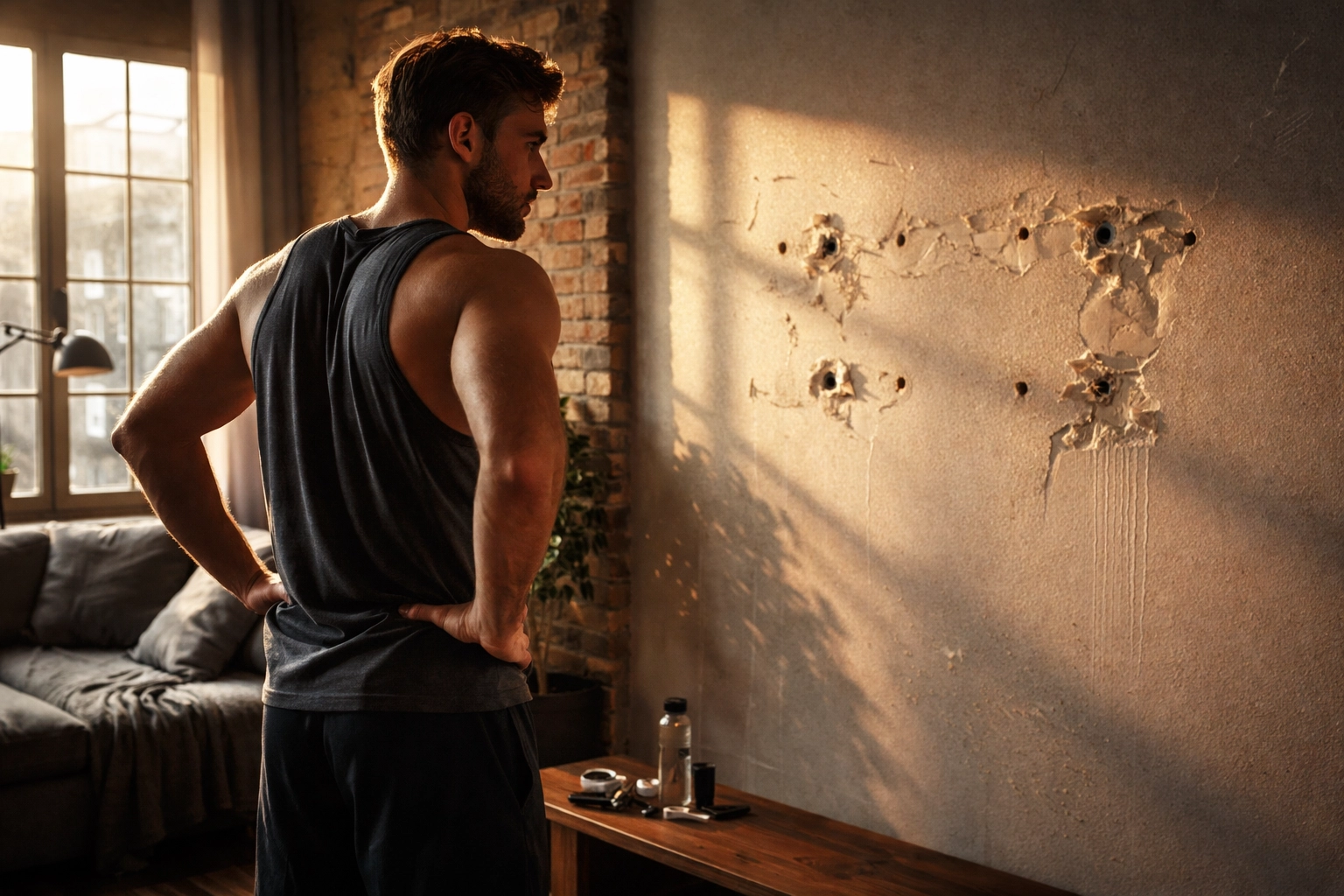
- Property damage that could cost you your security deposit or home resale value
- Limited functionality, most wall-mounted bars only do one thing: pull-ups
For serious athletes who train multiple disciplines, calisthenics, resistance training, bodyweight skills, a single pull-up bar mounted to your wall might actually be limiting your potential.
No-Damage Alternatives: What Actually Works
The fitness industry has come a long way. Today's no wall damage workout systems can rival traditional mounted equipment in stability and versatility. Here's the honest breakdown of your options.
Doorway Pull-Up Bars: The Budget Entry Point
We've all seen them. Those leverage-based bars that hook onto your door frame. They're cheap, require zero tools, and you can take them down in seconds.
The good: Low cost, no damage, minimal space requirements. Great for beginners testing the waters with bodyweight training at home.
The bad: Limited weight capacity, restricted clearance (especially if you're over 5'10"), and not designed for dynamic movements. Try a kipping pull-up on one of these, and you might end up through the doorway, literally.
The verdict: Fine for basic pull-ups and chin-ups. Not a real solution for serious athletes looking to progress.
Free-Standing Pull-Up Stations: More Room to Work
Free-standing pull-up frames don't attach to anything. They rely on their own weight and base design for stability. Many offer dip bars, leg raise stations, and multiple grip options.
The good: No installation, moveable, versatile exercise options. Some models can be weighted down for added stability.
The bad: They take up significant floor space. Budget models wobble during intense movements. Quality ones that don't wobble? They're massive and expensive.
The verdict: Decent for moderate home gym equipment needs. Not ideal if you're tight on space or training explosive movements.
Floor-to-Ceiling Systems: The Game-Changer
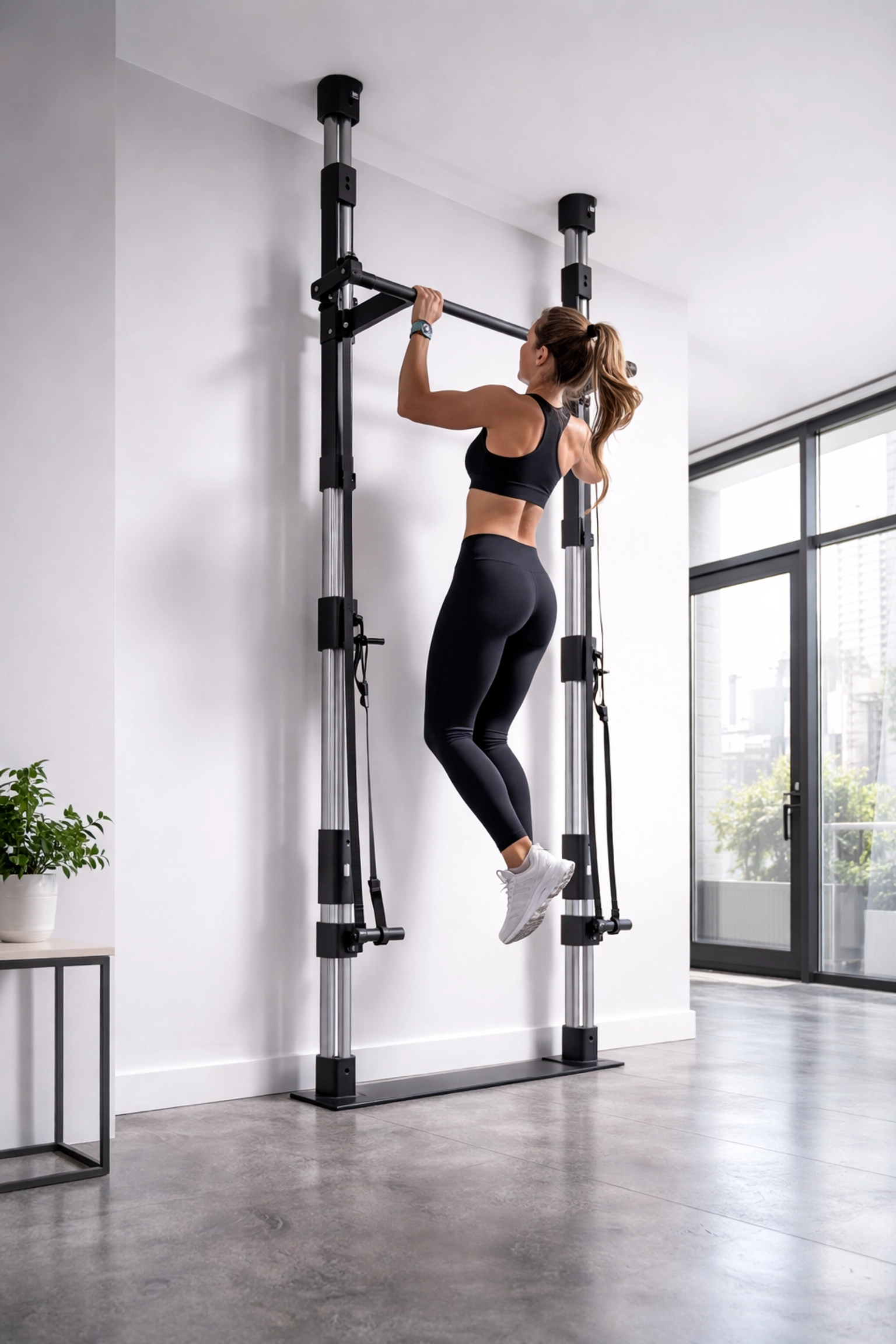
Here's where things get interesting. Floor to ceiling gym systems use tension between your floor and ceiling to create a stable, versatile training station without any wall damage.
This is the category where serious athletes are finding their edge.
Unlike doorway bars that limit your movement or free-standing stations that eat up your floor space, floor-to-ceiling systems offer:
- Multiple attachment points for bands, rings, suspension trainers, and pull-up bars
- No permanent installation, tension-based setup that leaves zero marks
- Compact footprint that works in apartments, garages, and small spaces
- Versatility for full body workouts at home across multiple training styles
At Bold Body Fitness, we've built our entire philosophy around this approach. Our Resistance Rail is engineered specifically for athletes who refuse to compromise between stability and flexibility.
What Serious Athletes Need From a Pull Up Bar Alternative
Let's get specific. If you're training at a competitive level, ninja warrior courses, CrossFit competitions, gymnastics skills, MMA conditioning, your home gym equipment needs to handle more than basic pull-ups.
Here's the checklist:
Stability under dynamic load: Kipping, butterfly pull-ups, explosive movements. Your setup can't wobble or shift.
Multiple grip options: Wide grip, narrow grip, neutral grip. Different grips target different muscle groups and prevent overuse injuries.
Attachment versatility: Can you hang gymnastics rings? Suspension trainers? Resistance bands? The best calisthenics equipment for home lets you train multiple modalities.
Progressive overload capability: Can the system handle weighted vests, hanging weights, or band-resisted work? Growth requires progressive challenge.
Space efficiency: Most of us aren't training in 2,000-square-foot warehouses. Your versatile home gym needs to fit your actual living situation.
The Resistance Rail Deluxe checks every one of these boxes. It's why calisthenics athletes, CrossFit competitors, and ninja warriors are switching from traditional wall-mounted setups.
Matching Your Training Style to the Right Setup
Different athletes need different solutions. Here's the straight talk:
For Calisthenics Practitioners
You're working toward front levers, muscle-ups, and advanced bodyweight skills. You need stability for static holds and smooth bar surfaces for dynamic transitions. A floor-to-ceiling system with gymnastics ring attachments gives you the most training variety for bodyweight training at home.
For CrossFit Athletes
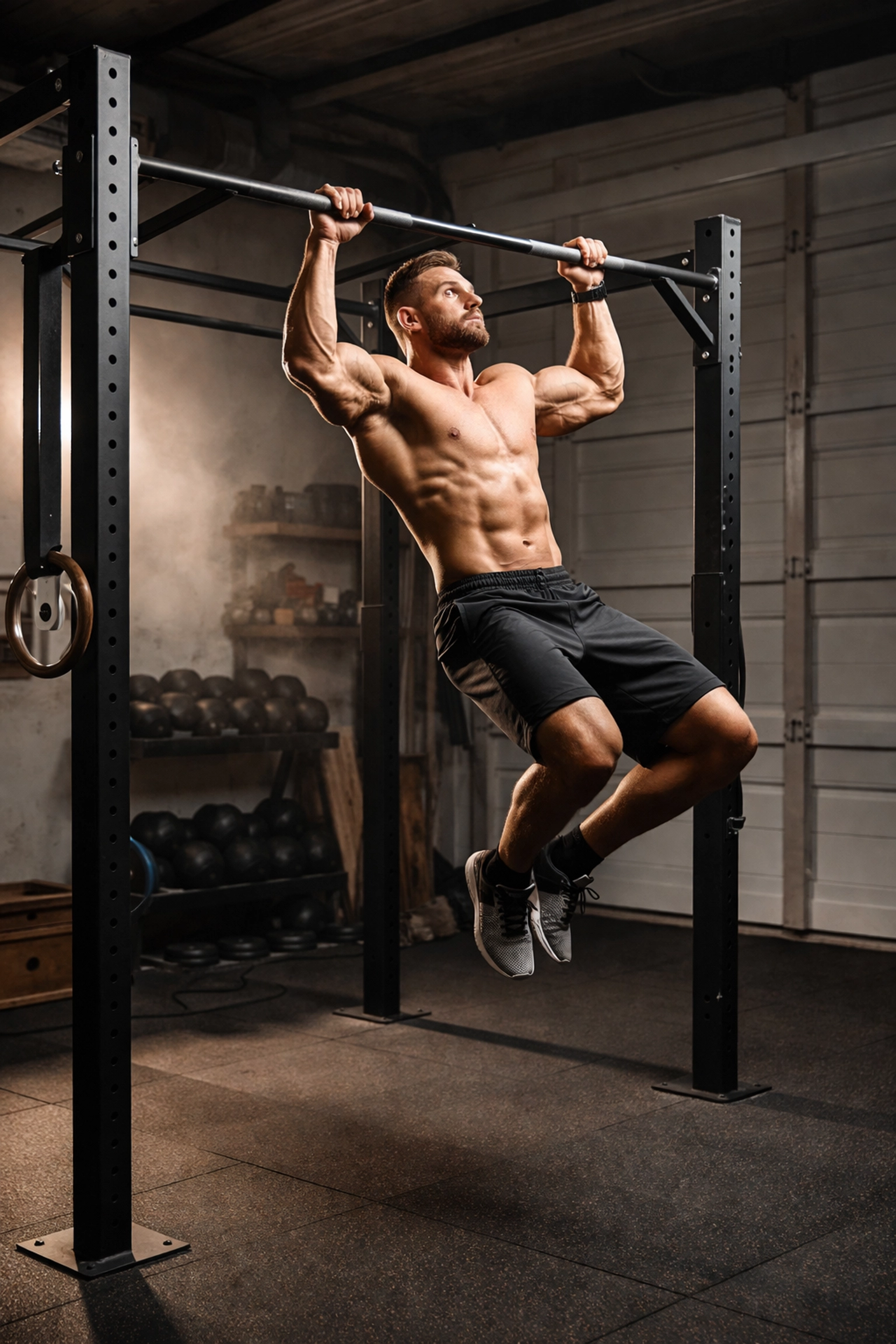
Your CrossFit home gym needs to support high-rep kipping pull-ups, toes-to-bar, and muscle-ups. Stability is non-negotiable. You also want the option to add resistance bands for scaled movements. Look for systems with multiple attachment heights.
For Ninja Warriors
Grip variety is everything. You're training laches, dynamic swings, and grip endurance. A versatile home gym with multiple attachment points lets you simulate competition obstacles without building a full-scale course.
For MMA Fighters and Combat Athletes
You need pulling strength, core work, and conditioning all in one station. Floor-to-ceiling systems let you attach resistance bands for striking resistance, hang for core work, and bang out pull-ups between rounds.
The Real Cost Comparison
Let's talk money. Wall-mounted pull-up bars range from $50 for basic models to $500+ for commercial-grade setups. But that's not the full picture.
Hidden costs of wall-mounted bars:
- Professional installation if you're not comfortable drilling into studs
- Drywall repair when you move or change your setup
- Security deposit deductions in rental situations
- Limited resale value (who wants someone else's wall holes?)
Floor-to-ceiling systems like the Resistance Rail often cost comparably to quality wall-mounted bars, but you get more exercise versatility, zero damage, and a system you can take with you when you move.
For athletes serious about building a long-term training setup, the math favors no-damage solutions.
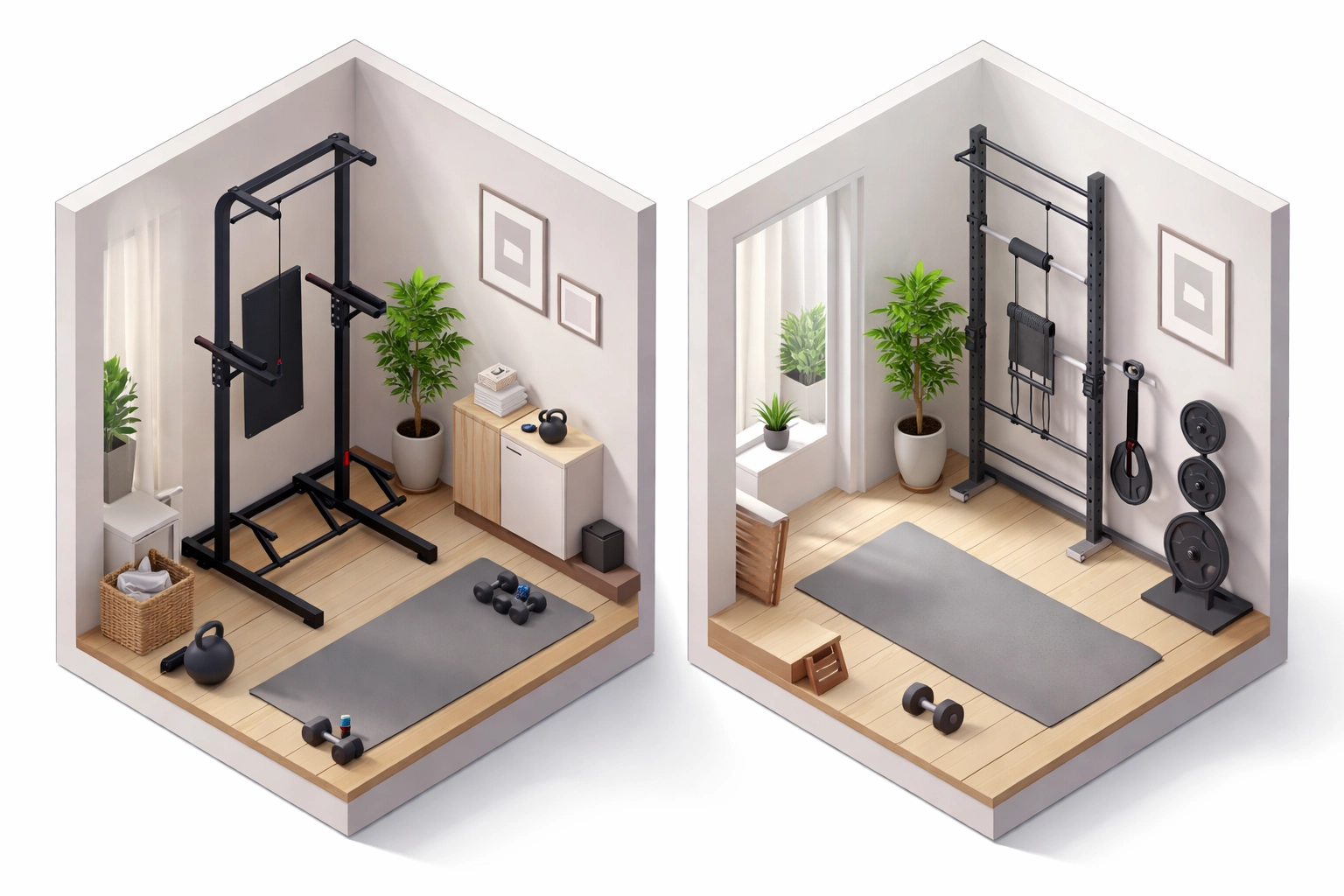
Making Your Decision
So do you really need a wall-mounted pull-up bar?
If you own your home permanently, have unlimited space, and only plan to do basic pull-ups: Sure, a wall-mounted bar works fine.
If you rent, value flexibility, train multiple disciplines, or want a truly versatile home gym: No. You don't need it. And you might actually be limiting yourself by going that route.
The best home gym equipment meets you where you are and grows with your training. It adapts to your space, your goals, and your life circumstances.
At Bold Body Fitness, we build for athletes who demand more. Check out our shop to see how the Resistance Rail system can transform your training space: without putting a single hole in your walls.
Your walls will thank you. Your training won't miss a beat.
