
Let's be real. You've probably thought about it a hundred times. Skipping the crowded gym. No more waiting for equipment. No more scheduling your life around class times. Just you, your garage (or spare room), and the freedom to crush WODs whenever you feel like it.
But then reality hits: you're renting, you have hardwood floors, your spouse would murder you if you drilled holes in the ceiling, or your landlord has made it crystal clear: no modifications.
Here's the good news: building a CrossFit home gym that delivers serious results without turning your house into a construction zone is absolutely possible. You just need the right strategy and the right home gym equipment.
This guide is for the athletes who refuse to compromise: ninja warriors, gymnasts, MMA fighters, calisthenics practitioners, and CrossFit enthusiasts who want to train hard at home without sacrificing their security deposit or their marriage.
The Real Challenge: Power Without Destruction
CrossFit is brutal on spaces. We're talking dropped barbells, dynamic movements, kipping pull-ups, and box jumps that could wake the neighbors. Traditional setups demand bolted rigs, wall-mounted pull-up bars, and equipment that leaves permanent marks.
That's a problem when you need a no wall damage workout system.
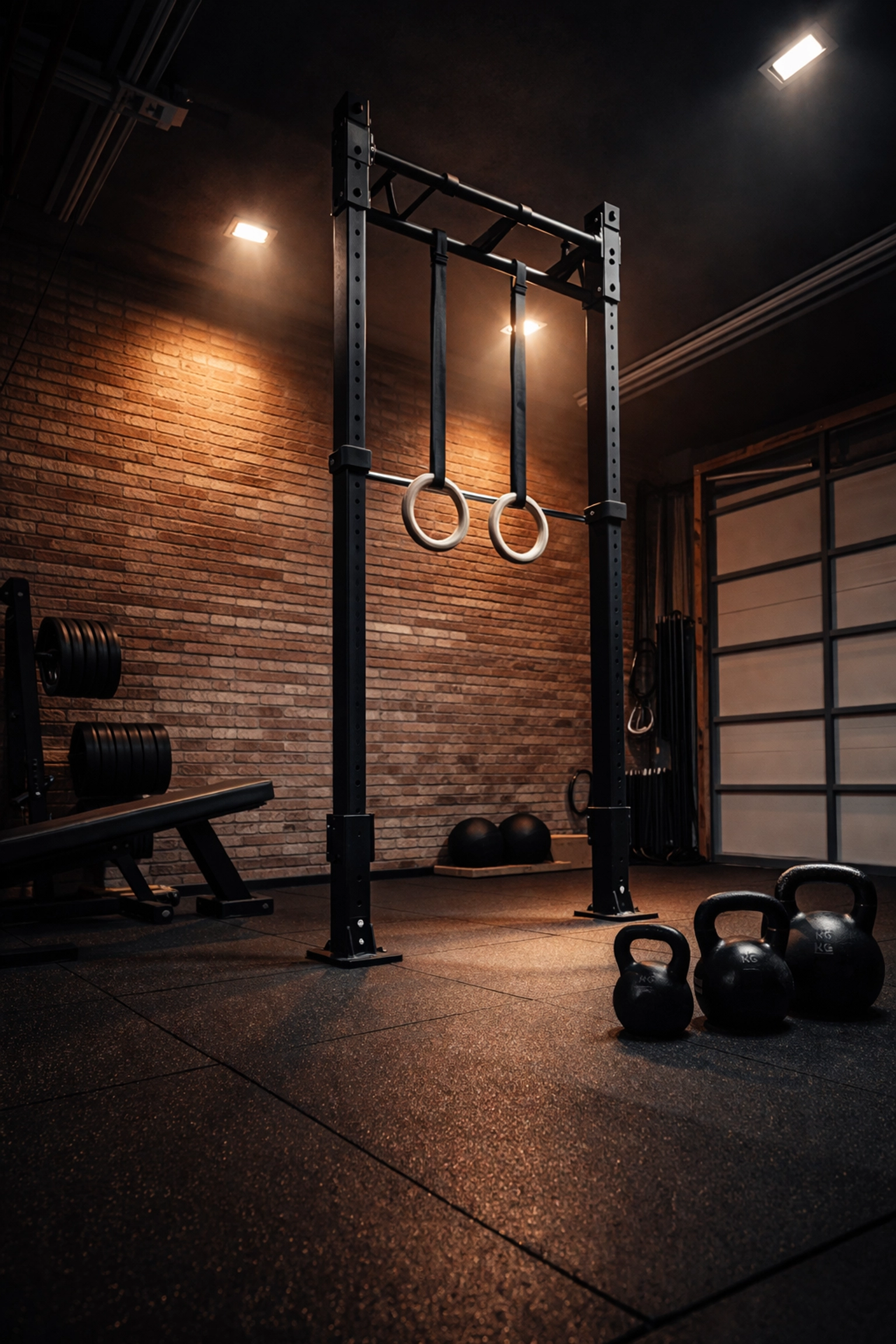
The key isn't avoiding intensity: it's choosing equipment designed to deliver maximum performance with minimal footprint. The best versatile home gym setups use freestanding, floor-to-ceiling, or tension-based systems that protect your space while giving you everything you need for a full body workout at home.
Step One: Plan Your Space Like a Pro
Before you spend a single dollar, grab a tape measure. Seriously.
Measure everything:
- Floor dimensions (length and width)
- Ceiling height (crucial for overhead movements and pull-up clearance)
- Door widths (you need to get equipment in there)
- Any obstacles like pipes, light fixtures, or low beams
CrossFit movements are dynamic. You need room to swing, jump, lift, and bail safely. A cramped space isn't just frustrating: it's dangerous.
The minimum recommended space: 10x10 feet with 9-foot ceilings for basic movements. If you want to do Olympic lifts or muscle-ups, aim for at least 12x12 feet with higher clearance.
Once you know your dimensions, you can start selecting equipment that fits without drilling, bolting, or begging your landlord for forgiveness.
Protecting Your Floors: Non-Negotiable
Here's where most home gym builds fail immediately.
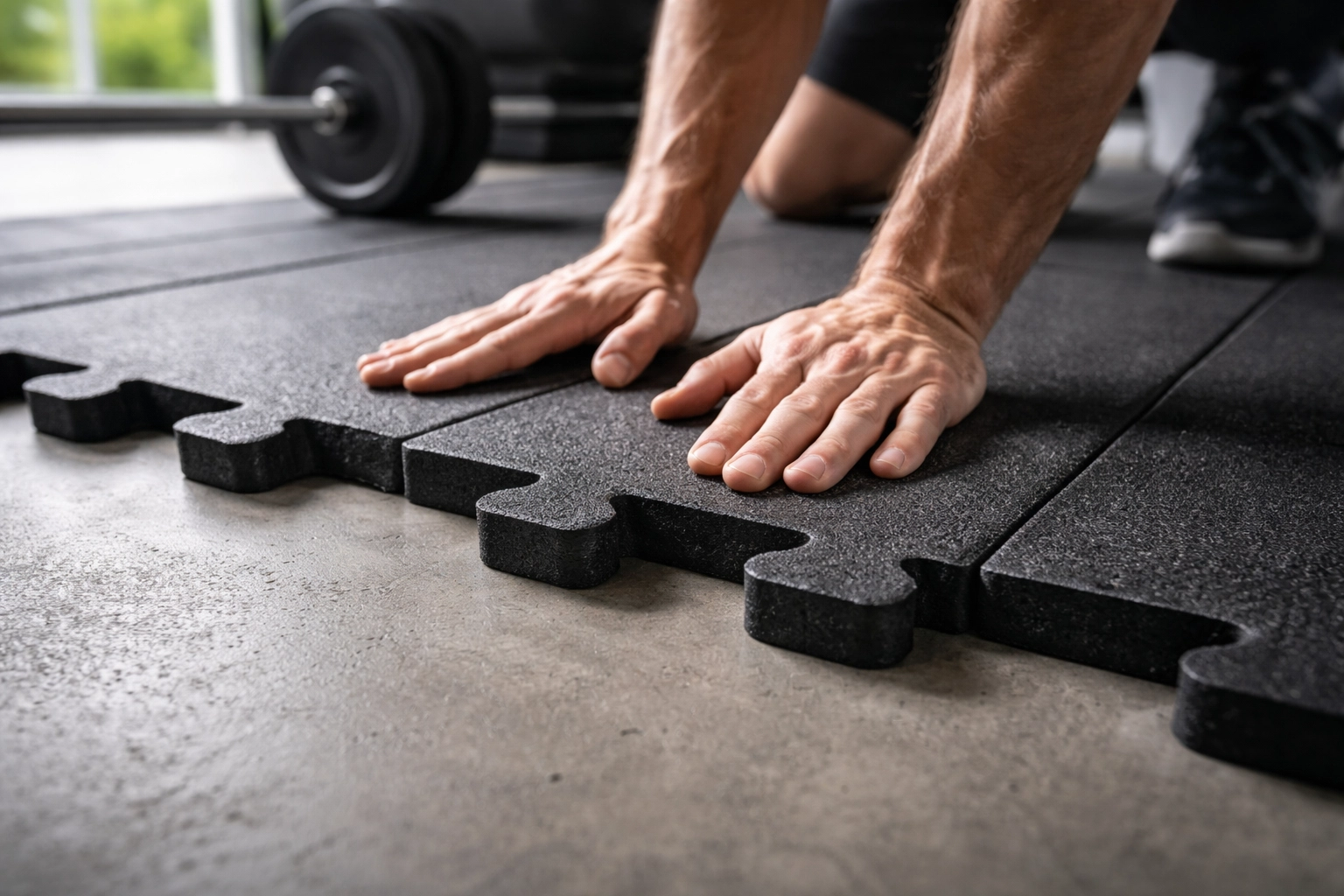
Rubber mat flooring isn't optional: it's essential. You're going to drop weights. You're going to jump. You're going to do burpees until you question your life choices. Without proper flooring, you'll crack concrete, dent hardwood, and create noise complaints that rival a construction site.
Pro tips for floor protection:
- Use high-density rubber mats (at least ¾ inch thick)
- Keep all mats the same thickness: mixing creates trip hazards
- Consider interlocking tiles for easy installation and removal
- Add a lifting platform for Olympic movements (plywood + rubber combo)
If you're in an apartment or above-ground floor, thick rubber mats also dampen sound. Your downstairs neighbors will thank you.
The Pull-Up Problem (And How to Solve It)
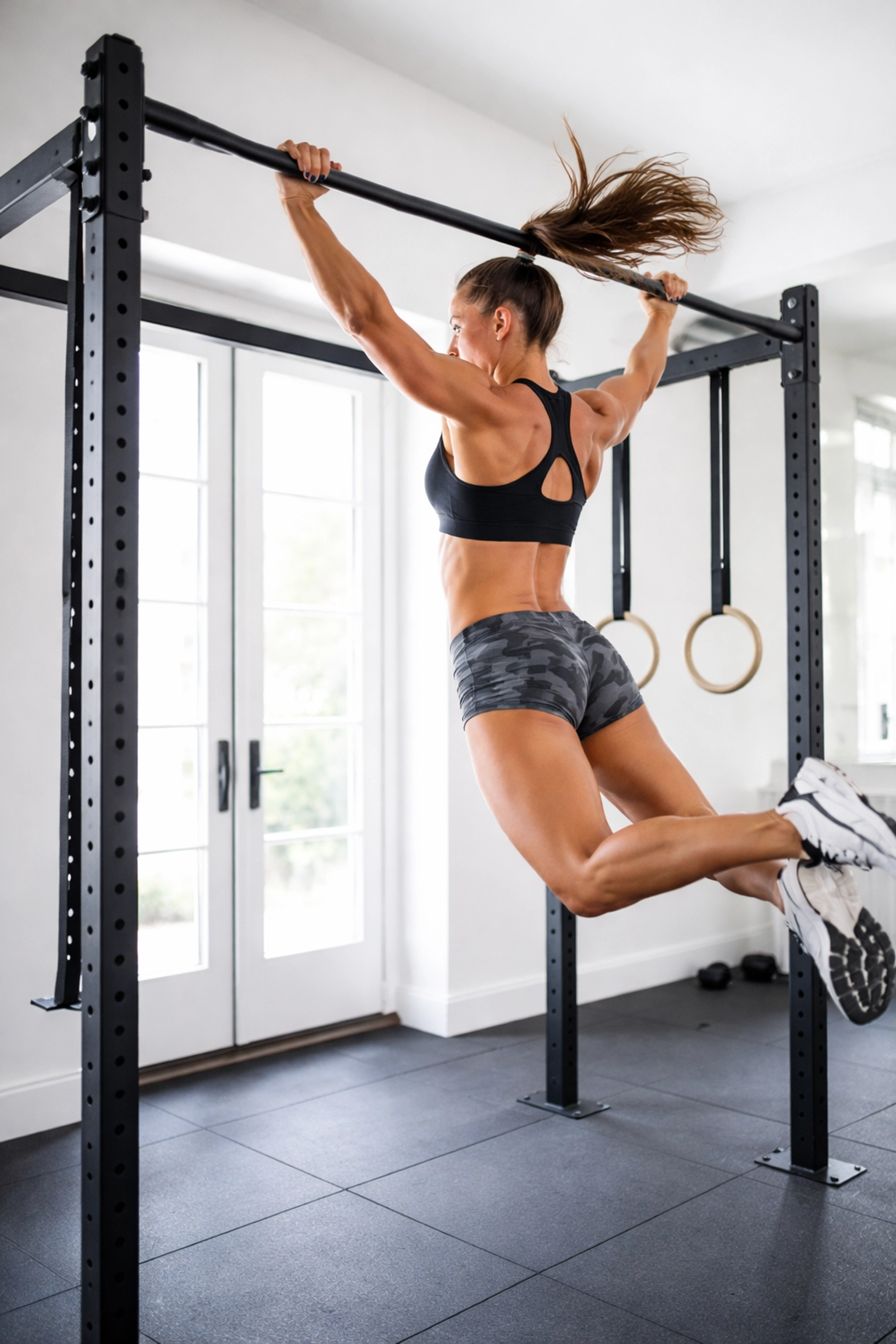
Pull-ups are foundational to CrossFit. Kipping pull-ups, strict pull-ups, muscle-ups, toes-to-bar: you need a solid bar that can handle explosive movement.
Traditional solutions? Doorframe bars that damage trim. Wall-mounted rigs that leave holes. Ceiling-mounted systems that require structural support and permanent installation.
None of these work for renters or homeowners who want a no wall damage workout system.
The solution: floor-to-ceiling systems.
A floor to ceiling gym setup uses tension between your floor and ceiling to create rock-solid stability without a single screw. The Resistance Rail from Bold Body Fitness is exactly this type of system: a pull up bar alternative that delivers the stability of a mounted rig without any permanent modifications.
This is game-changing for:
- Apartment dwellers
- Renters
- Homeowners who don't want holes in their ceiling
- Anyone who needs to disassemble and move their gym
You get a legitimate calisthenics equipment for home setup that supports pull-ups, muscle-ups, leg raises, and resistance band training. No compromises.
Essential CrossFit Equipment That Won't Wreck Your Space
Let's build your arsenal. Here's what you actually need for serious resistance training and CrossFit workouts at home:
The Foundation
-
Olympic barbell and bumper plates: Bumper plates are designed to be dropped. They absorb impact and protect your floors far better than iron plates. Start with a 45lb bar and a set ranging from 10lb to 45lb bumpers.
-
Freestanding squat rack: Look for heavy-duty racks with wide bases that don't require floor bolting. Weight storage pegs add stability without anchoring.
-
Lifting platform: A DIY platform (plywood + horse stall mats) gives you a dedicated drop zone and protects whatever's beneath it.
Bodyweight and Conditioning Gear
This is where bodyweight training at home shines. These items are portable, space-efficient, and floor-friendly:
- Plyo boxes: Soft foam boxes eliminate the shin-destroying metal edges and protect floors from impact
- Gymnastics rings: Hang them from your floor-to-ceiling system for dips, rows, and muscle-up progressions
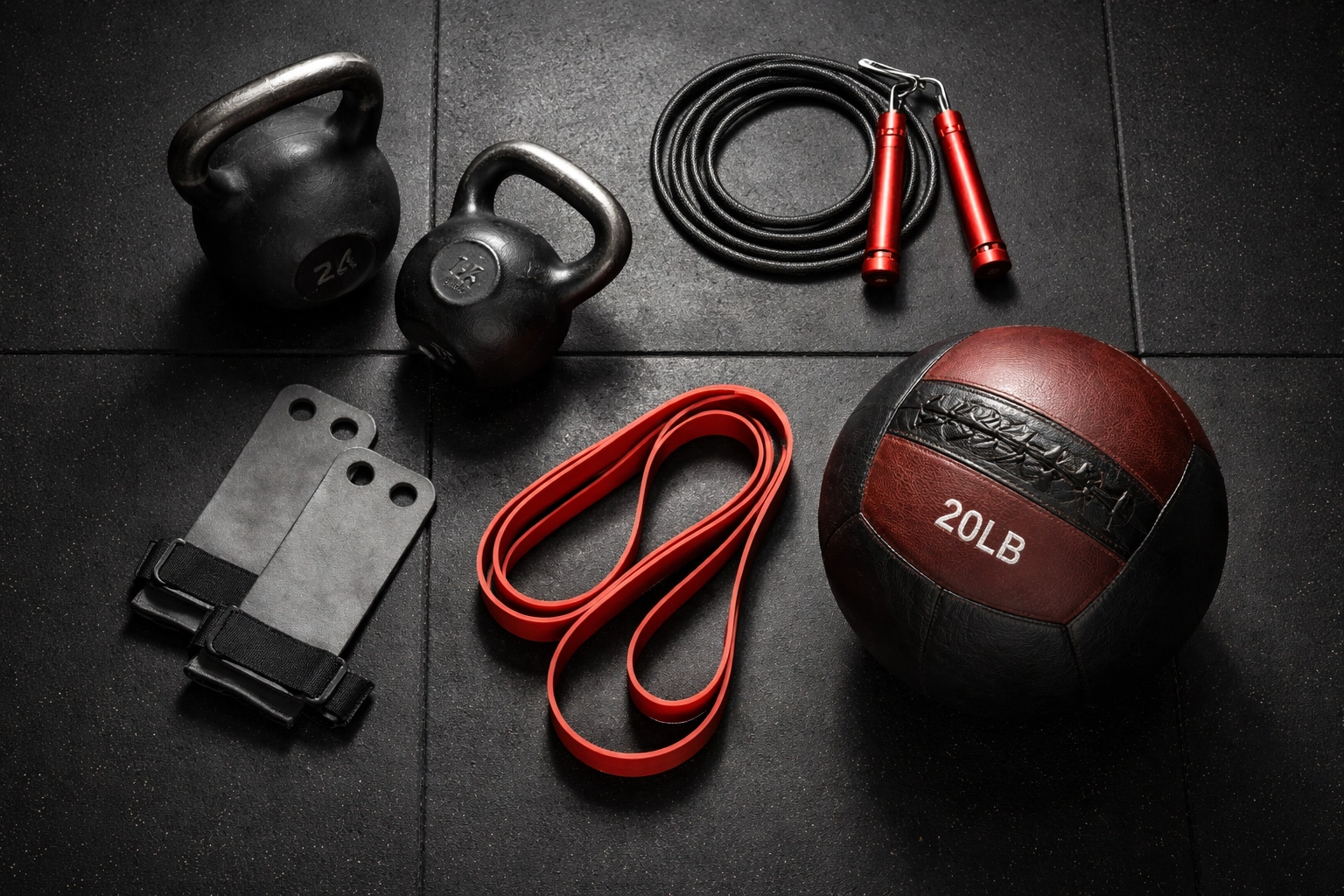
- Kettlebells: Start with 35lb and 53lb: covers most conditioning work
- Medicine balls and slam balls: Slam balls are designed for throws and won't bounce into your TV
- Jump rope: Speed ropes are essential for double-unders and cardio conditioning
- Resistance bands: Perfect for warm-ups, accessory work, and scaling movements
The Versatile Centerpiece
For a truly versatile home gym, you need a system that does multiple jobs. This is where the Resistance Rail Deluxe earns its place. It's not just a pull-up bar: it's a complete calisthenics equipment for home solution that supports dozens of exercises without touching your walls.
Combine it with rings, bands, and your bodyweight, and you've got a setup that rivals commercial gyms for functional fitness.
Building Your CrossFit Home Gym in Phases
Don't blow your entire budget on day one. Build smart.
Phase 1: The Essentials ($500-$800)
- Rubber flooring
- Barbell + bumper plates (basic set)
- Floor-to-ceiling pull-up system
- Jump rope
This gets you squatting, deadlifting, pressing, and doing pull-ups. That's 80% of CrossFit right there.
Phase 2: Expand Your Arsenal ($400-$600)
- Kettlebells (2-3 weights)
- Plyo box
- Gymnastics rings
- Slam ball
Now you're doing full conditioning workouts, gymnastics progressions, and explosive training.
Phase 3: Go Pro ($500+)
- Additional plates
- Freestanding squat rack
- GHD machine
- Specialty bars (trap bar, axle bar)
At this point, you've got a complete CrossFit home gym that handles anything programming throws at you.
Programming for Your Home Setup
Having equipment is one thing. Using it effectively is another.
Structure your weeks around the CrossFit methodology:
- Constantly varied: Rotate movements to avoid plateaus
- Functional movements: Squats, deadlifts, presses, pulls, carries
- High intensity: Push the pace, track your times, beat your numbers
A sample week might look like:
- Monday: Heavy lifting (squat/deadlift focus)
- Tuesday: Conditioning (AMRAP with kettlebells and bodyweight)
- Wednesday: Skill work (pull-up progressions, ring training)
- Thursday: Rest or active recovery
- Friday: Mixed modal (barbell + gymnastics combo)
- Saturday: Long chipper workout
- Sunday: Rest
The Bold Body Fitness shop has resources to help you maximize your home training setup.
The Bottom Line
You don't need a commercial space, permanent installations, or a fortune to build a legitimate CrossFit home gym. What you need is smart planning, protective flooring, and equipment designed for real training without real damage.
A floor to ceiling gym system like the Resistance Rail gives you the pull-up capability that CrossFit demands without a single hole in your walls. Combine that with bumper plates, kettlebells, and conditioning gear, and you've built a training environment that delivers results.
No excuses. No damage. No limits.
Your garage. Your rules. Your gains.
