
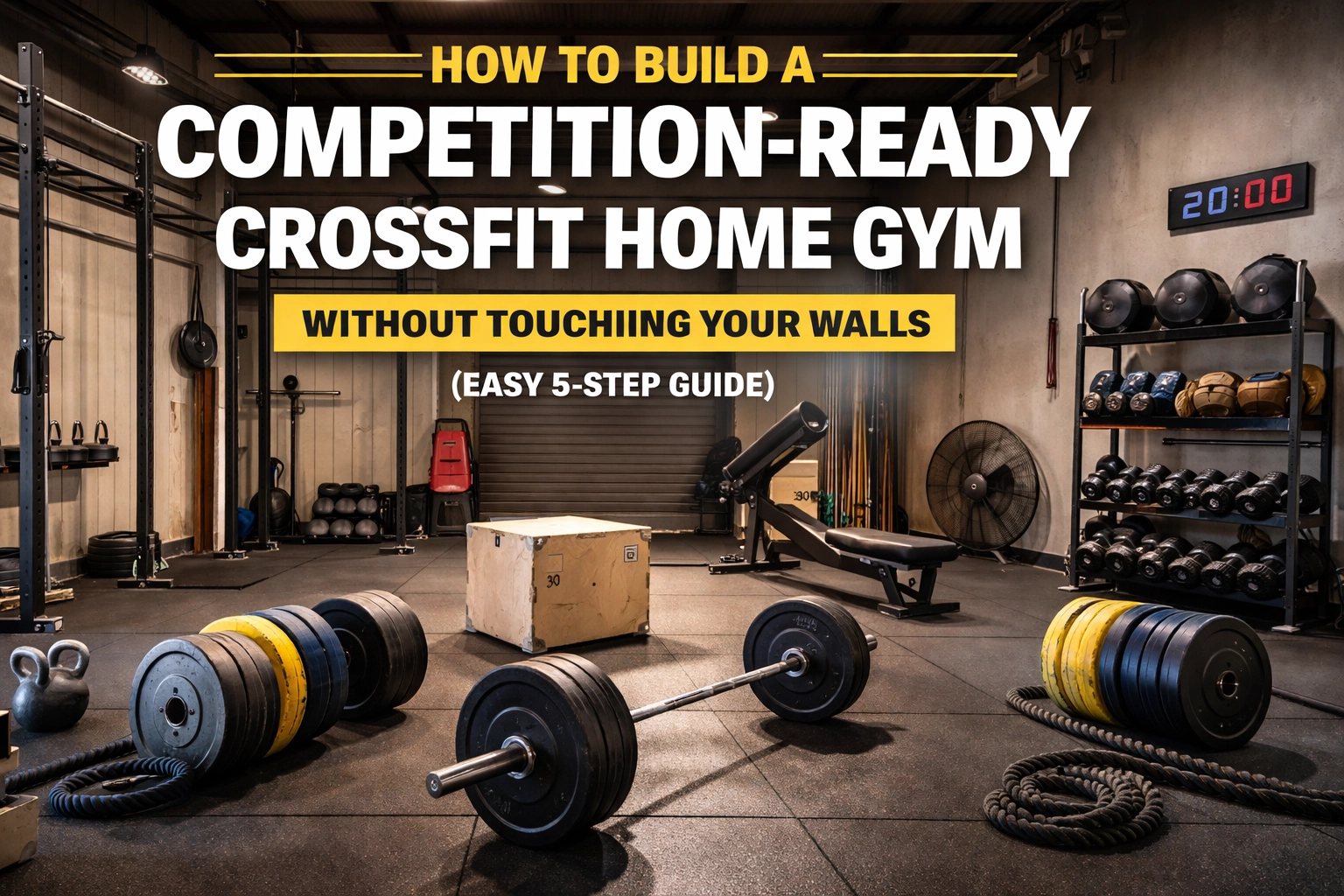
Let's get something straight: You don't need to drill into your walls, sacrifice your security deposit, or buy a house just to train like a competitor. The myth that building a legit CrossFit home gym requires permanent modifications is exactly that: a myth.
Whether you're a ninja warrior grinding through grip training, an MMA fighter working on explosive power, or a CrossFit athlete prepping for competition season, this guide is your blueprint. We're talking a no wall damage workout system that still lets you throw down muscle-ups, kipping pull-ups, and everything in between.
Ready to build something bold? Let's break it down.
Why Wall-Free Matters More Than You Think
Here's the reality most fitness equipment companies don't want to talk about: not everyone owns their space. Renters, apartment dwellers, and homeowners who actually like their walls shouldn't be locked out of serious training.
Traditional home gym equipment almost always assumes you can bolt things into studs. Pull-up bars? Wall-mounted. Suspension trainers? Ceiling anchors. Rigs? Permanent installations.
That's a problem when you're looking at a lease agreement or staring at pristine drywall you'd rather not destroy.
The good news? The fitness industry has evolved. You can now build a versatile home gym that rivals any box: completely freestanding, completely competition-ready.
Step 1: Lock Down Your Foundation With a Freestanding Rig
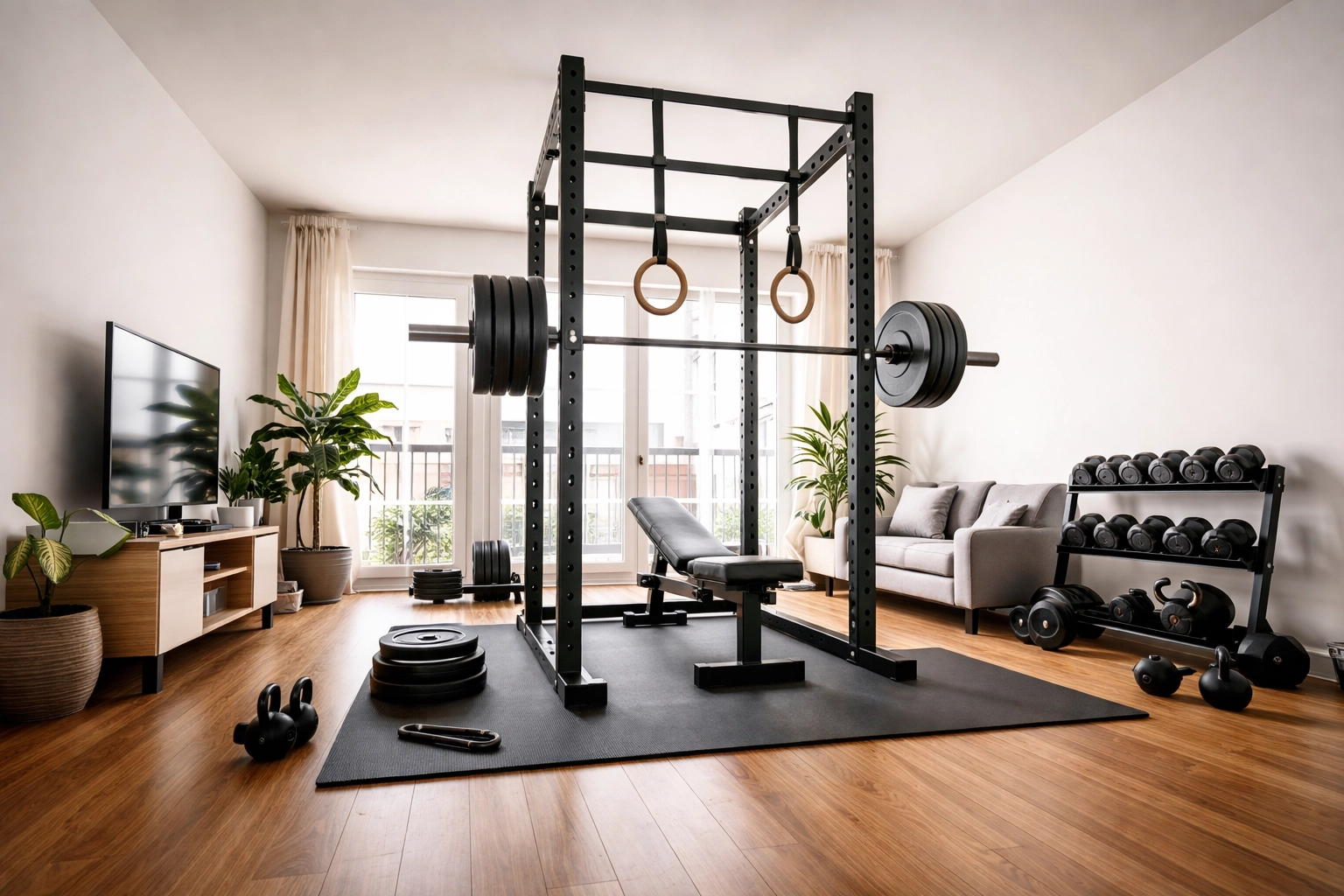
Every serious CrossFit home gym starts with a rig. It's the command center for pull-ups, muscle-ups, barbell movements, and accessory work.
The key word here is freestanding. You want a rig that plants itself on the floor without touching a single wall. Options like the V2 Castro Rig (around $2,130) or the Infinity Rig ($1,550+) are built specifically for home setups and can handle the abuse of competition-level training.
On a tighter budget? A standalone power rack like the Titan T-3 ($519-$689) delivers 1,100 lbs of weight capacity with 11-gauge steel construction. It accepts most standard rack attachments and keeps your floor space open for movement.
What to look for:
- Weight capacity of at least 1,000 lbs
- Pull-up bar attachment compatibility
- Enough height for kipping movements (minimum 8 feet ceiling clearance)
- Weighted base plates or bolt-down options for stability
Your rig is the anchor. Get this right, and everything else falls into place.
Step 2: Solve the Pull-Up Problem Without Destroying Your Ceiling
Here's where most home gym builds fall apart. Pull-ups are foundational to CrossFit, calisthenics, and functional fitness: but traditional solutions suck for renters.
Doorframe pull-up bars? They max out around 300 lbs, destroy your trim, and feel sketchy during kipping movements. Wall-mounted bars? Not an option if you value your walls (or your landlord's sanity).
This is exactly why the floor to ceiling gym concept has exploded. Instead of anchoring to walls, these systems use tension between your floor and ceiling to create rock-solid stability for bodyweight training at home.
The Resistance Rail from Bold Body Fitness is the gold standard here. It's a pull up bar alternative that installs in minutes without drilling, supports serious weight, and handles everything from strict pull-ups to muscle-up progressions.
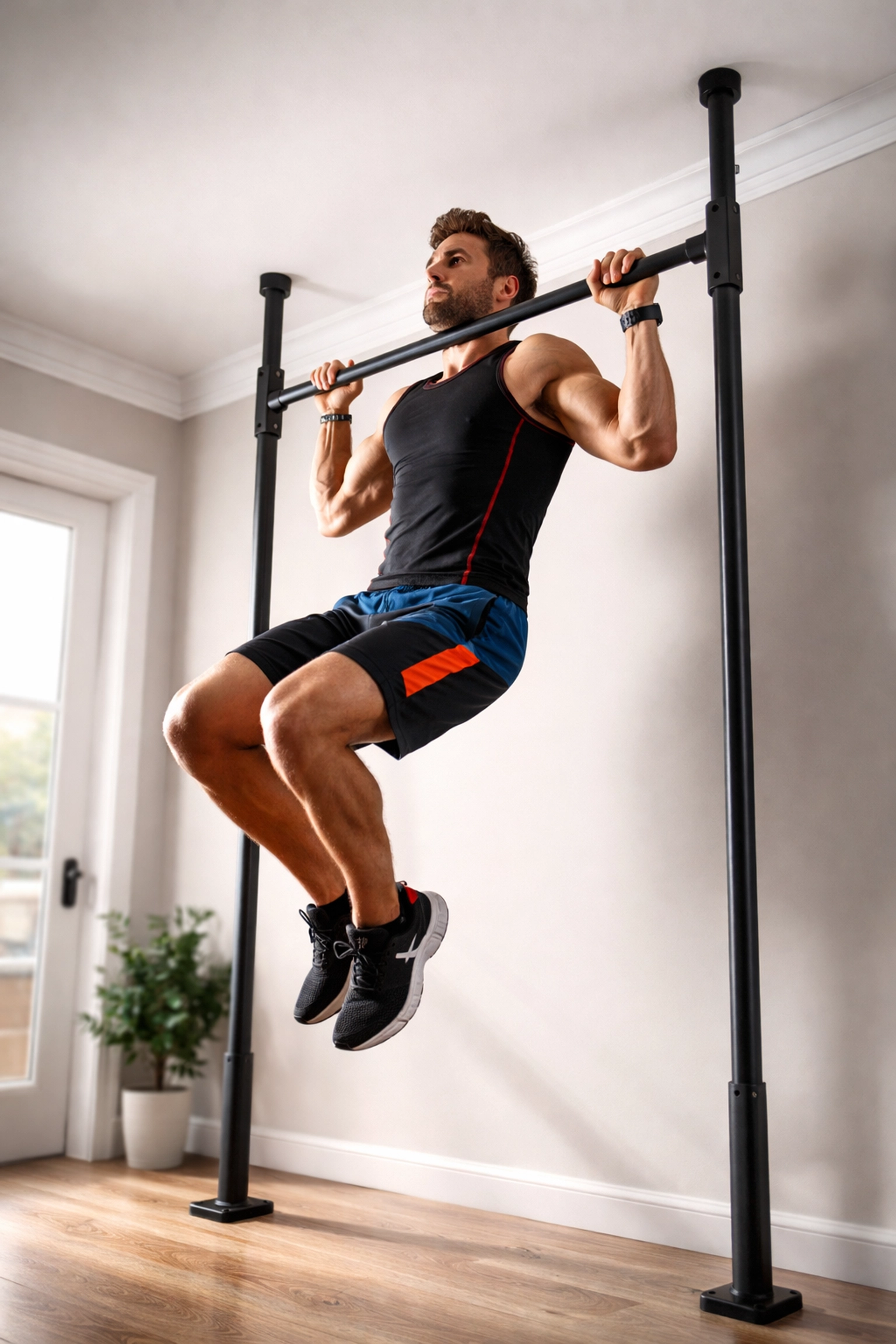
For athletes who want the full package, the Resistance Rail Deluxe adds even more attachment options for resistance training and gymnastic movements.
Why this matters for CrossFit athletes:
- No ceiling damage means no repair bills
- Tension-based systems handle dynamic movements
- Quick setup = more time training, less time building
- Portable enough to relocate when you move
If you're serious about calisthenics equipment for home that doesn't compromise performance, this is the move.
Step 3: Stack Your Barbell Arsenal
CrossFit without barbells isn't really CrossFit. You need quality plates, a solid bar, and enough weight to progress through competition-standard movements.
The essentials:
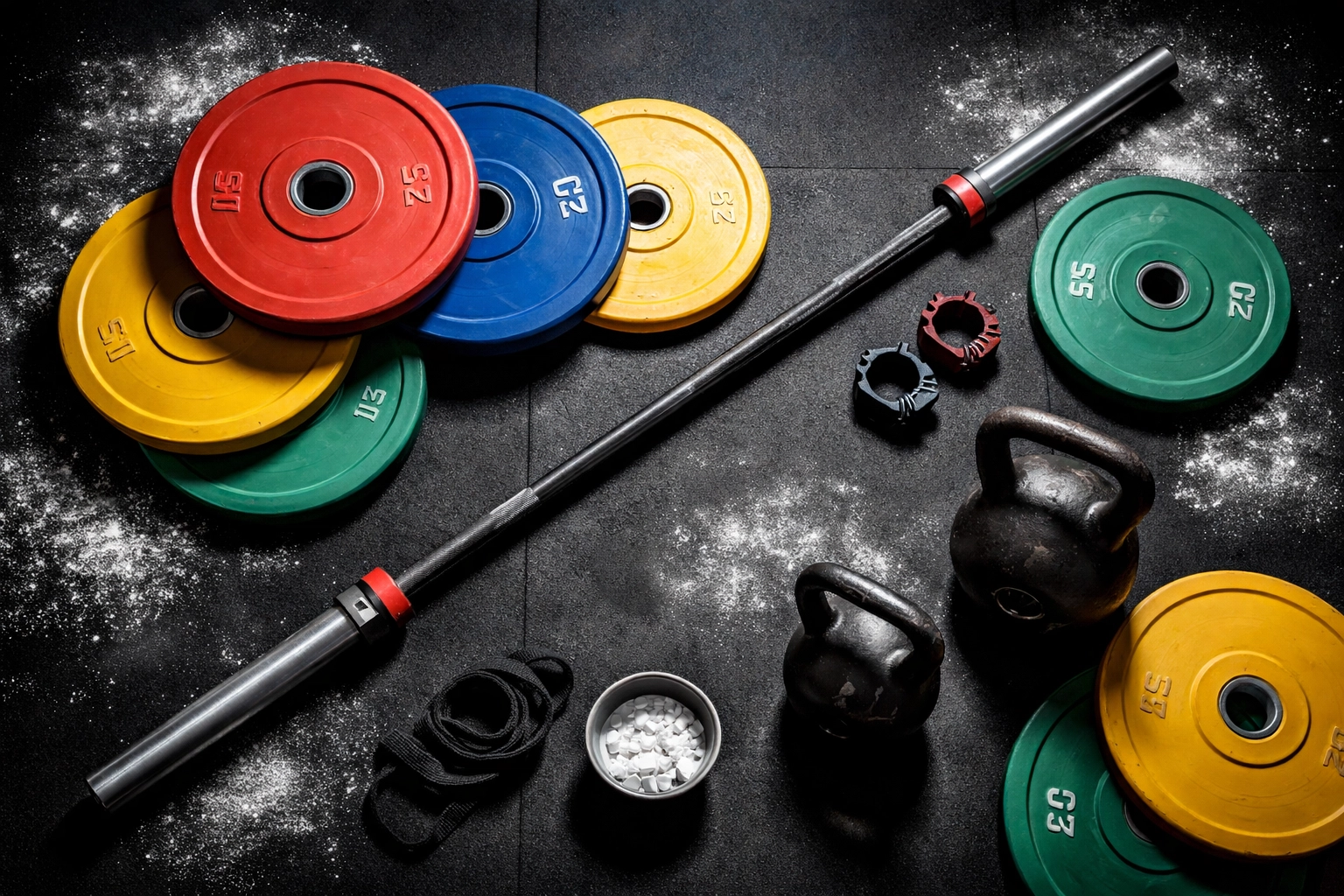
- Olympic barbell: 20kg for men, 15kg for women (competition spec)
- Bumper plates: Start with 210-320 lbs depending on your current strength. Rogue Training 2.0 plates are durable and save space.
- Collars: Don't cheap out here: you need them locked tight during Olympic lifts
Bumper plates are non-negotiable. You will drop weight. You will fail lifts. Bumpers protect your floor and your equipment.
The beauty of a freestanding rig? All your barbell movements: squats, deadlifts, bench press, cleans, snatches: happen right there without wall reinforcement.
Step 4: Add Competition-Specific Equipment
Once your foundation is locked in, it's time to build out your arsenal with the gear that separates home gym warriors from competition-ready athletes.
Plyo Box
The Rogue Flat Pack Games Box ($125) uses standard Games-style dimensions (20/24/30 inches). Box jumps, step-ups, and box-over burpees all require this piece.
GHD Machine
If space allows, a Glute-Ham Developer is a game-changer for midline stability and posterior chain development. The Titan GHD ($599.99) or Rogue Abram 2.0 ($695) are both solid choices that sit completely freestanding.
Dumbbells and Kettlebells
Competition WODs regularly include dumbbell snatches, kettlebell swings, and farmer carries. A range of 15-70 lb dumbbells and 16-32 kg kettlebells covers most programming needs.
Flat Bench
A sturdy bench with 1,000 lb capacity ($159-$239) handles all your pressing work without wall support.
Portable Workout Mat
A thick rubber mat ($70 for the Rogue Individual Mat) protects your floor during double unders and floor movements while creating a defined workout zone.
Step 5: Master Your Space Layout
Here's the truth about building a full body workout at home setup: layout matters as much as equipment selection.
Minimum space requirements:
- 10 x 10 feet for basic training
- 12 x 14 feet for competition-style WODs with barbell cycling
- 8+ foot ceiling clearance for overhead movements and kipping
Optimal Layout Strategy
Center your rig. This is your command center. Everything else orbits around it.
Position barbells and plates within arm's reach of your squat/deadlift position. You shouldn't have to walk across the room between movements during a WOD.
Keep your mat space clear for burpees, double unders, and floor work. This is your "open zone."
Store dumbbells and kettlebells along one wall (no mounting required: just floor placement) for easy access during conditioning pieces.
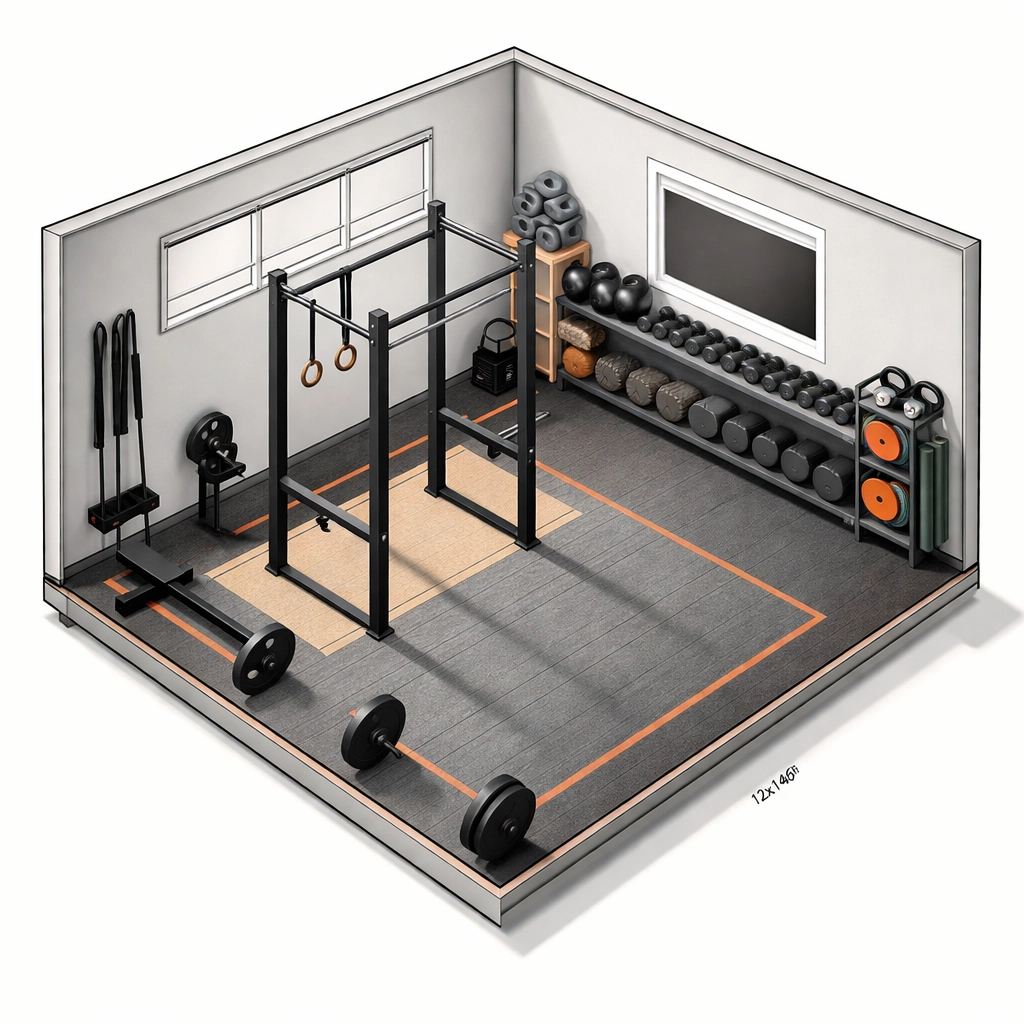
This layout keeps every movement in-floor accessible. Muscle-ups on the rig. Barbell cycling right below. Kettlebell work in the open zone. No wall anchors required.
The Bold Body Approach to Home Training
Building a competition-ready CrossFit home gym isn't about spending $10,000 or destroying your living space. It's about strategic equipment selection and intelligent layout design.
The athletes crushing it in their garages, spare bedrooms, and rental apartments aren't working with more resources: they're working with better systems.
A no wall damage workout system built around tension-based equipment like the Resistance Rail, combined with quality freestanding components, gives you everything you need for serious resistance training and functional fitness.
No excuses. No wall damage. No compromises.
Ready to build your competition-ready setup? Check out the full lineup of calisthenics equipment for home training at the Bold Body Fitness shop and start training like you mean it.
Quick Reference Checklist
| Equipment | Purpose | Wall-Free? |
|---|---|---|
| Freestanding Rig | Pull-ups, squats, rack work | ✅ |
| Resistance Rail | Pull-ups, muscle-ups, calisthenics | ✅ |
| Bumper Plates + Barbell | Olympic lifts, strength work | ✅ |
| Plyo Box | Box jumps, conditioning | ✅ |
| GHD Machine | Core, posterior chain | ✅ |
| Dumbbells/Kettlebells | Accessory work, WODs | ✅ |
Your walls stay clean. Your training stays elite. That's the Bold Body way.
