
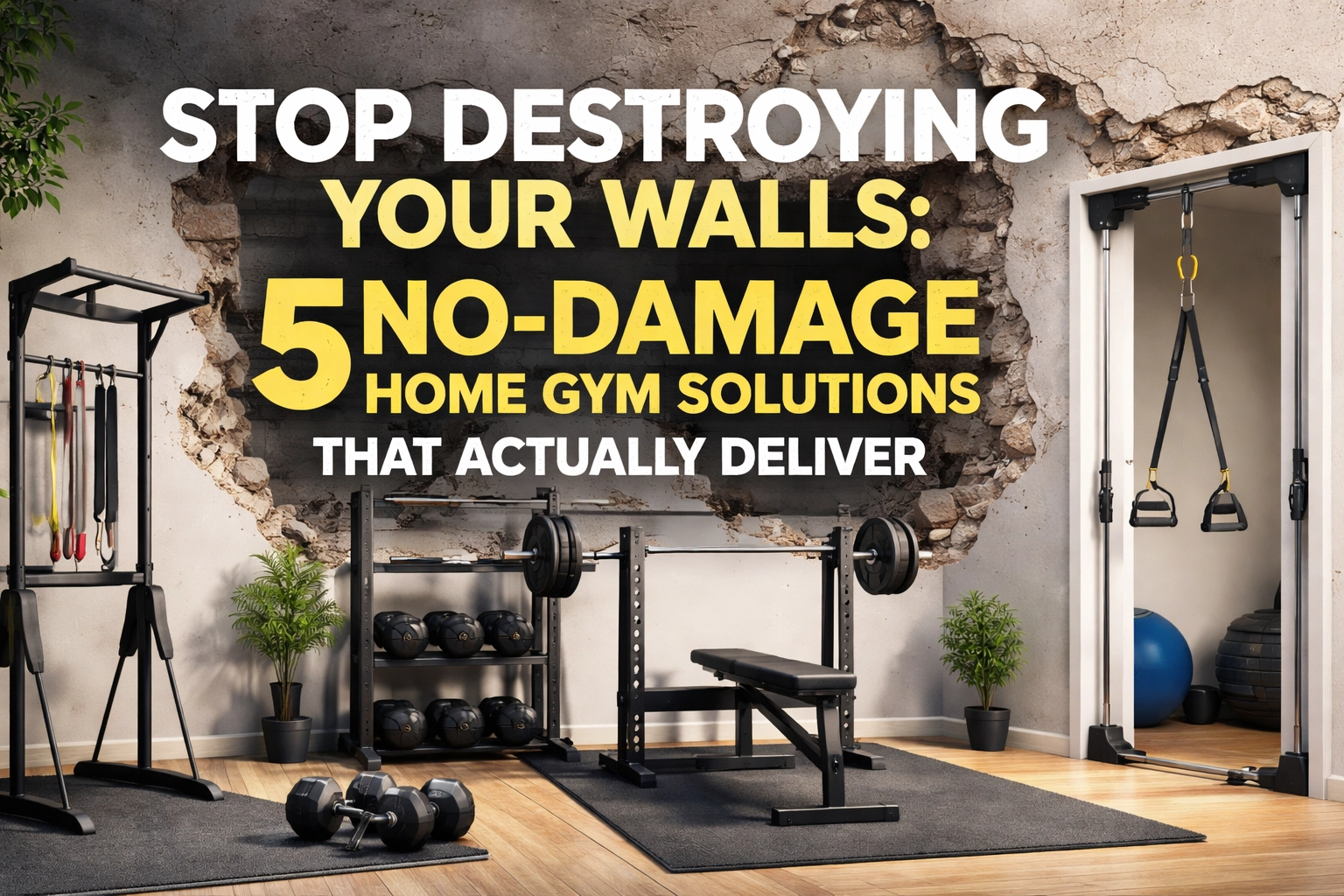
Let's be real for a second. You've been there. Standing in your spare room, garage, or basement with a drill in one hand and a mounting bracket in the other, wondering if your landlord is going to absolutely lose it when they see what you've done to their walls.
Or maybe you own your place, but you've already discovered that drywall and heavy pull-up bars have a complicated relationship. One that usually ends with crumbling plaster, stripped anchors, and a workout station that feels about as stable as a house of cards in a hurricane.
Here's the thing: building a no wall damage workout system doesn't mean settling for weak equipment or half-baked workout routines. The fitness equipment industry has evolved, and there are now legitimate solutions that deliver serious results without turning your home into a construction zone.
Whether you're a calisthenics beast, a CrossFit junkie, an MMA fighter looking for functional strength, or a ninja warrior in training, this guide breaks down the five best no-damage home gym solutions that actually work.
Why Traditional Wall-Mounted Equipment Falls Short
Before we dive into the solutions, let's talk about why wall-mounted gear causes so many headaches in the first place.
Most residential walls aren't designed to handle the dynamic forces of someone doing muscle-ups, kipping pull-ups, or explosive resistance training. Standard drywall crumbles. Studs can crack. And even if you find solid mounting points, you're still dealing with permanent holes that'll haunt you when it's time to move or sell.
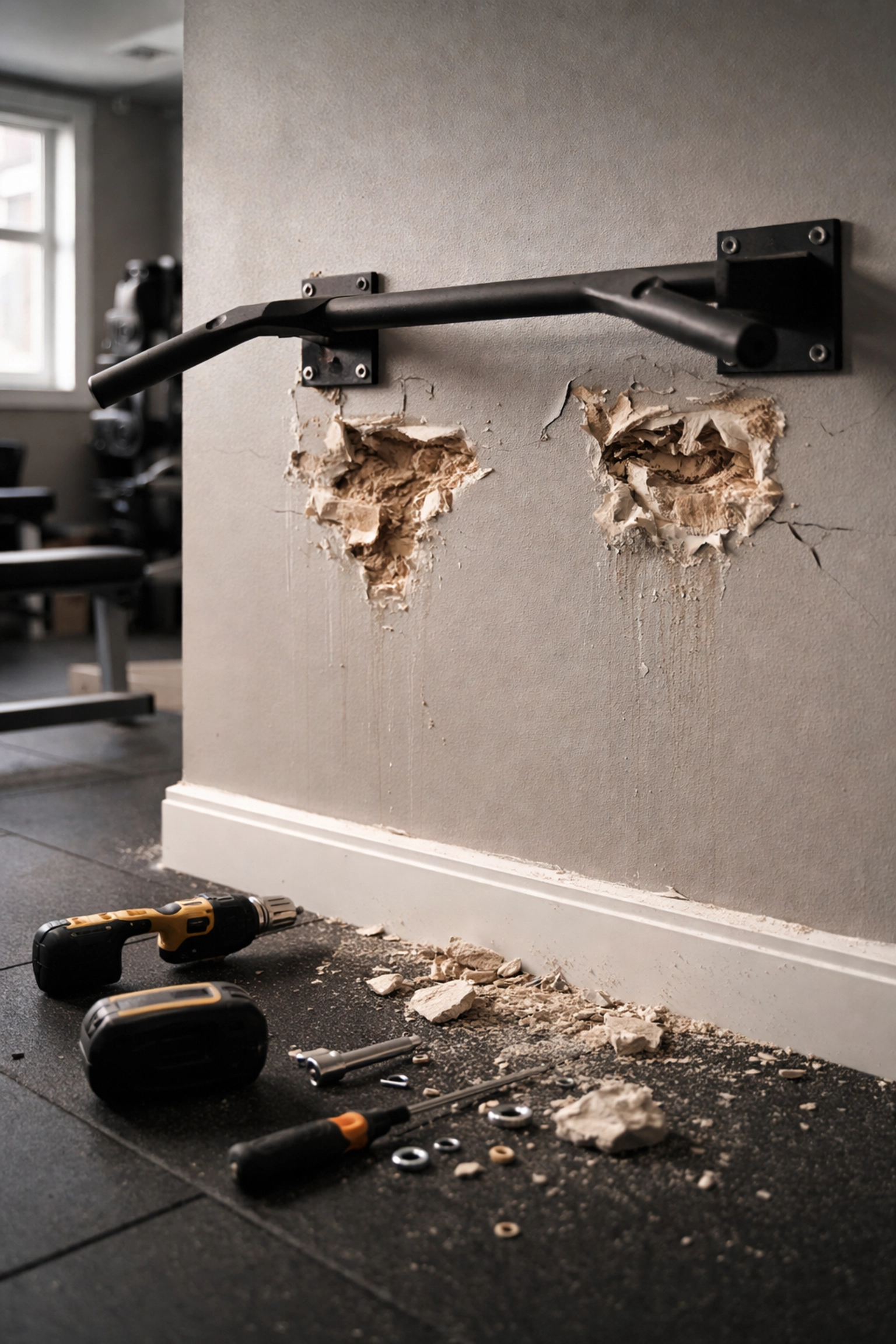
For renters, the situation is even worse. Most lease agreements specifically prohibit the kind of modifications needed to safely install heavy-duty home gym equipment. So you're stuck choosing between risking your security deposit or giving up on serious bodyweight training at home.
But not anymore.
Solution #1: Floor-to-Ceiling Tension Systems
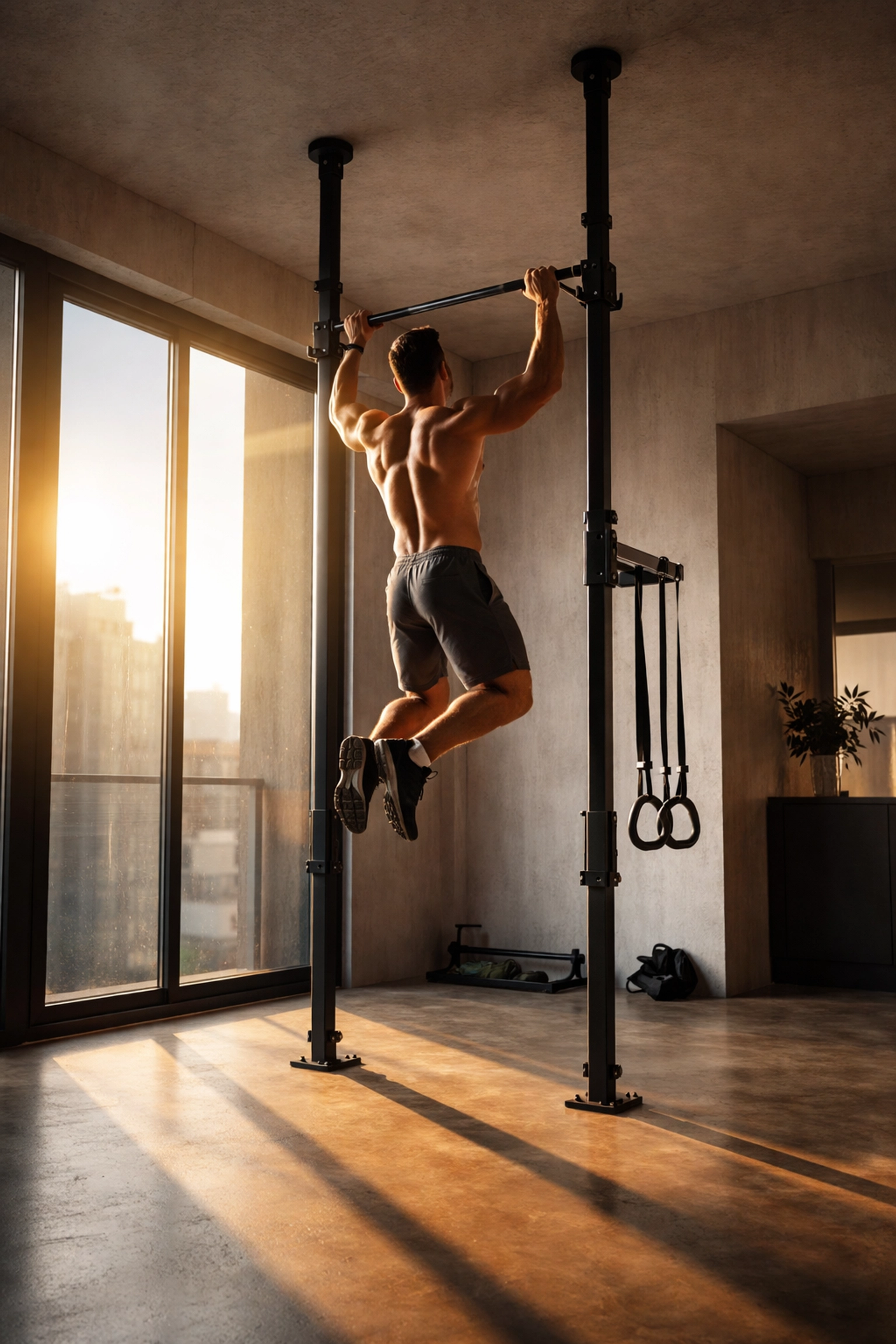
This is the game-changer that serious athletes have been waiting for. Floor to ceiling gym systems use tension compression technology to create a rock-solid training station without a single hole in your walls or ceiling.
The concept is simple but brilliant: a vertical rail or pole is installed between your floor and ceiling using adjustable tension mechanisms. The pressure holds everything firmly in place, giving you a stable anchor point for pull-ups, resistance bands, suspension training, and more.
The Resistance Rail from Bold Body Fitness is the gold standard in this category. Unlike cheap tension rods that wobble and shift, the Resistance Rail is engineered for serious athletes who demand serious performance.
What makes it stand out:
- Zero wall damage – no drilling, no anchors, no permanent modifications
- Incredible versatility – functions as a pull up bar alternative, resistance band anchor, and suspension trainer mount
- Compact footprint – perfect for apartments, condos, and small spaces
- Professional-grade construction – built to handle dynamic movements and heavy loads
For calisthenics practitioners and CrossFit athletes who need a versatile home gym solution, this type of system checks every box. You can perform pull-ups, hanging leg raises, banded exercises, and even attach gymnastics rings: all without putting a single hole in your walls.
Solution #2: Free-Standing Power Racks
If you've got the floor space, a quality free-standing squat rack with an integrated pull-up bar is a solid investment for your crossfit home gym or general strength training setup.
The key advantage here is obvious: these racks stand on their own two feet (or four, technically). No wall mounting required. Many models can be bolted directly to a platform or weighted down for extra stability without touching your walls.
Look for racks that include:
- Multi-grip pull-up bars for varied hand positions
- Safety catches for solo training
- Plate storage to keep your space organized
- Enough height clearance for full-range movements
The downside? Space. A proper power rack takes up serious real estate. If you're working with a spare bedroom or a corner of your living room, this might not be the most practical choice. But for dedicated garage gyms, it's a beast of a solution.
Solution #3: Portable Suspension Trainers
Suspension trainers have been a staple of bodyweight training at home for years, and for good reason. They're portable, affordable, and incredibly effective for building functional strength.
Modern suspension systems can be anchored to door frames, ceiling joists, or outdoor structures: giving you flexibility without permanent installation. The TRX Home Suspension Trainer is a popular option, using a simple door anchor that wedges into place without any hardware.
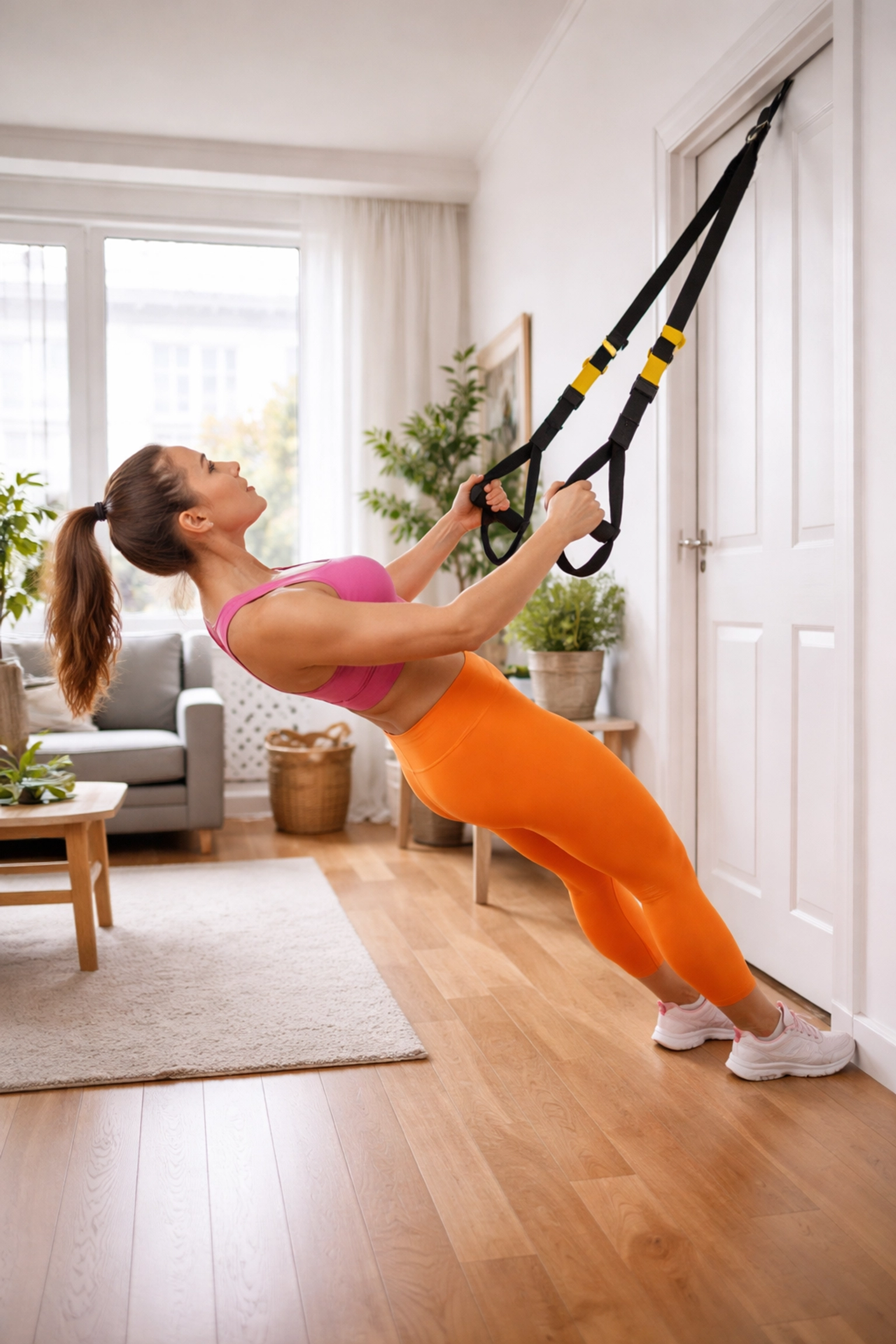
For a full body workout at home, suspension trainers deliver:
- Rows, chest presses, and flyes for upper body
- Pistol squat assists and hamstring curls for lower body
- Core-destroying moves like pikes, rollouts, and body saws
The limitation? You're somewhat dependent on having the right anchor point available. Door frames work in a pinch, but they can feel limiting for more advanced movements. That's where combining a suspension trainer with a tension-based system like the Resistance Rail Deluxe makes sense: you get a dedicated anchor point that's always ready to go.
Solution #4: Smart Resistance Band Machines
The new generation of resistance band machines has completely changed the game for calisthenics equipment for home use. These compact units use digital or mechanical resistance instead of traditional weight stacks, which means smaller footprints and zero wall mounting requirements.
Units like the Speediance Gym Monster and similar smart trainers pack serious functionality into a surprisingly small package. We're talking full cable tower capabilities: lat pulldowns, cable crossovers, tricep pushdowns: without the massive frame of commercial gym equipment.
Benefits for serious athletes:
- Variable resistance that mimics free weights
- Digital tracking for progressive overload
- Compact enough to fit in apartments or small studios
- No installation beyond plugging in
These machines won't replace a full resistance training setup for powerlifters or competitive strength athletes, but for functional fitness, rehabilitation, or supplementary training, they're incredibly effective.
Solution #5: Protective Flooring Systems
Here's a solution that often gets overlooked: the floor itself. Even if you've solved the wall-damage problem, dropped dumbbells and shifting equipment can destroy your subflooring in record time.
Athletic rubber flooring tiles (typically 8mm thick or more) create a protective barrier that:
- Absorbs impact from dropped weights
- Prevents equipment from sliding during intense sessions
- Reduces noise that travels to other rooms or units
- Provides cushioning for floor-based exercises
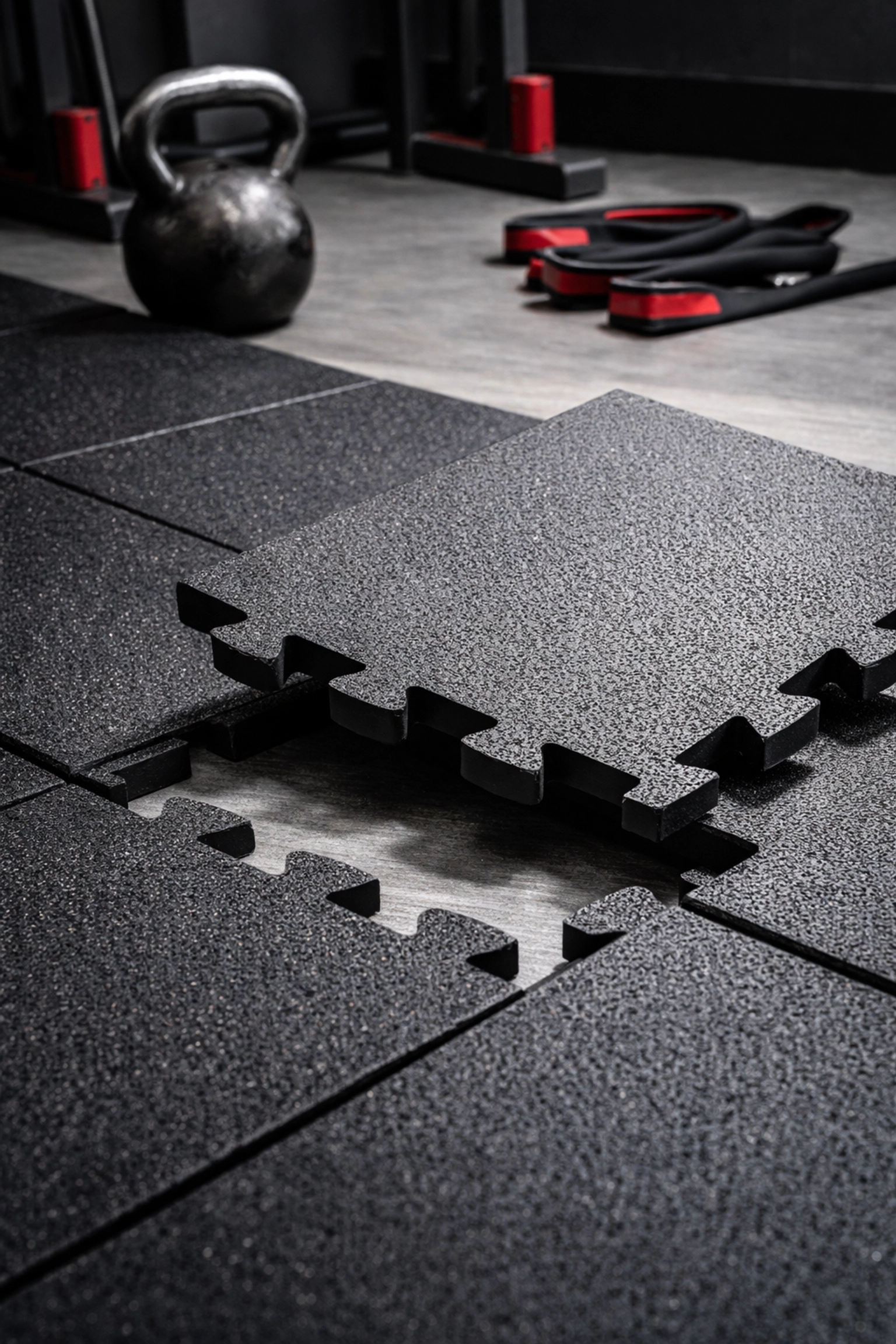
Interlocking tiles are the easiest option: they snap together without adhesive, so you can install and remove them without any permanent changes. Look for tiles rated for gym use, not just generic rubber mats from the hardware store.
When combined with any of the above solutions, quality flooring transforms your space into a legitimate training environment without risking damage to your home.
Choosing the Right Solution for Your Training Style
Not every solution works for every athlete. Here's a quick breakdown based on your primary training focus:
For Calisthenics and Gymnastics:
A floor-to-ceiling system like the Resistance Rail is your best bet. The vertical anchor point supports pull-up variations, lever progressions, and ring work without any compromise. Check out the Bold Body Fitness shop for options built specifically for serious bodyweight athletes.
For CrossFit and Functional Fitness:
Consider combining a free-standing rack with a tension-based system. This gives you barbell work capability plus gymnastics movements in one space.
For MMA and Combat Sports:
Resistance bands and suspension trainers deliver the rotational strength and core stability fighters need. A floor-to-ceiling system also works perfectly for band-resisted strikes and grappling drills.
For Ninja Warriors:
You need grip training and pulling power. A tension-mounted pull-up system with multiple attachment options is essential: bonus points if you can add climbing grips or peg boards.
The Bottom Line
Building a legit home gym equipment setup without destroying your walls isn't just possible: it's actually the smarter choice for most athletes. You maintain flexibility, protect your investment (or your security deposit), and still get access to professional-grade training.
The key is choosing solutions engineered for serious use, not flimsy products that'll fail when you need them most. Floor-to-ceiling systems, free-standing racks, suspension trainers, smart resistance machines, and proper flooring can all work together to create a versatile home gym that rivals commercial facilities.
Ready to build your no-damage training space? Start with a solid foundation like the Resistance Rail and build from there. Your walls will thank you. Your training won't suffer. And you'll finally have a setup that works as hard as you do.
