
Look, we need to talk.
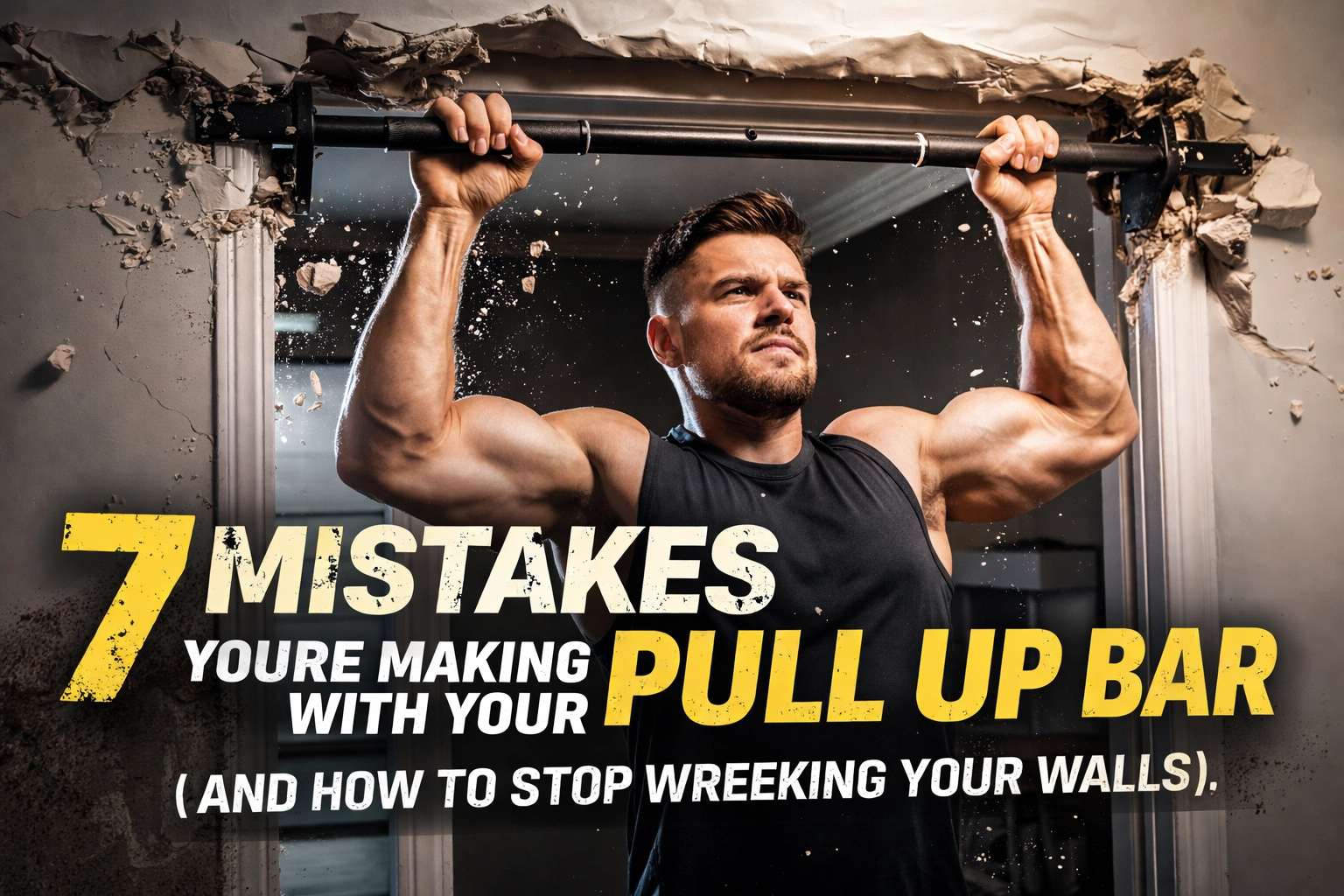
That pull up bar you installed last month? The one you were so pumped about? It's probably destroying your walls right now. Or it's about to fail spectacularly mid-rep. Or maybe it's already sitting in your garage because it "didn't work out."
Here's the brutal truth: most people set up their home gym equipment completely wrong. They buy the cheapest option, slap it up without thinking, and then wonder why their landlord is keeping their security deposit or why they can't progress past ten reps without the whole thing shaking like a leaf.
Whether you're a calisthenics beast, a CrossFit athlete training between gym sessions, or a ninja warrior building grip strength at home, these mistakes are costing you gains, and money.
Let's fix that.
Mistake #1: Mounting Directly to Drywall (The Classic Blunder)
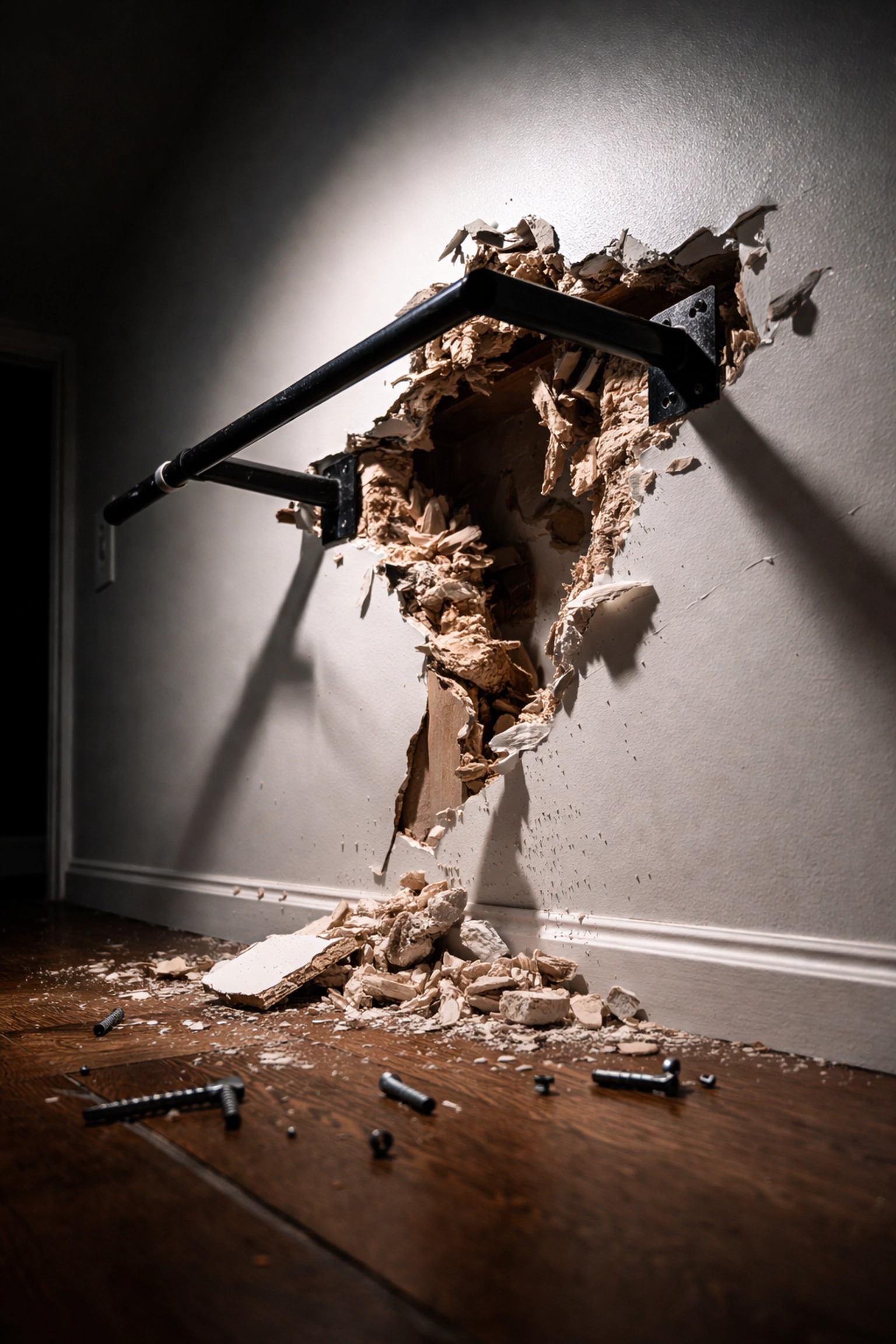
This one hurts to write because it's so common. You grab your drill, find a "good spot" on the wall, and start making holes. The problem? Drywall alone can't support your bodyweight. Period.
Drywall is essentially compressed chalk held together by paper. It's designed to look pretty, not to handle 150+ pounds of dynamic force during kipping pull ups or muscle-ups.
What happens: The screws slowly pull out. Cracks spider across your wall. One day, mid-rep, the whole thing rips free, taking a chunk of your wall with it.
The fix: If you're going wall-mounted, you MUST hit studs. Use a stud finder, mark your spots, and anchor into solid wood framing. Even then, you're looking at potential long-term damage from the constant stress.
Or, here's a thought, skip the wall damage entirely with a no wall damage workout system that doesn't require drilling into your home.
Mistake #2: Trusting Cheap Doorway Bars with Your Safety
Those $30 doorway pull up bars are everywhere. They seem like the perfect solution for bodyweight training at home. No drilling, easy setup, affordable.
Here's what the marketing doesn't tell you: they're destroying your door frame with every single rep.
The constant downward pressure creates indentations in your door trim. Over time, you'll see cracks forming in the architrave, that decorative molding around your door. And guess what? Most manufacturers explicitly exclude this damage from their warranties. They know it's inevitable.
The real kicker: These bars have serious weight limits. Most max out around 200 lbs, and that's static weight. Add momentum from dynamic movements, the kind serious athletes actually need, and you're flirting with disaster.
If you're building a CrossFit home gym or training for ninja warrior competitions, a tension-mounted doorway bar isn't equipment. It's a liability.
Mistake #3: Ignoring Your Training Style When Choosing Equipment
Not all pull up bars are created equal. And not all training styles work with every setup.
A gymnast practicing skin-the-cats needs different equipment than someone doing strict pull ups for general fitness. An MMA fighter working explosive pulling power has different demands than a calisthenics practitioner holding front levers.
Common mismatches:
- Doorway bars for kipping pull ups (they wobble and slip)
- Narrow-grip-only bars for wide-grip lat development
- Low-ceiling setups for muscle-ups
- Unstable equipment for weighted progressions
The solution: Think about your actual training goals before buying anything. If you need a versatile home gym setup that handles everything from basic pull ups to advanced calisthenics movements, you need equipment built for real athletes, not weekend warriors.
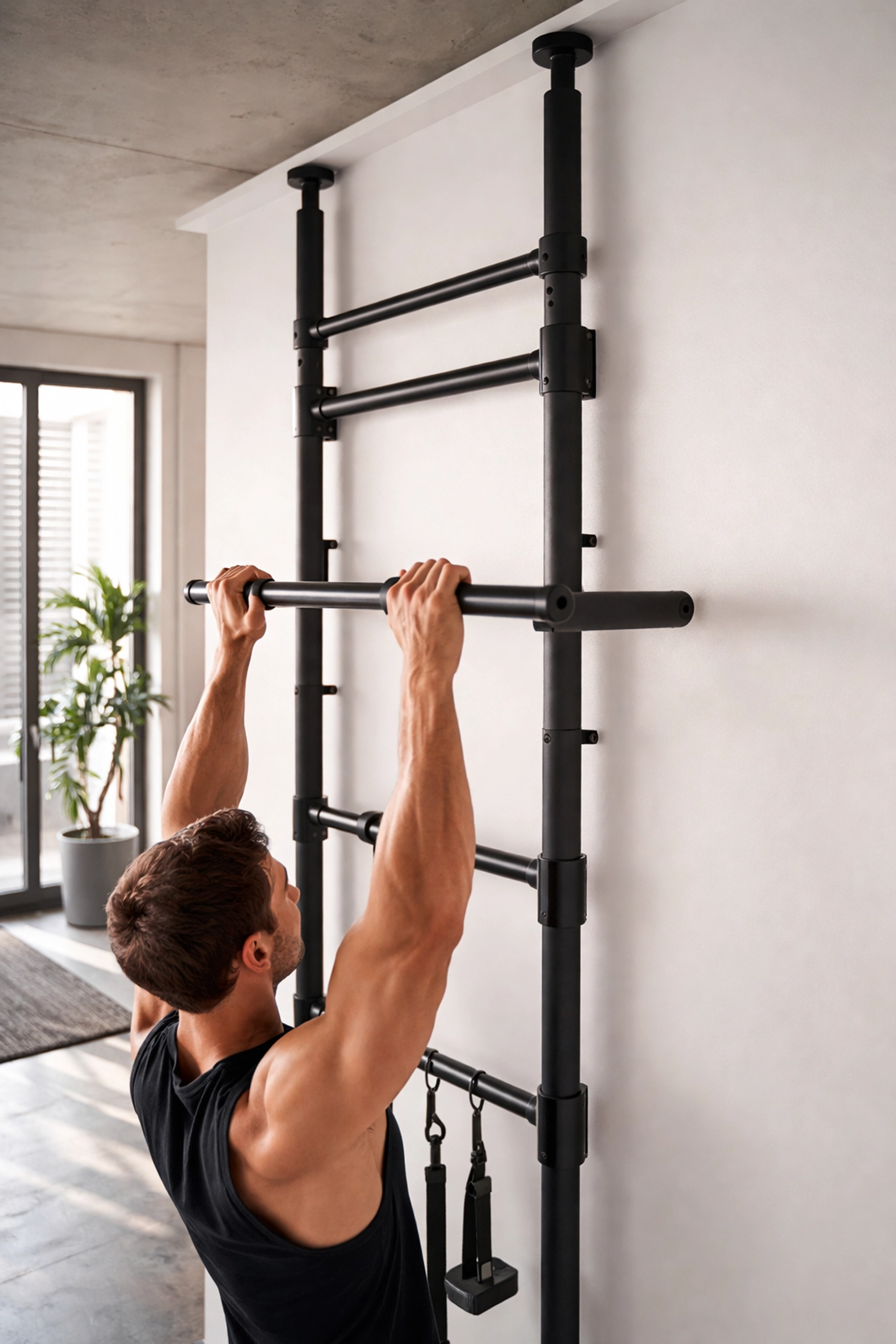
The Resistance Rail was designed specifically for this. It's a floor to ceiling gym system that handles serious resistance training without asking your walls to make sacrifices.
Mistake #4: Installing at the Wrong Height
This sounds minor. It's not.
Install too low, and you'll never achieve full extension on your pull ups. You'll bend your knees awkwardly, throw off your form, and limit your range of motion. Goodbye, full muscle activation.
Install too high, and you can't safely mount or dismount. You'll need to jump to grab the bar: which is fine until you're fatigued and miss. Or you'll need a chair every time, which kills your workout flow.
The sweet spot: Your bar should be high enough that you can hang with arms fully extended and feet slightly off the ground. For most people, this means about 7-8 feet of clearance.
The problem: Most homes don't have ideal ceiling heights in convenient locations. Doorways are usually around 6'8". Wall-mounting in the right spot might mean drilling into areas without proper stud support.
This is why serious athletes are switching to adjustable floor to ceiling systems. They fit your space instead of forcing your space to fit them.
Mistake #5: Forgetting About Grip Width Options
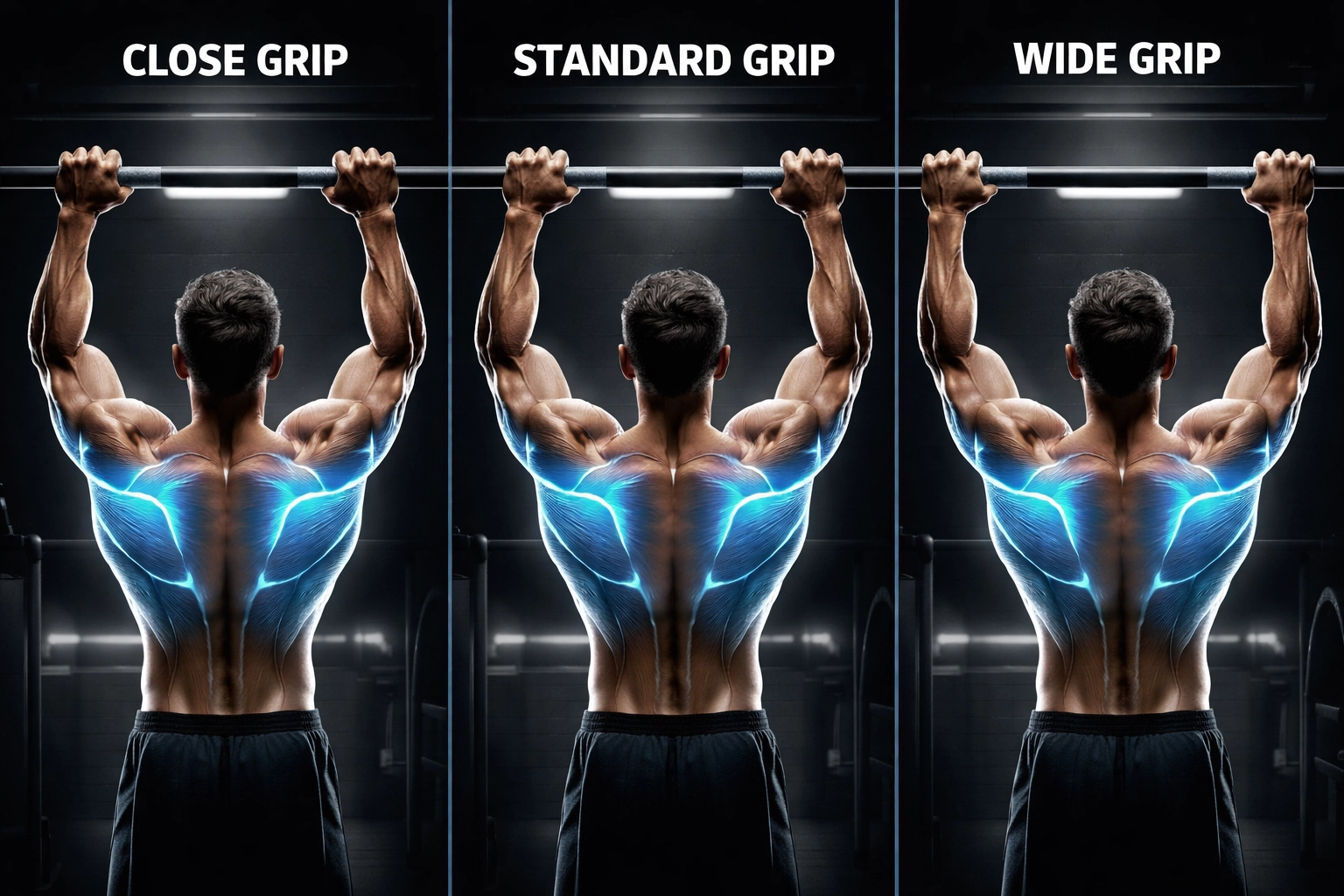
Here's a training truth that cheap equipment ignores: grip width matters. A lot.
- Close grip emphasizes biceps and lower lats
- Standard grip provides balanced lat development
- Wide grip targets upper lats and creates that V-taper
If your setup only allows one grip width, you're leaving gains on the table. You're also creating repetitive stress patterns that can lead to overuse injuries in your shoulders and elbows.
What most people do: Buy a single straight bar and never think about it again.
What athletes do: Invest in calisthenics equipment for home that offers multiple grip positions and angles. The ability to rotate through grip variations isn't a luxury: it's how you build complete pulling strength without destroying your joints.
Mistake #6: Neglecting Regular Safety Checks
When's the last time you actually inspected your pull up bar?
Hardware loosens. Tension decreases. Rubber grips wear down. Wall anchors slowly work their way free from micro-movements you can't even see.
The nightmare scenario: You're three months into consistent training. Your strength has increased significantly. You're now putting more force through equipment that's been slowly degrading since day one. Something gives.
The fix: Check your setup weekly. Tighten bolts. Inspect mounting points for cracks or loosening. Replace worn grips. If anything feels less stable than it did originally, stop using it until you've identified and fixed the problem.
Better yet: choose equipment designed for long-term heavy use. At Bold Body Fitness, we build gear that handles serious athletes doing serious work, day after day.
Mistake #7: Settling for Single-Purpose Equipment
This is the big one. The mistake that costs you the most money and space over time.
You buy a pull up bar. Then you need a dip station. Then somewhere to anchor resistance bands. Then a spot for rows. Before you know it, your "home gym" looks like a cluttered mess of single-purpose equipment that still can't do everything you need.
The smart approach: Invest once in a versatile home gym system that handles multiple exercises without multiplying your equipment.
The Resistance Rail Deluxe is exactly this kind of pull up bar alternative. It's a complete system for full body workout at home: pull ups, rows, resistance band work, and more: without a single hole in your wall.

Stop Compromising Your Training (And Your Walls)
Here's the bottom line: if you're serious about bodyweight training at home, you need equipment that matches your ambition.
That means:
- No wall damage from janky installations
- No weight limits that cap your progression
- No single-purpose gear cluttering your space
- No constant worry about hardware failure
Whether you're training for ninja warrior, building functional strength for MMA, mastering advanced calisthenics skills, or just want a CrossFit home gym that doesn't require a construction permit: you deserve better than doorway bars and drywall anchors.
Check out the full lineup at our shop and see what proper home gym equipment actually looks like.
Your walls will thank you. Your training will thank you. And your future self: the one hitting muscle-ups and weighted pull ups without equipment failure anxiety: will definitely thank you.
Now stop making these mistakes and start making gains.
