
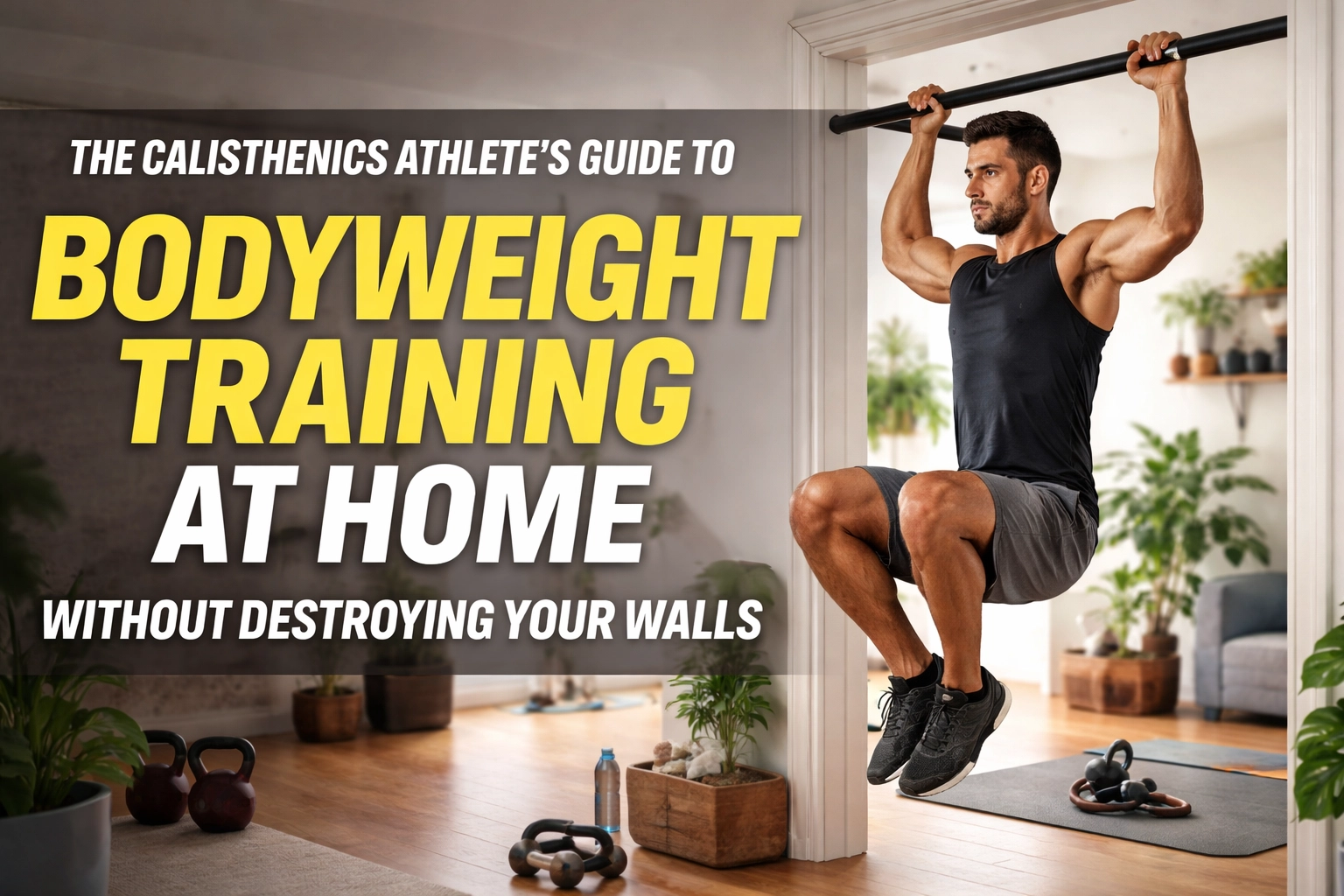
Let's get one thing straight: you don't need a commercial gym membership, a garage full of iron, or a landlord's nightmare of holes in your walls to build serious strength. Bodyweight training at home has been the secret weapon of elite athletes for centuries: from ancient Greek Olympians to modern-day ninja warriors crushing obstacle courses.
But here's where most people mess up. They think calisthenics means doing a few pushups in their living room and calling it a day. Wrong. Real bodyweight training is a full-blown assault on your muscles, your endurance, and your mental fortitude. And the best part? You can do it all without putting a single hole in your rental apartment walls.
Welcome to your complete guide to building a beast-mode physique with bodyweight training at home: no wall damage, no excuses, just results.
Why Bodyweight Training Dominates for Home Athletes
Forget what the gym bros told you. Research consistently shows that bodyweight exercises can be just as effective as lifting weights for building muscle and strength. The difference? You don't need thousands of dollars in equipment or a dedicated room to store it all.
Calisthenics builds functional strength that transfers directly to real-world performance. Whether you're a CrossFit athlete looking to dominate WODs, an MMA fighter needing explosive power, or a gymnast chasing that perfect muscle-up, bodyweight training delivers.
Here's what makes it superior for home training:
- Zero equipment barrier to entry : Start today with just your body and floor space
- Scalable difficulty : Progress from beginner to advanced without buying new gear
- Joint-friendly movement patterns : Natural ranges of motion reduce injury risk
- Full-body integration : Every exercise demands core stability and coordination
- No wall damage : Perfect for apartments, rentals, or anywhere you can't drill holes
The Foundation: Core Calisthenics Movements You Need to Master
Every serious calisthenics program revolves around fundamental movement patterns. Master these, and you've built the foundation for advanced skills like muscle-ups, human flags, and planche progressions.
Push Movements
Your pushing arsenal should include:
- Standard pushups : The cornerstone of upper body strength
- Diamond pushups : Crushing your triceps and inner chest
- Archer pushups : Single-arm strength without the instability
- Pike pushups : Building boulder shoulders without a single dumbbell
- Decline pushups : Upper chest emphasis using any elevated surface
Start where you're at. If standard pushups are tough, begin with knee pushups or incline pushups against a sturdy surface. There's no shame in progression: there's only shame in not showing up.
Pull Movements
Here's where most home athletes hit a wall (pun intended). Pull movements require something to hang from, and traditional pull-up bars mean drilling into door frames or walls.
This is exactly why a no wall damage workout system changes everything.
Without proper pulling exercises, you'll develop muscle imbalances that lead to injury and a physique that looks like it skipped back day. Australian rows using a sturdy table work for beginners, but serious athletes need a dedicated pull up bar alternative that doesn't require permanent installation.
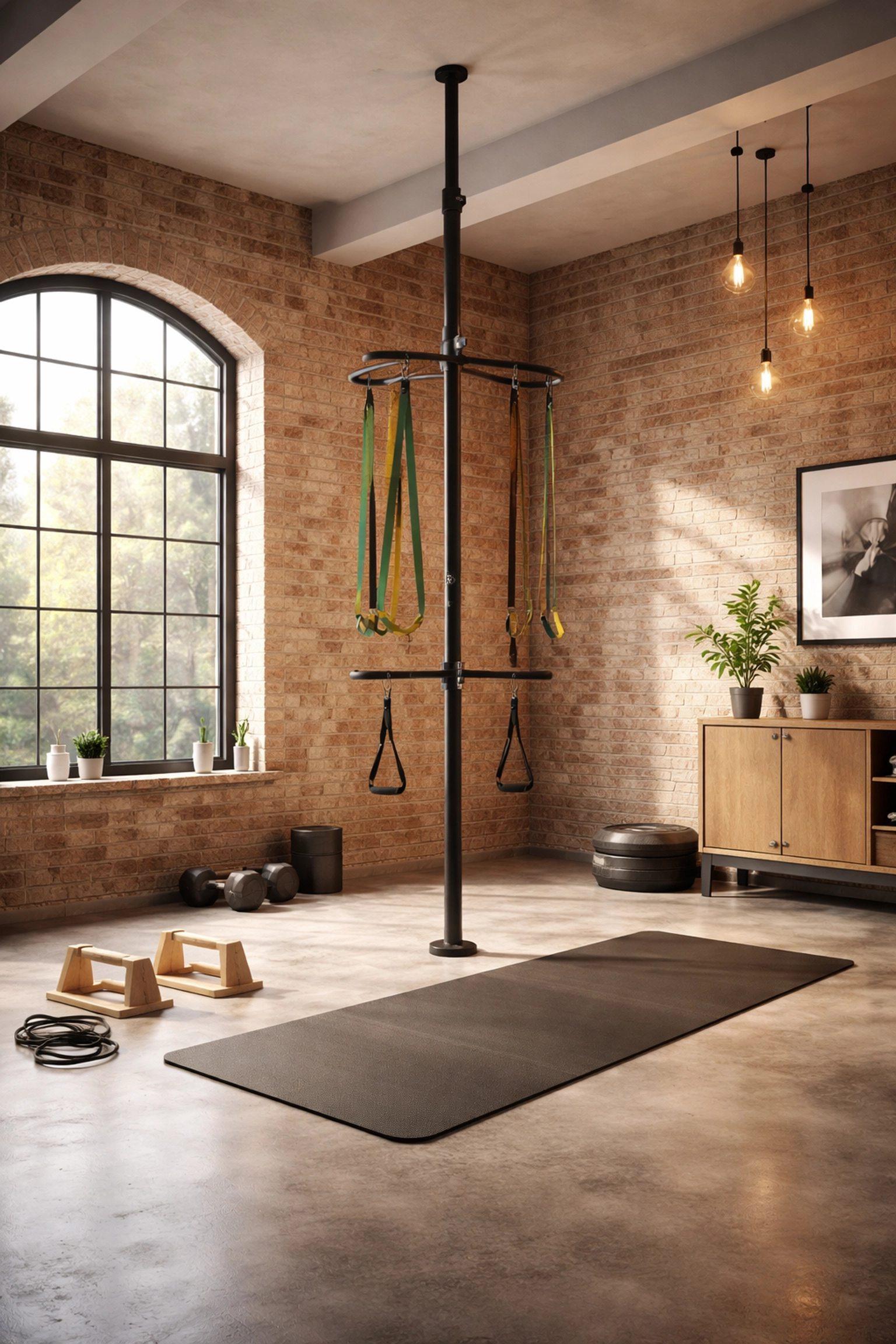
The Resistance Rail from Bold Body Fitness solves this problem completely. This floor to ceiling gym system uses tension to lock securely between your floor and ceiling: zero holes, zero damage, maximum functionality. It's the versatile home gym solution that ninja warriors, gymnasts, and calisthenics athletes have been waiting for.
Leg Exercises
Don't skip leg day just because you're training at home. Your lower body contains the largest muscle groups in your body, and training them triggers massive hormonal responses that benefit your entire physique.
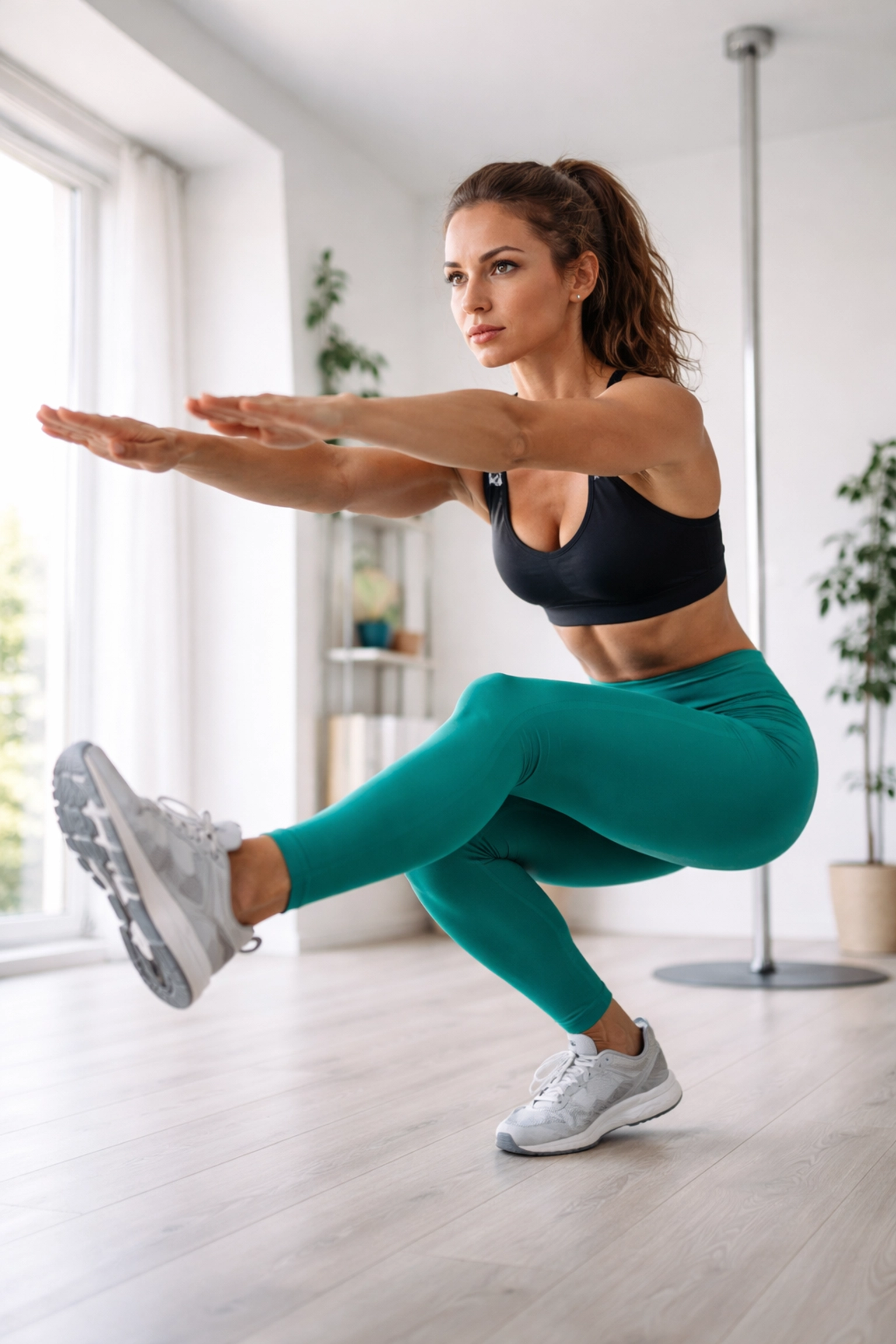
- Pistol squats : The king of bodyweight leg exercises
- Bulgarian split squats : Using any chair or couch as your rear foot elevation
- Jump squats : Explosive power development
- Walking lunges : Functional strength and balance
- Nordic curls : Hamstring destroyers using just a couch to anchor your feet
Core Work
Your core isn't just your abs: it's the entire muscular system that stabilizes your spine and transfers force between your upper and lower body. A weak core means weak everything else.
Build an unbreakable midsection with:
- Hollow body holds : The gymnast's secret weapon
- Planks and side planks : Anti-extension and anti-lateral flexion strength
- Windshield wipers : Rotational power (hanging from your Resistance Rail)
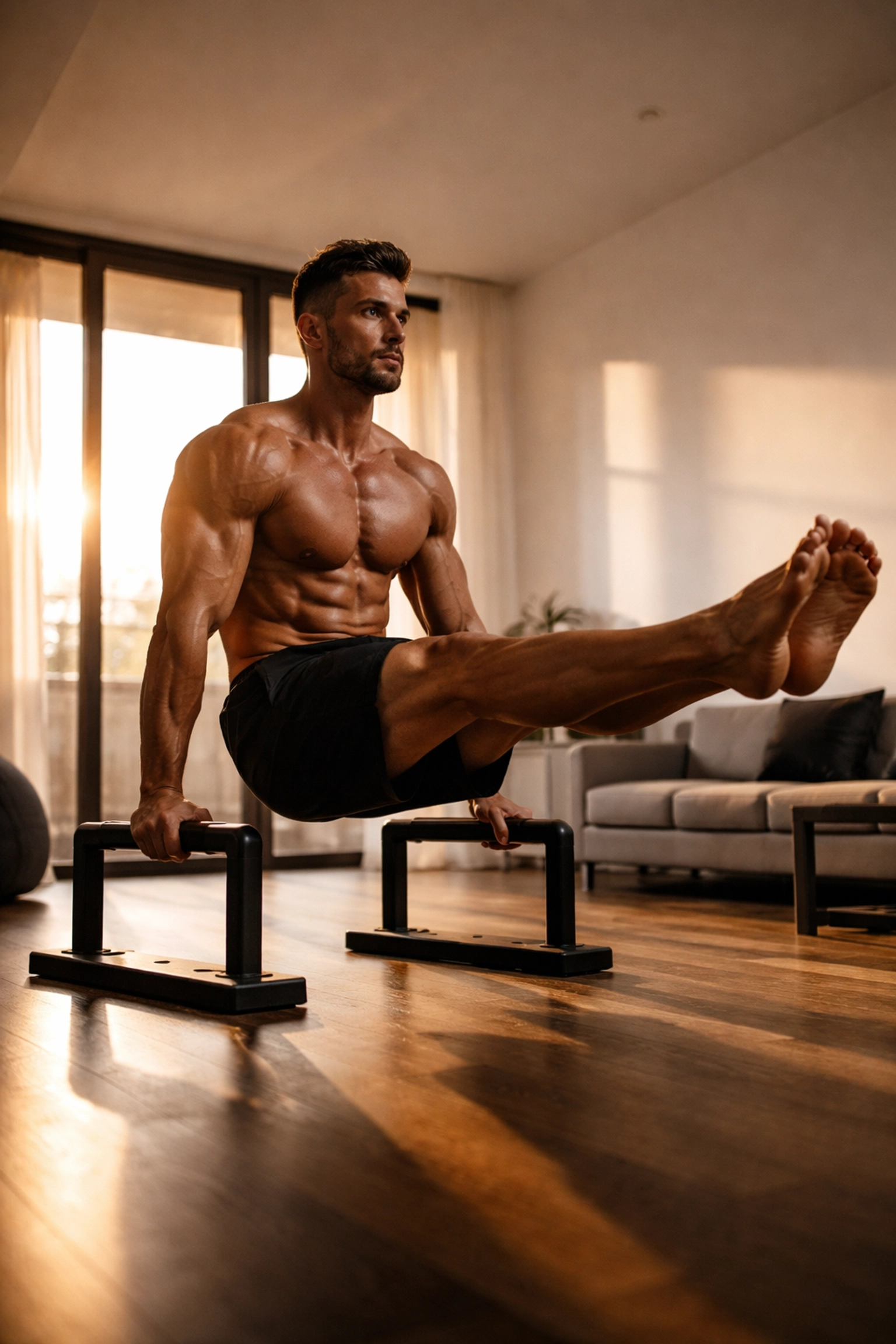
- L-sits : Crushing your hip flexors and core simultaneously
- Dead bugs : Coordination and core stability in one movement
Programming Your Home Calisthenics Training
Having a list of exercises means nothing without a structured program. Here's how to organize your full body workout at home based on your available training days:
3 Days Per Week: Full Body Focus
Best for: Athletes maintaining fitness or those with limited time
Sample Structure:
- Day 1: Push emphasis + legs + core
- Day 2: Rest
- Day 3: Pull emphasis + legs + core
- Day 4: Rest
- Day 5: Full body circuit
- Days 6-7: Rest
4 Days Per Week: Upper/Lower Split
Best for: Balanced development with solid recovery
Sample Structure:
- Day 1: Upper body (push/pull)
- Day 2: Lower body + core
- Day 3: Rest
- Day 4: Upper body (push/pull)
- Day 5: Lower body + core
- Days 6-7: Rest
5-6 Days Per Week: Advanced Split
Best for: Serious athletes chasing maximum gains
Consider a Push/Pull/Legs rotation that allows you to hit each muscle group twice per week while maintaining adequate recovery.
Building Your No-Damage Home Gym Setup
Let's talk calisthenics equipment for home that won't destroy your living space or empty your bank account.
The Essentials
1. A Quality Floor-to-Ceiling System
This is the game-changer. A floor to ceiling gym like the Resistance Rail gives you a rock-solid anchor point for pull-ups, hanging leg raises, resistance band work, and dozens of other exercises. Unlike door-frame pull-up bars that damage trim and feel sketchy under load, a tension-based system provides commercial-gym stability in your apartment.
The Resistance Rail from Bold Body Fitness is specifically designed for serious athletes who refuse to compromise on training quality just because they're working out at home. It's the ultimate pull up bar alternative for renters and homeowners who value their walls.
2. Resistance Bands
Bands add accommodating resistance to bodyweight movements and enable assisted variations of advanced skills. Loop a band over your Resistance Rail for assisted pull-ups, or use it for banded pushups to increase difficulty at the top of the movement.
3. Parallettes or Push-Up Handles
These simple tools increase range of motion on pushing exercises and enable L-sits, handstand work, and other gymnastics-based movements. They're cheap, portable, and dramatically expand your exercise options.
4. A Yoga Mat or Exercise Mat
Protect your joints and your floors. Quality mat = quality training sessions.
The CrossFit Home Gym Advantage
If you're building a CrossFit home gym, the combination of a Resistance Rail and basic equipment opens up massive programming possibilities. Add a jump rope, a kettlebell or two, and a medicine ball, and you can replicate most CrossFit workouts without the monthly box membership fees.
The Warm-Up Protocol You Can't Skip
Cold muscles and stiff joints are injury magnets. Before every session, run through this 5-10 minute warm-up:
- Light cardio (5 minutes): Jumping jacks, jogging in place, or jump rope
- Arm circles and swings: Forward, backward, and across your body
- Wrist circles and stretches: Essential for pushup and handstand work
- Cat-cow stretches: Spinal mobility and core activation
- Scapula rows or wall slides: Shoulder blade health and stability
- Bodyweight squats and lunges: Lower body prep and hip mobility
Progression: From Beginner to Beast
The magic of bodyweight training at home lies in progression. You don't need heavier weights: you need harder variations.
Here's how progression works in calisthenics:
Pushup Progression:
Knee pushups → Standard pushups → Diamond pushups → Archer pushups → One-arm pushup negatives → One-arm pushups
Pull-Up Progression:
Australian rows → Negative pull-ups → Assisted pull-ups (band) → Standard pull-ups → Weighted pull-ups → Muscle-ups
Squat Progression:
Assisted squats → Standard squats → Jump squats → Shrimp squats → Pistol squats (assisted) → Full pistol squats
Each progression might take weeks or months to master. That's the beauty of calisthenics: there's always a harder variation calling your name.

Common Mistakes That Kill Your Progress
Mistake #1: Skipping Pull Movements
Without a proper pull up bar alternative or hanging setup, most home athletes neglect their back completely. This creates dangerous muscle imbalances, rounded shoulders, and a physique that screams "I only do pushups." Invest in a no wall damage workout system and prioritize pulling movements equally with pushing.
Mistake #2: Ego Over Form
Cranking out sloppy reps might stroke your ego, but it destroys your joints and limits your gains. Every rep should be controlled, full range of motion, and executed with intention. Slow down.
Mistake #3: No Structured Program
Random workouts produce random results. Follow a structured program for at least 8 weeks before changing things up. Progressive overload: adding reps, sets, or moving to harder variations: is how you grow.
Mistake #4: Neglecting Recovery
Training breaks you down. Sleep, nutrition, and rest days build you back up stronger. Train hard, recover harder.
Your Next Move
You've got the knowledge. You've got the movements. Now you need the setup.
Stop making excuses about not having gym access or not wanting to destroy your walls. Bodyweight training at home is the most accessible, effective, and scalable training method available: and with the right home gym equipment, you can build a physique and performance level that rivals any commercial gym member.
The Resistance Rail from Bold Body Fitness is the missing piece for serious calisthenics athletes. A true versatile home gym that installs in minutes, requires zero wall damage, and provides the foundation for unlimited training progressions.
Time to stop reading and start training. Your walls will thank you. Your body will thank you more.
