
Let’s be real: most home gyms are a graveyard of good intentions and half-baked ideas. You started with a vision of a high-performance sanctuary, a place where you could crush bodyweight training at home, push your limits with calisthenics equipment for home, and maybe even build a CrossFit home gym that would make your local box jealous.
But then reality hit. You bought a pull-up bar that creaks every time you breathe on it. You filled your floor space with bulky machines that only do one thing. Or worse, you’ve realized that your setup is actually holding back your progress.
At Bold Body Fitness, we don’t do "mediocre." We’re about building athletes, which means your home setup needs to be as elite as your mindset. Whether you’re a ninja warrior, a gymnast, an MMA fighter, or a hardcore calisthenics practitioner, your gear should be an asset, not a liability.
If you want to stop wasting time and start seeing results, you need to stop making these seven common home gym mistakes. Here’s how to fix them and turn your spare room or garage into a powerhouse of performance.
1. The "Eye-Ball" Method: Not Measuring Your Space Correctly
Most people walk into a room, look at a corner, and think, "Yeah, a rack will fit there." This is the fastest way to end up with a gym you can’t actually use. For serious athletes, especially those doing dynamic movements like muscle-ups or handstand pushups, ceiling height is the ultimate gatekeeper.
If you’re looking at a floor to ceiling gym system, you can’t just guess. You need to know exactly how much vertical real estate you’re working with.
The Fix:
Get a laser measure or a reliable tape measure. Measure the height from the floor to the lowest point of your ceiling (watch out for those soffits and HVAC ducts). If you’re installing a Resistance Rail, you need to ensure the track has the clearance it needs to function.
Account for your flooring too. A standard rubber stall mat adds about 3/4 of an inch. If you’re a gymnast or a ninja warrior, you need "buffer zones": the space around the equipment where you won't kick a wall or smash a window. A versatile home gym requires breathing room.

2. Settling for the "Bargain Bin" Trap
We get it: building a home gym is an investment. But there is a massive difference between "affordable" and "cheap." Cheap equipment isn't just a waste of money; it's a safety hazard.
If you are an MMA fighter or a heavy-duty CrossFit athlete, you are putting hundreds of pounds of force onto your equipment. Cheap pull-up bars can snap. Low-grade resistance bands can snap. Flimsy racks can tip.
The Fix:
Invest in commercial-grade quality for your home. You don't need fifty different machines; you need three or four pieces of elite gear. Look for high-tensile steel, high weight capacities, and reputable brands.
When we designed the Resistance Rail Deluxe, we didn't aim for the lowest price point; we aimed for the highest performance. We built it for people who train hard. Buying once and buying right saves you money and keeps you out of the ER. Check out our about us page to see why we refuse to compromise on quality.
3. Filling the Room with "Unitaskers"
The biggest killer of a full body workout at home is clutter. Most people make the mistake of buying single-use machines: a leg extension machine here, a seated row there. Unless you live in a literal warehouse, you don't have the space for that.
For the calisthenics athlete or the ninja warrior, your equipment needs to be as adaptable as you are. A bulky power rack is great, but if it takes up 80% of your room, you’ve just lost your floor space for mobility work and agility drills.
The Fix:
Prioritize a versatile home gym setup. Look for equipment that allows for multi-planar movement. Instead of a dedicated lat pulldown machine, look for a high-quality pull up bar alternative or a sliding anchor system.
The Resistance Rail system is designed to provide infinite anchor points for resistance training without the footprint of a traditional rack. It allows you to transition from high-anchor pull-ups to low-anchor rows in seconds, keeping your heart rate up and your floor space clear. Visit our shop to see how one rail can replace half a dozen machines.
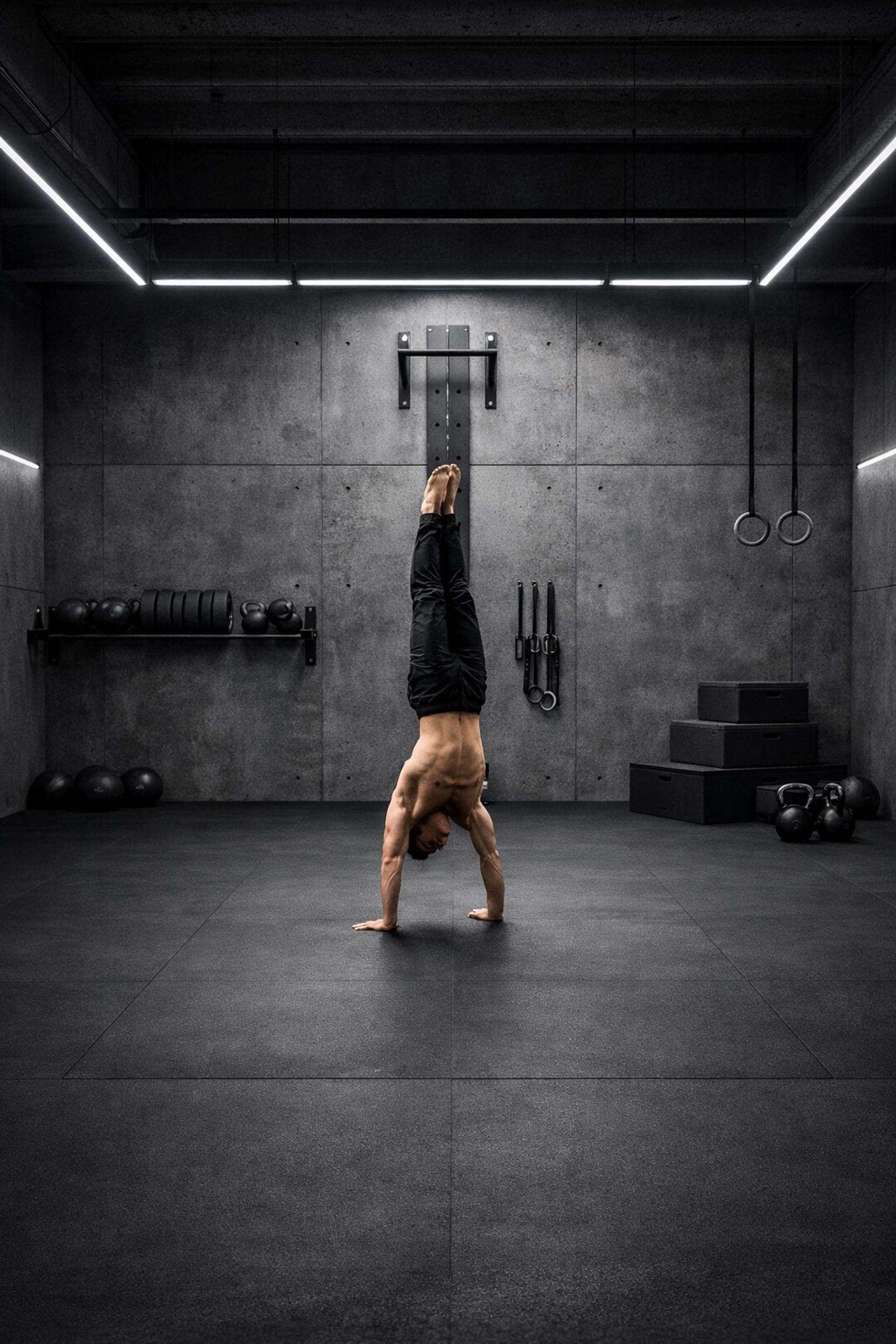
4. Neglecting Your Foundation (Flooring)
Your floor is the most used piece of equipment in your gym. If you’re training on bare concrete, you’re destroying your joints and your equipment. If you’re training on cheap foam "puzzle" mats, you’re dealing with a slippery, unstable surface that will tear the first time you drop a kettlebell.
For those serious about a CrossFit home gym, flooring isn't optional: it's foundational. It absorbs impact, reduces noise, and protects your subfloor from cracks.
The Fix:
Go for 3/4-inch recycled rubber stall mats. They are the gold standard for a reason. They don't compress, they offer incredible grip for MMA or wrestling drills, and they can handle the weight of a heavy rack.
If you’re concerned about the "gym smell," look for vulcanized rubber options. A solid foundation makes every movement feel more secure, allowing you to push harder during your bodyweight training at home.
5. The Renters' Nightmare: Permanent Wall Damage
A major hurdle for many fitness enthusiasts is the "no-go" from landlords or the fear of ruining a finished basement. Most high-end calisthenics equipment for home requires bolting into studs, which leaves massive holes and structural concerns.
If you’re looking for a no wall damage workout system, you might feel stuck with those flimsy door-frame pull-up bars that ruin your trim and offer zero stability.
The Fix:
Stop settling for gear that damages your home. The modern athlete needs a floor to ceiling gym that utilizes tension or smart anchoring.
Our Resistance Rail Standard is a game-changer for those who need high performance without the structural commitment. It provides a rock-solid anchor for resistance training and bodyweight moves without the need to tear apart your drywall. It’s the ultimate solution for the mobile athlete.
6. Ignoring the "Flow" of Your Training
Your gym layout should mirror your training style. If you’re doing supersets or HIIT, you shouldn't be tripping over a bench to get to your bands. A disorganized gym is an unused gym. If it’s a pain to set up a movement, you’re subconsciously going to skip it.
Serious practitioners: gymnasts and CrossFitters: need a "flow." You need to move from a power movement to a mobility movement without a five-minute equipment reconfiguration.
The Fix:
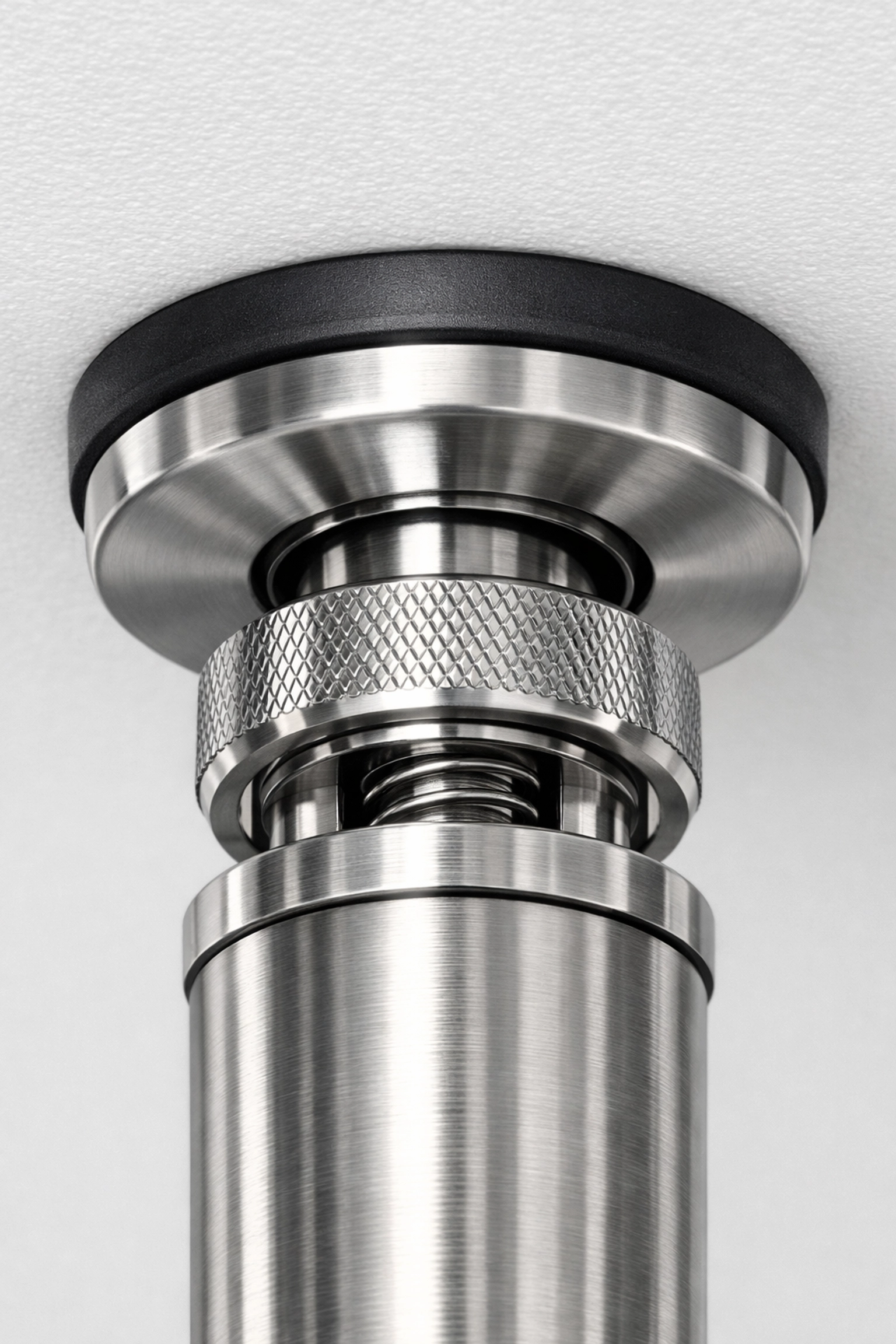
Organize your gym into zones. Keep your "vertical" equipment (like the Resistance Rail) against the wall to maximize the "active" floor space. Use vertical storage for your weights and bars.
At Bold Body Fitness, we recommend mapping out your most common circuits. If you’re a regular on our forums, you’ll see our community members sharing their layouts. A clean, organized space creates a focused mind. If you need inspiration, check out our gallery for professional-grade setups.
7. Skipping Maintenance and Safety Checks
Because it’s in your home, it’s easy to treat your gear like furniture. But fitness equipment has moving parts, bolts that can loosen, and materials that can fatigue. For an MMA fighter or gymnast, a failed anchor point during a dynamic move is a disaster.
The Mistake:
Assuming your gear is "set it and forget it." Over time, the vibrations from your workouts can loosen the most secure bolts.
The Fix:
Conduct a "Safety Sunday" once a month. Check the tension on your floor to ceiling gym system. Inspect your resistance bands for micro-tears (if you see a white "stress" mark, throw it away). Tighten the bolts on your pull-up bar.
Maintenance isn't just about safety; it’s about performance. A well-maintained rail system slides smoother, and a well-lubricated machine lasts longer. If you’re unsure how to maintain your Bold Body gear, reach out via our contact page.

The Path to a Bold Home Gym
Building a home gym is about more than just buying stuff; it’s about creating an environment where failure isn't an option. By avoiding these seven mistakes, you’re not just saving money: you’re ensuring that every drop of sweat you pour into your full body workout at home actually counts.
At Bold Body Fitness, we believe your home should be your most effective training ground. Whether you are searching for a pull up bar alternative that actually supports your weight or a no wall damage workout system that fits your lifestyle, we’ve got the engineering to back you up.
Don’t let a poorly planned gym stall your progress. Measure your space, invest in quality, prioritize versatility, and keep your gear maintained. You’re an athlete: your equipment should act like it.
Ready to upgrade?
Join the ranks of elite home athletes. Explore our product line today and see how the Resistance Rail can transform your training. Whether you're a beginner or a seasoned ninja warrior, it’s time to go Bold.
For more tips, tricks, and workout programming, head over to our community forums and connect with others who are taking their home training to the next level. Let’s get to work.
