
You’ve decided to take your training seriously. No more waiting for the squat rack at the local commercial gym, no more smelling other people’s sweat, and no more commuting in traffic just to hit a deadlift PR. You’re building a sanctuary of iron and sweat. But here’s the reality: most people fail before they even start because their home gym equipment is either a disorganized mess of cheap plastic or a collection of overpriced paperweights.
If you are a Ninja Warrior, a gymnast, a CrossFit athlete, or an MMA fighter, you don’t have room for "average." You need gear that stands up to the punishment of explosive movements and high-intensity resistance training. Most home setups are built for the casual hobbyist, not the athlete looking to shatter plateaus.
At Bold Body Fitness, we see the same blunders over and over. If your progress has stalled or your garage looks like a graveyard of unused gadgets, you’re probably making one of these seven mistakes. Here is how to fix them and turn your space into a high-performance versatile home gym.
1. You Haven't Optimized Your Vertical Space (The Floor-to-Ceiling Fail)
Most people think of their gym in terms of square footage. They look at the floor and try to cram as many machines as possible onto the carpet or rubber mats. This is the fastest way to run out of room and kill your workout flow.
When you only focus on the floor, you neglect 90% of your training potential. For serious athletes: especially those involved in calisthenics or gymnastics: the magic happens in the vertical plane. If you aren't utilizing a floor to ceiling gym concept, you’re missing out on essential pulling and pressing angles.
The Fix: Think vertically. Stop looking for more floor space and start looking at your walls and ceilings. A versatile home gym should allow you to move from floor exercises to overhead work seamlessly. This is where the Resistance Rail from Bold Body Fitness changes the game. By utilizing a vertical rail system, you can adjust your anchor points from the floor all the way to the top of the wall, giving you an infinite number of resistance angles without taking up more than a few inches of floor depth.

2. Buying Single-Stack, One-Note Machines
We’ve all seen them: those massive, multi-station machines that claim to do "50 exercises in one." They are bulky, they cost a fortune to ship, and they usually do about 48 of those 50 exercises poorly. For a CrossFit home gym or a high-level calisthenics setup, these machines are a death sentence for your gains. They lock you into fixed ranges of motion that don’t translate to real-world strength or athletic performance.
If you’re an MMA fighter, you need functional movement. You need to be able to rotate, lunge, and pull in ways that mimic a fight. A fixed chest press machine isn't going to help you finish a takedown or improve your punching power.
The Fix: Ditch the "all-in-one" monstrosities. Focus on a full body workout at home using equipment that allows for free, multi-planar movement. Your core equipment should be adaptable. Instead of a machine that only does leg extensions, look for a system that allows you to perform rows, presses, woodchops, and squats. The goal is to maximize the utility of every square inch. A streamlined setup focusing on high-quality resistance training tools will always beat a room full of heavy, single-use iron.
3. Choosing "Cheap" Over "Capable"
Budget is a real factor, but in the world of fitness, you get exactly what you pay for. If you buy the cheapest calisthenics equipment for home, don't be surprised when the welds snap during a muscle-up or the padding disintegrates after three months of use.
For Ninja Warriors and gymnasts, equipment failure isn't just a nuisance: it’s a safety hazard. When you are hanging three feet off the ground or performing explosive plyometric movements, you need to know your gear isn't going to buckle.
The Fix: Invest in professional-grade gear. If you can't afford everything at once, build your gym in phases. Start with the foundational pieces. Check out the Bold Body Fitness Shop to see how high-quality engineering makes a difference. Look for heavy-duty steel, industrial-grade mounting hardware, and equipment designed by people who actually train. Buying once and buying right is significantly cheaper than replacing a $200 piece of junk every six months.
4. The Pull-Up Bar Predicament
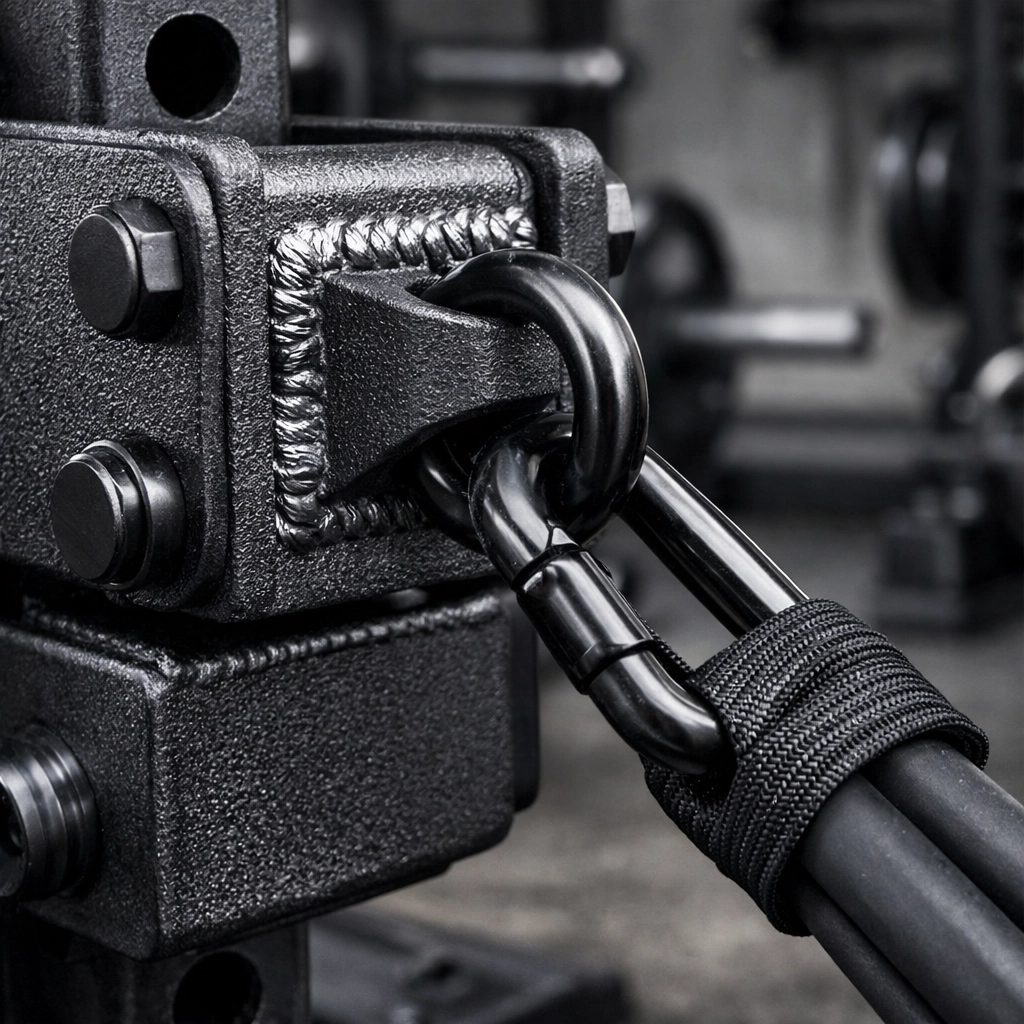
Every home gym needs a way to pull. But many athletes are limited by their environment. Maybe you’re in a rental and can’t bolt a massive rig into the wall. Or maybe those doorway pull-up bars feel like they’re about to rip the trim off your house (and they probably are).
The mistake here is thinking your only options are a massive power rack or a flimsy doorway bar. This leads to athletes skipping vertical pulling altogether, which is a disaster for back development and grip strength.
The Fix: Look for a pull up bar alternative that provides stability without the footprint. If you are serious about bodyweight training at home, you need an anchor point that feels solid. The Resistance Rail can serve as an incredible base for this. When combined with the right attachments, you can perform high-level pulling movements and suspension trainer exercises that traditional bars simply can't handle. It’s about creating a no wall damage workout system that still lets you train like a pro.
5. Ignoring the "No Wall Damage" Requirement (For Renters and High-End Homes)
One of the biggest hurdles to a great crossfit home gym is the installation. Many of the best systems require you to drill massive holes into your wall studs. If you’re renting an apartment or you don't want to destroy your finished basement, this is a deal-breaker.
The mistake most people make is either doing it anyway and losing their security deposit, or settling for a "standalone" tower that wobbles every time you touch it. A wobbling gym is a gym you won't use.
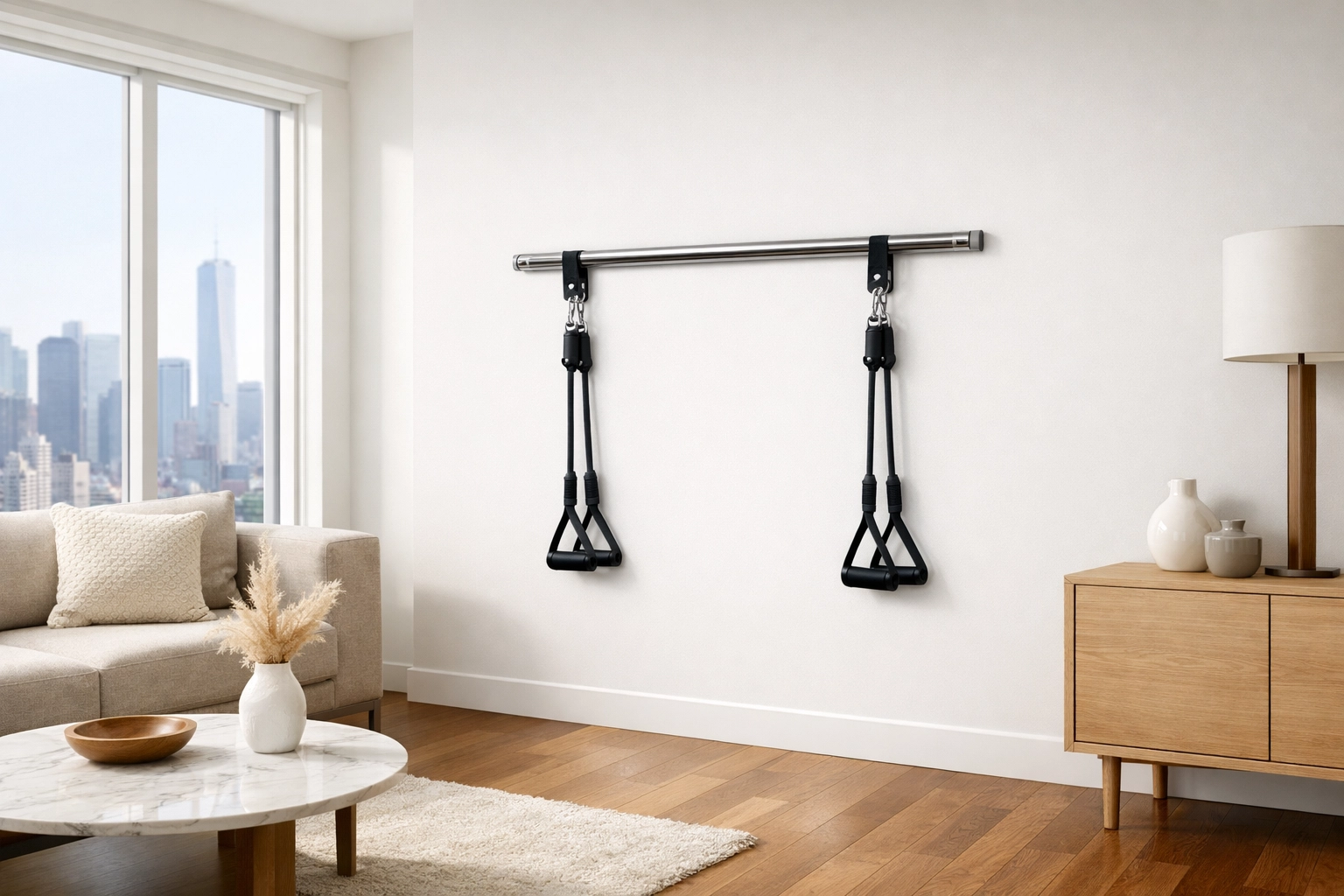
The Fix: Prioritize a no wall damage workout system. There are ways to get a rock-solid workout without turning your drywall into Swiss cheese. Modern engineering has allowed for tension-based systems or rail systems that distribute weight more effectively. At Bold Body Fitness, we specialize in equipment that respects your living space while still standing up to the intensity of a pro-level workout. You shouldn't have to choose between a six-pack and your security deposit.
6. Lack of Versatility in Resistance Levels
If your home gym only consists of a few sets of dumbbells or one heavy kettlebell, you are going to hit a plateau fast. To build "Ninja-level" strength, you need to understand progressive overload. The mistake here is not having a way to micro-adjust your resistance.
In a commercial gym, you can just grab the next pair of dumbbells. At home, buying 20 pairs of dumbbells is expensive and takes up a massive amount of space.
The Fix: Embrace high-end resistance training with elastic tension and variable anchor points. By using the Resistance Rail Standard, you can instantly change the difficulty of an exercise by moving the carriage up or down or swapping out bands. This allows you to go from high-rep endurance work to heavy, muscle-building resistance in seconds. It’s the ultimate way to achieve a full body workout at home without owning 1,000 lbs of loose iron.
7. Forgetting the "Core" of Calisthenics: Stability
Many home gym owners focus purely on "moving the weight." They forget that for gymnasts and MMA fighters, the ability to stabilize is just as important as the ability to push or pull. If your equipment is too static: meaning it only moves in one fixed direction: you aren't training your stabilizer muscles.
This is the "machine vs. free weights" debate on steroids. If you want to be an elite athlete, your home gym must challenge your balance and core integration.
The Fix: Incorporate calisthenics equipment for home that allows for suspension and rotational movement. Your equipment should act as an extension of your body. When you use a rail system with high-quality bands and handles, every rep requires your core to fire to keep you balanced. This is how you build the functional strength required for the octagon or the gymnastics rings.

Why the Resistance Rail is the Solution You’re Missing
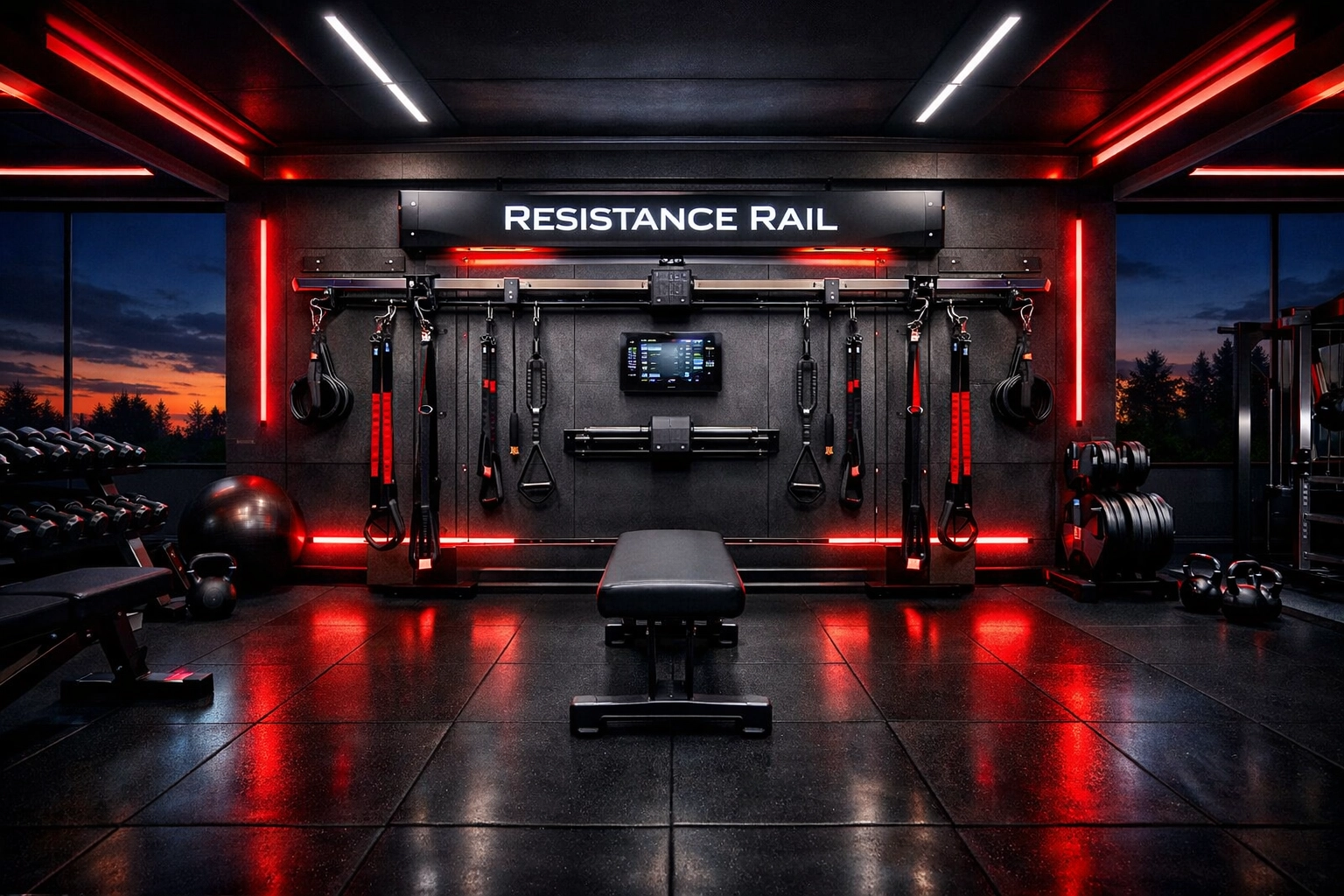
We’ve talked a lot about the mistakes, but let’s talk about the ultimate fix. If you want to avoid the clutter, the damage, and the limitations of traditional gear, the Resistance Rail is the answer.
It was designed for the athlete who demands more. It’s a floor to ceiling gym that installs easily, offers a no wall damage workout system, and provides the most versatile home gym experience on the market. Whether you are doing bodyweight training at home or looking to add serious resistance training to your routine, the Rail adapts to you.
Benefits for Specific Athletes:
- Ninja Warriors: Use the variable heights to simulate reaches and pulls from every possible angle. Improve your grip and explosive pulling power without a massive rig.
- Gymnasts: Perfect for accessory work. Use the Rail to strengthen the specific small muscle groups needed for iron crosses and planches.
- MMA Fighters: The perfect tool for rotational power. Attach bands at shoulder height for punching resistance or at the bottom for sprawl and takedown drills.
- CrossFit Athletes: Great for EMOMs and high-intensity intervals. Swap between movements faster than you can drop a barbell.
Stop Making Excuses, Start Making Progress
Building a home gym shouldn't be a headache. It shouldn't involve a dozen trips to the hardware store or a mountain of "as seen on TV" junk. If you avoid these seven common mistakes, you’ll be miles ahead of the competition.
Focus on:
- Verticality (Floor to ceiling)
- Versatility (Multi-use gear)
- Quality (No cheap welds)
- Functionality (Pull-up alternatives)
- Property Respect (No damage systems)
- Progressive Overload (Variable resistance)
- Stability (Core-focused movements)
Your training is only as good as the tools you use. Don't let mediocre equipment stand between you and your peak performance. It’s time to go bold.
Ready to transform your space? Check out the full range of home gym equipment at Bold Body Fitness and take the first step toward a smarter, stronger home setup. For more tips on mastering your movements, read our Ultimate Guide to Bodyweight Training at Home.
Summary of the Fixes:
| Mistake | The Fix | Key Keyword |
|---|---|---|
| Ignoring vertical space | Use a rail system | Floor to ceiling gym |
| Bulky machines | Functional trainers | Versatile home gym |
| Cheap gear | Invest in pro-grade steel | Home gym equipment |
| No pull-up bar | Find an anchor alternative | Pull up bar alternative |
| Damaging walls | Tension/Rail mounts | No wall damage workout system |
| Static resistance | Variable band tension | Resistance training |
| Zero stability work | Calisthenics focus | Calisthenics equipment for home |
Your home is your arena. Treat it like one. Avoid the junk, focus on the flow, and invest in the gear that works as hard as you do. Bold Body Fitness is here to make sure your home gym is never the reason you miss a PR again. Let's get to work.
