
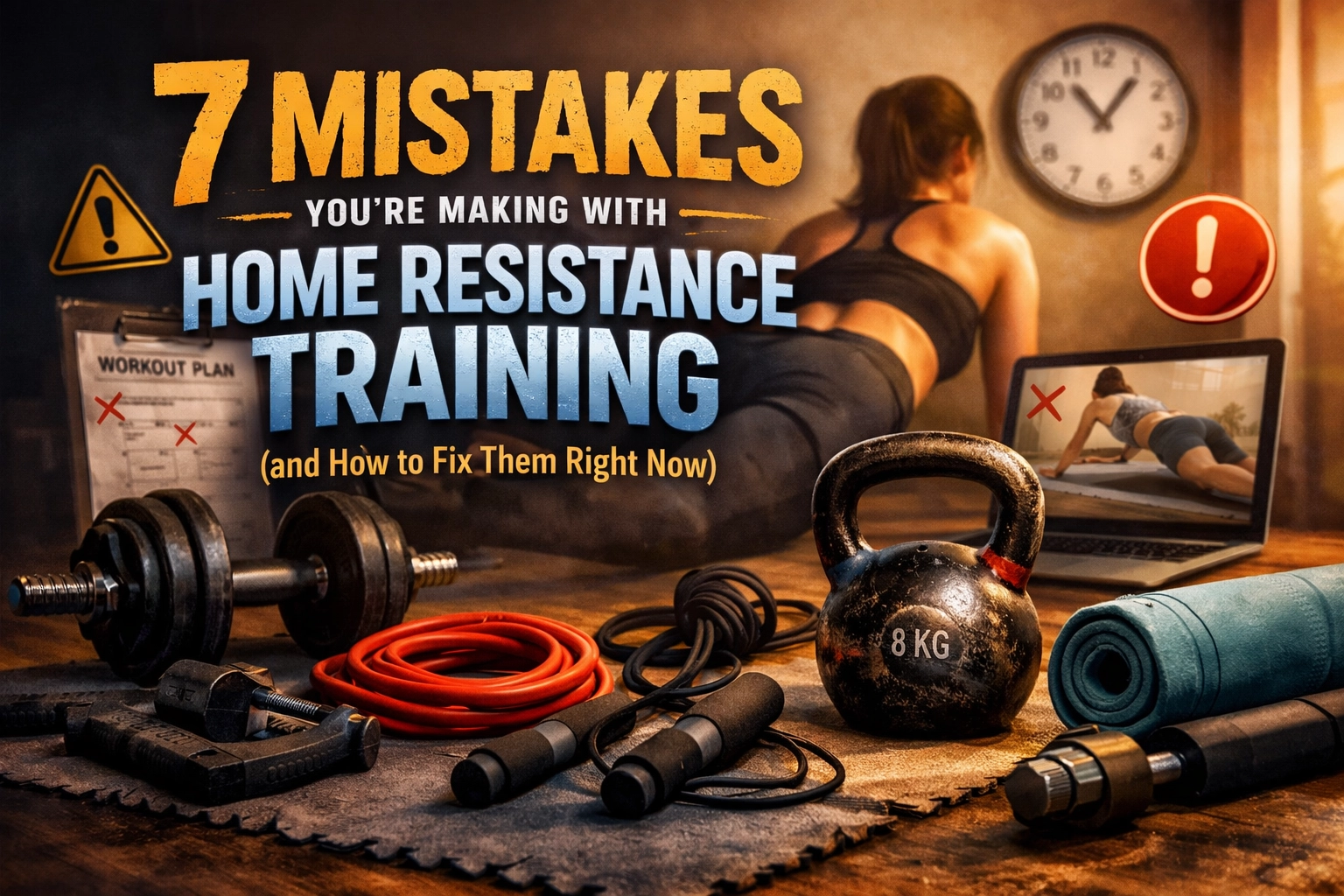
You’ve got the drive. You’ve got the grit. You’re the person who doesn't wait for the commercial gym to open its doors to get a sweat on. Whether you’re a Ninja Warrior in training, a Brazilian Jiu-Jitsu blue belt looking for that extra explosive edge, or a calisthenics fanatic obsessed with mastering the human flag, your home is your sanctuary.
But let’s be real: most home workouts suck.
You’re grinding away in your garage or living room, but the gains aren't coming. You’re hitting plateaus faster than a CrossFit rookie on their first Murph. Why? Because home resistance training is a different beast than training with a full rack of weights. If you aren’t careful, you’re just going through the motions, wasting time, and, worst of all, setting yourself up for a nasty injury.
At Bold Body Fitness, we don’t do "mediocre." We do elite. It’s time to stop playing around with your fitness and start training with intent. Here are the seven biggest mistakes you’re making with your home gym setup and the immediate fixes to turn your space into a powerhouse.
1. The "Zero to Sixty" Sin: Skipping Your Warm-Up
We get it. You’re busy. You have twenty minutes between Zoom calls or before the kids wake up, and you want to dive straight into those heavy band presses or explosive pull-ups.
The Mistake: You treat your body like a light switch. You flip it "on" and expect peak performance from cold muscles.
Why it Backfires: When you’re doing high-intensity bodyweight training at home or using heavy resistance, your tendons and ligaments need blood flow. Skipping the warm-up leads to "snap, crackle, and pop": and not the breakfast cereal kind. For MMA fighters and gymnasts, joint integrity is everything. A cold shoulder is a torn rotator cuff waiting to happen.
The Fix: Spend exactly five minutes on dynamic movement preparation. No static stretching yet: save that for the end. Think arm circles, leg swings, and "world’s greatest stretches." If you’re using a floor to ceiling gym system like the Resistance Rail, use the light bands for high-rep, low-tension face pulls and rotations to wake up your nervous system.

2. Flying Blind: Ignoring Form Without Feedback
In a commercial gym, you have mirrors and probably a few meatheads who (rightfully or not) will tell you if your back is rounding. At home, it’s just you and the four walls.
The Mistake: You’re prioritizing "getting the rep done" over "doing the rep right."
Why it Backfires: Without professional feedback or visual cues, you develop compensation patterns. You might think you’re hitting a perfect chest press, but your left shoulder is doing 70% of the work. Over time, this leads to imbalances that can ruin your performance in the cage or on the rings.
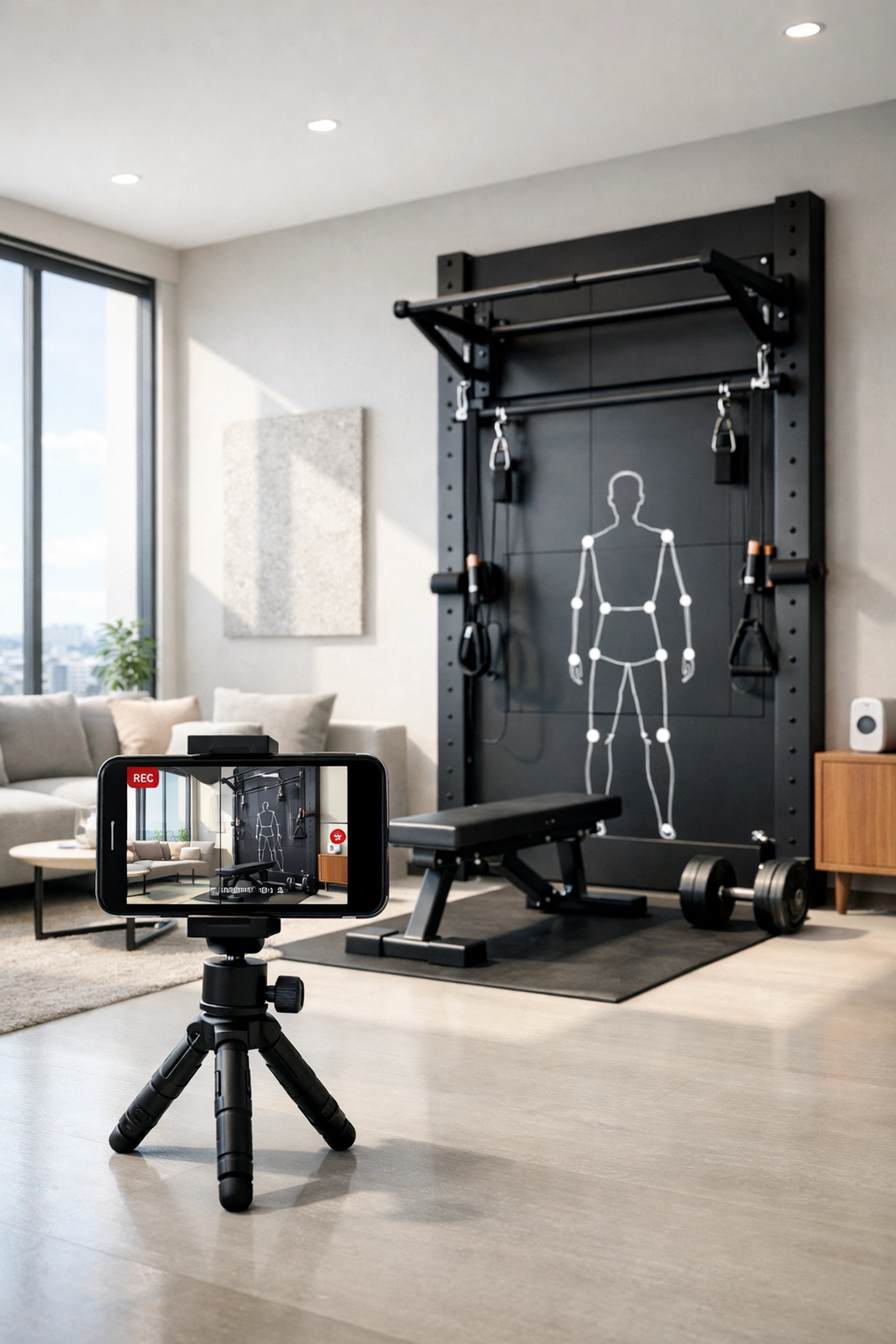
The Fix: Record yourself. Set up your phone and film one set from the side and one from the front. Compare your form to high-quality tutorials. Better yet, invest in versatile home gym equipment that encourages proper mechanics. The Resistance Rail provides a stable, vertical anchor point that prevents the "band snap-back" and erratic angles common with cheap door anchors, allowing you to maintain a consistent line of force. Check out our full range of gear at the Bold Body Fitness Shop.
3. The "YouTube Roulette" Strategy: Lack of Structure
Are you just scrolling through YouTube every morning and picking whatever "15-Minute Shred" video has the flashiest thumbnail? Stop it.
The Mistake: You have no program. You have a collection of random workouts.
Why it Backfires: Randomness yields random results. To build real strength and hypertrophy, you need progressive overload. You need to know what you did last week so you can do more this week. This is especially true for crossfit home gym enthusiasts who need to balance metabolic conditioning with pure strength work.
The Fix: Pick a goal. Do you want to master the muscle-up? Do you want to add two inches to your quads? Follow a structured 8-12 week program. Track your reps, your sets, and the tension level of your bands. If you aren't writing it down, you aren't training; you’re just exercising.
4. The Plateau Trap: Repeating the Same Routine Forever
The human body is an adaptation machine. It wants to be efficient. If you do 50 pushups every morning, by week four, your body has figured out how to do 50 pushups with the absolute minimum amount of energy required.
The Mistake: You’re still doing the same routine you started six months ago.
Why it Backfires: If the challenge doesn't change, the body doesn't change. You’ll hit a plateau, your motivation will tank, and your home gym equipment will start collecting dust.
The Fix: Vary the stimulus. If bodyweight is too easy, add resistance. This is where the Resistance Rail shines as a pull up bar alternative. Instead of just doing standard pull-ups, you can add variable resistance to your rows, presses, and squats. You can change the angle of the pull in seconds, forcing your muscles to stabilize in ways they aren't used to. Keep your body guessing, and it will keep growing.
5. Data Amnesia: Not Tracking Your Progress
You wouldn't run a business without looking at the books. Why are you running your body without looking at the data?
The Mistake: You "feel" like you’re getting stronger, but you don't actually know.
Why it Backfires: "Feeling" is subjective. One day you’re tired, and a light workout feels hard. Another day you’re caffeinated to the gills, and a hard workout feels easy. Without data, you can't identify when it's time to increase the load or when you’re overtraining and need a deload week.
The Fix: Get a dedicated training log. Whether it’s an app or an old-school notebook, track the specific resistance levels. If you’re using calisthenics equipment for home, track your hold times for planks, levers, and handstands. Aim for a 1-5% improvement every single week.
6. The Cardio Comatose: Over-Relying on HIIT
Somewhere along the line, people started believing that if they weren't gasping for air and lying in a pool of sweat, the workout didn't count.
The Mistake: Your "resistance training" is actually just high-speed cardio with light weights.
Why it Backfires: Burpees and mountain climbers are great for your heart, but they won't build the explosive power an MMA fighter needs or the raw strength a gymnast requires. If you want to change your physique and your performance, you need to lift heavy things (or high-tension bands) with control.
The Fix: Separate your sessions. Dedicate 3 days a week to pure resistance training. Focus on slow, controlled eccentrics (the lowering phase) and explosive concentrics. Use the Resistance Rail to simulate heavy compound lifts like the deadlift and overhead press. If you can do more than 15 reps easily, the resistance is too low. Crank it up.

7. The Gear Gap: Using the Wrong Tools for the Job
You’re a serious athlete. Why are you using equipment designed for a casual Sunday stretcher?
The Mistake: You’re using flimsy door anchors, cheap bands that snap, or "no-drill" bars that slide off the frame when you apply real force.
Why it Backfires: Insecurity in your equipment leads to insecurity in your movement. You won't go 100% on a row if you’re afraid the door anchor is going to fly out and hit you in the face. Furthermore, most home setups damage the walls, which is a nightmare for renters or anyone who values their home's resale value.
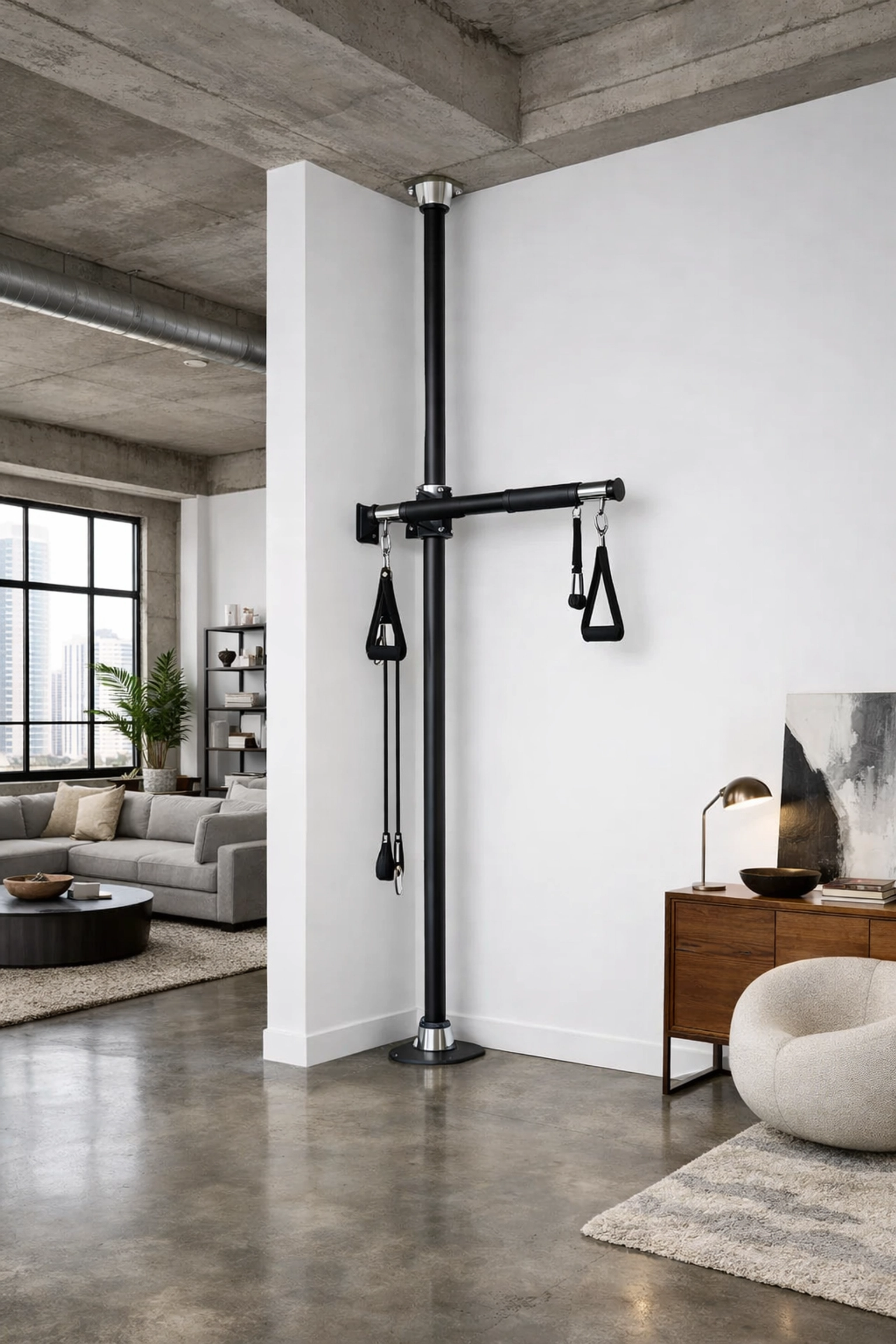
The Fix: You need a no wall damage workout system that actually handles professional-grade tension. The Resistance Rail is a floor to ceiling gym that stays put without a single screw in your wall. It’s the ultimate full body workout at home solution because it’s built for the intensity of a CrossFit box but designed for the constraints of a modern apartment.
Why the Resistance Rail is the Game Changer You Need
At Bold Body Fitness, we saw the flaws in the home gym market. We saw the broken door frames, the limited angles of traditional pull-up bars, and the clutter of having fifteen different sets of dumbbells.
We built the Resistance Rail to be the versatile home gym of the future. Here’s why it’s the fix for almost every mistake listed above:
A True Floor to Ceiling Gym
Most home setups limit you to one or two heights. The Resistance Rail allows for infinite adjustment from the floor to the ceiling. Want to do low-anchor cable-style woodchoppers for MMA core power? Done. Want to do high-anchor tricep extensions? Done. It’s the most adaptable calisthenics equipment for home on the market.
Pull Up Bar Alternative (and More)
Standard pull-up bars are great until you want to work on your horizontal pulling or your lower body. The Rail transforms your space into a 3D training zone. It functions as a pull up bar alternative by allowing for high-tension band-assisted or resisted pull movements that actually mimic the mechanics of a bar, but with more versatility for your back and grip.
No Wall Damage Workout System
This is the holy grail for home fitness. Most high-end home gym equipment requires you to bolt it into the studs. If you’re renting, you’re out of luck. The Resistance Rail uses a high-tension pressure system that is rock-solid. You get the stability of a commercial rack with zero holes in the drywall.

Built for Serious Athletes
We didn't design this for the "New Year's Resolution" crowd. We designed this for the guy who wants to master a front lever. We designed it for the woman who needs to maintain her CrossFit gains while traveling or working from home. It’s rugged, it’s bold, and it’s built to take a beating.
How to Optimize Your Home Full Body Workout
If you’re ready to stop making mistakes and start making moves, follow this "Bold Body" template for a full body workout at home using resistance training:
- Lower Body Power (4 Sets of 8-10): Use the Resistance Rail at the lowest setting. Step into the bands for resisted squats or lunges. Focus on a 3-second descent.
- Upper Body Push (4 Sets of 8-10): Set the Rail to chest height. Perform resisted chest presses or standing incline presses. This targets the fibers that standard pushups often miss.
- Upper Body Pull (4 Sets of 10-12): Set the Rail to head height. Perform high-to-low rows. This is essential for posture and for anyone training for the Ninja Warrior "Salmon Ladder."
- Core Rotational Strength (3 Sets of 15): Set the Rail to mid-height. Perform Pallof presses or rotations. This is where MMA fighters build that "knockout power" that starts in the hips and moves through the core.
- Finisher (2 Minutes): High-intensity metabolic work. This is where you can bring back the cardio: resisted sprints in place or fast-paced "banded punches."
The Bold Bottom Line
Your home gym shouldn't be a place of compromise. It should be the place where you outwork everyone else.
Mistakes like skipping warm-ups, ignoring form, and using subpar equipment aren't just minor annoyances: they are barriers between the athlete you are and the athlete you want to become.
Stop settling for "good enough." Upgrade your training, fix your form, and invest in a system that works as hard as you do. Whether you need a pull up bar alternative that won't destroy your door frame or a complete floor to ceiling gym that fits in the corner of your bedroom, we’ve got you covered.
Ready to transform your home training?
Explore the Resistance Rail Now
Browse All Bold Body Fitness Equipment
Don't let another workout go to waste. Fix these mistakes today, and get back to what matters: getting stronger, faster, and better than you were yesterday. That’s the Bold way.
