

Listen up. I’m Brian Kerr, founder of Bold Body Fitness, and I’ve seen enough "home gym fails" to last a lifetime. You’ve seen them too: the viral clips of guys trying to hit a muscle-up on a cheap doorway bar only to end up on the floor with a face full of splintered wood and a $500 repair bill for their door frame.
If you’re serious about your resistance training and building real-world strength, you need to stop treating your home like a playground and start treating it like a high-performance facility. Most people buy a pull-up bar, slap it on a wall, and pray for the best. That’s a recipe for disaster. Whether you’re a Ninja Warrior in training, a dedicated CrossFit athlete, or an MMA fighter, your equipment needs to be as tough as you are.
Today, we’re breaking down the 7 most common mistakes people make with home pull-up bars and how you can transition to a no wall damage workout system that actually supports your goals.
1. Trusting Your Life to Drywall
Let’s get one thing straight: Drywall is essentially compressed chalk held together by a thin layer of paper. It is designed for aesthetics, not for supporting a 200-pound human doing explosive bodyweight training at home.
One of the biggest mistakes beginners make is trying to mount a wall-pull-up bar directly into drywall using hollow-wall anchors. Those anchors are fine for a picture frame, but they will fail instantly under the dynamic load of a pull-up. Even if you hit a stud, if you don't use lag screws or if you position the bar poorly, the lateral force can cause the drywall around the mounting plate to crumble.
If you want a full body workout at home without turning your living room into a construction zone, you have to move past basic wall-mounted gear.
2. Using Doorway "Leverage" Bars Incorrectly
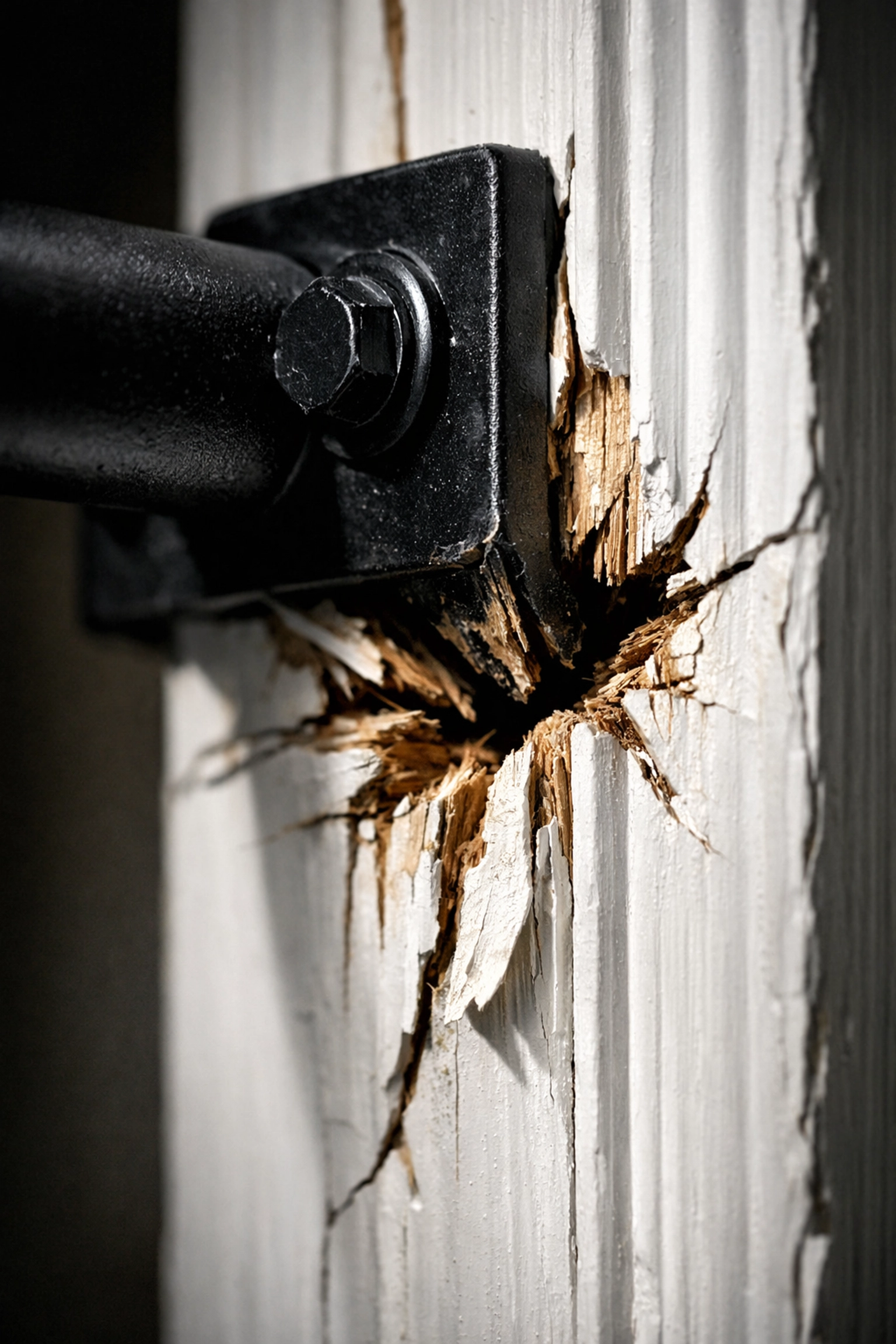
Doorway bars are the "fast food" of home gym equipment. They’re cheap, convenient, and ultimately bad for your house. These bars rely on leverage and downward pressure. Every time you hang from one, you are putting hundreds of pounds of pressure on your door trim.
Most door trim is held on by finishing nails: thin little wires that aren't meant to support weight. Over time, that trim will flex, crack, and eventually pull away from the wall. If you’ve ever noticed "mysterious" cracks appearing above your doors, your pull-up bar is the culprit.
3. The "Set It and Forget It" Mentality
You wouldn't drive a car for five years without checking the oil, so why do you ignore your calisthenics equipment for home? Most people install a bar once and never check the bolts again.
Vibration and dynamic movement (especially if you’re doing kipping pull-ups or toes-to-bar) will loosen hardware. A loose bolt leads to a shifting bar, which leads to stripped wood or bent metal. At Bold Body Fitness, we advocate for a weekly safety check. If it squeaks, wobbles, or feels "off," stop using it immediately. Safety is non-negotiable when you’re hanging five feet off the ground.
4. Compromising Your Range of Motion
Installing a bar too low is a classic mistake. If you have to tuck your knees behind you just to keep your feet off the floor, you are killing your gains. A proper pull-up requires a full hang with your lats fully stretched. Short-changing your range of motion means you’re missing out on the most critical part of the movement.
Worse, if you’re a gymnast or CrossFit athlete, a low bar makes it impossible to practice transitions or explosive movements. You need height, and you need clearance. If your current setup doesn't allow for a full, dead-hang extension, you need a pull up bar alternative that scales with your height.
5. Skipping the Load-Bearing Verification
Don't just assume a stud is a stud. Many people use a cheap stud finder, drill a hole, and hope they hit the center. If you’re off by even half an inch, that lag screw is barely holding onto the side of the wood. When you add dynamic force, the screw can rip out sideways, taking a chunk of your wall with it.
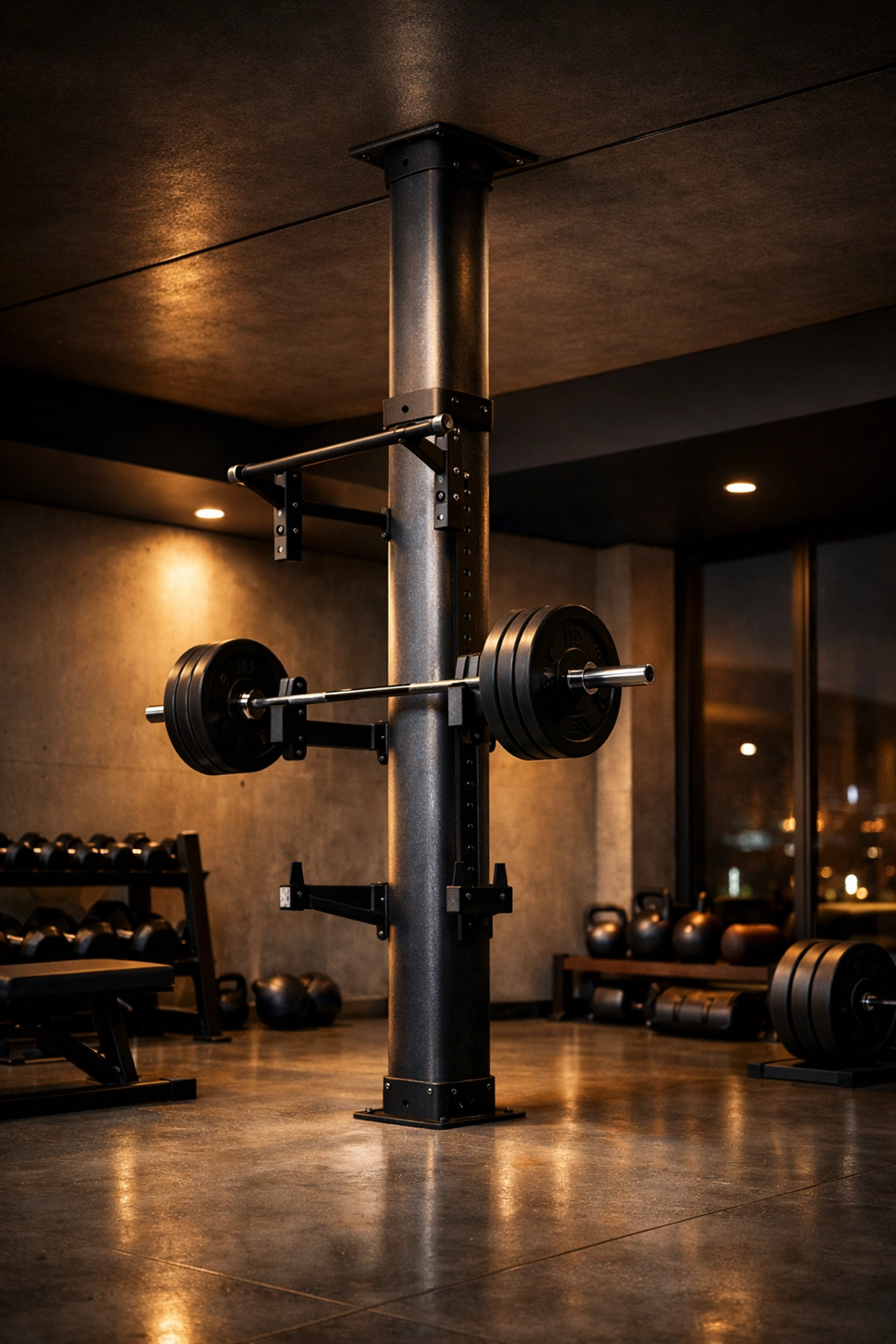
Professional-grade setups, like a floor to ceiling gym, eliminate this guesswork. Instead of relying on a 2x4 hidden behind plaster, you’re using the structural integrity of your home’s floor and ceiling joists to create a rock-solid foundation.
6. Buying Gear That Doesn't Match Your Ambition
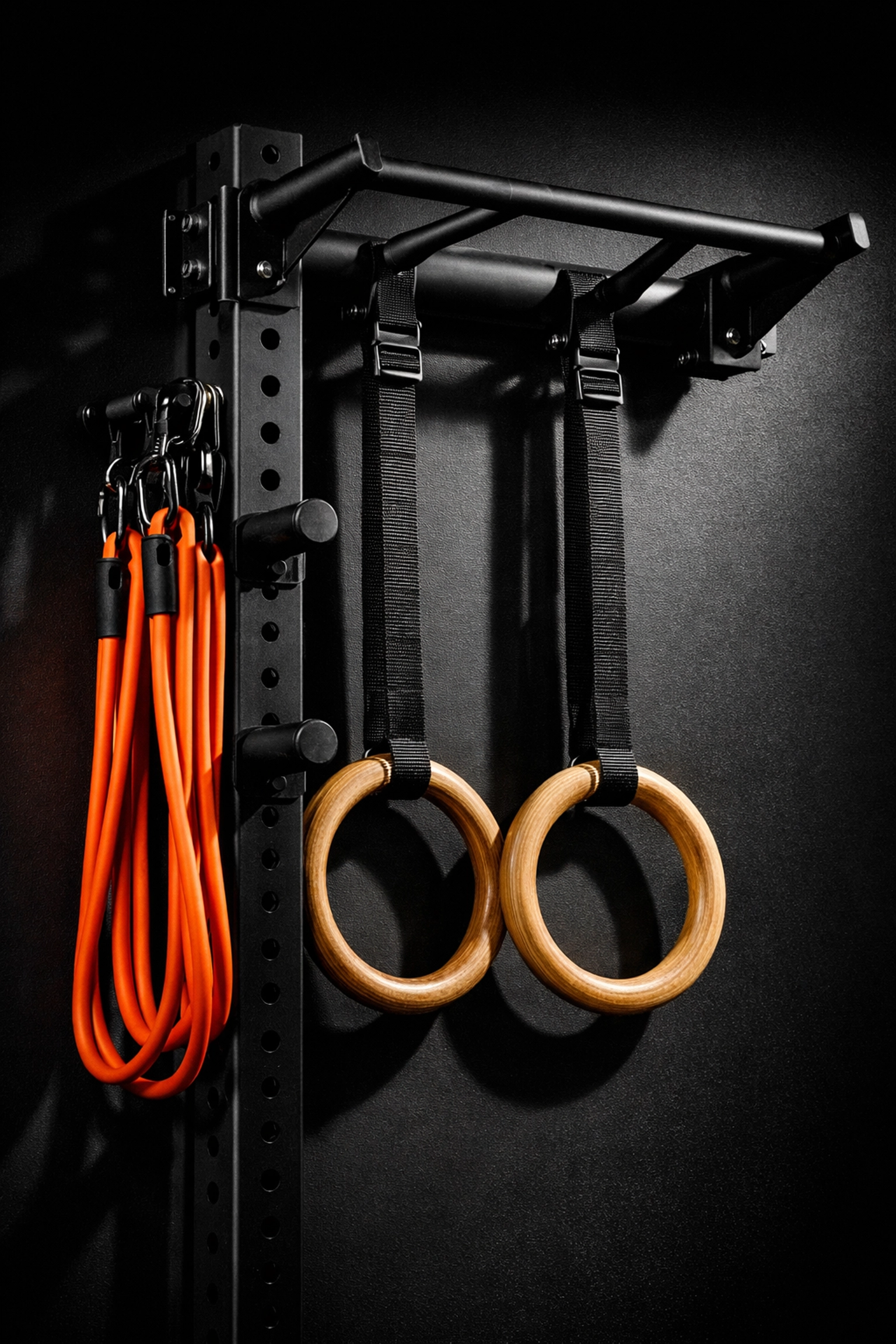
If you want to be a Ninja Warrior, a $30 tension bar isn't going to cut it. You need versatility. You need to be able to attach rings, resistance bands, and maybe even a salmon ladder attachment.
Most home pull-up bars are "one-trick ponies." They give you one grip angle and zero options for expansion. Serious athletes need a versatile home gym that can evolve. This is why we developed the Resistance Rail Standard. It’s not just a bar; it’s a modular system designed for people who actually train.
7. Ignoring Floor and Ceiling Stability
People focus so much on the wall that they forget about the two most stable parts of the room: the floor and the ceiling. Wall mounts are restricted by stud spacing (usually 16 inches). This limits where you can put your gym.
By switching to a floor-to-ceiling system, you gain the freedom to place your gym anywhere: even in the middle of a room if you have the space. This is the secret to a high-performance crossfit home gym that doesn't require a dedicated garage or a "man cave."

The Solution: Why the Resistance Rail Changes Everything
At Bold Body Fitness, we knew there had to be a better way. We were tired of seeing people ruin their rentals and damage their homes just to get a workout in. That’s why we created the Resistance Rail.
This is the ultimate no wall damage workout system. Instead of drilling into your studs or crushing your door frames, the Resistance Rail uses a heavy-duty floor-to-ceiling pressure system. It’s incredibly stable, meaning you can go hard on your calisthenics without the bar shaking.
Why Serious Athletes Are Switching:
- Zero Damage: Perfect for renters or anyone who values their home's resale value.
- Versatility: It’s more than a pull-up bar. It’s a complete resistance training station. You can easily attach bands, straps, and accessories to hit every muscle group.
- Ninja-Level Strength: If you’ve read our Ultimate Guide to Bodyweight Training at Home, you know that variety is key to breaking plateaus.
- Built Bold: We don't do "flimsy." This is industrial-grade equipment for people who push their limits.
How to Upgrade Your Home Gym Today
If you’re still using a bar that makes you nervous every time you jump up, it’s time for an upgrade. Stop settling for equipment that limits your potential and threatens your drywall.
Head over to our Shop and check out the Resistance Rail. It’s time to build a versatile home gym that matches your intensity. Whether you’re working on your first pull-up or training for a Spartan Race, you deserve gear that won't let you down.
Bold Body Fitness isn't just a name: it's how we train. Don't let your equipment be the weak link in your progression. Fix these 7 mistakes, invest in a system that works, and get back to the grind.
Visit Bold Body Fitness for more tips on maximizing your home workouts and to see our full lineup of professional-grade calisthenics gear.
Summary Checklist for a Damage-Free Home Gym:
- Stop using doorway bars if you care about your trim.
- Verify your studs with a high-quality sensor if you MUST mount to a wall.
- Choose floor-to-ceiling systems for maximum stability and zero wall damage.
- Inspect your gear weekly. Tighten those bolts.
- Prioritize range of motion. If you can’t hang straight, the bar is too low.
- Invest in modularity. Your gym should grow with your skills.
- Think like an athlete, not a consumer. Buy gear that lasts a lifetime, not a season.
Stay bold. Train hard. We’ll see you on the rail.
