
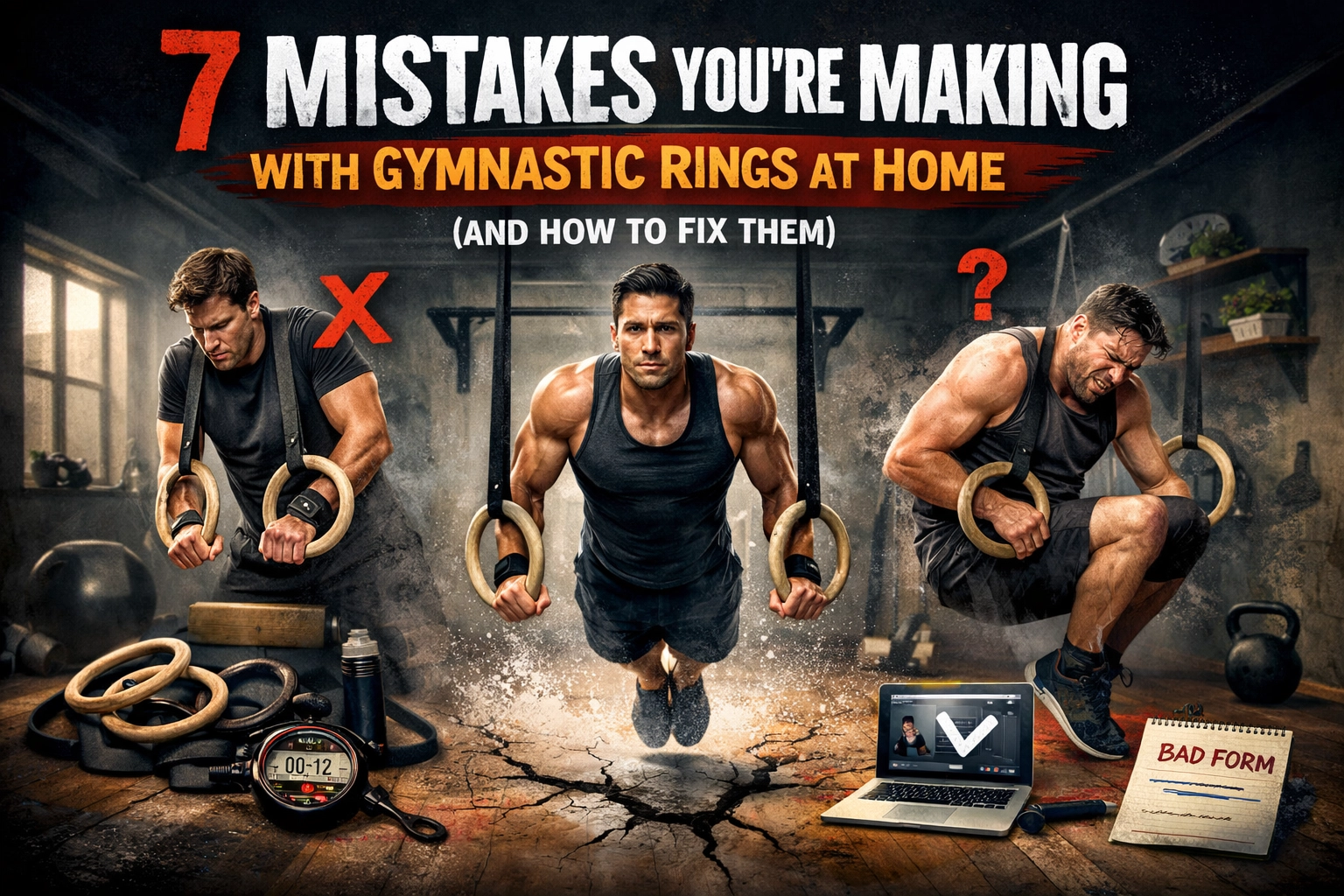
Gymnastic rings are the ultimate equalizer. They don’t care how much you bench or how many miles you run on a treadmill. The moment you grab those rings, you’re dealing with physics, instability, and the cold, hard truth of your own body weight. For serious athletes: ninja warriors, CrossFit fanatics, MMA fighters, and calisthenics pros: rings are the gold standard for building a bulletproof upper body and a core made of steel.
But here’s the problem: most guys setting up a home gym treat rings like an afterthought. They throw them over a shaky tree branch or a cheap door bar and wonder why their shoulders hurt or why they aren’t seeing gains.
At Bold Body Fitness, we don’t do mediocre. If you want an elite-level full body workout at home, you need to stop making these rookie mistakes. Here are the seven biggest blunders people make with gymnastic rings and exactly how to fix them so you can dominate your training.
1. The "Closet Space" Trap: Insufficient Setup Area
The biggest safety and performance issue we see is athletes trying to cram a high-intensity workout into a low-intensity space. Gymnastic rings aren't like a stationary machine; they move in 360 degrees. Your body moves up, down, side-to-side, and: if you’re doing it right: into inverted positions.
When you lack space, you subconsciously limit your range of motion. You shorten your dips because you’re afraid of hitting the wall, or you kick your legs during pull-ups because the ceiling is too low. This ruins your mechanics and kills your progress.
The Fix:
You need a "Strike Zone." Aim for at least 2 square meters of clear floor space and a height that allows for full extension. This is why a floor to ceiling gym setup is the superior choice for serious home training.
By using the Resistance Rail, you can position your rings with precision, ensuring you have the clearance needed for muscle-ups, front levers, and skin-the-cats without worrying about crashing into furniture. Don't just find a spot; create an arena.

2. The "Cold Start" Sin: Rushing the Warm-Up
We get it. You’re busy, you’re hyped, and you want to jump straight into those ring dips. But training on rings puts an immense amount of stress on your tendons and ligaments, specifically in the shoulders and elbows. Jumping into resistance training without a specific warm-up is a fast track to tendonitis.
Rings require "active" stability. Every minor muscle in your rotator cuff is screaming to keep you steady. If those muscles are cold, they’re brittle.
The Fix:
Spend at least 10 minutes prepping your joints. Start with 5 minutes of general movement (jumping jacks or shadow boxing) to get the blood flowing. Then, move into ring-specific prep:
- Scapular Pull-ups: Hang from the rings and move only your shoulder blades.
- Support Hold: Just hold yourself at the top of a dip position, focusing on turning the rings out (external rotation).
- Band Pull-Aparts: Use a resistance band to wake up the rear delts.
If you aren't sweating before your first "real" set, you aren't ready to touch the rings.
3. Investing in Trash: Using Poor-Quality Equipment
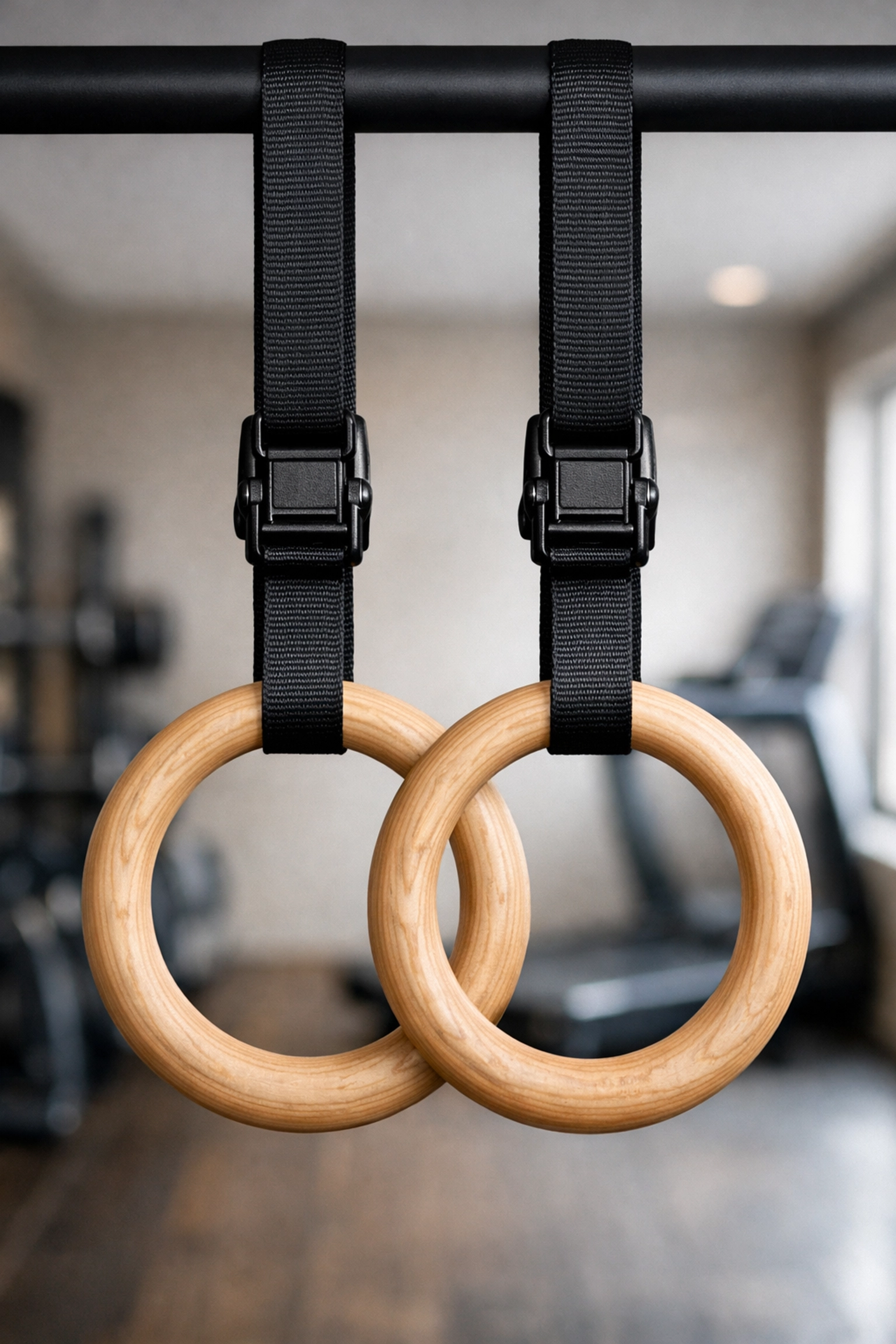
If you’re a serious athlete, why are you buying $20 plastic rings from a bargain bin? Cheap rings are slippery, the straps slip under tension, and the buckles are prone to snapping. There is nothing more dangerous than a buckle failing while you’re mid-muscle-up.
Plastic rings also have a terrible feel. They don’t hold chalk well, and the thin straps can chafe your skin raw. If you want to perform like a pro, you need professional-grade calisthenics equipment for home.
The Fix:
Buy wood. Period. High-quality birch or oak rings provide a superior grip even when your hands are dripping with sweat. Furthermore, look at your mounting system. If you're looking for a pull up bar alternative that actually holds up to the rigors of heavy bodyweight training, the Resistance Rail from Bold Body Fitness is your answer.
It’s built for athletes who demand more. It’s a versatile home gym system that provides a rock-solid anchor point for rings, bands, and weights, ensuring your gear is as tough as your workout.
4. The "Uneven" Struggle: Improper Ring Height and Geometry
Setting your rings at the wrong height is the silent killer of gains. If they’re too low, you’re forced to tuck your legs, which breaks your "hollow body" tension and makes the exercise less effective. If the straps are too close together, you’ll constantly be rubbing your skin against the nylon. If they’re too far apart, you’re adding unnecessary lateral tension that can lead to shoulder impingement.
The Fix:
Standard ring width should be about 50cm (roughly 20 inches) or slightly wider than shoulder-width. For height, you want enough clearance that your feet don’t touch the ground in a dead hang.
The beauty of a no wall damage workout system like the Resistance Rail is the ability to adjust your anchor points perfectly every single time. Stop guessing. Use a measuring tape or the markings on your straps to ensure they are perfectly level. Training on uneven rings is a recipe for muscle imbalances.
5. Ego Over Form: The Pendulum Effect
The most common sight in a crossfit home gym is someone "kipping" or swinging wildly on the rings before they’ve even mastered a strict movement. Swinging creates momentum, and momentum is the enemy of muscle growth.
When you swing, you lose core tension. On rings, core tension is what keeps you stable. If you’re wobbling like a pendulum during pull-ups, you aren't actually training your back; you're just practicing how to not fall off.
The Fix:
Master the Hollow Body Position. Point your toes, squeeze your glutes, and engage your abs. Your body should be a solid, unmoving plank from your hands to your feet.
- Slow it down: Use a 3-second eccentric (lowering) phase on every rep.
- False Grip: If you’re serious about muscle-ups, start training the false grip (resting the heel of your palm on top of the ring) during your rows and pull-ups.
Strict form is the only way to build the "old school" strength that MMA fighters and gymnasts are known for.
6. The "Fast Track" Fallacy: Skipping the Foundation
Everyone wants the "cool" moves: the Iron Cross, the Muscle-Up, the Back Lever. But if you can't do 15 perfect push-ups on the floor, you have no business doing push-ups on the rings. The instability of bodyweight training at home adds a massive "difficulty tax" to every movement.
Attempting advanced moves without a foundation is how you tear a labrum or a bicep tendon.
The Fix:
Follow the "Rule of 10." You should be able to perform:
- 10 Strict Pull-ups
- 10 Strict Dips
- 10 Deep Ring Rows
- 30-second Support Hold
Only once you have mastered these basics should you start adding complexity. The Bold Body Fitness philosophy is about building a body that lasts, not one that burns out after three months of ego-lifting. Use the Resistance Rail to micro-adjust the difficulty: lowering the rings for easier rows or raising them for more challenging pull-ups.

7. The CNS Burnout: Neglecting Recovery
Ring training is taxing on the Central Nervous System (CNS). Because your brain has to constantly calculate how to keep you balanced, you will fatigue much faster than you would on a stable bar or machine. Many athletes try to train rings every single day, leading to "brain fog," plateauing strength, and nagging joint pain.
The Fix:
Treat ring sessions like heavy deadlift days. If you’re doing high-intensity ring work, limit it to 3-4 times per week. On your "off" days, focus on mobility or light resistance training using bands.
Remember, muscles don't grow while you’re hanging from the rings; they grow while you’re sleeping and eating. Listen to your joints. If your elbows start to "click" or your shoulders feel "heavy," take a deload week.
Why the Resistance Rail is the Ultimate Partner for Ring Training
If you’re serious about your home gym equipment, you need a system that evolves with you. Traditional door-frame pull-up bars are limiting and dangerous. Wall-mounted rigs require drilling into your studs and taking up permanent space.
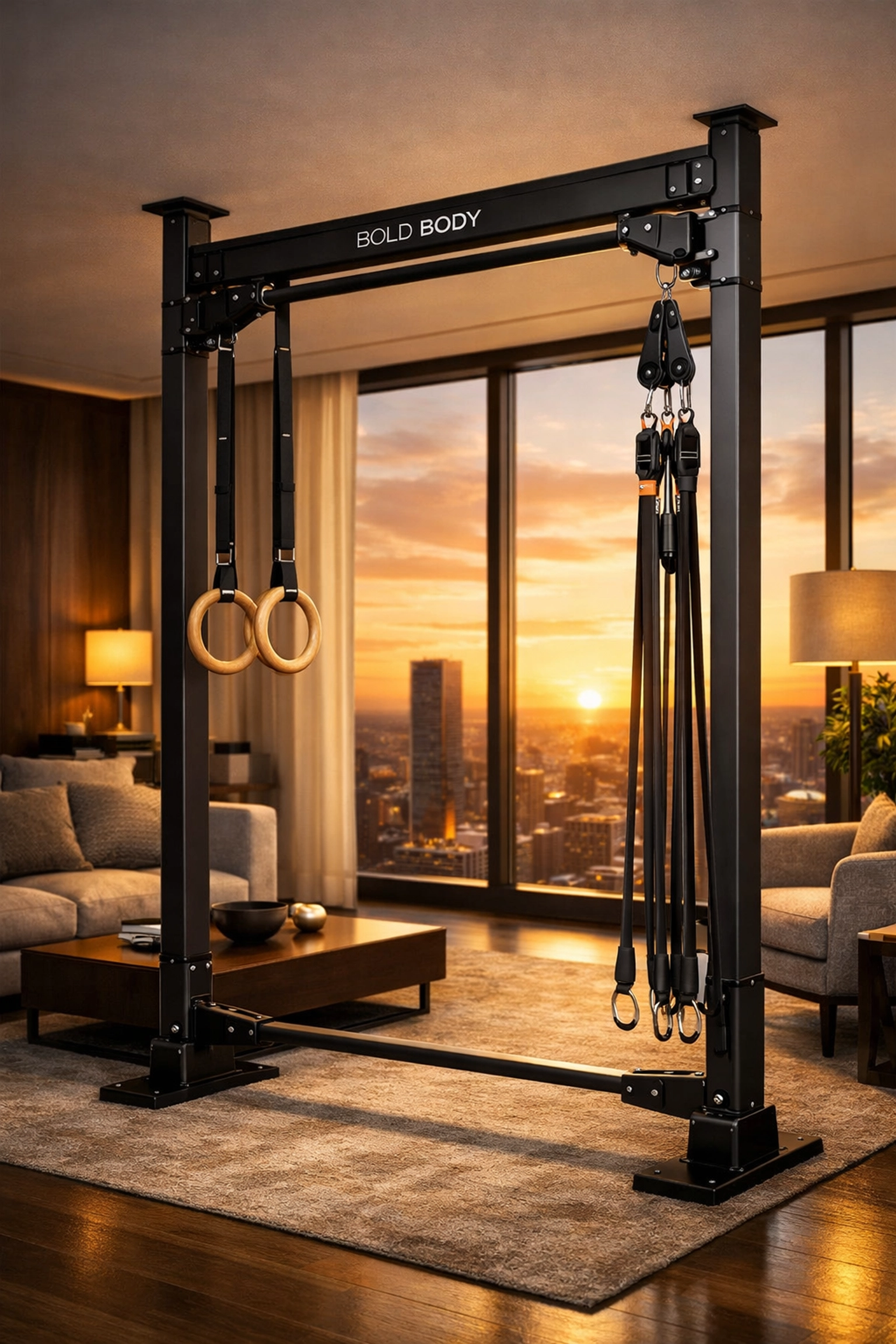
The Resistance Rail by Bold Body Fitness changes the game. It’s a no wall damage workout system that provides the stability of a commercial rig with the footprint of a floor lamp.
- Elite Stability: Zero wobble. When you’re mid-transition in a muscle-up, you need to know your anchor point isn't going anywhere.
- Versatility: It’s more than just a place to hang rings. It’s a versatile home gym that integrates resistance bands, weights, and more.
- Space-Saving: Perfect for apartments or garages where space is at a premium.
The Bottom Line
Gymnastic rings are one of the most powerful tools in any athlete’s arsenal, but they demand respect. By fixing these seven common mistakes: optimizing your space, prioritizing quality gear like the Resistance Rail, and checking your ego at the door: you will unlock a level of strength and body control you never thought possible.
Are you ready to stop making excuses and start building a Bold Body?
Shop the Resistance Rail and Level Up Your Home Gym Today.
Key Takeaways for Your Ring Journey:
- Space is King: Don't cram your workout.
- Prep the Joints: Your shoulders will thank you.
- Quality Over Everything: Invest in the best gear.
- Level the Playing Field: Ensure your rings are even.
- Strict is Better: Eliminate the swing.
- Earn the Progress: Master the basics first.
- Respect the CNS: Recovery is where the gains happen.
Stop settling for "good enough" workouts. Whether you're training for the Octagon, the obstacle course, or just the mirror, the combination of gymnastic rings and the Bold Body Fitness Resistance Rail is the ultimate shortcut to elite performance.
Grab your rings. Let’s get to work.
