

You think training at home is easy? Think again. Without a coach watching your every move or gym equipment forcing proper mechanics, most people turn their home workouts into a masterclass of what NOT to do. And the worst part? You don't even realize you're sabotaging your gains until months of wasted effort pile up.
Whether you're a CrossFit athlete grinding between gym sessions, an MMA fighter maintaining conditioning, or a calisthenics practitioner perfecting your craft, these seven mistakes are killing your progress. Let's fix them.
Mistake #1: Treating Your Warm-Up Like It's Optional
The Problem: You roll out of bed, throw on workout clothes, and dive straight into pull-ups or pistol squats with cold muscles and stiff joints. This isn't "saving time": it's gambling with your body. Without immediate access to sports medicine or physical therapy, home training injuries become catastrophic setbacks that derail weeks or months of progress.
Cold muscles tear easier. Stiff joints compensate poorly. Your nervous system isn't primed for explosive movements. Every rep you do without warming up is a liability.
The Fix: Build a 5-7 minute movement preparation protocol that you execute religiously before every session. This isn't some casual stretching routine: it's deliberate system activation.
Start with joint mobility: arm circles in both directions, leg swings (front-to-back and side-to-side), hip circles, and ankle rolls. Progress into dynamic movements that mimic your workout patterns. If you're hitting pull-ups, include scapular shrugs and dead hangs. Planning pistol squats? Add bodyweight squats with a pause at the bottom.
For serious athletes, this warm-up doubles as technique refinement. Those first few minutes establish the movement quality you'll maintain under fatigue later in the session.

Mistake #2: Letting Form Deteriorate Without External Feedback
The Problem: In a gym, mirrors surround you. Coaches correct your positioning. Other athletes provide visual reference points. At home? You're operating blind. Poor form becomes your default, compensation patterns develop unchecked, and you're teaching your body movement patterns that will take months to unlearn.
Every rep with compromised form is a rep that reinforces dysfunction. You're not just wasting time: you're actively building bad movement patterns into your nervous system.
The Fix: Create feedback mechanisms that replace external coaching. Position your phone to record working sets from multiple angles. Film yourself and watch immediately: not at the end of the workout when it's too late to fix. If you can afford it, invest in a standing mirror or train near reflective surfaces.
More importantly, slow down. Perfect the movement at controlled speeds before adding intensity, volume, or complexity. Can you perform 10 perfect push-ups with a 3-second descent? Then you're ready to add explosive variations. Still struggling to maintain a neutral spine during pull-ups? Stay in progressions until the pattern is bulletproof.
For bodyweight training at home, equipment that enforces proper mechanics makes a massive difference. Systems like the Resistance Rail provide consistent anchor points that guide movement patterns without requiring wall damage or complex installation.
Mistake #3: Random Exercise Selection Disguised as "Intuitive Training"
The Problem: You scroll through Instagram, find a brutal-looking HIIT circuit, crush it, then tomorrow pick a yoga flow because you're sore, then the next day discover a Navy SEAL workout challenge. This isn't programming: it's fitness ADHD. Your body needs consistent, progressive stimulus to adapt and improve. Random workouts create random results.
You're working hard without working smart. Every session feels difficult, but you're not moving toward any specific goal. Months pass and you're no stronger, no faster, no more capable than when you started.
The Fix: Build a structured program with clear progression schemes. This doesn't require hiring a coach or buying expensive software. It requires intention.
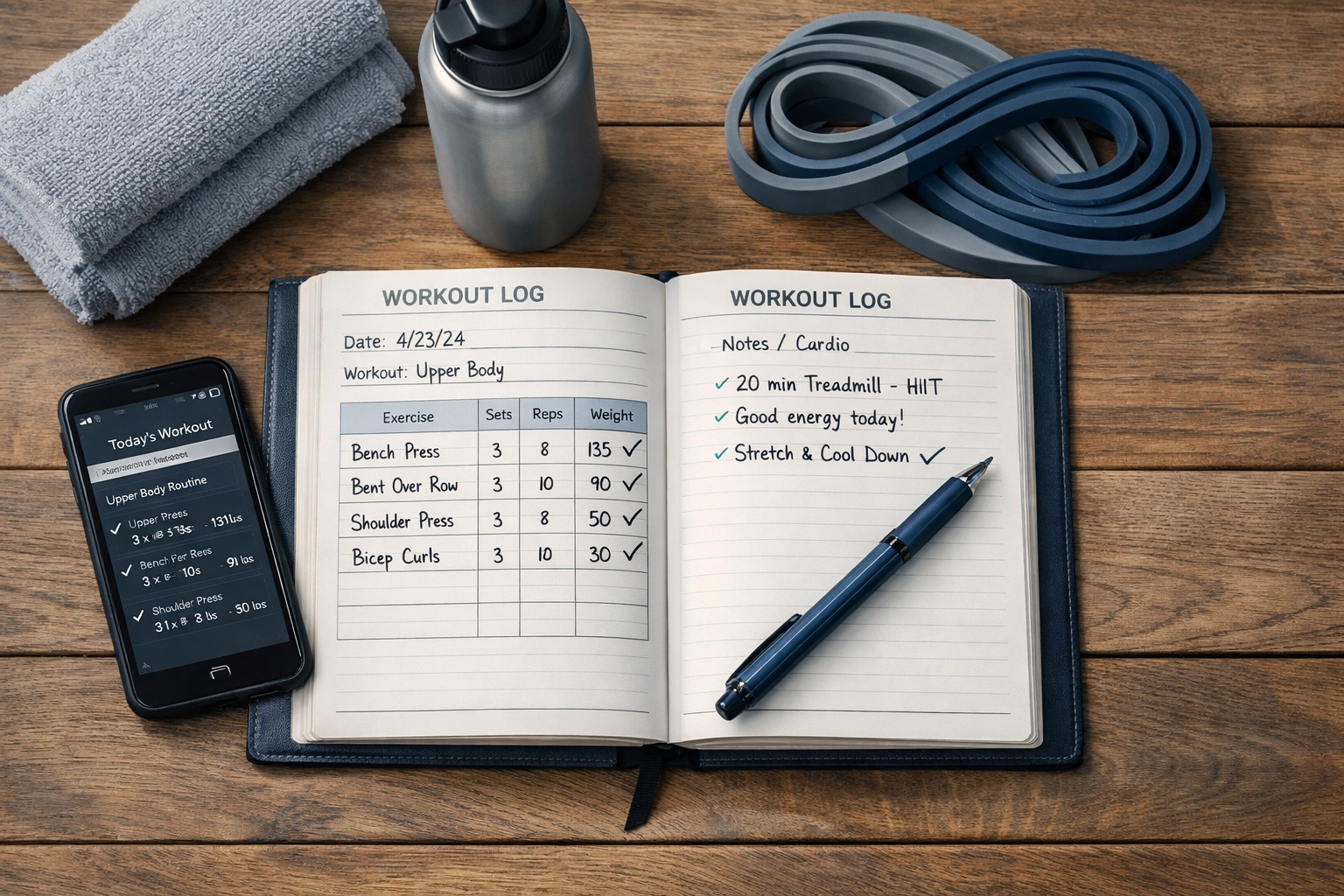
Choose 4-6 fundamental movement patterns: horizontal push (push-ups), horizontal pull (rows), vertical push (handstand progressions), vertical pull (pull-ups), squat variations, and hinge patterns. Assign specific progressions to each pattern. Track your reps, sets, and difficulty variations every session.
Progress systematically. If you hit 3 sets of 10 pull-ups this week, aim for 3 sets of 11 next week, or add a pause at the top, or slow the eccentric. Small, consistent progressions compound into massive gains over months.
For serious practitioners, versatile home gym equipment that supports multiple movement patterns eliminates the excuse of limited options. You don't need a full commercial gym: you need intelligent equipment that allows progressive overload across fundamental patterns.

Mistake #4: Confusing Cardio Fatigue with Strength Building
The Problem: Your workout is 30 minutes of burpees, mountain climbers, jumping jacks, and high knees. Your heart rate is maxed out. You're sweating profusely. You feel destroyed. And you're not building meaningful strength or muscle.
High-intensity cardio has its place, but it's not a substitute for resistance training. If your goal includes getting stronger, building muscle, or developing the strength-to-weight ratio needed for advanced calisthenics, overemphasizing HIIT is actively counterproductive. You're burning through recovery capacity without providing the stimulus your muscles need to grow.
The Fix: Flip the priority hierarchy. Build your full body workout at home around strength and skill work first, then add conditioning as a complement rather than the foundation.
Start sessions with your most technically demanding movements: muscle-ups, front levers, one-arm push-up progressions, pistol squats. These require fresh nervous system capacity and perfect form. Progress to strength-focused compound movements with challenging progressions. Only after you've accumulated quality strength work should you consider adding metabolic conditioning.
For CrossFit athletes training at home between gym sessions, this means treating home workouts as skill refinement and strength maintenance, not attempts to replicate the gym's conditioning pieces. You can't build the same level of conditioning with bodyweight work alone, but you can absolutely maintain and improve strength with intelligent programming.
Mistake #5: Treating Every Workout Like Groundhog Day
The Problem: You do the same routine every session: 20 squats, 15 push-ups, 30-second plank, repeat three times. The first week it's challenging. The second week it's manageable. By week four, you're on autopilot. Your body adapted weeks ago and stopped improving.
Adaptation is the enemy of progress. Once your body can comfortably handle a specific stimulus, it has zero reason to get stronger or build more muscle. You're maintaining, not progressing.
The Fix: Implement strategic variation while maintaining movement pattern consistency. This sounds contradictory but it's not. You still train the fundamental patterns every week: push, pull, squat, hinge: but you vary the specific exercises, tempo, intensity, and volume.
This week, regular push-ups for 3 sets of 12. Next week, decline push-ups for 3 sets of 8. The following week, push-ups with a 5-second eccentric for 3 sets of 6. Same pattern, different stimulus.
For pull-up variations, this could mean changing grip width, adding pauses, incorporating tempo changes, or using resistance bands. Small changes create entirely new stimuli that force continued adaptation.
Quality home gym equipment for bodyweight training expands your variation options dramatically. A floor-to-ceiling training system opens up angles and positions impossible with fixed bars, allowing you to target muscles from different vectors without leaving your home.
Mistake #6: Treating Recovery Like a Weakness
The Problem: You train hard every single day because rest days feel like giving up. Your performance degrades steadily. Movements that felt smooth last month now feel heavy and awkward. You're accumulating fatigue faster than you can recover from it, and instead of backing off, you push harder.
This isn't toughness: it's stupidity. Your body builds strength and muscle during recovery, not during training. Training provides the stimulus. Recovery creates the adaptation. Skip recovery and you're just breaking yourself down without building back up.
The Fix: Schedule strategic recovery as intentionally as you schedule intense training. This doesn't mean lying on the couch eating pizza: it means active recovery, mobility work, and lighter movement days.
A smart weekly structure might include three high-intensity strength sessions, two moderate skill-focused sessions, one active recovery day (light movement, stretching, mobility), and one complete rest day. The specific distribution depends on your training age, goals, and recovery capacity, but the principle remains: you must build recovery into your program.
For serious athletes, tracking your readiness markers helps optimize this balance. Simple metrics like resting heart rate, grip strength, and subjective energy levels provide feedback about whether you're recovered enough for a hard session or need another day of lighter work.
Mistake #7: Ignoring the Fundamentals Beyond Exercise Selection
The Problem: You obsess over whether to do 3 sets or 4 sets, whether to train fasted or fed, whether to do pull-ups before or after push-ups: while sleeping 5 hours per night, eating like garbage, and managing stress by ignoring it. Exercise is one variable in a complex system. Optimize it in isolation and you're still leaving massive gains on the table.
Your body doesn't distinguish between physical stress from training and psychological stress from work, relationships, or financial pressure. It all draws from the same recovery bucket. Poor sleep demolishes your body's ability to adapt to training. Inadequate protein prevents muscle growth. Chronic stress elevates cortisol and impairs recovery.
The Fix: Build a complete system that addresses all the variables affecting your adaptation to training. This means:
Sleep: Prioritize 7-9 hours nightly with consistent sleep and wake times. Quality sleep is non-negotiable for strength athletes and anyone serious about body composition.
Nutrition: Consume adequate protein (0.8-1g per pound of bodyweight for serious athletes), maintain consistent meal timing, and eat enough total calories to support your training volume.
Stress Management: Implement deliberate recovery practices: meditation, breathwork, nature time, whatever works for you: that give your nervous system a break from constant sympathetic activation.
Movement Quality Checks: Regularly assess whether you can still perform fundamental patterns with perfect form. If your squat depth is deteriorating or your shoulder mobility is regressing, address it before it becomes a limiting factor.
At Bold Body Fitness, we build equipment for athletes who understand that home training isn't a compromise: it's an opportunity. The Resistance Rail system provides professional-grade training capacity without requiring permanent installation, wall damage, or sacrificing floor space. It's designed for serious practitioners who demand the same quality from their home setup as they expect from their programming, nutrition, and recovery protocols.
The Reality Check
Home training done correctly is brutally effective. Home training done poorly is a waste of time that builds bad habits and prevents progress. The difference between these outcomes isn't your genetics, your available space, or your equipment budget: it's your willingness to address these fundamental mistakes honestly and implement systematic fixes.
Stop making excuses. Stop cycling through random workouts. Stop ignoring the basics while obsessing over minutiae. Build a structured program, execute it with discipline, recover intelligently, and support your training with the fundamentals of sleep, nutrition, and stress management.
Your home gym can build world-class strength and conditioning: if you stop sabotaging yourself with these preventable mistakes. Now get to work.
