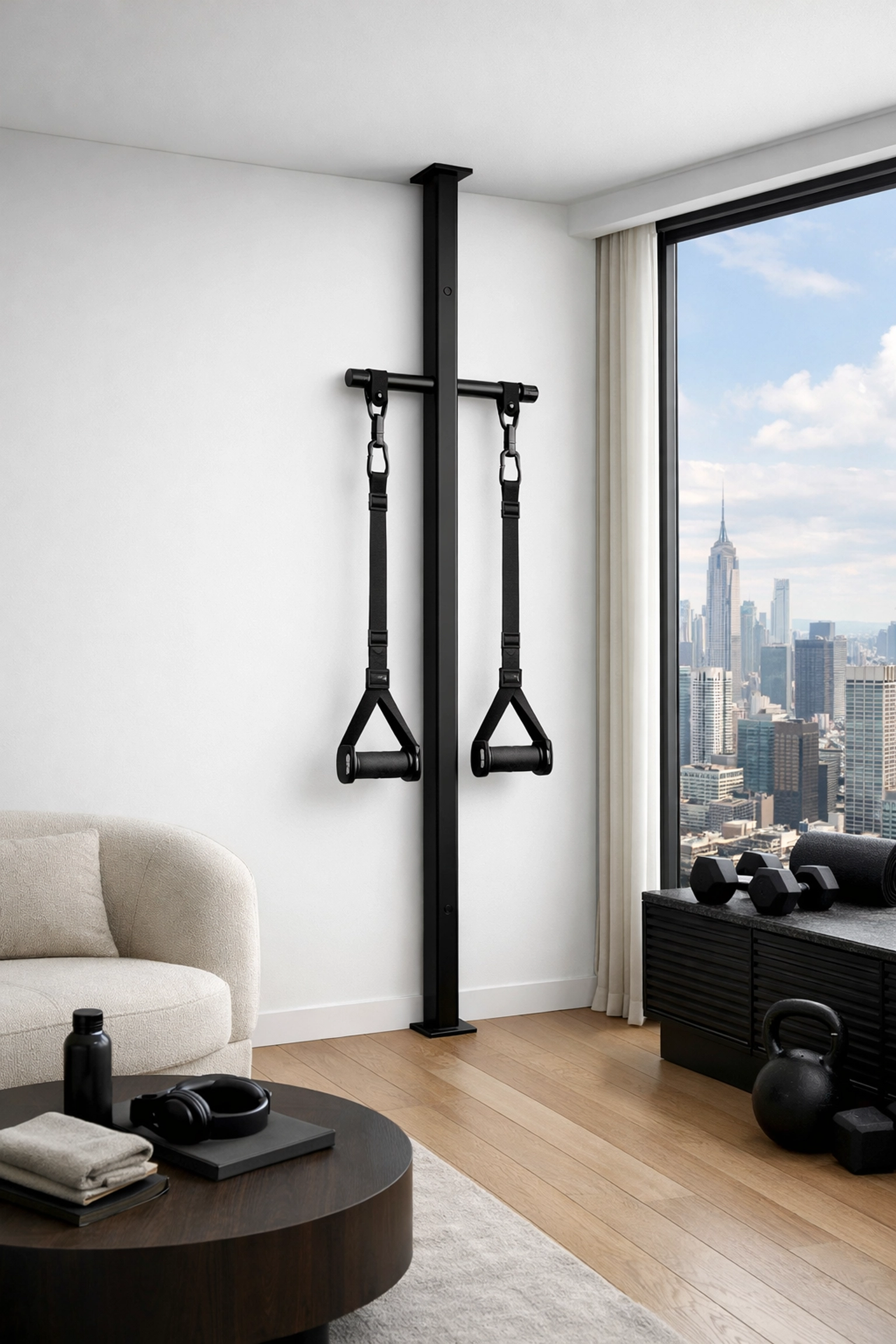
Let’s be honest: your back day shouldn't feel like a game of Russian Roulette with your door frame. If you’re a serious athlete: someone into calisthenics equipment for home, a CrossFit enthusiast, or a Ninja Warrior in training: you know that the pull-up is the king of upper-body movements. But for many, the traditional bar isn't an option. Maybe you're renting and can't drill holes, or maybe you're tired of those flimsy telescoping bars that slide down the moment you attempt a muscle-up.
You’ve likely turned to a pull up bar alternative. You’re doing "doorway rows," using resistance bands over a rafters, or sliding around on the floor trying to mimic a lat pulldown. But it’s not working. Your gains have plateaued, your lats aren't popping, and quite frankly, you’re bored.
At Bold Body Fitness, we don't do mediocre. We believe your home gym equipment should work as hard as you do. If your current setup feels more like a compromise than a solution, here are 10 reasons why your pull-up alternative is failing you: and exactly how to fix it.
1. The Stability Is a Joke
Most "no-drill" pull-up alternatives rely on friction or leverage against a door frame. For a casual user, that might be fine. For a 200lb MMA fighter or a gymnast working on explosive power, it’s a recipe for a trip to the ER. If your equipment wobbles, your brain subconsciously limits your force production. You can’t go "all out" if you're worried about the bar snapping off the trim.
The Fix: You need a floor to ceiling gym solution that anchors securely without destroying your property. Stability breeds strength. When your anchor point is rock-solid, your central nervous system allows you to recruit more muscle fibers. This is why the Resistance Rail is a game-changer: it provides the stability of a commercial rack with a no wall damage workout system.

2. You’ve Sacrificed Range of Motion (ROM)
Are you doing "pull-ups" where your chin barely clears the door frame because you're afraid of hitting your head on the ceiling? Or maybe your "floor pull-ups" only allow for about six inches of travel? Partial reps lead to partial results. To build a thick, wide back, you need full extension at the bottom and a hard squeeze at the top.
The Fix: Look for a versatile home gym setup that allows for verticality. If you’re using a pull-up bar alternative like a suspension trainer or resistance bands, ensure you have enough overhead clearance to fully lock out your elbows and pull your chest to the anchor point.
3. The "Friction" Fallacy of Floor Pull-ups
We’ve all seen the videos: put a towel on a hardwood floor, lay on your stomach, and "pull" yourself forward. While it’s a creative bodyweight training at home hack, it’s mathematically inferior. The resistance is determined by your weight and the friction of the floor. There is zero progressive overload. Once you can pull yourself across the floor, what’s next? Adding a second towel?
The Fix: Transition to actual resistance training. Use a system that allows you to add weight or increase tension. The goal is to move your body weight against gravity, or move a significant load through space. Floor sliding is for cleaning; pulling is for growing.
4. Grip Fatigue is Killing Your Back Gains
Many people use door frames or table edges as a pull up bar alternative. The problem? These surfaces are usually flat, wide, and slippery. Your forearms and fingers give out long before your lats even realize they’re supposed to be working. You’re essentially doing a grip workout that happens to involve your back.
The Fix: Invest in calisthenics equipment for home that features ergonomic, round grips. If you must use an alternative, use chalk or grip straps. Better yet, get a dedicated rail system that mimics the feel of a professional bar. Check out our shop for gear designed for actual human hands.
5. You’re Only Working in One Plane
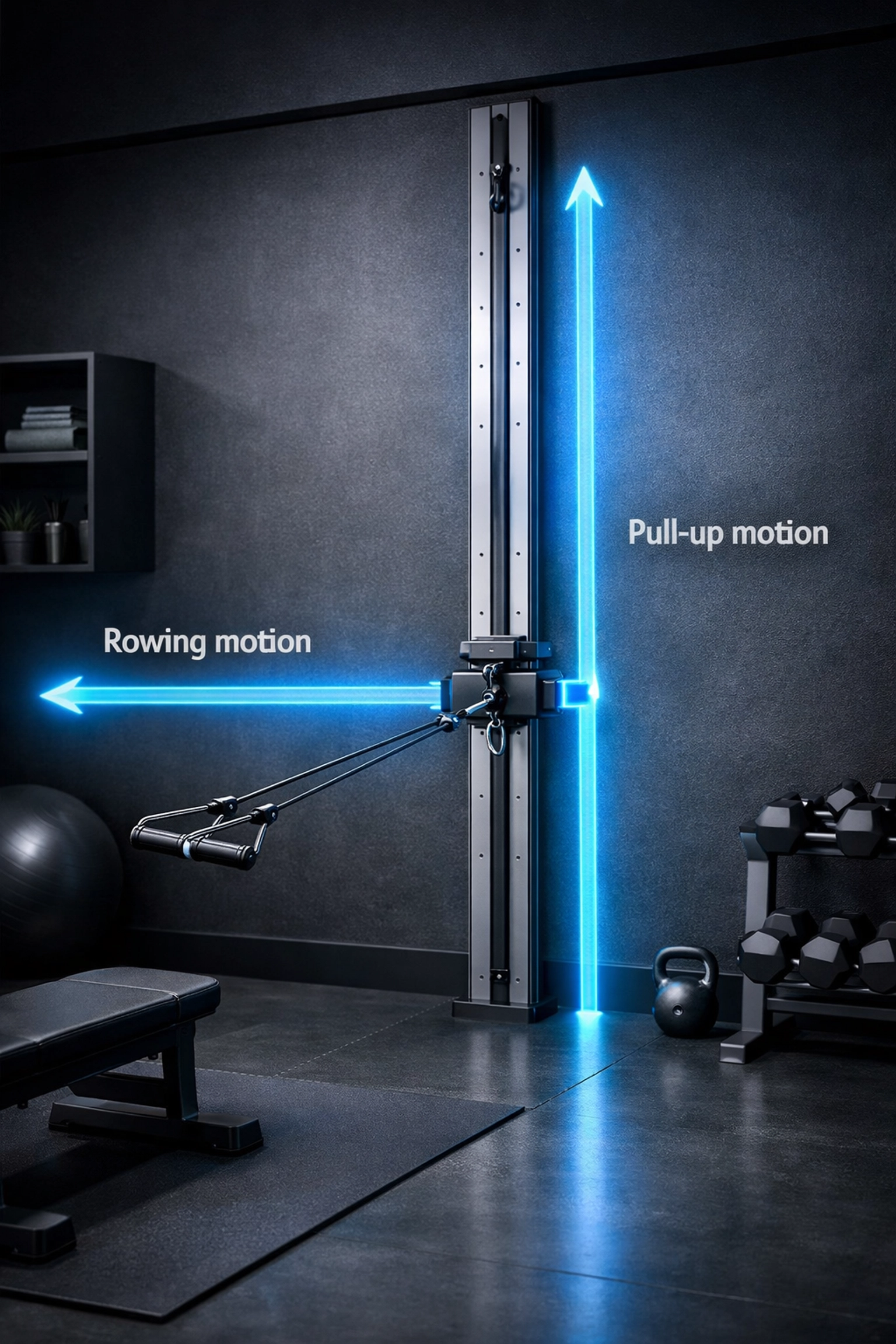
A traditional pull-up is a vertical pull. Many alternatives, like the "inverted row" under a kitchen table, are horizontal pulls. While rows are great, they don't replace the vertical pull-down/pull-up mechanic. If your full body workout at home only consists of rows and push-ups, you’re missing out on the vertical development that gives you that "V-taper" look.
The Fix: Ensure your crossfit home gym includes both horizontal and vertical pulling options. A floor to ceiling gym like the Resistance Rail allows you to adjust your anchor point from the floor to the top of the rail, meaning you can hit rows, pull-ups, and high-to-low woodchoppers all in one spot.
6. The Resistance Curve is Backwards
If you’re using resistance bands as a pull up bar alternative, you’ve probably noticed they get harder the further you stretch them. In a pull-up, the hardest part is usually the top (the "finish"). With bands, the resistance is highest at the top, which can be good, but if the band is too light, you get zero tension at the bottom. This "slack" means you aren't building strength in the stretched position.
The Fix: Use high-quality, tiered bands and anchor them correctly. You need a setup that allows the bands to remain under slight tension even at the "start" of the move. This is why a dedicated resistance training rail is superior to just looping a band over a door: it allows for precise anchoring at the exact height you need.
7. You’re Afraid of Wall Damage
Let’s be real: the reason most people use subpar alternatives is that they don't want to lose their security deposit. You want a full body workout at home, but you don't want a crossfit home gym that looks like a construction site. This fear leads to using "doorway" bars that eventually crack the wood or leave black marks on the paint.
The Fix: Look for a no wall damage workout system. Our mission at Bold Body Fitness was to solve this exact problem. You can have a heavy-duty, professional-grade setup that uses tension and smart engineering to stay in place without a single screw entering your drywall.
8. Lack of Versatility Leads to Boredom
Doing the same three variations of an inverted row gets old fast. If your equipment only does one thing, you’re going to stop using it. Serious athletes need variety: neutral grips, wide grips, chin-ups, and even muscle-up transitions.
The Fix: Build a versatile home gym. Your equipment should be a platform, not just a tool. It should allow for the addition of rings, bands, and different handle types. Check out our product-sitemap.xml to see how we’ve expanded the possibilities of home training.

9. Your Setup is Too Low
If you’re over 5’10”, most doorway pull-up bars require you to tuck your knees. This changes your pelvic tilt and makes it harder to engage your core properly. It also makes it impossible to do "dead hangs" or work on your "hollow body" position, which are foundational for bodyweight training at home.
The Fix: You need height. A floor to ceiling gym utilizes the full vertical space of your room. This allows you to hang with straight legs, which is crucial for gymnasts and Ninja Warriors who need to practice full-body tension.
10. The "I'll Just Do Lat Pulldowns Instead" Mentality
Some people give up on the pull-up entirely and try to replace it with light-weight resistance band pulldowns. While pulldowns have their place, they don't require the same level of core stabilization or "total body" recruitment as a pull-up. You’re isolating when you should be integrating.
The Fix: Stop avoiding the hard work. If you can’t do a full pull-up yet, use your home gym equipment to perform eccentric (negative) reps or assisted reps with a solid anchor. The Resistance Rail is perfect for this because you can set the resistance to exactly what you need to progress.

Why the Resistance Rail is the Ultimate Fix
We didn't just want to create another piece of home gym equipment. We wanted to create the only piece you’d ever need for upper body and core dominance.
The Resistance Rail Standard isn't just a pull up bar alternative; it's a structural evolution.
- No Wall Damage: It stays in place via high-strength tension.
- Full Customization: Move your attachment points in seconds.
- Pro-Grade: Built for the intensity of MMA training and calisthenics.
Stop settling for doorway bars that fail and floor exercises that don't challenge you. If you’re serious about your resistance training, you need tools that match your ambition.
Maximize Your Home Gains
To truly see results, you need to treat your home workouts with the same respect as a commercial gym session. That means:
- Tracking Progress: Write down your reps and sets.
- Quality Gear: Don't buy the cheapest option on a giant retail site. Buy from people who actually train.
- Consistency: A versatile home gym eliminates the "I don't have time to go to the gym" excuse.
Ready to stop making excuses and start making progress? Explore our full collection of gear and join the tribe of athletes who refuse to let four walls limit their potential. For more tips on mastering your home setup, check out our post-sitemap.xml for our latest training guides.
Bold Body Fitness: Train Hard. Damage Nothing.