

You've committed to bodyweight training at home. You've cleared out a corner of your garage, spare room, or living space. You show up consistently. You sweat. You grind.
And yet... nothing's changing.
Your pull-ups haven't improved. Your muscle definition is basically invisible. Your strength gains have flatlined harder than a heart monitor in a bad movie. What gives?
Here's the brutal truth: most people sabotage their full body workout at home without even realizing it. They make the same mistakes over and over, wondering why their home gym setup isn't delivering the results they see others getting at commercial facilities.
But it's not about having access to thousands of dollars worth of equipment. It's about training smart, staying consistent with the right principles, and having the right tools for versatile, effective workouts.
Let's break down exactly why your home training is failing: and more importantly, how to fix it starting today.
Reason #1: You're Lifting Too Heavy (Or Not Heavy Enough)
This is the classic Goldilocks problem. Go too heavy with your resistance training, and your form crumbles. Your muscles don't get the targeted stimulus they need because you're recruiting every muscle in your body just to survive the rep. Injury risk skyrockets.
Go too light? You're basically doing expensive stretching. Your muscles yawn at the lack of challenge and refuse to adapt.
The Fix: For strength and muscle building, choose resistance levels that allow you to complete 4 sets of 6-12 reps with strict form: where the last 2-3 reps feel genuinely challenging. For muscular endurance, bump that to 3-4 sets of 15-20+ reps.
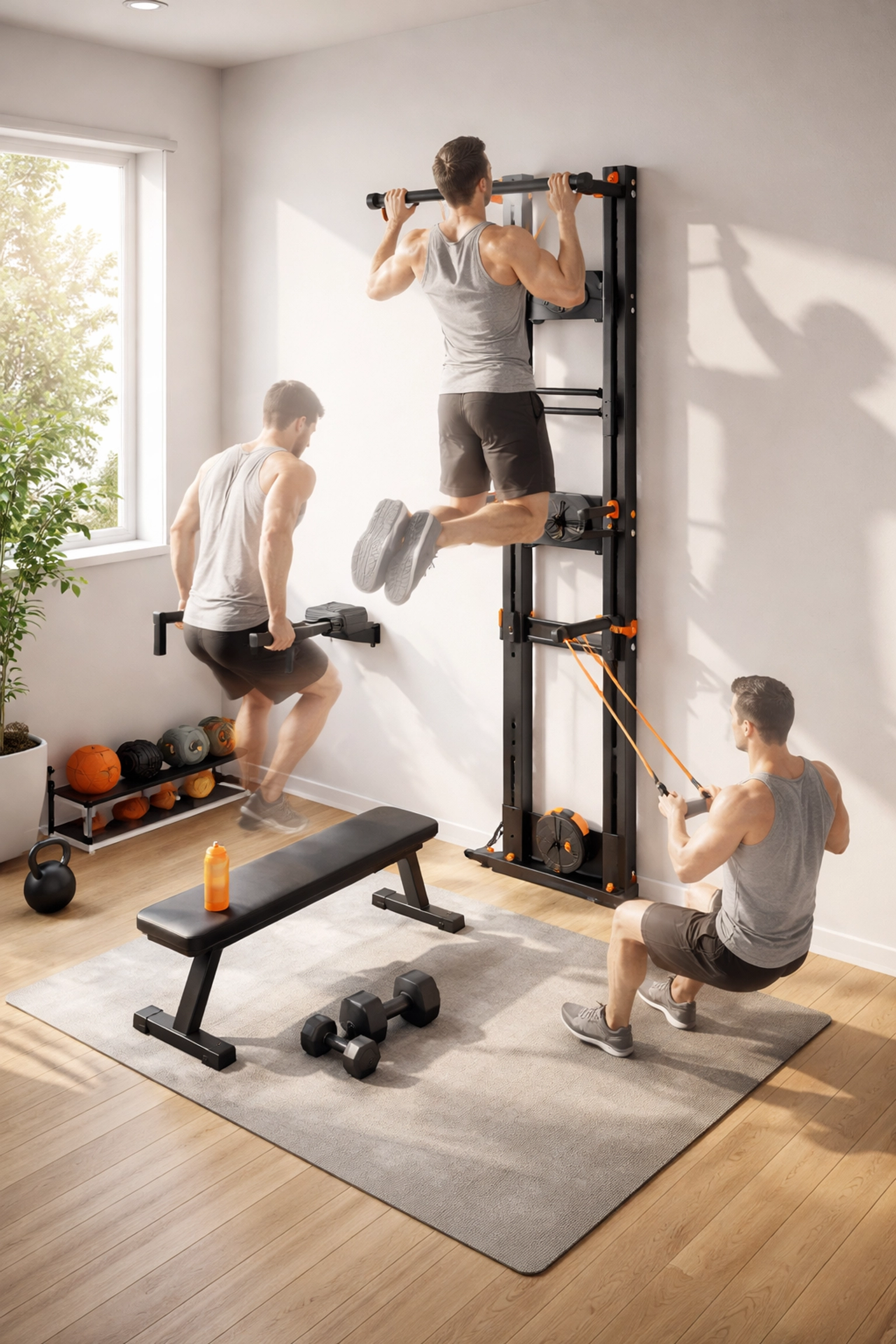
If you're doing calisthenics equipment for home training, this means progressing to harder variations or adding resistance bands. The Resistance Rail Standard makes this dead simple by giving you adjustable anchor points for bands and bodyweight movements in one system.

Reason #2: Your Form Is Garbage (And You Don't Even Know It)
Here's a hard pill to swallow: you probably think your form is decent. It's not.
Poor exercise form is the silent killer of home workout progress. Without coaches or training partners watching you, bad habits creep in. You cheat reps. You use momentum instead of muscle. You target the wrong muscle groups entirely.
The Fix: Set up a mirror or, better yet, record yourself. Watch your form with the same critical eye you'd use watching someone else. Practice each movement pattern until proper technique becomes automatic.
This is where having proper home gym equipment matters. Unstable, janky setups force you to compensate and develop compensatory movement patterns. A solid, stable system like a floor to ceiling gym gives you the foundation to focus purely on form.
Reason #3: You Skip Your Warm-Up Like It's Optional
It's not optional. Skipping your dynamic warm-up can reduce your workout performance by approximately 20%. That's not a typo. Twenty percent.
You're essentially handicapping yourself before you even start. Cold muscles don't contract as efficiently, joints don't move as smoothly, and your nervous system isn't primed to recruit maximum muscle fibers.
The Fix: Spend 5-10 minutes on dynamic stretches before every single session. Arm circles, leg swings, hip rotations, thoracic spine mobility: whatever your workout requires, prepare those areas first. Your body will thank you with better performance and fewer injuries.
Reason #4: You Do The Exact Same Workout Every. Single. Day.
Your body is an adaptation machine. It's designed to become efficient at whatever you throw at it. That's great for survival. It's terrible for progress.
When you do the same exercises, same sets, same reps, same order every session, your muscles adapt and stop responding. Plateaus aren't just frustrating: they're your body telling you it's bored.
The Fix: Vary your stimulus regularly. Change exercises, rep ranges, tempos, and training angles. If you've been doing standard pull-ups for months, switch to wide grip, close grip, or archer variations. This is where having a versatile home gym setup becomes crucial: you need equipment that allows for exercise variety without cluttering your space.
Reason #5: You've Neglected the Holy Trinity of Fitness
Strength. Cardio. Mobility.
Most home exercisers obsess over one and completely ignore the others. The strength-obsessed skip cardio and wonder why they gas out. The cardio addicts avoid resistance training and wonder why they look the same despite running for hours. Everyone skips mobility work and wonders why they're always injured.
The Fix: Balance all three pillars every week. Your full body workout at home should include resistance training for strength and muscle, aerobic work for cardiovascular health and fat loss, and dedicated mobility sessions for flexibility and injury prevention. This isn't optional fluff: it's the foundation of sustainable fitness.
Reason #6: You Train Every Day Without Rest
Hustle culture has convinced people that rest is weakness. It's not. Rest is where the magic happens.
Training breaks down muscle tissue. Rest is when your body rebuilds it stronger. Skip rest days, and you enter a state of chronic overtraining where your hormones tank, your progress reverses, and your injury risk explodes.
The Fix: Take 1-2 complete rest days per week from strenuous exercise. You can stay active with light walking or gentle mobility work, but give your body time to recover. This is especially important for high-intensity athletes: CrossFit home gym warriors, MMA fighters, and ninja warrior competitors need recovery even more than casual exercisers.
Reason #7: Your Nutrition Is an Afterthought
You can't out-train a bad diet. You've heard it a million times because it's absolutely true.
Inadequate nutrition prevents muscle protein synthesis: the actual process that builds new muscle tissue. If you're not eating enough protein, enough calories, and the right nutrients at the right times, your workouts are essentially wasted effort.
The Fix: Prioritize protein intake (aim for 0.7-1g per pound of bodyweight for active individuals). Fuel properly before workouts and recover with quality nutrition afterward. This doesn't mean obsessive calorie counting: it means being intentional about supporting your training with food.

Reason #8: You're Sleep-Deprived and Expecting Results
Sleep is the most underrated performance enhancer on the planet. The CDC recommends at least 7 hours per night for adults, and athletes often need more.
During deep sleep, your body releases growth hormone, repairs muscle tissue, and consolidates motor patterns from your training. Skimp on sleep, and you're essentially flushing your hard work down the drain.
The Fix: Prioritize sleep like you prioritize your workouts. Create a consistent sleep schedule. Optimize your sleep environment. Stop scrolling your phone in bed. Your gains depend on it.
Reason #9: You Have No Structured Plan
"I'll just work out and see what happens" is not a plan. It's a recipe for spinning your wheels indefinitely.
Working out without clear goals, progressive structure, and measurable targets is one of the worst mistakes you can make. You end up doing random exercises at random intensities with random frequency: and getting random (read: zero) results.
The Fix: Create or follow a structured program with specific goals. Know what you're training each session before you start. Track your workouts so you can apply progressive overload: adding reps, resistance, or difficulty over time. Without progression, there's no adaptation.
At Bold Body Fitness, we built the Resistance Rail specifically to support structured, progressive bodyweight training at home. It gives you the anchor points and stability needed for everything from basic movements to advanced calisthenics progressions.
Reason #10: Your Equipment Limits Your Options
Here's where most home gym setups fail: they're either too limited or too complicated.
Minimal equipment means you run out of exercise variations quickly and can't progress. Bulky commercial equipment destroys your space, damages your walls, and still doesn't offer the versatility you need for full body training.
Traditional pull up bar alternatives either require wall damage, are unstable, or limit you to a handful of movements. Serious athletes: gymnasts, calisthenics practitioners, CrossFit competitors: need more than a doorway bar can offer.
The Fix: Invest in versatile home gym equipment that gives you maximum exercise variety without destroying your living space. A no wall damage workout system that offers multiple anchor points, stability for dynamic movements, and compatibility with resistance bands opens up hundreds of exercise possibilities in a minimal footprint.

This is exactly why we created the Resistance Rail. It's a floor to ceiling gym system that installs without wall damage, supports serious training loads, and provides the versatility that dedicated athletes demand. Whether you're doing pull-ups, muscle-ups, resistance band work, or suspension training, it handles everything in one compact system.
Check out the full lineup in our shop and see why athletes are making the switch.
The Bottom Line
Your full body workout at home isn't failing because home training doesn't work. It's failing because of correctable mistakes in your approach, recovery, and equipment.
Fix your form. Structure your training. Balance strength, cardio, and mobility. Prioritize sleep and nutrition. Give yourself proper rest. And equip your space with gear that supports real progress: not just basic movements.
Home training can absolutely deliver elite-level results. You just need to stop making the mistakes that hold most people back.
Now get after it.
